

AI-based performance metrics are the data points and scoring systems that reveal how well content performs inside AI-driven search tools, including AI Overviews, chatbots, and answer engines. Unlike traditional SEO metrics, they measure whether your content gets cited or ignored inside a generated answer. As AI search adoption grows, businesses that ignore these signals risk losing visibility even while ranking well on a classic results page. This guide breaks down what these metrics mean, why they matter, and exactly how to start tracking them. See our AI visibility audit for auditing visibility.
Direct Answer: AI-based performance metrics track how often, and how accurately, AI search tools cite your content in generated answers. They typically include citation frequency, entity recognition accuracy, and content extraction quality — signals that traditional rank trackers do not capture.
What Are AI-Based Performance Metrics?
AI-based performance metrics measure how AI systems interpret, rank, and cite a page when answering a user’s query. In short, they quantify visibility inside generative responses rather than inside a traditional blue-link results page. For example, a large language model, which is a type of AI trained on massive text datasets to generate human-like responses, might pull a statistic from your article without ever sending a visitor a click. That citation, however invisible in Google Analytics, still counts as valuable exposure.
Because these systems rely on natural language understanding, they weigh clarity, structure, and factual precision more heavily than backlink volume alone. As a result, tracking these metrics requires different tools than classic rank trackers. According to Wikipedia’s overview of large language models, these systems generate responses by predicting likely text sequences based on training data, which explains why well-structured, unambiguous content tends to get cited more often.
Why AI-Based Performance Metrics Matter for Search Visibility
AI search adoption is accelerating quickly, and that shift changes how visibility gets measured. In fact, industry research has found that a growing share of informational searches now end with an AI-generated summary rather than a scroll through ranked links. Consequently, businesses that only monitor traditional rankings may be missing a large, and growing, portion of their actual audience reach; see our AI visibility audit for an audit framework.
Furthermore, Google’s own search documentation confirms that AI-generated features draw from indexed, well-structured web content, meaning strong fundamentals still matter. In particular, sites that pair solid technical SEO with clear, quotable answers tend to see stronger citation rates. For a deeper breakdown of which signals to prioritize first, this guide to automated performance metrics outlines specific tracking priorities for teams just getting started.
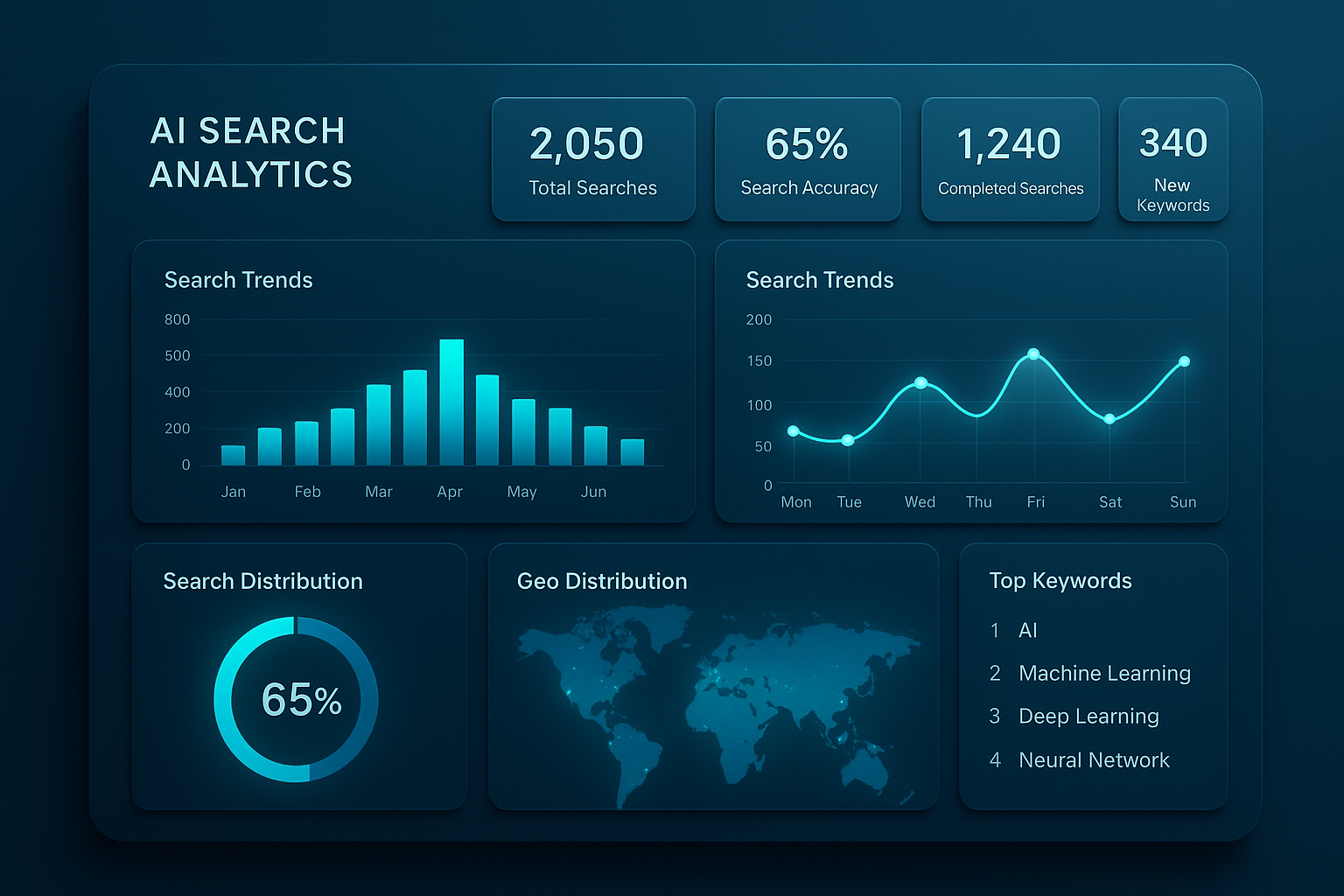
A visual example of how AI-based performance metrics can be organized on a tracking dashboard.
Key AI-Driven Metrics You Should Track
Several specific signals fall under the umbrella of AI-driven performance tracking. Understanding each one helps prioritize where to focus optimization efforts first.
- Citation frequency — how often an AI tool references your content in generated answers.
- Entity recognition accuracy — whether AI systems correctly identify your brand, products, or authorship.
- Content extraction quality — how cleanly a system pulls a quote or statistic without distortion.
- Answer completeness score — whether your page fully satisfies the implied question without requiring a follow-up search.
- Cross-platform visibility — how consistently your content appears across multiple AI search tools rather than just one.
How to Start Tracking AI-Based Performance Metrics: Step-by-Step
Getting started does not require a large team. Instead, a focused, five-step process can build a reliable baseline within a single afternoon.
- Audit existing content structure. Review top pages for clear headings, direct answers, and factual accuracy, since AI systems favor content that is easy to parse and extract cleanly.
- Add structured data markup. Implement schema such as Article, FAQPage, and HowTo so AI crawlers can identify entities, questions, and processes with confidence.
- Select an AI tracking platform. Choose a tool that monitors citation frequency across AI Overviews, chatbots, and answer engines rather than relying only on traditional rank tracking software.
- Establish a baseline report. Record current citation rate, mention frequency, and entity recognition scores before making changes so improvement can be measured accurately.
- Optimize and monitor continuously. Update content based on tracking insights, then review results weekly to catch shifts in citation behavior across different AI search tools.
Agencies managing several client sites often need a scalable version of this process. This agency reporting guide for AI search performance covers how to standardize this workflow across multiple accounts without losing detail.

Consistent monitoring of AI-based performance metrics helps teams spot citation trends early.
AI-Based Performance Metrics vs. Traditional SEO Metrics
Traditional SEO metrics, such as keyword rankings and organic click-through rate, still matter. However, they only tell part of the story in an AI-first search landscape. In contrast, AI-driven metrics capture visibility inside zero-click experiences, where a user gets an answer without ever visiting a website.
Similarly, backlink profiles remain useful for authority signals, but they don’t necessarily predict AI citation likelihood. Specifically, well-organized content with direct answers often outperforms link-heavy pages inside generative results. For teams building a broader measurement framework, this complete guide to smarter SEO scorecards compares both metric types side by side in more detail. See our AI search performance reporting guide for agency reporting workflows.
Common Mistakes When Measuring AI Search Performance
One frequent mistake is relying solely on click data, which understates true reach since many AI answers never generate a visit. Another common error involves ignoring schema markup, which limits how well AI crawlers can parse page content in the first place.
Additionally, some teams check performance only once and never revisit it. Because AI models refresh frequently, according to the National Institute of Standards and Technology’s AI resources, static one-time audits quickly become outdated. Ongoing monitoring, therefore, is not optional for anyone serious about AI search visibility.
Choosing Tools to Automate AI Performance Analytics — see AI-driven content discovery for discovery-oriented tooling.
Manually tracking citation frequency across multiple AI platforms is time-consuming, especially for agencies handling several client sites. That’s where automated platforms come in. RankAuthority.com offers a 1-Click AI AutoPilot tool designed specifically to automate the technical and strategic work behind generative engine optimization and answer engine optimization, without requiring a steep learning curve.
Whether managing one website or an entire client portfolio, a risk-free trial period allows teams to test automated tracking before committing. For a broader framework on evaluating scorecard-style tools, these companion resources — part two and part three of the smarter SEO scorecard series — walk through additional evaluation criteria.

AI-based performance metrics connect content quality signals across multiple search platforms.
Frequently Asked Questions About AI-Based Performance Metrics
What are AI-based performance metrics?
AI-based performance metrics are data points that measure how content is discovered, cited, and ranked by AI search tools like AI Overviews, chatbots, and answer engines. They differ from traditional SEO metrics because they track visibility inside generative responses rather than only in ranked link lists.
Why are AI-based performance metrics important for SEO?
They matter because AI search tools increasingly answer queries directly, often without sending a click to a website. Tracking these metrics helps businesses understand whether their content is being cited or ignored inside those AI-generated answers.
How do AI-based performance metrics differ from traditional SEO metrics?
Traditional SEO metrics focus on rankings, clicks, and backlinks within search results pages. AI-based performance metrics instead measure citation frequency, entity recognition, and content extraction quality inside AI-generated summaries.
What tools can track AI-based performance metrics?
Platforms built for generative and answer engine optimization, such as automated AI scorecards, track citation rates and visibility. Some services offer 1-click automation for smaller teams without dedicated analysts.
How long does it take to see results from tracking these metrics?
Most businesses notice measurable shifts in citation frequency within four to eight weeks of consistent optimization. Results vary based on content quality, site authority, and how often AI models refresh their indexes.
What is the biggest mistake businesses make with AI performance tracking?
The most common mistake is relying solely on click-through data, which undercounts AI-driven visibility. Since many AI answers don’t generate a click, ignoring citation and mention metrics gives an incomplete picture.
Does structured data affect AI-based performance metrics?
Yes, structured data such as schema markup helps AI systems parse entities and context more accurately. Well-structured pages are more likely to be cited correctly in AI-generated answers.
How much does AI performance tracking typically cost?
Costs range from free manual checks to subscription-based automated platforms, which often run from around $30 to several hundred dollars monthly depending on scale. Agencies managing multiple clients typically need tiered or multi-site plans.
Can small businesses benefit from AI-based performance metrics?
Small businesses can benefit significantly because AI search often favors clear, well-structured answers over sheer domain authority. Tracking these metrics helps smaller sites find realistic visibility opportunities against larger competitors.
What role does content freshness play in AI search visibility?
Freshness matters because AI models frequently prioritize recently updated, accurate content when generating answers. Regularly updating statistics, examples, and dates can improve citation likelihood.
Are AI-based performance metrics the same across all AI search engines?
No, each AI search engine weighs signals differently, so citation rates can vary between tools. Consequently, businesses should track performance across multiple AI platforms rather than a single source.
What is the best way to start using AI-based performance metrics?
The best starting point is auditing current content for clarity, structure, and factual accuracy, then monitoring citation frequency using an automated tracking tool. From there, businesses can refine content based on what AI systems reward.
Final Thoughts on AI-Based Performance Metrics
In summary, AI-based performance metrics give businesses a clearer view of visibility in an AI-driven search world, where citations often matter as much as clicks. As AI search tools continue reshaping discovery, teams that monitor citation frequency, entity accuracy, and content structure will stay ahead of those relying on outdated tracking alone. Ultimately, combining strong content fundamentals with the right automated tools makes it far easier to keep pace as generative and answer engines keep evolving.

