

AI optimization technology is quickly becoming the deciding factor in whether a business gets found online or gets left behind. As search engines and AI assistants increasingly generate answers instead of simple link lists, brands need tools that speak the language of machine learning models, not just keyword algorithms. In addition, this shift means older SEO tactics alone can no longer guarantee visibility on their own. This article explains what AI optimization technology means, how it functions, and how platforms such as RankAuthority help businesses adapt to this rapid transformation in search. Last updated: 2026-07-30.
Quick Answer
AI optimization technology refers to automated software systems that adjust a website’s content, structure, and technical signals so AI-powered search engines and answer engines can understand and surface that content more effectively. It typically combines generative engine optimization (GEO) and answer engine optimization (AEO) techniques with ongoing machine-learning analysis.
What Is AI Optimization Technology?
AI optimization technology is the umbrella term for software that automates the technical and strategic work needed to rank well in AI-driven search environments. Specifically, it analyzes a site’s content, structure, and metadata, then applies changes designed to help large language models interpret and cite that content accurately. See our SEO for AI-Driven Businesses playbook for implementation details.
Unlike a single tool, AI optimization technology usually includes several layers working together: content analysis, schema generation, competitor benchmarking, and continuous monitoring. As a result, businesses no longer need to manually track every algorithm update or AI model change. Instead, the platform adapts on their behalf, which is precisely the promise behind automated systems like RankAuthority’s 1-Click AI AutoPilot. For a deeper look at how these automated systems function day to day, see this guide on digital optimization tools for AI-powered search success.

A visual representation of how AI optimization technology tracks search visibility across AI-driven platforms.
How AI-Driven Optimization Is Reshaping Search Rankings
Search behavior has changed dramatically over the past two years. In particular, generative AI models such as those built on large language models now summarize entire web pages directly within search results, reducing the need for users to click through. According to trends reported by Google Search Central, AI-generated overviews now appear across a growing share of informational queries, which changes how visibility is earned.
Consequently, AI-driven optimization now requires more than traditional backlinks and keyword density. Content must be structured for entity recognition, meaning search systems need to clearly identify who, what, and where a piece of content refers to. For background on this concept, the Wikipedia entry on generative artificial intelligence offers useful context. Similarly, technical signals like page speed and structured data remain relevant, since AI models still rely on crawlable, well-organized pages. To understand this shift in more depth, review this analysis of how AI-driven optimization improves online visibility.
Key Components of AI Optimization Technology
Above all, AI optimization technology works by combining several distinct disciplines into one automated workflow. Two of the most important components are Understanding AEO/GEO, each targeting a different type of AI search experience.
Generative Engine Optimization (GEO) Explained
Generative engine optimization, or GEO, focuses on making content easy for generative AI models to summarize and cite. This typically involves clear definitions, well-organized headings, and content written in a way that answers questions directly rather than burying answers in long paragraphs. For a broader explanation, this resource on AEO as the future of AI search pairs well with GEO strategy.
Answer Engine Optimization (AEO) Explained
Answer engine optimization, or AEO, focuses specifically on voice assistants and answer boxes that pull short, direct responses from web pages. Therefore, formatting matters greatly here, since a concise one- to three-sentence answer near the top of a section is far more likely to be extracted than a lengthy explanation buried in dense text.
How to Implement AI Search Optimization: A Step-by-Step Process
Implementing AI search optimization does not need to be overwhelming. Below is a practical process businesses can follow, whether managing one site or dozens of client properties. Learn more in Understanding AEO/GEO AI.
- Audit your current visibility across AI Overviews, chatbots, and standard rankings to identify where gaps exist.
- Restructure key pages so direct answers appear early, since generative engines favor concise, extractable content.
- Add schema markup, including FAQ and Article schema, so AI systems can parse page context with confidence.
- Automate ongoing optimization using a SEO for AI-Driven Businesses approach rather than relying on manual updates alone.
- Track citation frequency and traffic trends monthly, then refine underperforming pages based on the data collected.
For a data-focused approach to step five, this guide on AI analytics for smarter rankings in 2025 explains which metrics matter most.
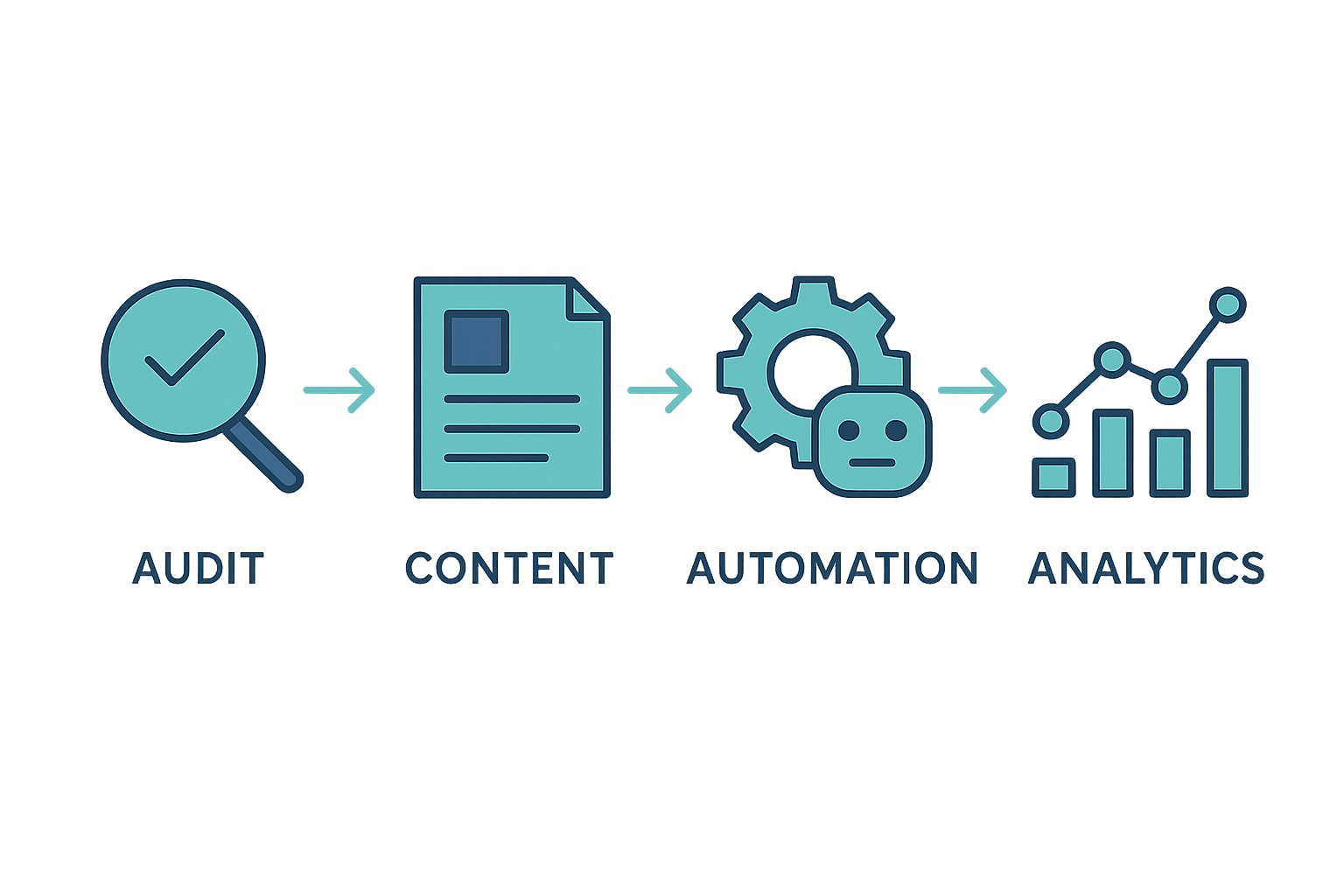
A simplified overview of the process behind implementing AI optimization technology.
Benefits of AI-Powered Search Optimization Tools
Businesses that adopt AI Search Optimization Tools typically gain three advantages: speed, scalability, and consistency. Instead of manually tracking every algorithm shift, automated platforms apply updates continuously, which saves considerable time for marketers and agencies alike.
Furthermore, these tools scale easily across multiple websites, making them practical for agencies managing several client properties at once. In particular, platforms offering a risk-free trial period, such as the seven-day trial available through RankAuthority, let teams test automation before committing long term. As a result, businesses can evaluate real performance data before making a larger investment.
Choosing the Right AI Optimization Platform
When comparing platforms, it helps to consider automation depth, reporting clarity, and whether the tool addresses both GEO and AEO rather than one alone. For example, RankAuthority’s 1-Click AI AutoPilot automates the technical and strategic work that would otherwise require significant in-house expertise, making it accessible to small business owners, digital marketers, entrepreneurs, and agencies alike.
In contrast, some tools focus narrowly on traditional keyword tracking without addressing generative answer visibility. Therefore, it’s worth comparing approaches directly; this comparison of AI-driven SEO versus traditional methods offers useful context for making that decision.
Common Mistakes to Avoid
Even with strong tools, mistakes can limit results. Above all, treating AI optimization as a one-time project rather than an ongoing process is the most common error, since AI models and ranking signals evolve continuously.
Additionally, ignoring structured data, neglecting content freshness, and failing to monitor citation frequency in AI-generated answers can all quietly erode visibility over time. Consequently, regular monitoring paired with automated updates tends to outperform sporadic manual efforts.
Frequently Asked Questions About AI Optimization Technology
What is AI optimization technology?
AI optimization technology is a set of automated tools and algorithms that adjust website content and structure so AI-powered search engines and answer engines can find, understand, and recommend that content more easily.
How is AI optimization technology different from traditional SEO?
Traditional SEO focuses mainly on keyword rankings in classic search results, while AI optimization technology also targets AI Overviews, chatbots, and generative answer engines by structuring content for direct-answer retrieval.
Why does AI optimization technology matter now?
It matters because a growing share of searches are answered directly by AI systems. Brands that ignore these systems risk losing visibility even if they still rank well in classic results.
What is generative engine optimization (GEO)?
GEO is the practice of structuring and writing content so generative AI models can accurately summarize, cite, and recommend it in AI-generated answers.
What is answer engine optimization (AEO)?
AEO focuses on formatting content, such as direct answers and structured data, so answer engines and voice assistants can extract clear responses quickly.
How long does it take to see results from AI-driven optimization?
Most businesses notice measurable visibility improvements within four to eight weeks, though results vary depending on site history, content volume, and competitive niche.
Does AI optimization technology replace traditional SEO?
No. AI optimization technology works alongside traditional SEO, since strong technical foundations still support AI-driven visibility.
How much does AI optimization technology typically cost?
Pricing varies widely by platform and scope, ranging from affordable monthly subscriptions for small sites to higher-tier plans for agencies managing multiple client properties.
What are common mistakes when adopting AI optimization technology?
Common mistakes include ignoring structured data, neglecting content freshness, and treating optimization as a one-time task rather than a continuous process.
Can small businesses benefit from AI optimization technology?
Yes. Small businesses often benefit significantly because automated platforms remove the need for in-house technical expertise, making AI-driven visibility accessible without large teams.
Is AI optimization technology only for large enterprises?
No. It is designed for businesses of all sizes, from solo entrepreneurs to agencies managing dozens of client websites.
How do I measure the success of AI-powered search optimization?
Success is typically measured through visibility in AI Overviews, citation frequency in generative answers, organic traffic trends, and improved rankings for target queries.
What role does structured data play in AI optimization technology?
Structured data, such as schema markup, helps AI systems understand page content contextually, which increases the likelihood of being cited in AI-generated answers.

Automated platforms make AI optimization technology accessible even without a technical background.
Final Thoughts
In summary, AI optimization technology has moved from a novelty to a necessity for businesses that want to stay visible as search continues shifting toward AI-generated answers. By combining generative engine optimization, answer engine optimization, and continuous automation, platforms like RankAuthority make it possible for small business owners, marketers, and agencies to compete without needing deep technical expertise. Ultimately, businesses that adopt AI optimization technology early, and refine it consistently, are best positioned to maintain strong visibility as AI search continues to evolve. To explore automated options firsthand, visit RankAuthority and consider starting with a risk-free trial.

