

Automated generative SEO content is reshaping how businesses create material that both traditional search engines and AI answer tools can find, understand, and cite. Instead of a writer spending hours researching keywords and manually formatting every page, AI-driven systems now handle research, drafting, and on-page optimization in minutes. As a result, small business owners, marketers, and agencies can publish consistently without expanding their teams. This guide explains what automated generative SEO content is, how it works, and how to use it effectively heading into 2026.
Quick answer: Automated generative SEO content is content drafted largely by AI software, then structured, formatted, and tagged with schema markup so it ranks well in search results and gets pulled into AI-generated answers from tools like Google AI Overviews and ChatGPT.
What Is Automated Generative SEO Content?
Automated generative SEO content is content created primarily by AI writing tools, then structured and optimized automatically for search engines, answer engines, and large language models. Specifically, it combines three layers working together: AI drafting, on-page SEO formatting, and machine-readable schema markup (structured code that describes page content to search systems).
This approach connects two related disciplines. Generative Engine Optimization (GEO) focuses on shaping content so AI systems can extract and cite it accurately. In contrast, Answer Engine Optimization (AEO) focuses on structuring direct answers that qualify for featured snippets and voice search results. Automated generative SEO content typically applies both at once, rather than treating them as separate projects.

Automated generative SEO content tools combine AI drafting with technical optimization in one workflow.
Why Automated SEO Content Matters for AI Search
Search behavior has shifted considerably. Today, many users get answers directly from AI summaries rather than clicking through a list of blue links. Google has publicly reported that its AI Overviews feature reaches more than 1.5 billion users monthly across over 100 countries, a scale that makes citation inside those summaries increasingly valuable for visibility (Google Search Central).
Consequently, businesses that rely solely on traditional keyword optimization risk losing visibility to competitors whose content is structured for both search engines and AI models. Automated generative SEO content addresses this gap by applying consistent formatting, definitions, and schema across every published page. Individual results vary depending on niche, competition, and existing site authority, but the underlying strategy applies broadly across industries.
How Automated Generative SEO Content Works
Building a reliable workflow generally follows a repeatable sequence. The steps below outline how most automated generative SEO content platforms, including Rank Authority, approach the process.
- Audit existing content and technical health. A full site audit identifies thin pages, missing schema, broken links, and technical errors before any new content gets generated.
- Identify topic gaps and citation opportunities. Competitor and keyword gap analysis reveal which questions rivals already answer and where AI tools are currently citing other sources.
- Generate structured, answer-first drafts. AI drafting tools produce content that opens with a direct answer, then expands with supporting detail and examples.
- Apply schema markup automatically. Structured data such as Article, FAQ, and HowTo schema helps search engines and AI models interpret the page correctly.
- Publish, submit for indexing, and monitor visibility. After publishing, the page is submitted for indexing and tracked for ranking and AI citation performance over time. Note that submitting a page for indexing does not guarantee inclusion; search engines ultimately decide whether and when to index it.
For a deeper breakdown of this process, see this guide on how automated GEO pages improve AI citations.
Automated Content Creation vs. Traditional SEO Writing
Traditional SEO writing depends on a human researching, drafting, and manually formatting each page, which often takes several hours per article. Automated content creation, by comparison, compresses research and drafting into minutes while applying consistent on-page structure across every piece.
Traditional SEO Writing
Manual research, drafting, and formatting; slower output; variable consistency across writers and pages.
Automated Generative SEO Content
AI-assisted drafting, automated schema, faster publishing cadence, with human review for accuracy.
However, automation does not remove the need for editorial judgment. Human reviewers still verify facts, adjust brand voice, and confirm that claims are accurate before publishing. To understand how teams combine both approaches, review this guide on how to streamline an SEO strategy using AI.
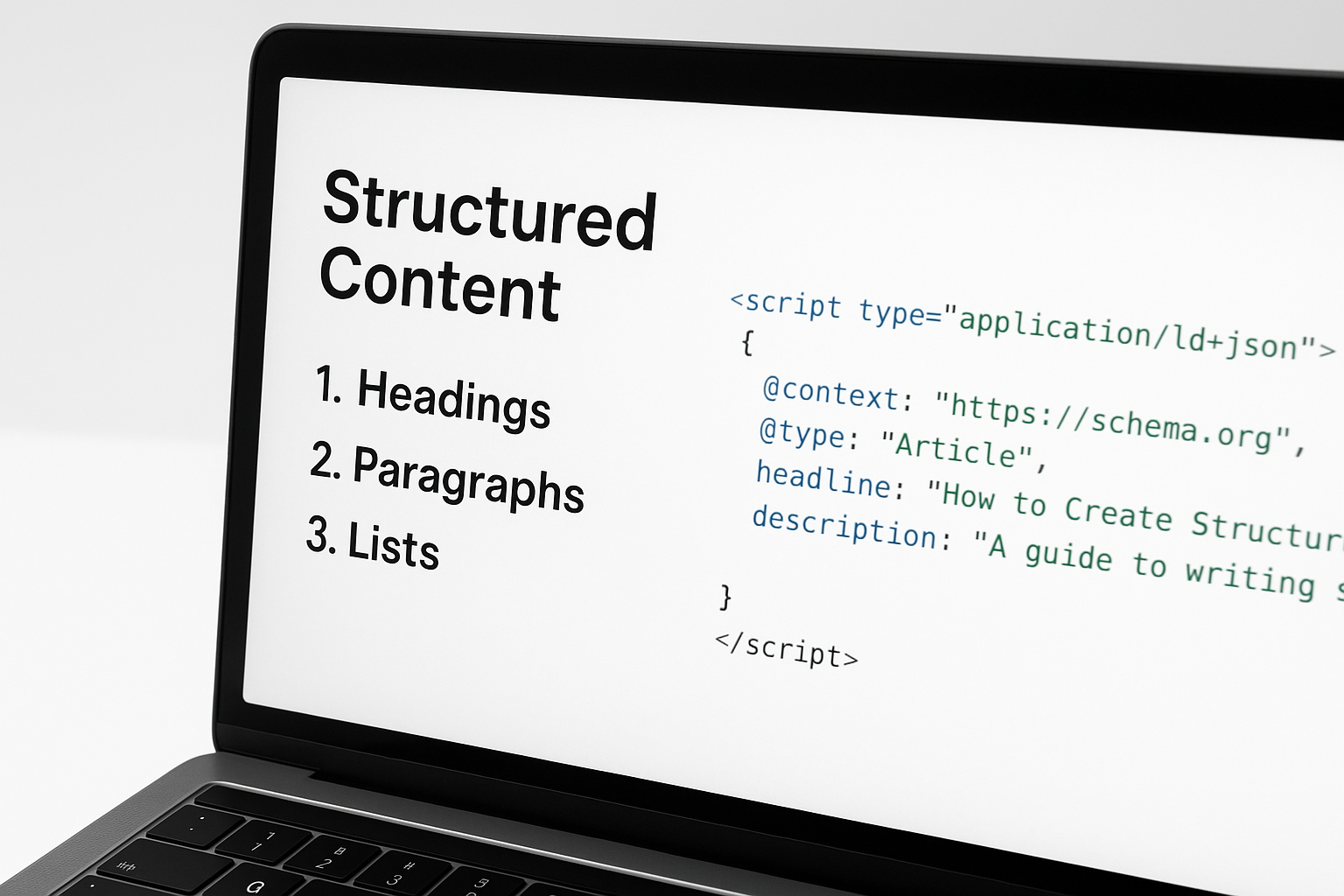
Structured headings paired with schema markup help automated generative SEO content get cited accurately.
Best Practices for AI SEO Content Automation
Above all, successful automation depends on structure and review discipline, not just speed. The following practices consistently improve both rankings and AI citation rates.
- Open every page with a direct, concise answer before adding supporting detail.
- Define technical terms on first use so both readers and AI models understand context.
- Apply schema markup consistently across every published page, not just a handful.
- Build internal links between related pages to reinforce topical authority.
- Review AI drafts for accuracy, originality, and brand voice before publishing.
Furthermore, pairing automation with a documented content plan keeps output consistent. This automated content strategy guide outlines how to plan topics around AI search growth rather than publishing randomly.
Common Mistakes to Avoid With Automated Generative SEO Content
Despite its advantages, automated generative SEO content can underperform when teams skip key steps. One frequent mistake is publishing AI drafts without any human review, which risks factual errors slipping through. Similarly, skipping schema markup leaves pages harder for AI systems to interpret, even when the writing itself is strong.
In addition, many sites ignore internal linking, which weakens topical authority signals across related pages. According to general guidance from Wikipedia’s overview of search engine optimization, structured site architecture remains a core ranking factor, and that principle extends directly to AI-driven content strategies.
Tools That Power Automated Generative SEO Content
Several platforms now combine AI drafting with technical optimization. Rank Authority, for example, brings SEO, GEO, and AEO together through features like 1-Click AI AutoPilot for automated technical fixes, AI Blog Builder for publishing optimized articles, RankFast for rewriting pages to outrank competitors, and RankLink for internal linking automation.
Specifically, the platform also includes free diagnostic tools such as an AI Visibility Checker and Site Audit Checker, which help businesses measure a starting point before automating content at scale. Anyone exploring options can try the Rank Authority platform through its seven-day trial. For additional context on evaluating platforms, see this complete guide to AI-based SEO content tools and this list of tools that streamline SEO processes.

Human review remains an important step even within an automated generative SEO content workflow.
Frequently Asked Questions About Automated Generative SEO Content
What is automated generative SEO content?
Automated generative SEO content is written and optimized primarily by AI software so it ranks in search engines and gets cited by AI answer tools. It combines AI drafting, on-page SEO formatting, and schema markup in one automated workflow.
How does automated generative SEO content differ from traditional SEO copywriting?
Traditional SEO copywriting relies on a human researching, drafting, and formatting each page manually. Automated generative SEO content uses AI systems to handle research, drafting, and technical optimization in minutes, with humans reviewing for accuracy.
How much does automated generative SEO content cost?
Costs vary widely depending on the platform, ranging from free tools with limited features to subscription plans for agencies managing multiple sites. Many platforms, including Rank Authority, offer a free trial so businesses can test results first.
How long does it take to see results from automated generative SEO content?
Most businesses notice improved indexing and content output within weeks, while ranking and AI citation gains typically build over one to three months. Individual results vary based on site history, competition, and niche.
Can automated generative SEO content get cited by AI tools like ChatGPT and Google AI Overviews?
Yes, when content is structured with clear definitions, direct answers, and schema markup, it becomes easier for AI answer engines to extract and cite. This structuring process is the core goal of Generative Engine Optimization.
What are common mistakes businesses make with automated generative SEO content?
Common mistakes include publishing AI drafts without human review, skipping schema markup, and ignoring internal linking. These gaps reduce both search rankings and AI citation potential.
Does automated generative SEO content still need human review?
Yes, human review remains important for accuracy, brand voice, and factual verification. Automation speeds up drafting and formatting, but editorial oversight protects quality and trust.
What is the difference between GEO and AEO in automated generative SEO content?
Generative Engine Optimization focuses on making content citable by AI models, while Answer Engine Optimization focuses on structuring direct answers for featured snippets and voice search. Automated generative SEO content typically applies both approaches together.
Which platforms help automate generative SEO content creation?
Platforms such as Rank Authority combine AI drafting, schema automation, and visibility tracking into one dashboard. Features like AI Blog Builder and 1-Click AI AutoPilot handle much of the technical and content work automatically.
Will automated generative SEO content hurt my rankings if it is AI-written?
Search engines do not penalize content simply for being AI-assisted; they evaluate helpfulness, accuracy, and originality. As a result, well-reviewed automated generative SEO content can rank as effectively as manually written content.
How does schema markup support automated generative SEO content?
Schema markup is structured code that explains page content to search engines and AI systems in a machine-readable format, as documented by Schema.org. It helps automated generative SEO content qualify for rich results, featured snippets, and AI answer citations.
What is the best practice for structuring automated generative SEO content?
Lead with a direct, concise answer, then expand with supporting detail, examples, and data. This answer-first structure matches how AI answer engines and featured snippets extract information.
Can small businesses benefit from automated generative SEO content?
Small businesses often benefit the most, since automation removes the need for a full in-house SEO team. It allows limited marketing staff to publish optimized content consistently without a steep learning curve.
How do I measure the success of automated generative SEO content?
Track organic rankings, indexing status, and AI citation appearances using visibility monitoring tools. Reviewing a diagnostic report, such as an RA Score, helps identify what is working and what needs adjustment.
Final Thoughts
In summary, automated generative SEO content gives businesses a practical way to keep pace with both traditional search rankings and the growing presence of AI answer engines. By combining AI drafting with schema markup, internal linking, and consistent human review, teams can publish faster without sacrificing accuracy or quality. As AI search continues to expand, treating automated generative SEO content as an ongoing process, rather than a one-time project, will matter most for sustained visibility. Reviewing options like Rank Authority’s free diagnostic tools is a reasonable first step for teams ready to start. Individual results vary, but a structured, well-reviewed approach consistently gives content the best chance to be seen and cited.

