

Learning how to maintain ongoing SEO optimization with AI has become essential now that search rankings shift week to week rather than once a year. Google alone pushes thousands of algorithm updates annually, and AI-powered answer engines like AI Overviews, ChatGPT, and Perplexity now influence where customers discover businesses. Consequently, a one-time SEO audit no longer keeps a website visible for long. Instead, businesses need a continuous system that monitors rankings, fixes technical issues, and refreshes content automatically. In this guide, you will learn exactly how artificial intelligence makes ongoing optimization realistic for small businesses, marketers, and agencies, without requiring a full-time SEO team.
QUICK ANSWER
How to maintain ongoing SEO optimization with AI is best described as a continuous cycle of automated monitoring, technical fixes, content refreshes, and AI visibility tracking that keeps a website competitive in both traditional search and AI answer engines. Platforms like Rank Authority automate this entire cycle, so rankings keep improving instead of quietly decaying over time.
What Is Ongoing SEO Optimization With AI?
Ongoing SEO optimization with AI is the practice of using automated tools and machine learning to continuously monitor, adjust, and improve a website’s search performance, rather than relying on periodic manual audits. In other words, instead of fixing issues once a quarter, software watches your site constantly and acts on problems as they appear.
This approach typically combines technical SEO automation, structured data generation, content freshness tracking, and visibility monitoring across both classic search engines and newer AI answer platforms. For example, a tool might detect a slow-loading page, generate schema markup automatically, and flag an outdated statistic for content refresh, all without a developer touching the code manually.
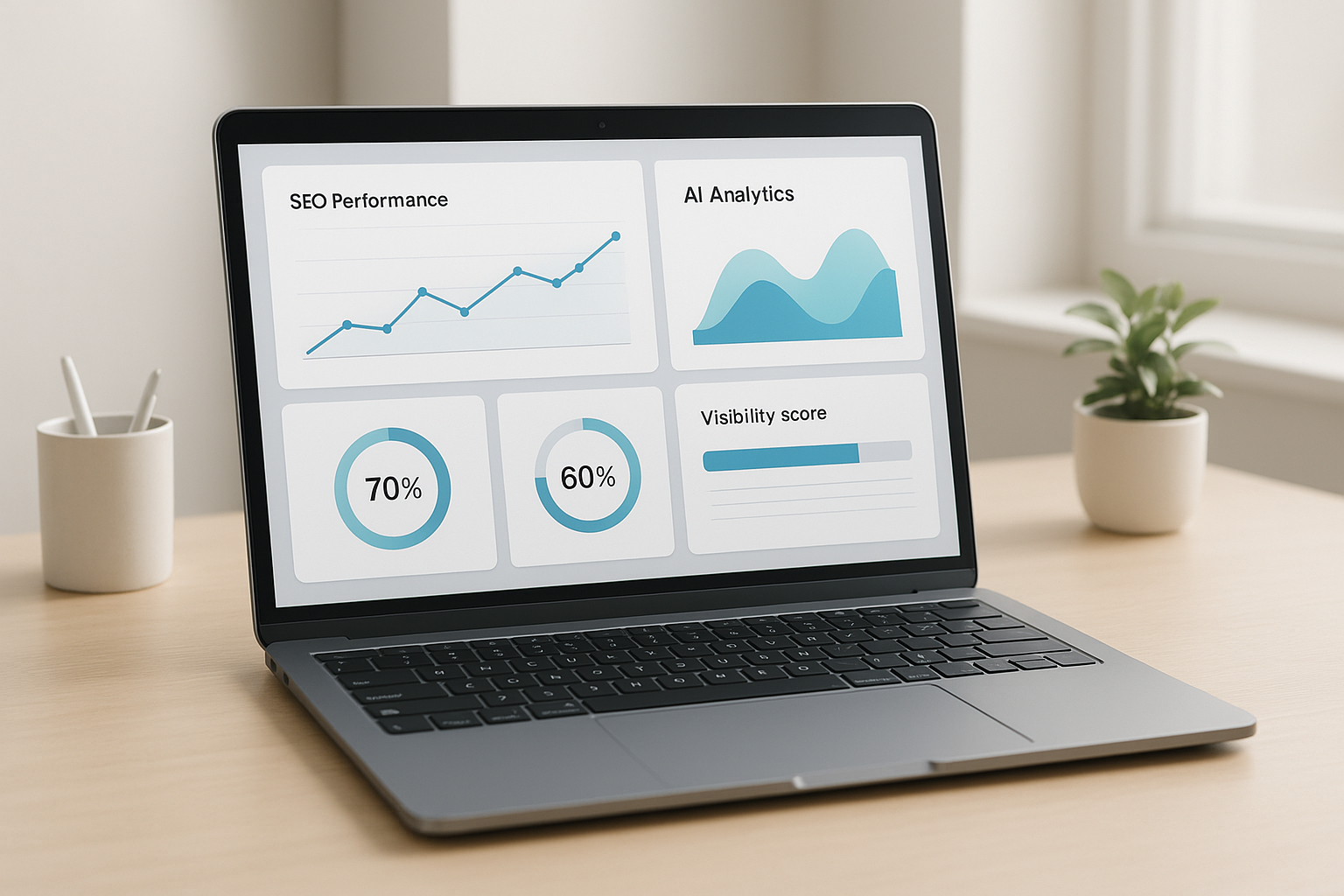
A real-time dashboard is central to how to maintain ongoing SEO optimization with AI, since it surfaces issues as they happen.
Why Continuous SEO Monitoring Matters More Than Ever
Search no longer behaves like a static system. According to Google’s Search Central documentation, the company makes thousands of changes to its search algorithms every year, many of which affect ranking signals in subtle ways. As a result, pages that were optimized correctly last quarter can quietly lose visibility without any obvious warning.
Meanwhile, AI answer engines are reshaping how people find information in the first place. Industry analysts, including Gartner, have projected meaningful declines in traditional search engine volume as users increasingly turn to AI chatbots and virtual assistants for answers. In contrast, static SEO strategies built only for classic search results risk missing this entire shift. Therefore, maintaining visibility now requires watching both ranking positions and AI citation performance at the same time.
For a deeper look at how automation responds to these shifts as they happen, see this guide on real-time SEO adjustments and how AI automation wins.
How to Maintain Ongoing SEO Optimization With AI: 6 Steps
Maintaining visibility does not require constant manual labor. Specifically, the following six-step process shows how automated tools handle the repetitive work while you focus on strategy and growth.
- Run a continuous AI site audit. Automated scanning tools check technical health, schema coverage, page speed, and content gaps on an ongoing basis instead of a single annual review.
- Automate technical fixes. Tools such as 1-Click AI AutoPilot streamline approved corrections for broken links, missing metadata, and slow pages without requiring an in-house developer team.
- Monitor rankings and AI citations in real time. Track keyword positions alongside AI visibility, so you know whether your brand is being cited inside AI Overviews and chatbot answers, not just classic search results.
- Refresh and expand content on a schedule. Update statistics, examples, and answers regularly so pages continue matching current search intent and stay eligible for AI citation.
- Automate internal linking and topical structure. Tools like RankLink connect related pages into clear topic clusters, which helps both search engines and AI systems understand your site’s authority on a subject.
- Track competitors and close keyword gaps. Ongoing competitor analysis identifies topics rivals rank for that you do not, allowing you to prioritize new content where it will have the most impact.
Notably, this process mirrors the broader automation approach discussed in how to automate SEO processes effectively, which covers workflow setup in more detail.
Using AI Tools to Track SEO Performance in Real Time
Once automation is running, visibility into results becomes just as important as the fixes themselves. Specifically, a good monitoring dashboard should show ranking trends, technical health scores, and AI citation activity in one place, rather than scattered across multiple tools.
For instance, a Rank Authority Score (RA Score) summarizes overall site health into a single measurable figure, which makes it easier to track progress over weeks and months. In addition, tools like RankFast analyze competitor pages directly, highlighting where a rival outranks you and suggesting rewrites to close that gap. Individual results vary, and reviews reflect individual user experiences rather than guaranteed outcomes for every website.

Scheduling content refreshes is one of the simplest ways small teams maintain ongoing SEO optimization with AI assistance.
Expanding Into GEO and AEO for Long-Term Visibility
Traditional ranking signals alone no longer capture the full picture. Generative Engine Optimization (GEO), which focuses on earning citations inside AI-generated answers, and Answer Engine Optimization (AEO), which structures content for featured snippets and AI answer boxes, now work alongside classic SEO rather than replacing it.
Practically speaking, this means building dedicated artifact pages designed for AI citation, formatting direct answers near the top of key pages, and generating structured data automatically so AI systems can parse content accurately. According to the Wikipedia entry on search engine optimization, structured markup has become an increasingly central part of how machines interpret web content, which underscores why schema automation matters for ongoing visibility.
For a broader view of how artificial intelligence changes strategic priorities, see how AI enhances SEO strategies and results, and for content-specific guidance, review this complete guide to AI content writing for SEO.
Common Mistakes to Avoid When Automating SEO With AI
Automation removes most of the manual workload, but it still requires oversight. The following mistakes most often undermine otherwise solid AI SEO efforts.
- Approving every AI-suggested change without a quick human review of brand tone and accuracy.
- Ignoring content freshness, which allows outdated statistics and examples to linger on high-traffic pages.
- Focusing only on traditional rankings while overlooking AI answer engine citations entirely.
- Skipping schema markup implementation, which limits how clearly AI systems can parse page content.
- Treating a single audit as “finished” instead of building a recurring, automated monitoring routine.
To see additional benefits automation brings when these pitfalls are avoided, review this overview of what benefits AI offers in SEO strategies.
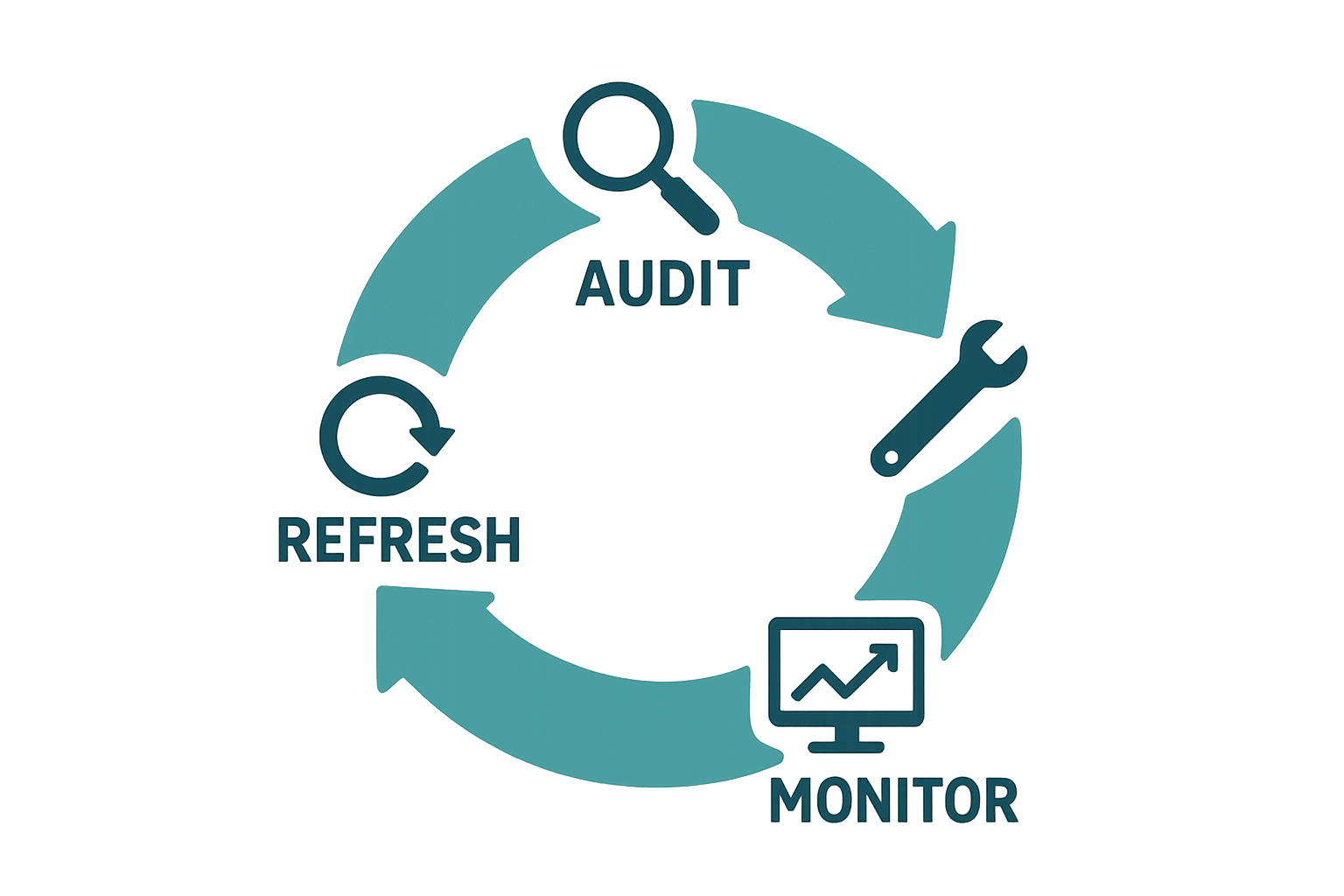
Ongoing optimization works as a repeating cycle rather than a single project.
Frequently Asked Questions About How to Maintain Ongoing SEO Optimization With AI
How to maintain ongoing SEO optimization with AI: where should you start?
To maintain ongoing SEO optimization with AI, start with a full site audit that identifies technical errors, missing schema, and content gaps. From there, automate recurring fixes and monitoring so improvements continue without manual effort.
How often should AI tools audit a website for SEO issues?
Most AI-driven platforms scan sites continuously or on a weekly schedule, since technical issues and ranking shifts can occur at any time. Continuous scanning catches problems faster than quarterly manual audits.
Why is continuous SEO optimization more important now than in the past?
Search algorithms and AI answer engines update far more frequently than they once did, so static optimization quickly becomes outdated. Continuous optimization keeps a site aligned with current ranking and citation signals.
How is ongoing SEO optimization with AI different from traditional SEO?
Traditional SEO often relies on periodic manual audits and one-time fixes, while AI-driven optimization runs continuously in the background. AI also extends optimization into GEO and AEO, which traditional methods rarely address.
How much does AI-powered SEO automation typically cost?
Pricing varies by provider and the number of sites managed, but many platforms offer accessible monthly plans and free trial periods. Rank Authority, for example, offers a seven-day risk-free trial before committing to a paid plan.
How long does it take to see results from ongoing AI SEO optimization?
Technical fixes can show measurable improvements within a few weeks, while content and authority gains typically build over several months. Individual results vary, and reviews reflect individual user experiences rather than guaranteed outcomes for every site.
What are the most common mistakes businesses make when automating SEO with AI?
Common mistakes include approving every AI-suggested change without review, ignoring content freshness, and focusing only on traditional search while ignoring AI answer engines. Skipping schema markup implementation is another frequent oversight.
What is the difference between GEO, AEO, and traditional SEO?
Traditional SEO focuses on ranking in classic search results, while Generative Engine Optimization (GEO) focuses on earning citations inside AI-generated answers. Answer Engine Optimization (AEO) structures content and schema so it can be pulled directly into featured snippets and AI answer boxes.
Can AI replace human SEO strategists entirely?
AI automates the repetitive technical and monitoring work, but strategic decisions about brand voice and priorities still benefit from human oversight. Most businesses get the best results by combining AI automation with periodic human review.
What tools help track AI search visibility and citations?
AI visibility checkers and citation tracking tools monitor whether a brand appears in AI Overviews, chatbot answers, and other AI search environments. These tools help businesses see where they are being cited and where competitors are gaining ground.
How does schema markup support ongoing AI SEO efforts?
Schema markup is structured code that helps search engines and AI systems understand page content more precisely. Automated schema generation keeps this markup current as pages change, supporting both traditional rankings and AI citation eligibility.
What best practices keep AI-driven SEO sustainable long term?
Sustainable AI SEO combines continuous monitoring, regular content refreshes, internal linking automation, and periodic human review of AI-suggested changes. Tracking a measurable score, such as an RA Score, also helps teams see progress over time.
Does Google guarantee indexing of pages submitted through automation tools?
No. Automation tools can submit pages and changes for indexing, but Google alone determines whether and when a page is actually indexed. Submission improves the odds of timely discovery but does not guarantee it.
How does content freshness affect ongoing SEO performance?
Search engines and AI answer systems tend to favor current, accurate information over outdated pages. Regularly refreshing statistics, examples, and page content signals ongoing relevance and supports continued visibility.
Final Thoughts: Building a Sustainable AI SEO Routine
Ultimately, learning how to maintain ongoing SEO optimization with AI comes down to building a repeatable cycle rather than chasing a single perfect audit. Continuous monitoring catches problems early, automated fixes handle recurring technical work, and scheduled content refreshes keep pages relevant to both search engines and AI answer platforms.
In addition, expanding into GEO and AEO ensures visibility extends beyond classic rankings into the AI answer environments where more customers now search. For teams that want this entire process automated in one dashboard, exploring how AI enhances broader strategy, as outlined in this benefits overview, is a reasonable next step. You can also run a free diagnostic scan at Rank Authority to establish a baseline before automating the rest of the process.

