

You do not need a four-figure monthly software budget to dominate search rankings. The best affordable SEO tools — chosen with purpose — deliver professional-grade results for a fraction of what enterprise platforms charge.
The best affordable SEO tools give small businesses and independent marketers the ability to rank on Google without overspending. Affordable SEO tools are software platforms that deliver professional search engine optimization capabilities — including keyword research, technical site auditing, rank tracking, and backlink analysis — at price points typically under $100 per month. In short, affordable SEO tools are the strategic equalizer between small teams and large-budget competitors. Whether you are just starting your SEO journey or scaling a lean operation, knowing which tools genuinely deliver is one of the most consequential decisions you will make for your organic search growth.
⚡ Quick Answer
The most capable affordable SEO tools combine keyword research, site auditing, rank tracking, and competitor analysis in a single low-cost subscription. Platforms like SE Ranking, Mangools, Ubersuggest, and Mangools KWFinder deliver 80–90% of enterprise-level functionality at 10–20% of the cost — making them the smart choice for small businesses, freelancers, and growing agencies.

A well-chosen set of affordable SEO tools gives small business owners the same strategic visibility as much larger competitors.
What Are Affordable SEO Tools?
Affordable SEO tools is a software category designed to make search optimization accessible without the enterprise price tag. Specifically, this term covers everything from freemium browser extensions and standalone keyword tools to full-featured SaaS platforms priced under $100 per month. According to Wikipedia’s overview of search engine optimization, SEO encompasses a broad range of technical and creative practices — and the right toolset helps practitioners execute those practices efficiently, regardless of budget.
The key distinction between affordable and enterprise tools is not accuracy — it is scale and data freshness. For example, a tool like Ahrefs crawls billions of pages daily, whereas a budget alternative may refresh its index weekly. However, for a local business or a niche content site, that difference rarely matters in practice. What matters, therefore, is whether the tool helps you find keyword opportunities, fix technical problems, and track progress over time. The best budget options do exactly that.
Who Should Use Budget SEO Software?
Affordable SEO tools are the right choice for a wide range of users. In particular, these platforms serve:
- Small business owners running their own websites and content marketing with limited budgets
- Freelance SEO consultants managing multiple client sites without the overhead of enterprise licensing
- Content marketers and bloggers who need keyword research and rank tracking but not agency-scale data volumes
- Early-stage startups prioritizing organic growth before they can justify a $500+/month tool investment
- Local SEO practitioners focused on specific geographic markets where granular national data is unnecessary
- Digital marketing students and professionals building skills without corporate tool budgets
The 6 Core Features to Look for in Affordable SEO Tools
Not every tool needs to do everything. Before selecting a platform, identify which SEO activities consume most of your time and which capability gaps are costing you rankings. Consequently, here are the six features that matter most when evaluating affordable SEO tools:
🔍 Keyword Research
Search volume, keyword difficulty scores, SERP feature data, and long-tail suggestions. The foundation of any content or on-page strategy.
🛠 Technical Site Auditing
Crawl error detection, broken links, duplicate content flags, page speed issues, and on-page optimization checks at scale.
📈 Rank Tracking
Daily or weekly position monitoring across target keywords, locations, and devices. Essential for measuring SEO progress over time.
🔗 Backlink Analysis
Identify who links to you and your competitors. Spot link-building opportunities and monitor your domain authority growth.
🏢 Competitor Analysis
Reveal which keywords competitors rank for, their top-performing pages, and where content gaps exist in your own strategy.
✍️ On-Page Optimization
Title tag and meta description recommendations, heading structure analysis, internal linking suggestions, and content scoring tools.
Best Affordable SEO Tools in 2025: Full Comparison
Below is a comprehensive, honest comparison of the most capable low-cost SEO platforms available today. Prices reflect entry-level paid tiers as of 2025. Furthermore, each tool is assessed against its real-world utility for small businesses — not just its feature list.
SE Ranking: The Best All-in-One Affordable SEO Tool
SE Ranking consistently earns the top spot in the affordable SEO tools category because it packs enterprise-level capabilities into a genuinely budget-friendly platform. Specifically, it offers daily rank tracking across search engines and locations, a comprehensive site audit module, a robust keyword research database, competitor gap analysis, and — as of 2024 — integrated AI writing and content optimization tools. For a small business spending around $52 per month, therefore, SE Ranking delivers an extraordinary range of capability.
Mangools / KWFinder: Best for Keyword Research on a Budget
Mangools is a suite of five interconnected tools — KWFinder, SERPChecker, SERPWatcher, LinkMiner, and SiteProfiler. However, most users find KWFinder to be the headline product. It is particularly effective for identifying low-competition keyword opportunities with visual difficulty scores that non-technical users can interpret at a glance. At approximately $29 per month, it represents one of the most accessible entry points into professional keyword intelligence.
Ubersuggest: Best for Content Strategy on a Tight Budget
Neil Patel’s Ubersuggest has evolved well beyond a basic keyword tool. In addition to volume and difficulty data, it now includes a content ideas module that surfaces high-traffic articles in any niche, a site audit feature, and basic backlink tracking. Its lifetime deal option (a one-time fee of around $290) makes it particularly cost-effective for users who want to avoid recurring monthly subscriptions altogether.
Screaming Frog SEO Spider: Best Free Technical SEO Tool
Screaming Frog’s desktop crawler is arguably the most powerful free technical SEO tool available for sites under 500 pages. It audits your site for broken links, redirect chains, duplicate content, missing meta tags, and dozens of other crawl-level issues that directly affect indexability and rankings. Consequently, for any site owner doing serious technical SEO, Screaming Frog’s free tier is non-negotiable.
Ahrefs Webmaster Tools: Free Backlink Intelligence
Most people associate Ahrefs with its expensive paid tiers ($99–$399/month). However, Ahrefs Webmaster Tools — the free tier available to verified site owners — is one of the most underused affordable SEO resources available. It gives you full access to your own site’s backlink profile, domain rating, organic keyword positions, and a comprehensive site audit. For monitoring your own site’s health and link profile without paying, it is unmatched.
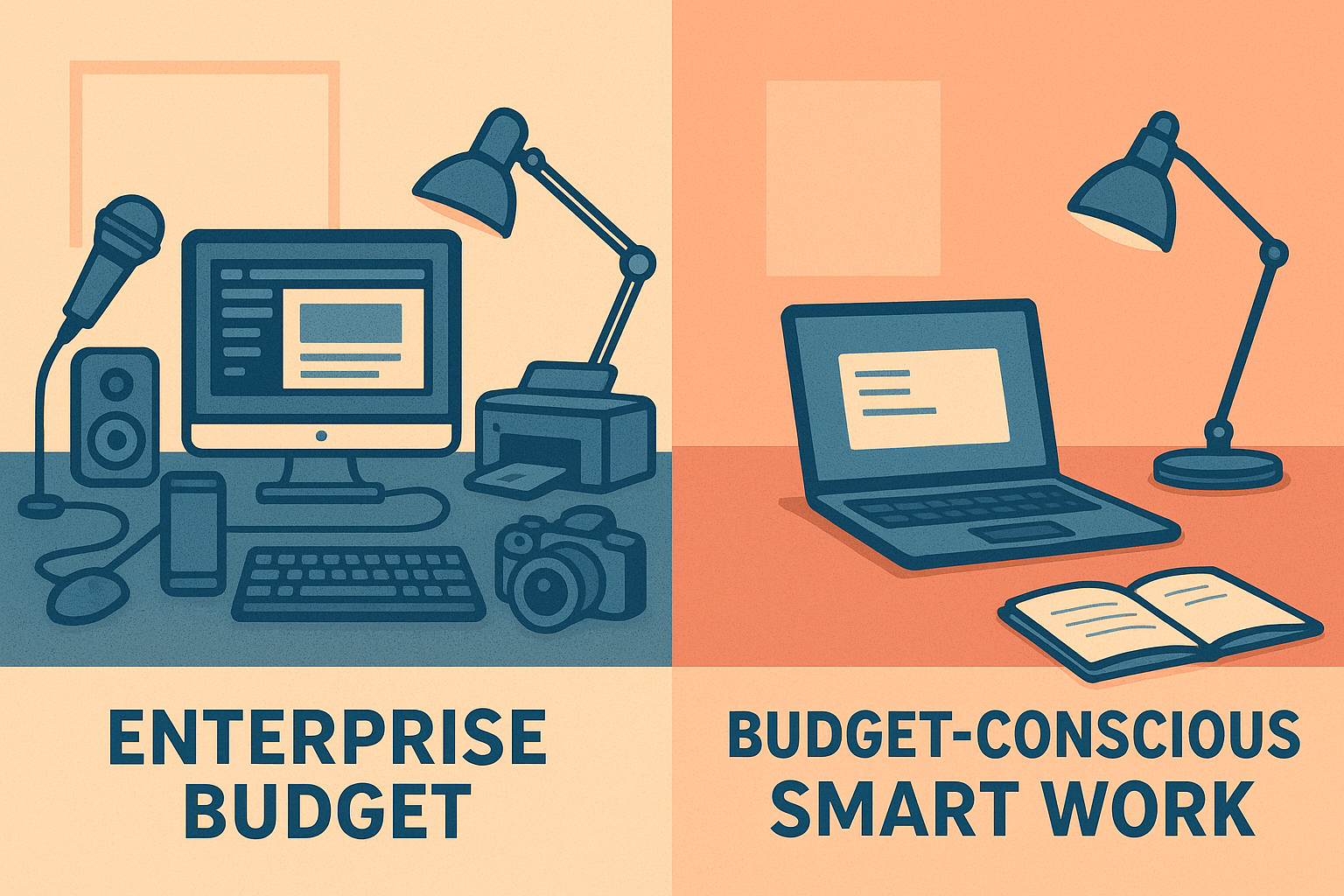
Smart tool selection beats big budgets — the right affordable SEO tools level the playing field for smaller teams.
How to Build a Complete SEO Stack Under $100/Month
The most cost-effective approach is not to find one tool that does everything passably. Instead, the winning strategy is to layer two or three specialized tools that each perform their core function exceptionally well. Here is a proven $60–$80/month stack that covers every major SEO need:
- Google Search Console (Free) — Your non-negotiable baseline. Impressions, clicks, Core Web Vitals, index coverage, and manual action alerts. Every SEO effort starts here.
- Google Analytics 4 (Free) — Behavioral data, conversion tracking, and traffic attribution. Validates your SEO work with real business outcomes, not just ranking data.
- SE Ranking (~$52/mo) — Handles rank tracking, keyword research, site auditing, and competitor gap analysis in one dashboard. The strongest value-to-feature ratio in the affordable SEO tools category.
- Screaming Frog Free Tier (Free) — Crawl up to 500 URLs for deep technical auditing. Upgrade to the paid version (£259/year) only when your site outgrows the free limit.
- Ahrefs Webmaster Tools (Free) — Free backlink monitoring and site audit for your own verified domain. Adds enterprise-grade link intelligence at zero additional cost.
This five-tool stack covers keyword intelligence, technical health monitoring, rank visibility, backlink tracking, and performance analytics — the complete picture — for roughly the cost of a weekly dinner out. Furthermore, for teams exploring AI-assisted SEO workflows, pairing these tools with an AI-driven strategy layer can multiply output significantly. The team at Rank Authority’s guide to AI SEO software and real-world wins outlines exactly how to integrate automation without abandoning the fundamentals.
💡 Pro Tip: Before committing to any paid plan, always use the free trial. Most reputable affordable SEO tools offer 7–14 day trials. Run a full site audit, track 20–30 keywords, and pull competitor data during that window. Evaluate real-world fit before paying a single cent.
Can Free SEO Tools Replace Paid Affordable SEO Tools?
Free tools are genuinely powerful — but they have real ceilings. Google Search Console tells you what keywords are already driving traffic; however, it does not help you discover new keyword opportunities or analyze competitors. Google Keyword Planner provides only broad volume ranges, not the precise difficulty scores and SERP analysis that strategic keyword selection requires. Similarly, free tiers of paid tools often limit the number of queries, keywords tracked, or pages crawled per month.
The sweet spot for most small businesses is therefore a hybrid model: use free tools for monitoring and validation, and invest in one affordable paid platform for prospecting, competitor research, and auditing. That combination keeps costs low while eliminating the blind spots that free-only setups inevitably create.
Free SEO Tools Worth Using in 2025
- Google Search Console — First-party data on impressions, clicks, position, and indexing status. Non-negotiable for any site.
- Google Analytics 4 — Behavior flow, conversion attribution, and audience insights. Pairs directly with Search Console for a complete traffic picture.
- Ahrefs Webmaster Tools — Free backlink analysis and site audit for verified site owners. Adds significant link intelligence at zero cost.
- Screaming Frog Free Tier — Up to 500 URL crawls for technical auditing. Sufficient for most small business sites.
- Google PageSpeed Insights — Free Core Web Vitals analysis and technical performance recommendations, directly from Google’s own infrastructure.
- AnswerThePublic (limited free) — Visualizes the questions and phrases people search around any keyword topic. Excellent for content ideation.
- Rank Math Free (WordPress) — On-page SEO scoring, schema markup generation, and XML sitemap creation inside WordPress at no cost.
Affordable SEO Tools for Specific Use Cases
Different SEO goals require different tools. Consequently, rather than recommending a one-size-fits-all solution, here is a breakdown of the best affordable SEO tools by specific use case:
Best Affordable SEO Tools for Local SEO
Local SEO requires tools that track map pack rankings, monitor Google Business Profile performance, and analyze local citation consistency. Specifically, the best affordable options for local SEO include:
- SE Ranking — Includes local rank tracking by city or ZIP code, plus competitor monitoring for map pack positions
- BrightLocal (~$29/mo) — Purpose-built for local SEO, with citation tracking, reputation monitoring, and local rank tracking in one dashboard For a deeper walkthrough, see our AEO Services for Local Businesses: The Complete Guide.
- Google Business Profile (Free) — The primary signal source for local search. Optimizing your profile is the single highest-ROI action for local SEO
Best Affordable SEO Tools for Bloggers and Content Creators
Content-focused users need tools that prioritize keyword opportunity identification, content gap analysis, and on-page optimization scoring. As a result, the most suitable affordable tools for bloggers include:
- Mangools KWFinder — Intuitive keyword research with visual difficulty indicators and SERP preview
- Ubersuggest — Content ideas module surfaces proven topics and shows estimated traffic potential
- Rank Math — Real-time on-page optimization scoring while writing inside WordPress
- AnswerThePublic — Generates question-based keyword ideas to target featured snippets and voice search
Best Affordable SEO Tools for E-Commerce Sites
E-commerce SEO requires attention to product page optimization, category structure, crawl efficiency, and structured data. Therefore, these affordable tools are particularly well-suited:
- Screaming Frog — Audits large product catalogs efficiently, identifies duplicate content and thin pages common in e-commerce
- SE Ranking — Tracks rankings across thousands of product keywords at scale within its affordable pricing tiers
- Google Search Console — Free rich result status monitoring and structured data validation, critical for product schema and review snippets
Affordable SEO Tools for AI-Powered and Modern Search
The search landscape is shifting rapidly. Google’s AI Overviews, Bing Copilot, and the rise of answer engine optimization (AEO — the practice of optimizing content to appear in AI-generated answer summaries) are changing which signals matter most. As a result, budget-conscious marketers increasingly need tools that surface not only traditional keyword data but also content gap analysis, semantic relevance signals, and structured data recommendations.
Several affordable platforms are already incorporating AI features into their core workflows. SE Ranking, for instance, has added AI writing assistants, SERP feature tracking, and content optimization scoring. Similarly, Rank Math includes AI-powered content analysis for WordPress users. For a deeper strategic framework around optimizing for AI-powered search, the Rank Authority guide on AI search engine optimization strategies and ROI is an essential read alongside any tool selection process.
What AI Features Should Affordable SEO Tools Include?
- AI content scoring — Analyzes your draft content against top-ranking competitors and suggests improvements for semantic depth
- SERP feature tracking — Monitors which keywords trigger AI Overviews, featured snippets, or People Also Ask boxes — critical data for modern optimization
- Semantic keyword clustering — Groups related keywords by topic so you can plan content that satisfies broader search intent
- Automated audit alerts — Sends notifications when technical issues or ranking drops are detected, reducing manual monitoring time

Modern affordable SEO tools increasingly incorporate AI features to help marketers navigate semantic search and AI-driven SERPs.
How to Evaluate Affordable SEO Tools Before Buying
Choosing the wrong tool wastes both money and time. Therefore, before committing to any paid subscription, run through this systematic evaluation process:
- Define your primary SEO bottleneck. Are you struggling to find keywords? Fix technical issues? Track rankings? Identify your biggest gap first — that determines which tool category to prioritize.
- Start a free trial, not a subscription. Most reputable affordable SEO tools offer 7–14 day free trials. Use that window to run a real audit on your own site, track your actual target keywords, and pull competitor data.
- Test the specific features you need. Do not be distracted by features you will never use. Evaluate whether the tool’s core function — the one you need most — works accurately and intuitively.
- Check data accuracy with Google Search Console. Cross-reference the tool’s keyword position data against your GSC data. If the numbers are wildly misaligned, be cautious about data reliability.
- Evaluate the learning curve honestly. A powerful tool you will not use consistently is worse than a simpler tool you use every week. Choose the platform that fits your workflow and skill level.
- Review upgrade pricing before you start. Some affordable SEO tools have low entry prices but steep upgrade costs as your needs grow. Understand the full pricing ladder before committing.
Affordable SEO Tools vs. Enterprise Platforms: Where the Line Is
Understanding where affordable tools genuinely compete — and where they fall short — prevents the frustration of expecting enterprise-grade outputs from budget platforms. Here is an honest breakdown:
Where Affordable Tools Match Enterprise Platforms
- Keyword research for small to mid-sized sites — Directional accuracy is sufficient for most content decisions
- Site auditing fundamentals — Crawl errors, broken links, missing tags, and redirect issues are identified just as effectively
- Rank tracking accuracy — Position monitoring is comparable; the difference is in the number of keywords you can track simultaneously
- On-page optimization guidance — Title tag, meta description, and content recommendations are equally actionable
Where Enterprise Platforms Pull Ahead
- Backlink database size and freshness — Ahrefs and Semrush crawl far more web pages daily; their link indexes are significantly larger
- Historical data depth — Enterprise tools often store years of ranking and traffic data; many budget tools have shorter lookback windows
- API access and custom reporting — Agencies managing hundreds of clients need programmatic data access that affordable tools rarely provide
- Advanced competitive intelligence — For highly competitive national or global markets, enterprise-scale data genuinely matters for gap analysis
For the vast majority of small businesses, however, these enterprise advantages are irrelevant to their day-to-day SEO execution. Consequently, investing in enterprise tools prematurely is one of the most common and costly mistakes small business SEO practitioners make.
Frequently Asked Questions About Affordable SEO Tools
How much should a small business spend on SEO tools?
Most small businesses can build a highly effective SEO workflow for $30 to $99 per month. The most efficient approach combines one paid affordable SEO tool with free resources like Google Search Console, Google Analytics 4, and Ahrefs Webmaster Tools. Spending more only makes sense when you have exhausted your current stack’s capabilities.
Are affordable SEO tools accurate for keyword research?
Yes — with an important caveat. Affordable SEO tools pull data from third-party indexes and Google’s own APIs, making their keyword volume and difficulty estimates accurate enough for practical decision-making. Directional accuracy is what matters most. You are identifying relative opportunity and competitive landscape, not predicting traffic to a precise decimal. For small to mid-sized sites, these estimates are more than sufficient.
Is Semrush or Ahrefs worth it for a small business?
Semrush and Ahrefs are industry gold standards — however, their entry plans start at $139 and $129 per month respectively. For most small businesses, the incremental data quality over affordable alternatives does not justify that cost difference. Start with a budget-friendly platform and upgrade only when your team has genuinely outgrown its limitations.
What is the single best free SEO tool available?
Google Search Console is the most valuable free SEO tool bar none. It provides direct, first-party data from Google on how your site is indexed, which queries trigger impressions, click-through rates by page, and critical technical issues. No third-party tool can replicate the authority or accuracy of that data. If you use only one SEO tool, make it this one.
Can I do SEO without any paid tools at all?
Yes — to a point. Google Search Console, Google Analytics 4, Ahrefs Webmaster Tools, Screaming Frog’s free tier, and Rank Math Free collectively cover a significant portion of the SEO workflow at zero cost. However, you will hit meaningful limitations in keyword discovery, competitor research, and proactive opportunity identification. For serious, sustained organic growth, a single paid affordable SEO tool investment of $29–$52/month pays for itself quickly through better-targeted content decisions.
Which affordable SEO tool is best for rank tracking specifically?
SE Ranking leads the affordable category for rank tracking accuracy and flexibility. It offers daily updates, location-specific tracking, device-level breakdowns, and multi-search-engine monitoring (Google, Bing, Yahoo) within its standard pricing tiers. Mangools SERPWatcher is a strong secondary option for users who prioritize simplicity over reporting depth.
Are there affordable SEO tools with lifetime deals?
Yes. Ubersuggest offers a one-time payment option (approximately $290) that eliminates recurring monthly fees — an outstanding value for solo bloggers and small business owners with consistent but moderate SEO needs. Platforms like AppSumo periodically list SEO tool lifetime deals as well, though you should evaluate the underlying company’s longevity before committing to a lifetime purchase.
Conclusion: Start Smart With Affordable SEO Tools
The myth that serious SEO requires a serious enterprise budget has been thoroughly disproven. The best affordable SEO tools available today — SE Ranking, Mangools, Ubersuggest, Screaming Frog, Ahrefs Webmaster Tools, and Google’s own free suite — give any motivated marketer or small business owner the complete data infrastructure needed to compete for meaningful search visibility. Moreover, the right affordable SEO tools, used consistently and strategically, will always outperform sporadic use of expensive enterprise platforms.
The winning approach is straightforward: start with free tools to establish your performance baseline, invest $30–$60 per month in one well-chosen paid platform that closes your biggest capability gap, and build systematic SEO habits around the data those tools surface. Above all, consistency with affordable SEO tools compounds over time — and that compounding is how small businesses build organic search authority that rivals much larger competitors.
Ready to build your SEO strategy on a real budget?
Explore the full resource library at Rank Authority — practical, actionable guides built for marketers who want measurable results without the enterprise price tag.

