

SEO Metrics Explained — by Jonathan Kim
“Understanding ahrefs authority is the first step toward building a backlink strategy that actually moves the needle.”
If you have spent any time doing SEO research, you have almost certainly encountered the term ahrefs authority — a collective label for the proprietary metrics that Ahrefs uses to quantify the link-based strength of websites and individual pages. At its core, ahrefs authority is the umbrella concept covering two key scores: Domain Rating (DR) and URL Rating (UR). These numbers, displayed on a logarithmic scale from 0 to 100, give SEO professionals a fast, reliable way to assess competitive landscapes, prioritize link-building targets, and benchmark their own sites against rivals. See our Domain Authority guide for a deeper comparison.
Quick Answer
Ahrefs authority refers to Ahrefs’ proprietary metrics — Domain Rating (DR) and URL Rating (UR) — that measure the backlink-based strength of a domain or page on a 0–100 logarithmic scale. Higher scores indicate a stronger, more authoritative backlink profile and correlate with better organic search visibility. Add an author byline and last-updated date to this section to strengthen E-E-A-T signals. This guide was written by Jonathan Kim. Last updated April 25, 2026.
What Is Ahrefs Authority?
Ahrefs authority is the term SEO practitioners use to describe the two core link-strength metrics built into the Ahrefs toolset. Unlike Google’s PageRank algorithm — which remains internal and unpublished — ahrefs authority scores are publicly visible and updated regularly, making them one of the most widely referenced third-party authority signals in the SEO industry. See our Domain Moz Rank guide for a direct comparison of competitive authority metrics.
The two pillars of ahrefs authority are:
Domain Rating (DR)
Measures the overall backlink strength of an entire domain. It accounts for the number and quality of unique referring domains pointing to your site. See our Domain Authority guide.
URL Rating (UR)
Measures the backlink strength of a specific page. It reflects both internal and external links pointing to that individual URL.
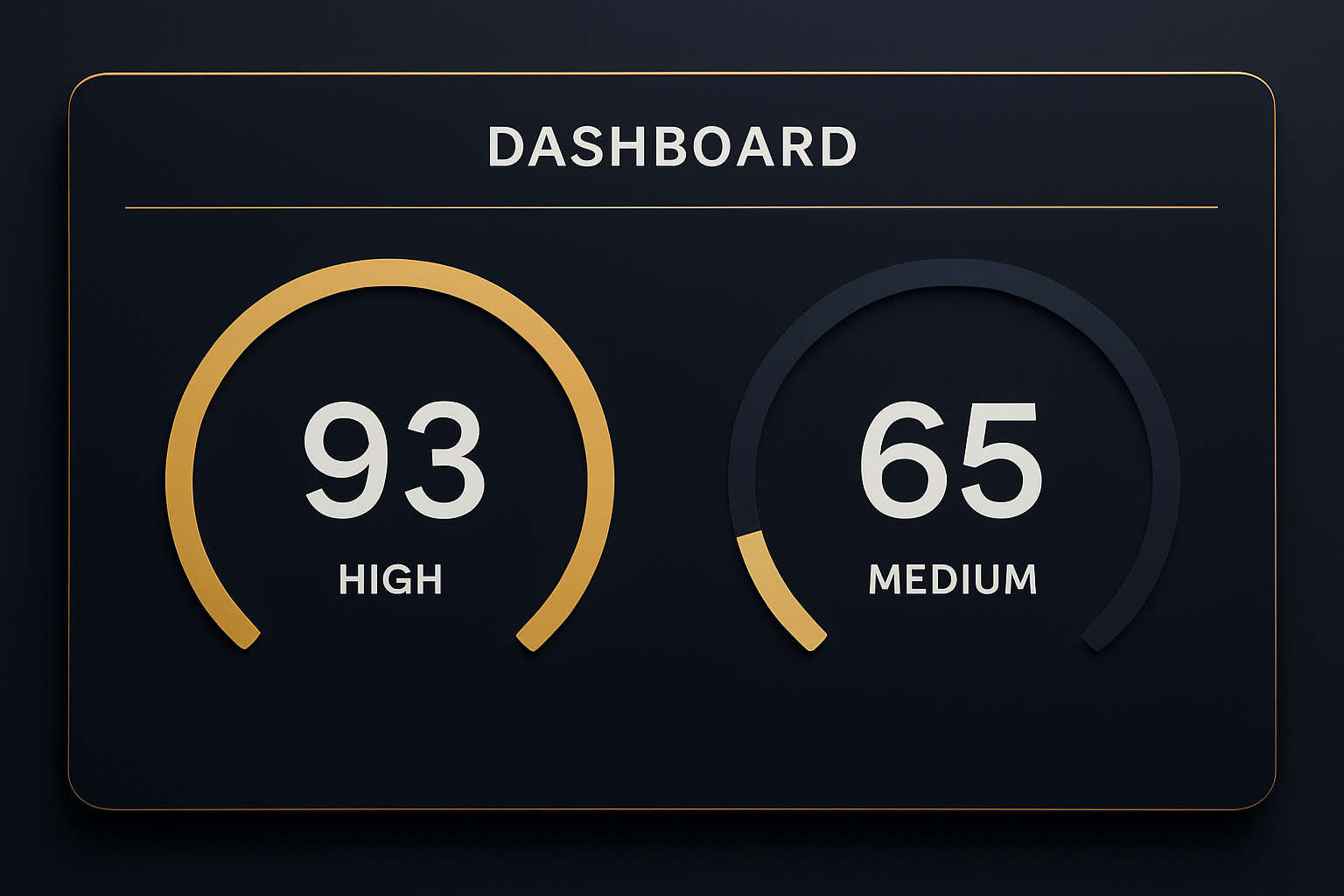
A visual representation of ahrefs authority metrics — Domain Rating and URL Rating — displayed as scored gauges in an SEO dashboard. For a deeper walkthrough, see our Ahrefs Domain Comparison: The Complete 2024 Guide.
How the Logarithmic Scale Changes Everything
One of the most misunderstood aspects of ahrefs authority is the logarithmic nature of its scoring. Moving from a DR of 10 to 20 is dramatically easier than moving from 60 to 70. The higher you climb, the more high-quality referring domains you need to acquire to register any meaningful increase.
This has a practical implication: never compare absolute DR differences as if they were linear. A site at DR 55 does not have “five more units of authority” than a DR 50 site — it may have substantially more referring domains and link equity. Understanding this curve helps you set realistic link-building goals and interpret competitive gaps accurately.
Key Insight
Because the scale is logarithmic, even a small improvement in a high DR score represents a massive increase in actual link equity. Focus on earning links from high-DR domains — each one carries exponentially more weight than a link from a low-DR source.
Does Ahrefs Authority Affect Google Rankings?
This is one of the most frequently asked questions in the SEO community. The direct answer: ahrefs authority scores are not Google ranking signals. Google does not use DR or UR in its algorithm — these are Ahrefs’ own proprietary calculations. However, they correlate strongly with ranking performance because they are built on the same underlying signal Google values most: high-quality backlinks.
Sites with high DR scores tend to rank well because they have attracted many authoritative backlinks — and those same links influence Google’s own internal assessment of a site’s trustworthiness. In this sense, ahrefs authority functions as a reliable proxy for the kind of link strength Google rewards.

A conceptual network showing how backlinks flow between websites — the foundation of any ahrefs authority score.
How to Improve Your Ahrefs Authority Score
Improving your ahrefs authority score is fundamentally about earning better backlinks. Here are the most effective strategies: see our Domain Authority Guide for deeper tactics.
- Create genuinely link-worthy content. Long-form guides, original research, data studies, and free tools attract natural backlinks from publishers who want to reference valuable resources.
- Pursue digital PR and media coverage. Getting mentioned in news articles, industry reports, and authoritative blogs generates high-DR backlinks that move the needle significantly.
- Use broken link building. Find broken outbound links on high-authority sites in your niche, then offer your relevant content as a replacement — a win-win for both parties.
- Guest post strategically. Contribute authoritative articles to reputable publications in your industry. Focus on quality placements over volume.
- Build internal link equity. While internal links do not raise your DR directly, strong internal linking improves UR across your pages, helping individual articles rank more competitively (see What is MozRank).
What Is a Good Ahrefs Authority Score?
Context matters enormously when evaluating ahrefs authority scores. A DR of 30 might be highly competitive in a niche local market but insufficient to compete in a broad, high-volume vertical. For comparisons with other tools see SEMrush Domain Authority. Here is a general benchmark reference:
Ahrefs Authority vs. Moz Domain Authority: Key Differences
Ahrefs authority (DR/UR) is frequently compared to Moz’s Domain Authority (DA) metric. While both attempt to predict ranking potential through backlink analysis, they differ in methodology, crawl frequency, index size, and how they weight link quality. See Moz Domain Ranking for a direct comparison of Moz’s metric.
What sets ahrefs authority apart is Ahrefs’ exceptionally large and frequently updated link index, which many practitioners consider the most comprehensive in the industry. For further context on alternate authority metrics, see Moz Rank guide. This makes DR and UR particularly reliable for competitive backlink gap analysis.
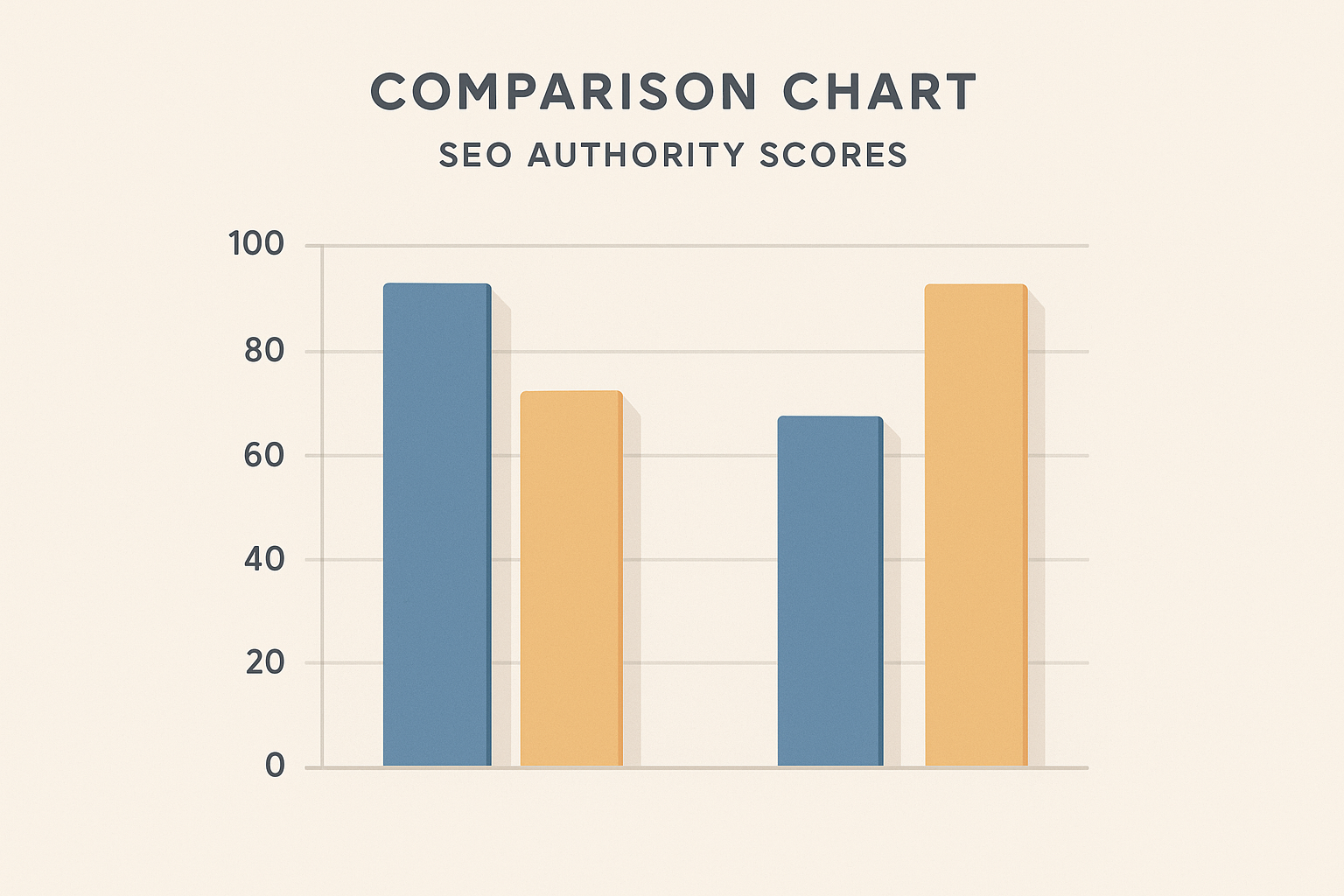
Authority tools comparison helps identify link-building gaps and opportunities in your niche.
Frequently Asked Questions About Ahrefs Authority
What is the difference between Domain Rating and URL Rating in Ahrefs?
Domain Rating (DR) measures the overall backlink strength of an entire domain, while URL Rating (UR) measures the link strength of a specific page. Both scores use a 0–100 logarithmic scale, but they evaluate authority at different levels of a website.
Does ahrefs authority directly affect Google rankings?
Ahrefs authority metrics like DR and UR are third-party indicators, not Google ranking signals. However, they correlate strongly with ranking performance because they reflect the quality and quantity of backlinks, which are a confirmed Google ranking factor.
How can I improve my ahrefs authority score?
You can improve your ahrefs authority score by earning high-quality backlinks from reputable websites, creating link-worthy content, conducting digital PR campaigns, fixing broken link opportunities, and consistently publishing authoritative resources in your niche.
What is a good Domain Rating score in Ahrefs?
A Domain Rating of 50 or above is generally considered strong for most niches. Scores above 70 are typical of well-established, high-authority sites. New websites often start below 10, and even modest improvements in DR can represent significant gains due to the logarithmic scale.
Putting Ahrefs Authority to Work in Your SEO Strategy
Knowing your ahrefs authority score is only useful if you act on it. Here are the three most impactful ways to integrate DR and UR into your daily SEO workflow:
1. Domain Authority guide. Use Ahrefs’ Site Explorer to compare your DR against your top-ranking competitors. If they consistently outrank you with similar content quality, a significant DR gap may be the determining factor. Identify the referring domains linking to them but not to you — these become your priority outreach targets.
2. Link prospect qualification. Before investing time in outreach, always check the DR of your target site. As a general rule, prioritize prospects with a DR above 40 and a healthy referring domain profile. Low-DR sites with spammy link patterns can sometimes do more harm than good.
3. Content performance auditing. Use UR to identify which of your pages are accumulating the most link equity. Pages with high UR but low organic traffic may have keyword targeting or on-page optimization issues — a signal to audit and optimize rather than build more links.
Further Reading
For a deeper dive into building sustainable domain authority and link-based SEO strategies, Rank Authority offers comprehensive guides tailored to both beginner and advanced SEO practitioners. For a deeper walkthrough, see our Ahrefs Domain Comparison: The Complete Guide (2024). Author: Rank Authority editorial team — add an author bio with credentials and a last-updated date to strengthen E‑E‑A‑T. Add an author byline and a "Last updated" date near the top to improve credibility and help readers assess freshness.
Conclusion
Ahrefs authority — encompassing Domain Rating and URL Rating — is one of the most practical and widely trusted frameworks for evaluating link-based SEO strength. While it does not directly influence Google’s algorithm, it serves as a powerful proxy for the backlink quality that does. Whether you are auditing a competitor, qualifying a link prospect, or tracking your own growth, understanding how ahrefs authority works gives you a meaningful edge in competitive search landscapes.
The most important takeaway: treat ahrefs authority as a directional compass, not an absolute verdict. Use it alongside content quality, topical relevance, and technical SEO health to build a holistic strategy. If you are looking to accelerate your progress, the resources at Rank Authority are a strong starting point for actionable guidance.
Disclaimer: Domain Rating, URL Rating, and all associated metrics referenced in this article are proprietary to Ahrefs. This content is intended for educational purposes and reflects general SEO best practices as understood at the time of publication. Last updated: 2026-07-02.

