

AI automated content creation is transforming how businesses produce blog posts, product descriptions, and marketing copy at scale. Instead of starting from a blank page, marketers now lean on machine learning systems to draft, optimize, and publish content in a fraction of the time it once took. This shift matters because both traditional search engines and newer AI answer engines reward sites that publish fresh, relevant material consistently. For a list of competitive tools, see competitive SEO tools. In this guide, you will learn exactly what AI automated content creation means, how it works, and how to build a workflow that stays both human-quality and search-ready.
Quick answer: AI automated content creation uses artificial intelligence, primarily large language models, to generate, optimize, and publish written content with minimal manual drafting. Businesses use it to scale blogs, product pages, and marketing copy while keeping a human reviewer in the loop for accuracy and brand tone.
What Is AI Automated Content Creation?
AI automated content creation is the use of artificial intelligence tools—such as large language models—to generate, optimize, and publish written content with little manual effort. It combines natural language generation, a branch of computer science focused on producing human-like text (see the Wikipedia overview of natural language generation), with data-driven optimization rules. As a result, teams can produce far more content than a purely manual process would allow.
In practice, this means feeding a system a topic, keyword, or brief, and receiving a structured draft in return. Furthermore, many platforms layer on SEO checks, readability scoring, and even publishing automation so the entire pipeline runs with minimal hands-on work.

AI automated content creation combines large language models with SEO optimization layers to produce publish-ready drafts.
How Does Automated AI Content Generation Work?
Automated AI content generation typically follows a pipeline: input, generation, optimization, and publishing. First, you provide a brief containing the target keyword, audience, and desired tone. Then, a generative model, a system trained to produce new text based on patterns in existing data (learn more via Wikipedia’s entry on generative artificial intelligence), drafts the content.
Next, an optimization layer checks the draft against on-page SEO factors, heading structure, and answer engine formatting. Consequently, the output is far more polished than raw model text alone. Finally, some platforms automate publishing directly to a content management system, while others route the draft to a human editor first.
Why Human Review Still Matters
Even with strong automation, human review remains important. In particular, editors catch factual errors, adjust brand voice, and confirm the content actually answers the reader’s question. Skipping this step is one of the fastest ways to undermine an otherwise solid AI automated content creation process.
Key Benefits of AI-Driven Content Automation
AI-driven content automation offers several clear advantages over fully manual publishing. Above all, it allows teams to scale output without proportionally increasing headcount or budget.
- Speed: Drafts that once took days can be produced in minutes, freeing writers to focus on editing and strategy.
- Consistency: Templates and briefs help maintain a steady tone and structure across large volumes of content.
- SEO alignment: Built-in optimization checks help drafts satisfy on-page ranking factors from the start.
- AI search readiness: Structured, direct answers make content more likely to be cited by AI Overviews and chat-based assistants.
According to a 2024 survey by the Content Marketing Institute, a majority of B2B marketers now use AI in some stage of content production, up sharply from just a couple of years earlier. This trend indicates that automated workflows are quickly becoming standard practice rather than an experimental tactic.
Step-by-Step: Building an AI Automated Content Creation Workflow
Setting up a reliable workflow does not have to be complicated. For actionable automation steps, learn how to automate your SEO process. Below is a practical sequence you can follow, whether you manage one website or dozens of client properties.
- Define goals and keyword targets. Identify the specific pages, keywords, and business outcomes you want content to support before choosing any automation tool or template.
- Select an automation platform. Choose a platform that combines drafting, SEO optimization, and publishing so you avoid stitching together several disconnected tools manually. Many teams choose tools that help streamline content marketing with prebuilt templates and connectors.
- Build detailed content briefs. Create structured briefs with target keywords, headings, tone, and required facts so the AI model produces relevant, on-brand drafts consistently.
- Generate the first draft. Run the brief through your chosen AI system to produce an initial draft, then review the output for structure, accuracy, and completeness.
- Edit, fact-check, and optimize. Have a human editor verify facts, adjust tone, and confirm the draft satisfies on-page SEO, readability, and answer engine formatting requirements.
- Publish and monitor performance. Publish the finished piece, then track rankings, traffic, and AI search citations so you can refine briefs and templates for future content.
For a deeper breakdown of tool selection, the complete guide to AI content creation platforms covers additional criteria worth considering before you commit to a workflow.
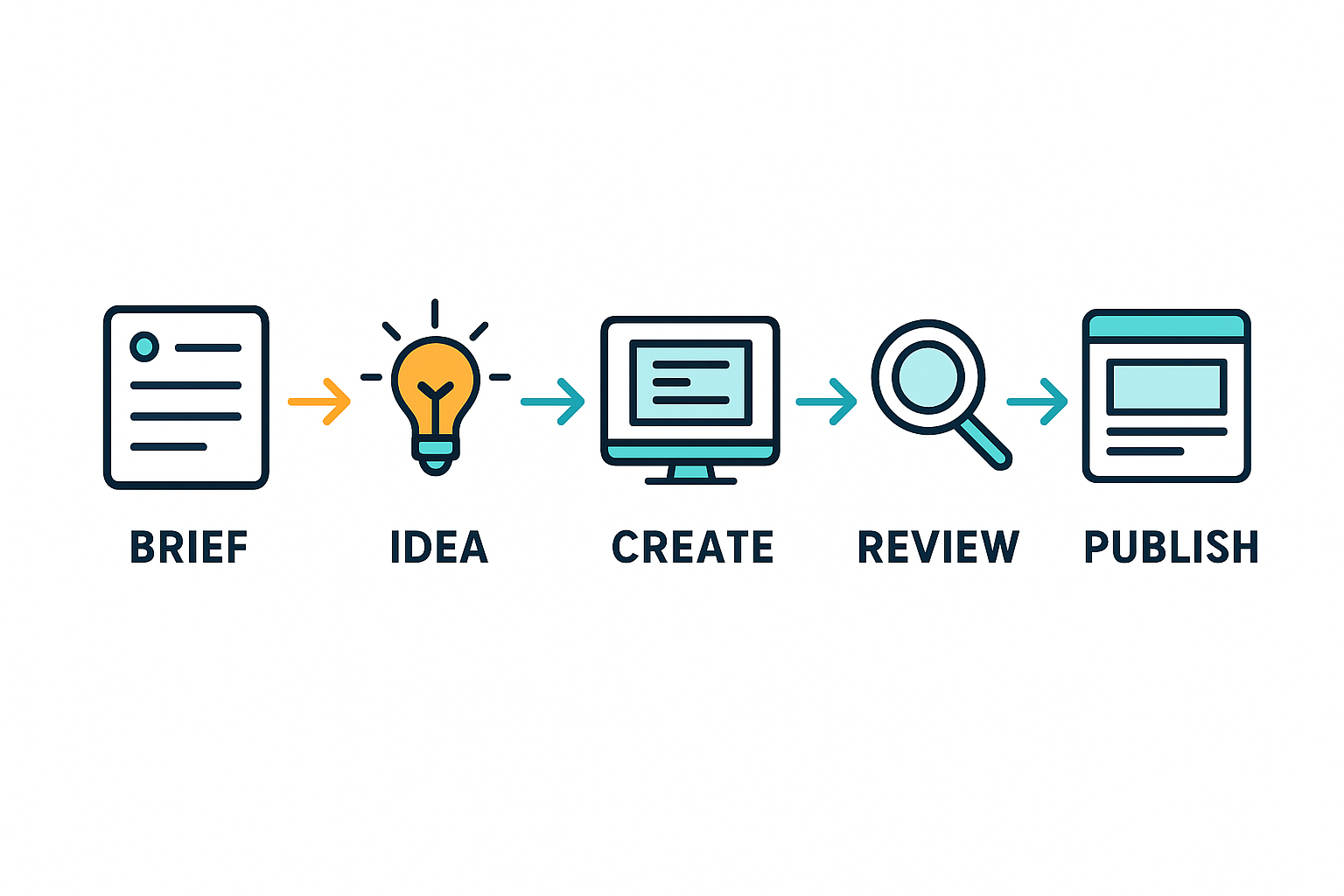
A repeatable workflow keeps AI automated content creation consistent across large volumes of pages.
AI Automated Content Creation vs. Traditional Content Writing
Traditional content writing relies entirely on human researchers and writers from start to finish. In contrast, AI automated content creation shifts much of the drafting and formatting work to a machine, while humans focus on strategy, fact-checking, and refinement.
| Factor | Traditional Writing | AI Automated Creation |
|---|---|---|
| Speed | Days per article | Minutes per draft |
| Scalability | Limited by team size | Scales with automation rules |
| Consistency | Varies by writer | Highly consistent via templates |
That said, neither approach is inherently “better” in isolation. Instead, the strongest results usually come from blending automated drafting with human editorial judgment, a strategy explored further in this guide to automated content marketing.
Choosing the Right Automated Content Creation Platform
Not all platforms handle AI automated content creation the same way. Some focus purely on drafting, while others add SEO scoring, generative engine optimization (GEO), and answer engine optimization (AEO) on top. Therefore, it helps to compare AI tools for content marketing before choosing a tool.
For example, rankauthority.com’s 1-Click AI AutoPilot technology automates much of the technical and strategic work behind GEO and AEO, which can otherwise require significant time and expertise. It is built for small business owners, digital marketers, entrepreneurs, and agencies managing multiple client sites, and it includes a risk-free seven-day trial period for testing results firsthand. You can review the approach directly at rankauthority.com.
If you want a more detailed comparison of AI SEO writing tools, the guide to AI-based SEO content tools and the guide to AI tools for content optimization both break down feature differences in more depth.
Common Mistakes to Avoid With AI Content Automation
Even reliable AI content automation systems can produce weak results if used carelessly. For instance, publishing drafts without editing often leads to generic or repetitive content that fails to rank well.
Similarly, ignoring fact-checking can introduce errors that damage credibility, particularly on topics involving statistics, pricing, or regulations. In addition, failing to match content to actual search intent, rather than just a keyword, remains one of the most frequent and costly mistakes. Above all, teams that skip performance monitoring miss the chance to explore automated content improvement strategies over time.
Best Practices for Sustainable Results
To get the most from AI automated content creation, keep a human editor involved at every stage, even if their role shrinks over time. Furthermore, build detailed briefs so the AI model has enough context to produce accurate, on-brand drafts.
It also helps to structure content with clear headings and direct answers near the top of each section, since this format performs well in both traditional search results and AI-generated answers. For more strategic tactics, see this complete guide to AI SEO content creation, consult the U.S. Federal Trade Commission’s guidance on truthful AI-related marketing claims when describing automated tools to your own audience, or read about AI-driven optimization to align models with SEO signals.
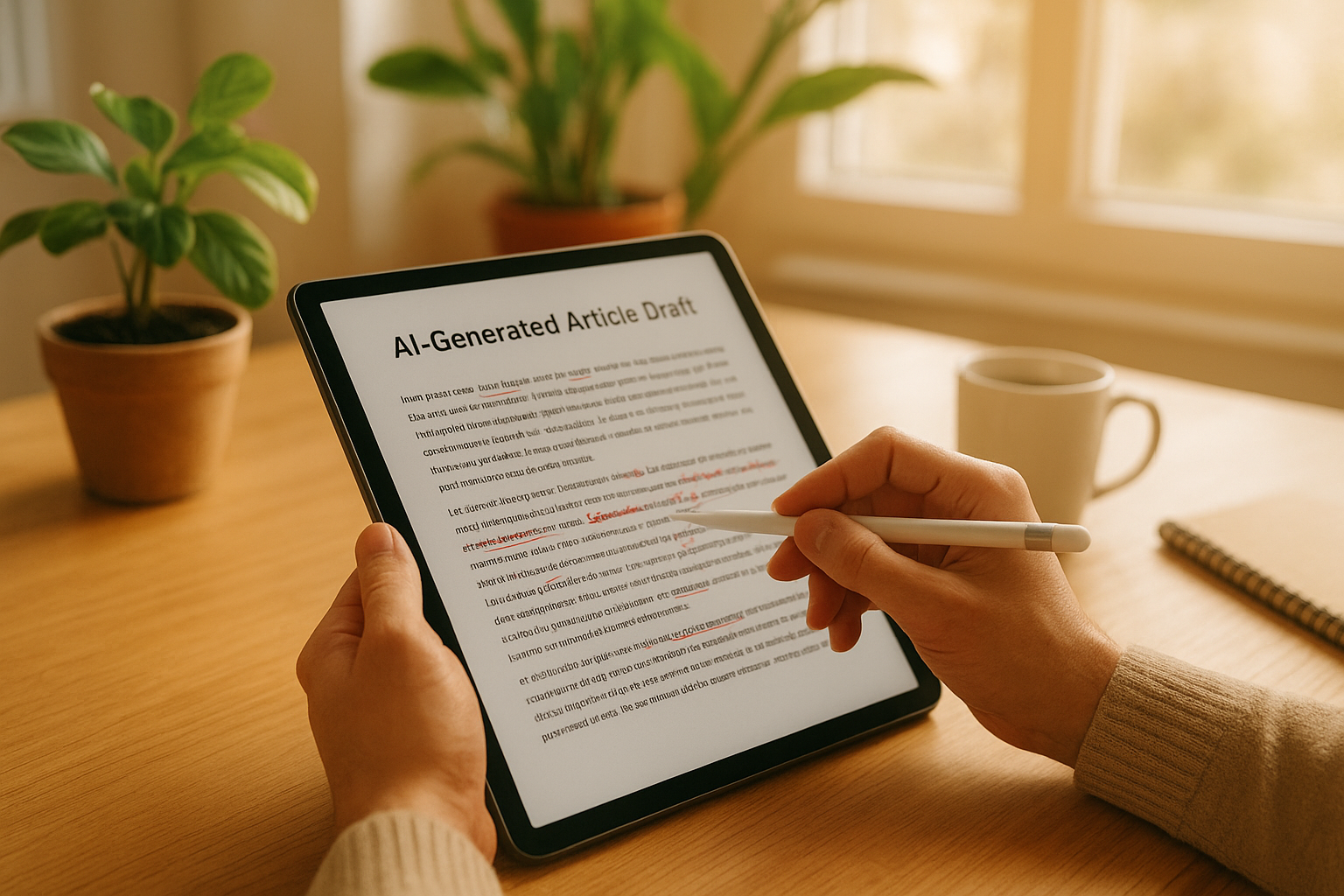
Combining AI automated content creation with human editing produces the most reliable long-term results.
Frequently Asked Questions About AI Automated Content Creation
What is AI automated content creation?
AI automated content creation is the use of artificial intelligence tools to generate, optimize, and publish written content with minimal manual effort. It relies on natural language generation and data-driven templates to produce blog posts, product copy, and other marketing assets at scale.
How does AI automated content creation work?
It works by feeding a large language model a brief, keyword, or template, which the model then expands into a full draft. Optimization layers check the draft against SEO and readability rules before it is published or sent for human review.
Why should businesses use AI automated content creation?
Businesses use it to publish more content, more consistently, without hiring a large writing team. This helps small businesses and agencies compete with larger brands for search visibility and AI answer engine citations.
What is the difference between AI automated content creation and AI-assisted writing?
AI-assisted writing means a human writer uses AI suggestions while drafting content manually. AI automated content creation goes further by generating, optimizing, and often publishing entire pieces with little to no manual drafting involved.
How much does AI automated content creation cost?
Costs vary widely, from free basic AI writing tools to platform subscriptions ranging from roughly $30 to several hundred dollars per month, depending on volume and automation depth. Many platforms, including rankauthority.com, offer a risk-free trial before you commit financially.
How long does it take to set up an AI content automation workflow?
A basic workflow can be set up in a single afternoon, and you can leverage AI insights to refine it, while a fully automated pipeline with review steps typically takes one to two weeks to refine. Ongoing adjustments continue as you learn what performs best for your audience.
What are common mistakes when using AI automated content creation?
Common mistakes include publishing unedited drafts, skipping fact-checking, and failing to align content with real search intent. These errors often lead to generic content that underperforms in both search rankings and reader engagement.
What are the best practices for AI automated content creation?
Best practices include using detailed briefs, keeping a human editor in the loop, and optimizing every draft for both traditional SEO and AI answer engines. Consistent quality checks help maintain accuracy and brand voice over time.
Can AI automated content creation replace human writers entirely?
Not entirely; most successful workflows still involve human oversight for accuracy, nuance, and brand tone. AI handles the heavy lifting of drafting and formatting, while people refine strategy and final quality.
Does AI automated content creation hurt SEO rankings?
AI-generated content itself does not violate search engine guidelines, since ranking systems focus on quality rather than authoring method. Low-quality, unedited AI content can hurt rankings, but well-optimized AI content performs comparably to human-written content.
What tools are used for AI automated content creation?
Common tools include AI tools for content marketing, large language model platforms, SEO optimization software, and end-to-end automation platforms that combine research, drafting, and publishing. Some platforms also add GEO and AEO optimization specifically for AI search visibility.
Is AI-generated content detectable by Google?
Detection tools exist, but major search engines have stated they do not penalize content simply for being AI-generated. Instead, their systems evaluate helpfulness, accuracy, and originality regardless of how the content was produced.
How does AI automated content creation affect visibility in AI search?
When paired with generative and answer engine optimization, AI automated content creation helps pages get cited by tools like AI Overviews and chat-based assistants. Clear structure, direct answers, and authoritative sourcing all improve these chances.
What industries benefit most from AI automated content creation?
E-commerce, local services, agencies, and SaaS companies benefit strongly because they need high content volume across many pages or clients. Any business needing consistent, scalable publishing can gain an advantage.
Final Thoughts
AI automated content creation is no longer an experimental tactic; it has become a practical way for businesses of all sizes to keep pace with rising content demands. As this guide has shown, the strongest results come from pairing automation with clear briefs, consistent SEO optimization, and a human editor who reviews every draft before it goes live.
Ultimately, whether you manage a single website or a portfolio of client sites, a well-structured AI automated content creation workflow can help you publish faster, rank more consistently, and stay visible as AI search continues to reshape how people find information online. Platforms like rankauthority.com, along with the additional guides linked throughout this article, offer practical starting points for putting these principles into action. Add internal links from 2–3 related site pages to this article to improve crawlability and distribute link equity across the site. Last updated: 2026-07-11. Author: Bryan Dantonio.

