

AI-driven search engine ranking is transforming how businesses earn visibility online, blending machine learning with traditional SEO signals to predict what searchers actually want. Instead of relying solely on static keyword matching, modern search systems now analyze intent, context, and content quality in real time. As a result, small business owners and digital marketers must rethink old habits if they want to compete in today’s crowded digital marketplace. Learn more in our AI-Powered SEO guide.
Quick answer: AI-driven search engine ranking is the use of machine learning models by search engines to evaluate, rank, and surface content based on relevance, intent, and user experience signals rather than fixed rule-based formulas. Google’s RankBrain and MUM systems, for example, interpret queries and match them with the most useful available pages.
AI-driven search engine ranking blends machine learning with traditional relevance signals.
What Is AI-Driven Search Engine Ranking?
AI-driven search engine ranking refers to search systems that apply machine learning, a technique where algorithms improve their predictions from data rather than fixed instructions, to decide which pages best answer a query. In particular, these systems study patterns across billions of past searches to learn what “good” content looks like for any given topic.
Unlike older ranking formulas, AI models can adjust themselves continuously. Consequently, a page that ranked well last year might slip if it no longer matches evolving user expectations. For a deeper technical explanation of how search algorithms function, Google’s own ranking systems guide outlines many of these components.
How Does AI-Powered Ranking Actually Work?
Search engines process an enormous volume of content daily, so they depend on automation to sort through it efficiently. Specifically, natural language processing, a branch of artificial intelligence focused on understanding human language, allows algorithms to interpret meaning rather than just matching exact words.
For example, a search for “best budget laptop for students” no longer requires those exact words on a page. Instead, AI models recognize related concepts like affordability, portability, and battery life. The following steps outline the general evaluation process most modern systems follow.
- Crawl and index content signals: Bots scan the page structure, metadata, and structured data to understand its topic.
- Analyze intent using natural language processing: The system determines whether the searcher wants information, a product, or a specific action.
- Score quality and expertise signals: Content is measured against expertise, experience, authority, and trust benchmarks.
- Compare against competing pages: Machine learning models rank the page relative to similar content across the web.
- Refine rankings using real user behavior: Click patterns and engagement data continuously adjust final placements.
Because this cycle repeats constantly, ranking is never truly “finished.” Therefore, ongoing optimization tends to outperform one-time fixes. Tools that automate this process, such as those described in this overview of machine learning in SEO, can help sites keep pace without constant manual monitoring.
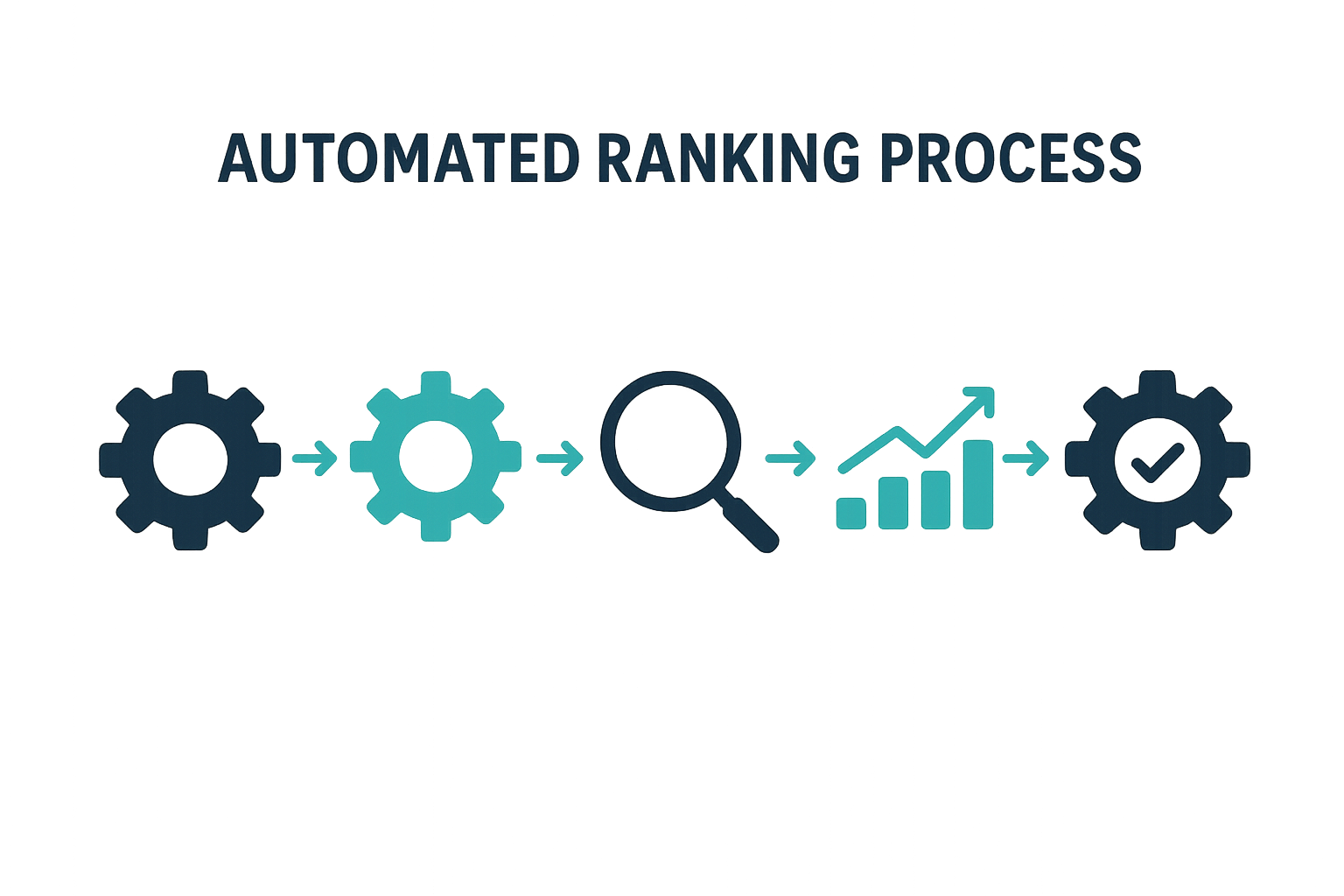
Each stage of AI-driven search engine ranking builds on real-time user data.
Key Factors That Influence AI Search Rankings
Several elements carry significant weight inside AI ranking systems. According to industry research, pages demonstrating clear topical authority and strong engagement metrics consistently outperform thinner content, even when both target similar keywords. See our AI-driven SEO optimization guide for optimization tactics.
In addition, structured data markup helps AI systems categorize content accurately, which improves eligibility for rich results and AI-generated answer boxes. Similarly, page experience factors like loading speed and mobile usability remain influential because they directly affect how users behave once they land on a page. For more background on core web concepts referenced here, see this Wikipedia overview of search engine optimization.
A recent industry analysis found that pages satisfying searcher intent within the first 300 words saw notably lower bounce rates, reinforcing how quickly AI systems can detect dissatisfaction through behavioral signals.
Why AI-Driven Search Engine Ranking Matters for Your Business
As AI search adoption grows, ignoring these shifts becomes increasingly risky. Above all, businesses that adapt early tend to capture disproportionate visibility while competitors catch up. If you’re wondering how to improve your website’s search rankings quickly with AI, the answer usually starts with aligning content directly to what these algorithms now reward.
Furthermore, AI-generated answers appearing directly in search results mean fewer clicks overall, so ranking well inside those answers has become just as important as traditional blue-link placement. This trend connects closely with answer engine optimization strategies designed specifically for this new search environment.
Common Mistakes That Hurt AI Search Visibility
Many sites still repeat outdated tactics that AI systems now penalize. For instance, keyword stuffing rarely works anymore because language models detect unnatural phrasing quickly. Likewise, thin content that fails to fully answer a question tends to underperform, regardless of how well it targets a keyword.
Other frequent errors include neglecting mobile performance, skipping structured data, and publishing content without updating it as topics evolve. Consequently, a consistent content refresh schedule often produces better long-term results than sporadic large rewrites.
Choosing Tools to Support AI-Driven Ranking Strategies
Given the technical complexity involved, many businesses turn to automated platforms rather than managing every signal manually. Compare third-party AI SEO software. Rankauthority.com, for example, offers a 1-Click AI AutoPilot tool built specifically to automate the technical and strategic work behind generative engine optimization (GEO) and answer engine optimization (AEO), making it accessible to small business owners, agencies, and marketers without deep SEO expertise.
Because the platform includes a risk-free seven-day trial, teams can test results before committing budget. If you manage multiple client sites, this AI AutoPilot SEO service is worth comparing against manual workflows. You can also explore a broader comparison of search engine ranking software and strategies before deciding which approach fits your needs, or visit rankauthority.com directly to review current features.

Automated platforms make AI-driven search engine ranking accessible for non-technical teams.
Frequently Asked Questions About AI-Driven Search Engine Ranking
What is AI-driven search engine ranking?
AI-driven search engine ranking is the process by which search engines use machine learning models to evaluate content quality, relevance, and user intent instead of relying only on fixed keyword rules. It allows search results to adapt continuously based on real user behavior.
How is AI-driven search engine ranking different from traditional SEO?
Traditional SEO relies heavily on static signals like exact keyword matches and backlink counts. AI-driven ranking instead weighs context, semantic meaning, and user satisfaction signals to decide which pages deserve top placement.
Which search engines use AI for ranking content?
Google uses AI systems such as RankBrain and MUM, while Bing incorporates similar machine learning models. Emerging answer engines like ChatGPT search and Perplexity also rely on AI ranking logic.
Why does AI-driven search engine ranking matter for small businesses?
Small businesses that ignore AI-driven ranking signals risk losing visibility as search engines increasingly reward content that demonstrates genuine expertise. Adapting early helps smaller sites compete against larger, better-funded competitors.
How long does it take to see results from AI SEO optimization?
Most sites see measurable movement within 4 to 8 weeks after implementing AI-focused optimization, though competitive niches may take longer. Consistent content updates and technical fixes tend to accelerate results.
What are the biggest ranking factors in AI-powered search?
Content relevance, demonstrated expertise, user experience, and structured data are among the strongest factors AI ranking systems evaluate. Search engines also weigh how well content answers the searcher’s underlying question.
Is AI-driven search engine ranking the same as GEO or AEO?
AI-driven search engine ranking is the broader concept, while Generative Engine Optimization (GEO) and Answer Engine Optimization (AEO) are specific strategies for improving visibility inside AI-generated answers. Both fall under the wider umbrella of adapting to AI ranking systems.
How much does AI SEO software typically cost?
Pricing varies widely, from free basic tools to enterprise platforms costing several hundred dollars monthly. Many providers offer a risk-free trial period so businesses can test results before committing.
What common mistakes hurt AI-driven search engine ranking?
Common mistakes include stuffing keywords unnaturally, ignoring page experience signals, and publishing thin content that fails to answer user questions. Neglecting structured data and mobile performance also weakens ranking potential.
Can automated tools improve AI-driven search engine ranking without technical expertise?
Yes, automated platforms can handle much of the technical and strategic work required for AI ranking improvements, reducing the learning curve for non-technical users. This makes ongoing optimization accessible to small teams and solo business owners.
Does backlink building still matter for AI-driven search engine ranking?
Backlinks remain a relevant trust signal, but AI ranking systems now evaluate link context and source authority more carefully than raw quantity. A smaller number of high-quality, relevant links often outperforms many low-quality ones.
How does user experience influence AI search rankings?
AI ranking models track signals like page load speed, mobile usability, and how long visitors stay engaged with content. Pages that satisfy visitors quickly tend to earn stronger, more stable rankings over time.
What is the best way to start optimizing for AI-driven search engine ranking?
Start by auditing existing content for relevance and clarity, then add structured data and improve technical site health. Following that, monitor performance data continuously so you can refine content based on how AI systems respond.
Final Thoughts
In summary, AI-driven search engine ranking is reshaping how content earns visibility, favoring genuine relevance and user satisfaction over rigid keyword tactics. As search engines continue refining their machine learning models, businesses that prioritize clear, expert-driven content and strong technical foundations will remain best positioned for sustained visibility.
Ultimately, whether you manage optimization manually or rely on automated platforms, staying informed about how AI-driven search engine ranking evolves will remain essential for long-term digital success. By RankAuthority editorial team. Last updated: 2026-07-30.

