
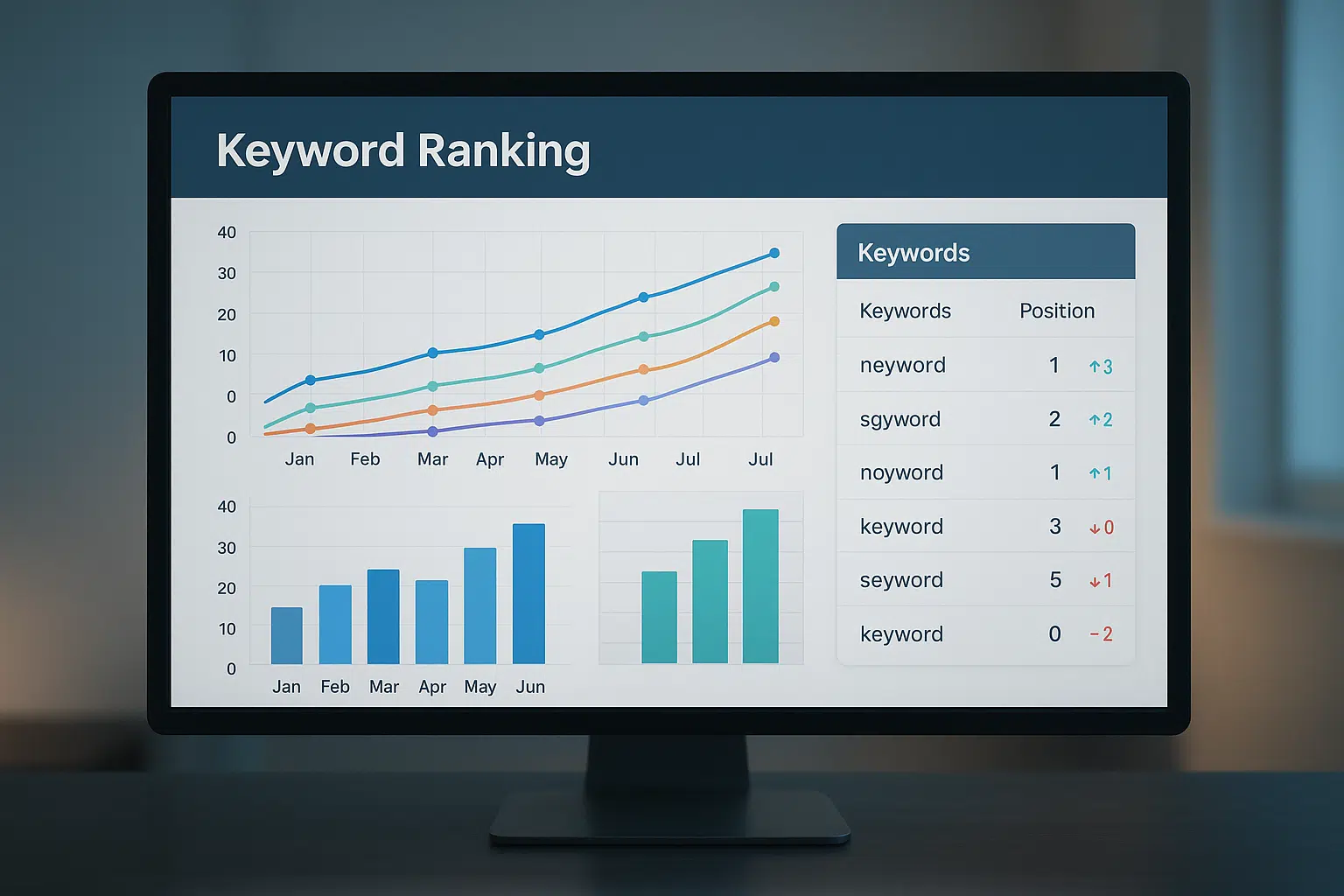
Stop guessing where your pages rank. An AI rank checker gives you real-time intelligence, predictive trend analysis, and competitor insights — all in one automated dashboard.
An AI rank checker is a software tool that uses artificial intelligence and machine learning to automatically monitor, analyze, and report on a website’s keyword positions across search engine results pages (SERPs). Where traditional rank trackers simply log a number once a day, AI-powered tools detect patterns, flag algorithm-driven changes, and surface prioritized recommendations — turning raw position data into a clear action plan for improving your organic visibility.
Quick Answer
An AI rank checker automatically tracks keyword positions in search engines and uses artificial intelligence to identify trends, diagnose ranking drops, and recommend optimizations. It replaces manual rank checking with continuous, intelligent monitoring that scales with your SEO strategy.
What Is an AI Rank Checker?
At its core, an AI rank checker combines traditional SERP position monitoring with machine learning layers that interpret the data intelligently. Instead of receiving a spreadsheet of keyword positions, you receive a living analysis: which pages are gaining momentum, which are at risk, and what actions will have the highest impact on your rankings.
According to Wikipedia’s overview of search engine optimization, ranking signals are constantly evolving — making manual tracking increasingly unreliable. AI rank checkers address this by correlating position fluctuations with known algorithm updates, content changes, and backlink activity simultaneously.
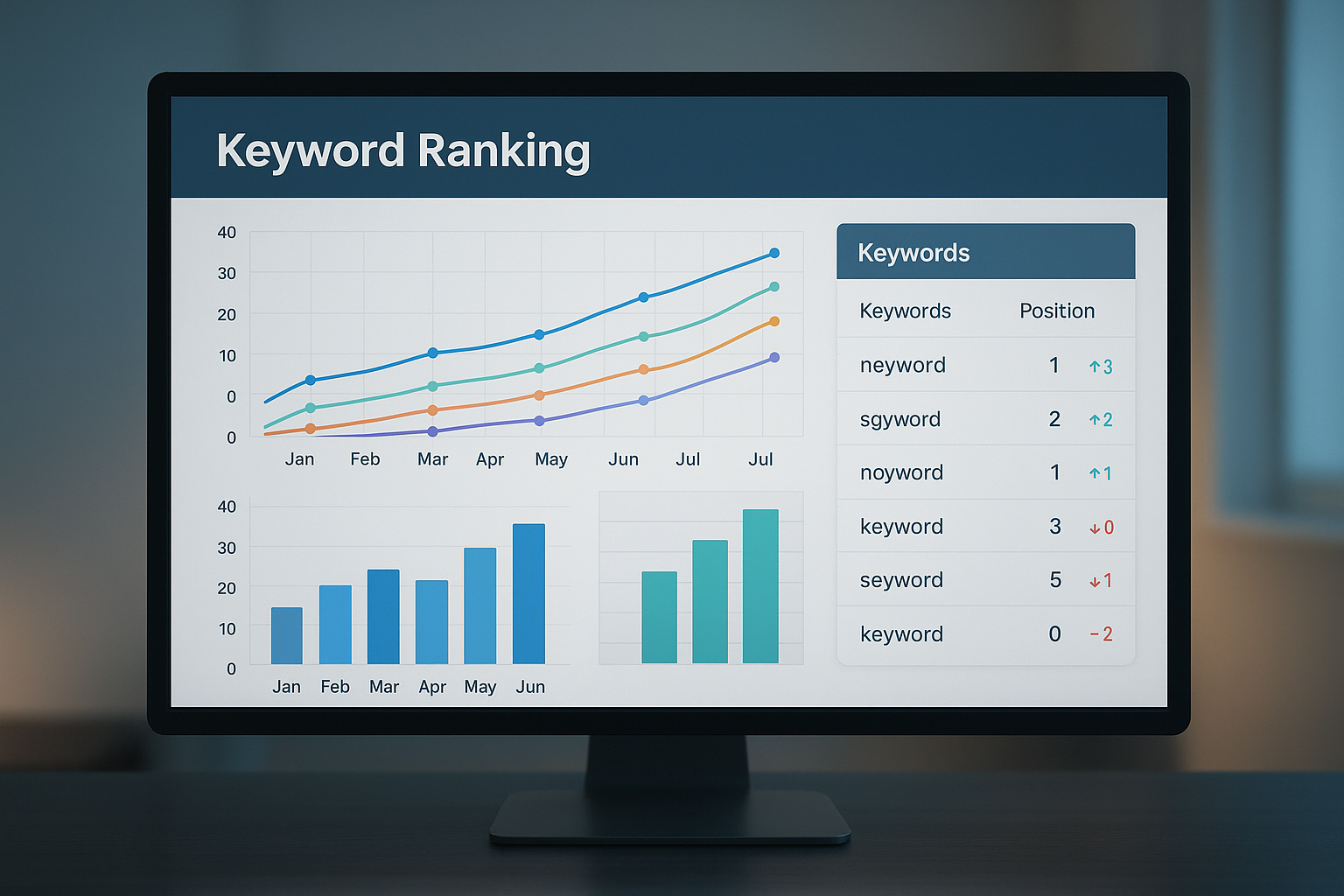
A modern AI rank checker dashboard gives you an at-a-glance view of keyword movements, trend lines, and competitive positioning.
Why AI-Powered Rank Tracking Outperforms Manual Methods
Manual rank checking — searching a keyword in an incognito window and noting your position — is time-consuming, inconsistent, and impossible to scale. Even basic automated trackers only tell you where you are, not why you moved or what to do next. AI rank checkers close that gap in three critical ways:
- Pattern Recognition: AI detects whether a ranking drop is a temporary fluctuation or a structural decline tied to a content or technical issue.
- Predictive Alerts: Machine learning models trained on historical SERP data can warn you when a keyword is trending toward a ranking loss before it happens.
- Competitive Intelligence: AI rank checkers continuously monitor competitor positions, flagging when rivals overtake you or when you have an opportunity to break into the top three.
- Actionable Prioritization: Rather than presenting hundreds of data points, AI surfaces the two or three actions most likely to improve your rankings this week.
Key Features to Look for in an AI Rank Checker
Not all AI rank checkers are built equal. When evaluating tools, prioritize the following capabilities:
For a deeper walkthrough, see our AI Optimization Tools: The Complete 2026 Guide.
📍 Local & Mobile Tracking
Monitor positions by city, region, or device type to reflect how real users find you.
🔄 Daily Automated Updates
Positions should refresh at least daily so you never act on stale data.
🤖 AI Insights Engine
Looks beyond numbers to explain why rankings changed and what to prioritize next.
🔗 Third-Party Integrations
Connects with Google Search Console, Analytics, and CMS platforms for unified reporting.
📊 SERP Feature Tracking
Monitors featured snippets, People Also Ask boxes, and local packs — not just blue links.
📈 Historical Data Archive
Long-term ranking history lets you correlate changes with content updates or algorithm rollouts.
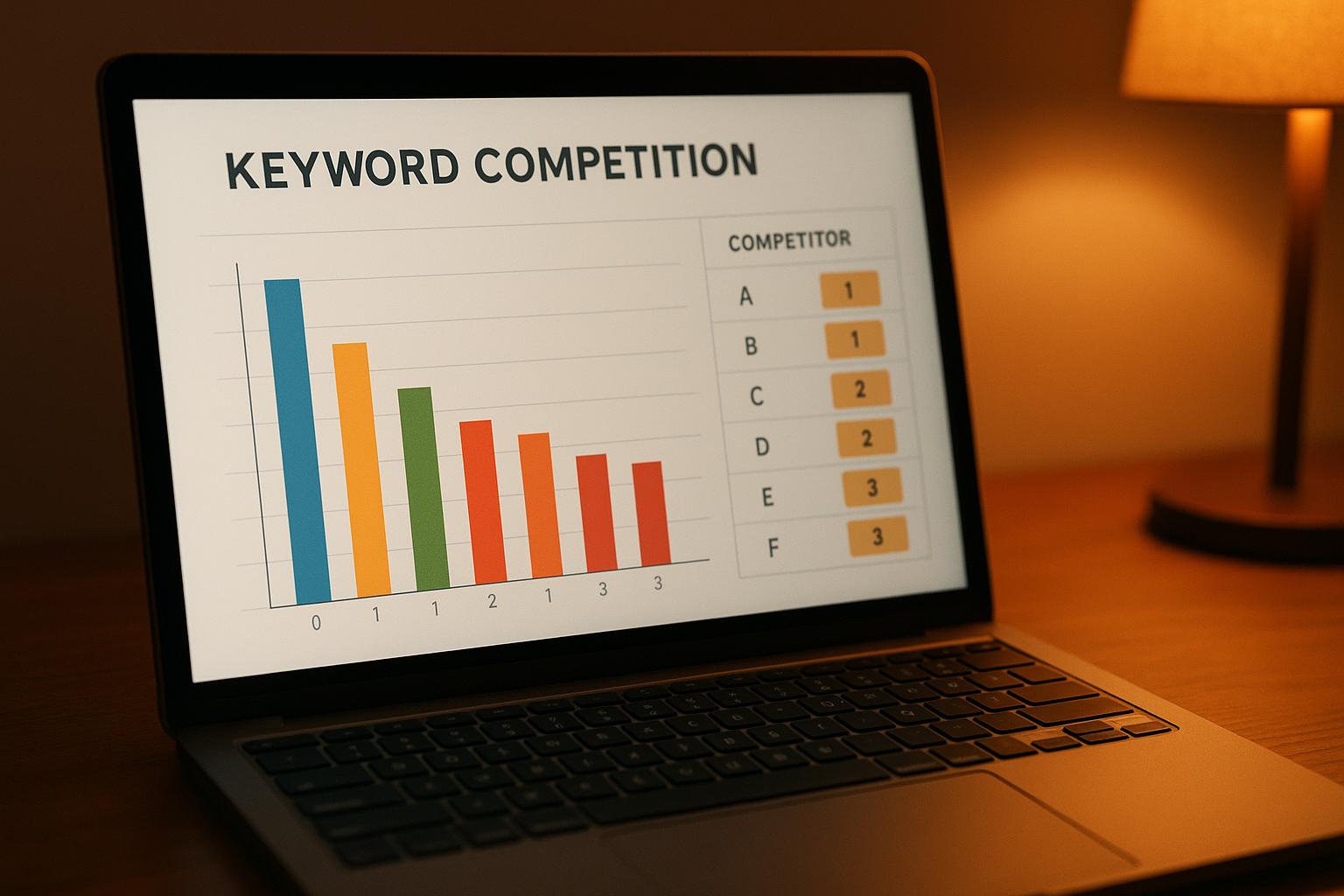
Competitor analysis within an AI rank checker reveals ranking gaps you can target to gain organic market share.
How to Set Up and Use an AI Rank Checker Effectively
Getting the most from an AI rank checker requires more than simply adding your domain and waiting. Follow these steps to build a tracking setup that drives real SEO decisions:
For a deeper walkthrough, see our AI Scorecard: The Complete Guide to Smarter SEO.
- Define Your Core Keyword Set: Start with the 20 to 50 keywords most directly tied to revenue or leads. Include a mix of head terms, mid-tail, and long-tail phrases. Avoid tracking hundreds of keywords from day one — focus drives faster insights.
- Configure Location and Device Targeting: Set your primary city or region and track both desktop and mobile separately. Rankings can differ significantly between devices, and mobile-first indexing makes mobile positions especially important.
- Add Competitor Domains: Input two to five competitors so the AI can benchmark your performance against the market. Watch for competitors moving into positions you hold and react proactively.
- Connect Google Search Console: Linking your Search Console account enriches rank data with impression and click-through-rate metrics, giving the AI more signals to work with when generating recommendations.
- Schedule Weekly Review Sessions: Commit to reviewing AI-generated insights once a week. Look for keywords that have moved significantly, pages flagged as at-risk, and quick-win opportunities on page two of results.
Tools like RankAuthority are built around exactly this workflow — combining automated daily tracking with AI-driven recommendations that tell you not just where you rank, but what to do next.
Common Mistakes That Undermine Your AI Rank Checker Data
Even the best AI rank checker delivers poor results if the setup is flawed. Here are the mistakes most SEOs make — and how to avoid them:
- Reacting to daily fluctuations: Rankings move up and down by one or two positions constantly. Focus on weekly or monthly trends, not single-day changes.
- Tracking only branded keywords: Your brand name will almost always rank first. Track the non-branded keywords where you’re actually competing for new organic traffic.
- Ignoring SERP features: A position-four ranking with a featured snippet is more valuable than a position-one ranking without one. Ensure your tool tracks the full SERP landscape.
- Not connecting analytics data: Ranking position alone doesn’t tell you if traffic or conversions improved. Always pair rank data with click and revenue metrics.
- Setting the wrong location: Tracking a national ranking when your customers are local will give you misleading data. Always match your tracking location to your actual audience geography.
AI Rank Checkers and the Future of SEO Monitoring
The evolution of AI rank checkers mirrors the broader shift in SEO from reactive to predictive. As search engines incorporate more AI into their own ranking systems — including Google’s Search Generative Experience — rank tracking tools must evolve in parallel. The next generation of AI rank checkers will monitor not just traditional blue-link rankings but also AI-generated answer appearances, voice search positions, and zero-click SERP features.
Platforms like RankAuthority are at the forefront of this transition, integrating AI analysis layers that adapt as search landscapes change — ensuring your rank tracking remains relevant regardless of how Google’s algorithm evolves.

AI rank checkers use neural network-style analysis to process thousands of ranking signals simultaneously — far beyond human capacity.
Frequently Asked Questions About AI Rank Checkers
What is an AI rank checker?
An AI rank checker is a software tool that uses artificial intelligence to automatically monitor, analyze, and report on keyword positions in search engine results. It goes beyond simple position logging by identifying trends, diagnosing ranking changes, and recommending specific optimizations to improve your search visibility.
How does an AI rank checker differ from a traditional rank tracker?
Traditional rank trackers record keyword positions at set intervals and display them in a table. An AI rank checker adds an intelligence layer that interprets those positions — correlating changes with algorithm updates, competitor moves, and on-page factors to tell you why rankings changed and what to do about it.
How often does an AI rank checker update keyword positions?
Most AI rank checkers update positions daily. Premium plans may offer more frequent refreshes. Daily updates are sufficient for most SEO strategies, as ranking changes meaningful enough to act on rarely occur within hours.
Can an AI rank checker track local SEO rankings?
Yes. Most AI rank checkers support local tracking at the city, region, or postal code level. This is essential for businesses with a geographic service area, as local rankings often differ significantly from national averages.
Is an AI rank checker suitable for SEO beginners?
Yes. The AI layer translates complex ranking data into plain-language summaries and prioritized action items, making it accessible even without deep SEO knowledge. Beginners benefit most from tools that explain what to do, not just what happened.
What search engines can an AI rank checker monitor?
Google is universally supported. Many tools also track Bing, Yahoo, and international engines like Baidu or Yandex. If you operate in markets where Google is not dominant, confirm multi-engine support before committing to a tool.
How many keywords can I track with an AI rank checker?
Keyword limits depend on your plan. Entry-level plans typically allow 50 to 500 keywords, while enterprise tiers handle tens of thousands. Start with your highest-priority keywords and expand as you identify more opportunities.
Can I track competitor rankings with an AI rank checker?
Yes, competitor tracking is a standard feature. You add competitor domains and the tool monitors their positions alongside yours, alerting you when rivals overtake your rankings or when you have a window to move up in a competitive keyword cluster.
What does an AI rank checker typically cost?
Pricing ranges from free basic tools to enterprise plans at several hundred dollars per month. Most small-to-medium businesses find strong AI rank checkers in the $30 to $100 per month range. Free tools are available but usually lack AI analysis and have strict keyword limits.
What are the most common mistakes when using an AI rank checker?
The most common mistakes are reacting to daily fluctuations instead of weekly trends, tracking only branded keywords, ignoring mobile rankings, and failing to connect analytics data to verify that ranking gains are translating into traffic. Setting the wrong tracking location is another frequent error.
Does an AI rank checker integrate with Google Search Console?
Many AI rank checkers integrate directly with Google Search Console, combining position data with impressions, clicks, and CTR metrics. This integration gives the AI more signals to analyze and makes recommendations more accurate and actionable.
How do I interpret ranking trend data from an AI rank checker?
Focus on 30-day and 90-day trend lines rather than individual daily positions. Prioritize keywords moving in or out of the top 10, pages losing visibility across multiple keywords simultaneously, and page-two rankings where targeted optimization could push you onto page one.
What is the best practice for setting up an AI rank checker for the first time?
Begin with your 20 to 50 most commercially important keywords. Configure your target location and device type, add two to five competitor domains, connect Google Search Console, and schedule a weekly review cadence. A focused initial setup delivers cleaner AI insights than tracking hundreds of keywords from day one.
Ready to Take Control of Your Rankings?
An AI rank checker is no longer a luxury for enterprise SEO teams — it’s an essential tool for any website that depends on organic search traffic. By combining automated daily tracking with machine learning insights, you gain the clarity and speed needed to outmaneuver competitors and protect your hard-won rankings. Start with a focused keyword set, review AI recommendations weekly, and let intelligent automation do the heavy lifting so you can focus on creating content that earns and keeps top positions.

