

**AI solutions for digital agencies** are no longer an optional upgrade — they are quickly becoming the operating system behind every agency that wants to survive the shift toward AI Overviews, chatbots, and answer engines. Search behavior has changed faster than most account managers can track by hand, and agencies that still rely on spreadsheets and manual audits are falling behind competitors who have automated the heavy lifting. Below, we break down exactly what these platforms are, which categories matter most, how much they cost, and how to roll them out across a full client roster without adding headcount. Add an author byline and a clear "Last updated" date near the top of the article to signal expertise and freshness.
What Are AI Solutions for Digital Agencies?
In plain terms, AI solutions for digital agencies are software platforms that use artificial intelligence — computer systems trained to recognize patterns and generate recommendations — to automate research, content, and reporting tasks that used to require an entire team. Rather than treating search engine optimization (SEO) as a purely manual discipline, these platforms apply machine learning to spot ranking opportunities, structure content for AI summarization, and flag technical issues before they cost a client visibility.
For agencies, this matters because client work rarely stops at one website. Most teams juggle dozens of accounts across wildly different industries, and doing manual audits for each one simply does not scale. As a result, AI-powered platforms have moved from “nice extra” to core infrastructure inside modern marketing agencies.

A unified dashboard lets agencies watch every client account update in real time instead of juggling separate spreadsheets.
Why Search Behavior Is Forcing Agencies Toward AI-Powered Tools
Search volume itself is shrinking. According to Gartner research on generative AI’s impact on search, traditional search engine volume could fall by as much as 25% by 2026 as users lean on AI chatbots and assistants instead of typing queries into a search bar. Consequently, agencies that optimize only for classic blue-link rankings risk losing visibility as client audiences migrate toward conversational answers.
In addition, AI-powered marketing tools help agencies keep pace with algorithm shifts that once demanded weeks of manual research. For example, when Google adjusts how AI Overviews are generated, automated platforms can flag content gaps within hours and suggest structural fixes immediately. As a result, agencies save time while still delivering the strategic insight clients pay for. Furthermore, these tools flatten the learning curve for junior staff, since most technical analysis happens automatically in the background rather than requiring years of hands-on SEO experience.
Above all, this shift explains why so many marketing leaders now describe AI solutions for digital agencies as infrastructure rather than an add-on. Agencies that adopt early gain a compounding advantage: cleaner data, faster reporting cycles, and earlier warning signs when a client’s visibility starts to slip.
Core Categories of AI Solutions for Digital Agencies
Not every AI tool serves the same purpose. Specifically, agencies typically need coverage across six distinct categories to run a full-service operation without gaps. Understanding each category helps teams avoid buying overlapping tools or, worse, leaving a critical function unautomated.
AI Content Creation and Optimization Tools
These platforms draft, brief, or optimize written content at scale. Rather than replacing writers outright, the strongest tools generate research-backed outlines and flag missing subtopics so human editors can focus on voice and accuracy instead of research grunt work.
AI SEO, GEO, and AEO Platforms
This category sits at the heart of most AI solutions for digital agencies today. Generative Engine Optimization (GEO) and Answer Engine Optimization (AEO) tools structure content so AI Overviews, ChatGPT, and voice assistants can extract and cite it directly. Agencies exploring this space often start with a comparison of SEO tools for agencies built to scale results before narrowing down to a GEO-specific platform.
AI Social Media Management Tools
These tools use AI to suggest posting times, generate caption variations, and analyze engagement patterns across client accounts. Similarly to content tools, they work best when a strategist reviews output before it goes live, since brand voice consistency still requires human judgment.
AI-Powered PPC and Ad Optimization Tools
Paid media platforms increasingly use machine learning to adjust bids, pause underperforming ads, and reallocate spend automatically. For agencies managing multiple ad accounts, this reduces the daily manual monitoring that used to eat into strategist time. See AI tools for traffic increase.
AI Client Reporting and Dashboard Tools
Instead of manually compiling ranking screenshots every month, agencies now rely on automated dashboards that pull live data and generate client-ready reports. This single category alone often justifies the cost of an AI platform for agencies managing multiple SEO campaigns.
AI Project and Workflow Management Tools
Finally, AI-assisted project management tools flag bottlenecks, predict deadline risk, and auto-assign tasks based on team capacity. While less flashy than content or SEO tools, this category quietly prevents the missed deadlines that damage client trust.
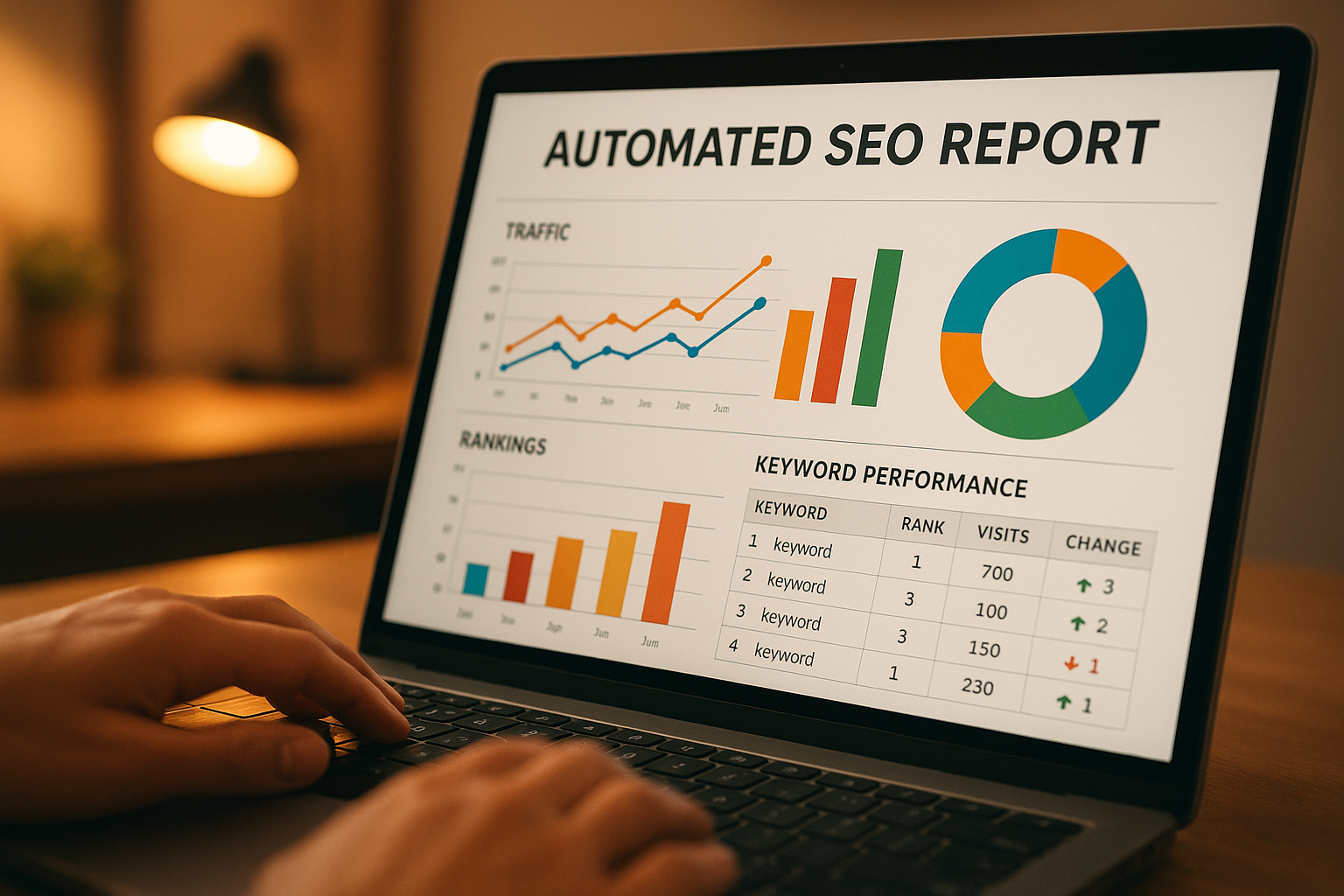
Automated reporting saves agencies hours every month when managing several client accounts at once.
Key Features Every Agency Should Expect From AI Marketing Tools
When evaluating AI marketing tools, agencies should look well beyond basic keyword tracking. For a broader view of what qualifies as a modern platform, many teams start with this breakdown of AI solutions for digital marketing to see which features fit their client mix.
Specifically, the most useful platforms typically include:
- Multi-client dashboards for centralized management
- Automated technical and content audits
- Optimization for AI summarization and citation using structured data markup
- Client-ready reporting exports
- Continuous monitoring of AI Overview appearances
- Data governance and permission controls for client accounts
Agencies overseeing several client accounts also benefit from learning how to manage multiple SEO campaigns using one tool, since consolidated dashboards cut down on duplicate work and reporting errors. Teams that want a side-by-side feature comparison can also reference this list of SEO tools for digital agencies rated for 2025 before shortlisting a platform.
How to Implement AI Solutions for Digital Agencies: A Step-by-Step Framework
Most automated platforms follow a similar rollout sequence. Here is the process agencies can expect when adopting AI solutions for digital agencies across a full client roster:
- Audit existing content for AI visibility gaps. Run an automated crawl that scores each client page on how easily AI systems can extract clear answers, headings, and structured data before making any changes.
- Optimize structure and schema markup. Apply automated fixes such as FAQ schema, clear heading hierarchies, and concise answer blocks so pages qualify for answer engine citations and richer search listings.
- Train the platform on brand voice and account context. Feed the tool each client’s tone guidelines, target audience, and competitor set so automated recommendations stay relevant rather than generic.
- Monitor AI citation performance. Track how often client brands appear inside AI-generated answers and chatbot responses, then adjust content strategy based on that real-world data every few weeks.
- Automate reporting across client accounts. Generate client-ready reports automatically instead of manually compiling ranking and citation data for every single account each month.
- Scale optimization across every managed website. Apply the same automated workflow to dozens of client sites simultaneously without adding headcount, then review outcomes quarterly to refine the process.
Agencies wanting a template for client conversations during this rollout can also review these notes on engaging clients using automated SEO reporting, since transparent communication prevents confusion when reports start looking different.
Best AI Solutions for Digital Agencies in 2025
Among the AI solutions for digital agencies available today, platforms for improving search visibility built specifically for automation stand out from generic all-purpose tools. RankAuthority’s 1-Click AI AutoPilot, for example, is designed to automate the technical and strategic work of GEO and AEO so agencies can manage many client sites without hiring additional specialists. The platform’s seven-day trial lets teams test automated audits, content optimization, and AI-citation monitoring before committing to a full subscription.
For a broader comparison, agencies exploring the market can review this 2025 guide to AI tools for digital marketing or this roundup of digital marketing agency tools that drive results to see how automated platforms compare to manual workflows. Similarly, teams wanting a deeper look at scaling results can check these SEO insights for agencies scaling client rankings faster, browse this dedicated list of SEO software for agencies built to scale client rankings fast, or consult our AI tools for traffic increase guide.
Choosing the right AI search software helps agencies scale client work without adding headcount.
How Much Do AI Solutions for Digital Agencies Cost?
Pricing varies widely depending on scope. Basic automation tools for a single function, such as reporting alone, often start under $100 a month. In contrast, full-suite platforms that combine GEO, AEO, and multi-client dashboards typically run several hundred dollars monthly, scaling with the number of managed sites.
Most reputable platforms offer tiered plans plus a trial period, which matters because cost alone should never be the deciding factor. Instead, agencies should calculate cost per managed account: a $300 monthly platform that replaces 15 hours of manual audit work across 20 clients is far cheaper than it first appears once staff time is factored in.
Measuring ROI: Metrics That Prove AI Tools Are Working
Above all, agencies need proof that automation is paying off, not just anecdotal impressions. Therefore, track these metrics monthly:
- AI citation frequency — how often client content appears inside AI Overviews or chatbot answers
- Time saved per account on audits and reporting
- Organic traffic and keyword ranking movement alongside citation data
- Client retention rate after automation rollout
- Strategist hours reallocated to higher-value client strategy work
AI Solutions for Digital Agencies vs. Traditional Marketing Tools
Traditional marketing tools mostly track keyword rankings, backlinks, and basic engagement metrics. In contrast, AI solutions for digital agencies also optimize content specifically for generative AI systems like ChatGPT and Google AI Overviews. This distinction matters because a client can rank well in traditional search yet remain invisible inside AI-generated answers if their content lacks clear structure and citable formatting. Consequently, agencies that only license legacy tools are solving half the visibility problem. Learn more about improving search visibility.
Data Privacy and Security Considerations for AI Agency Tools
Because agencies handle sensitive client data across many accounts, security cannot be an afterthought. Specifically, agencies should confirm that any AI platform encrypts data in transit and at rest, offers role-based account permissions, and clearly discloses whether client content is used to train external AI models. Reviewing a vendor’s data policy before onboarding protects both the agency and its clients from unexpected exposure.
Common Mistakes Agencies Make When Adopting AI Search Software
Even strong AI search software can underperform if agencies skip a few important steps. In particular, over-relying on automation without human review often leads to generic content that lacks a client’s brand voice. Similarly, ignoring content quality in favor of speed can hurt long-term trust with both readers and AI systems.
Above all, agencies should avoid skipping onboarding and training for staff, since even automated platforms require some setup knowledge. Finally, many teams forget to monitor AI citation performance after launch, missing the chance to refine strategy based on real results.
Frequently Asked Questions About AI Solutions for Digital Agencies
What are AI solutions for digital agencies?
AI solutions for digital agencies are software platforms that automate search optimization tasks such as audits, content analysis, and answer-engine formatting using artificial intelligence. They let agencies manage many client accounts without a large in-house technical team.
How do AI solutions for digital agencies differ from traditional SEO tools?
Traditional SEO tools mostly track keyword rankings and backlinks, while AI solutions for digital agencies also optimize content for generative AI systems like ChatGPT and Google AI Overviews. This means they cover both classic rankings and AI-generated answer visibility.
How much do AI-powered agency tools typically cost?
Pricing varies widely, from under $100 a month for basic automation to several hundred dollars for platforms managing many client sites. Most reputable platforms offer tiered plans plus a trial period so agencies can test value first.
How long does it take to see results from AI search optimization?
Technical fixes like schema markup can show effects within a few weeks, while broader AI citation visibility often takes one to three months to build. Results depend on site authority, content quality, and niche competitiveness.
Can one platform manage SEO for multiple clients at once?
Yes, many AI-driven platforms include multi-client dashboards that let agencies audit, optimize, and report on dozens of websites from a single account. This reduces duplicate work and keeps reporting consistent.
What is Generative Engine Optimization (GEO)?
Generative Engine Optimization, or GEO, is the practice of structuring content so AI systems can easily summarize, cite, and recommend it in generated answers. It focuses on clarity and structure rather than keyword density alone.
What is Answer Engine Optimization (AEO)?
Answer Engine Optimization, or AEO, formats content to directly answer specific questions so voice assistants and AI search tools can pull it as a direct response. It relies heavily on concise answer blocks and clear headings.
What mistakes do agencies make when adopting AI tools?
Common mistakes include relying on automation without human review, ignoring content quality, and skipping proper onboarding for staff. Agencies also often forget to monitor AI citation performance after launch.
Do AI tools replace human strategists at agencies?
No, AI tools handle repetitive technical work but still need human strategists to interpret data, set client goals, and make creative decisions. The best results pair automation with experienced oversight.
Is there a free trial before committing to an AI optimization platform?
Many platforms, including RankAuthority, offer a risk-free seven-day trial so agencies can test automated audits and reporting before paying. This lets teams evaluate fit without a long-term commitment.
What features should agencies prioritize when choosing AI tools?
Agencies should prioritize multi-client dashboards, automated technical audits, AI-citation monitoring, and client-ready reporting exports. These features save the most time when managing several accounts at once.
How should agencies handle data privacy when using AI marketing tools?
Agencies should confirm any AI vendor encrypts client data, offers role-based permissions, and discloses whether content is used to train outside AI models before onboarding a new platform.
Why is AI search optimization becoming essential for agencies in 2025?
As more users turn to AI chatbots and AI Overviews instead of traditional search results, agencies that ignore AI search optimization risk losing client visibility. Adopting these workflows now helps agencies stay competitive as search behavior keeps shifting.
Final Thoughts on Choosing AI Solutions for Digital Agencies
In summary, AI solutions for digital agencies are no longer a nice-to-have; they are becoming a practical requirement as search shifts toward AI Overviews, chatbots, and answer engines. Agencies that automate GEO and AEO workflows can manage more clients, respond faster to algorithm changes, and free up strategists for higher-value work. Ultimately, choosing the right AI solutions for digital agencies comes down to matching platform features — like multi-client dashboards, citation monitoring, and solid data privacy practices — to the specific needs of the accounts being managed. As search behavior continues to evolve, agencies that start testing automated platforms today, such as through a seven-day trial, will be better positioned to keep client rankings strong across both traditional and AI-driven search environments. Last updated: 2026-08-14.

