

AI tools for content marketing have become essential for businesses that want to keep pace with search engines increasingly powered by machine learning. As a result, generative search environments and answer engines are reshaping how people discover information, and marketers who skip automation risk falling behind. This guide breaks down what these tools do, how to pick one, and how a platform like rankauthority.com automates the technical side of the work.
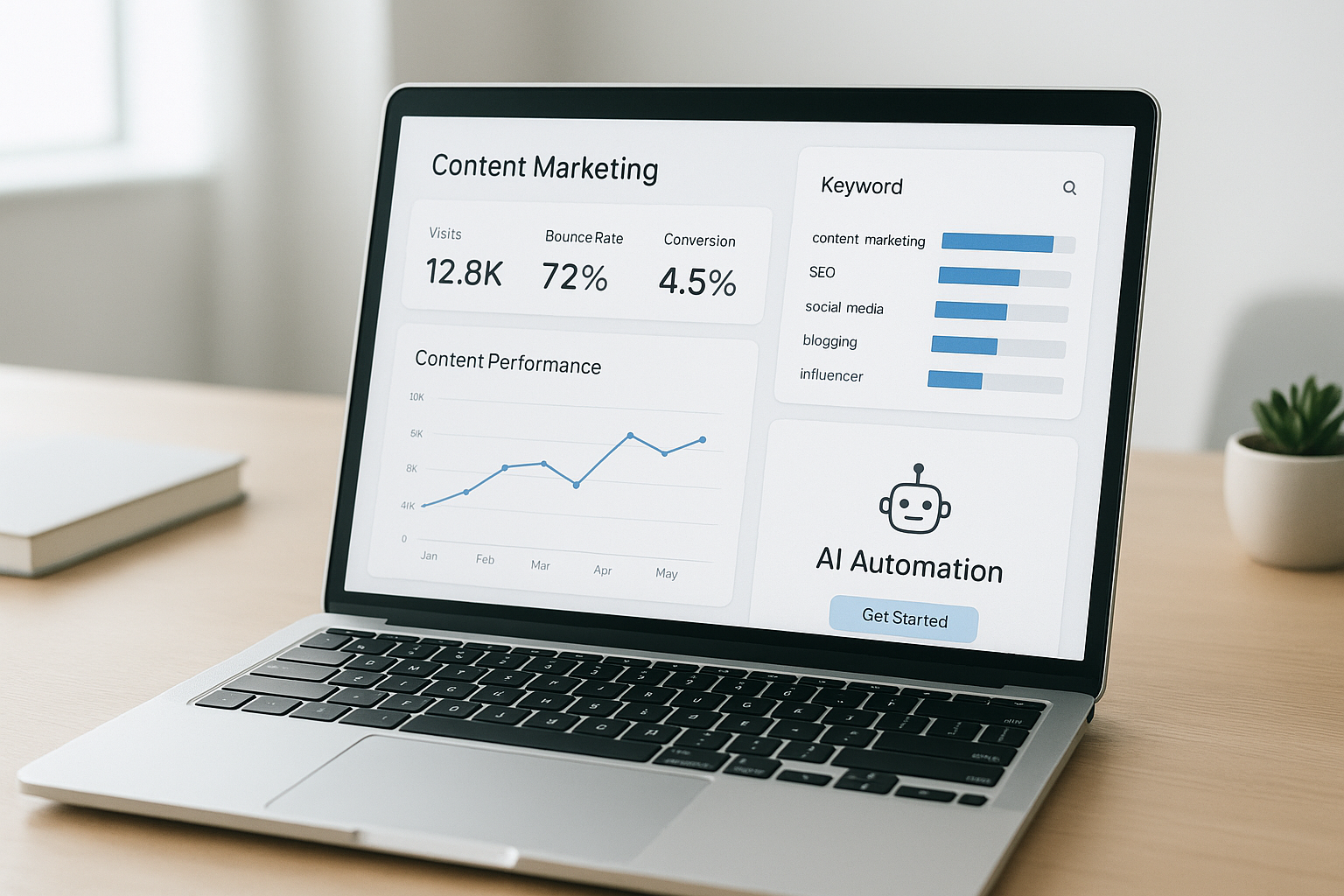
AI tools for content marketing combine research, writing, and optimization into one automated workflow.
What Are AI Tools for Content Marketing?
AI tools for content marketing are software platforms that use artificial intelligence, meaning computer systems trained to recognize patterns and generate recommendations, to plan, create, optimize, and distribute content. In short, they automate the research and technical work that manual content teams would otherwise spend hours completing.
Specifically, these platforms typically handle keyword research, content briefs, on-page optimization, and performance tracking. For example, some tools focus narrowly on writing assistance, while others, such as rankauthority.com’s automated approach, manage the entire optimization cycle from strategy through monitoring.
According to Wikipedia’s overview of content marketing, the practice has always centered on creating valuable material that attracts and retains an audience. Consequently, AI simply accelerates and scales that same core objective.
Why Content Teams Are Adopting AI-Driven Marketing Automation
Search behavior is changing quickly, and that shift is driving adoption. Increasingly, users ask AI assistants and generative engines direct questions instead of typing keywords into a traditional search bar.
As a result, brands that only optimize for classic search results miss a growing share of visibility. Furthermore, according to the National Institute of Standards and Technology’s AI research resources, adoption of AI systems across industries has accelerated markedly in recent years, reflecting how mainstream automated content and optimization tools have become.
In practice, this means marketing teams need help managing both traditional SEO and newer disciplines like Generative Engine Optimization and Answer Engine Optimization at the same time. That is precisely the gap AI-driven marketing automation tools are built to fill.
Direct answer: AI tools for content marketing automate research, writing assistance, on-page optimization, and performance monitoring so businesses can compete in both traditional search and AI-powered answer engines without hiring a full specialist team.
Key Categories of AI Tools for Content Marketing
Not every platform does the same job. Therefore, it helps to understand the main categories before choosing a solution for your team or agency.
AI Writing and Ideation Tools
These tools generate topic ideas, outlines, and first drafts based on target keyphrases. Similarly, many can repurpose one piece of content into multiple formats, such as turning a blog post into social captions.
AI SEO, GEO, and AEO Optimization Tools
This category focuses on making content discoverable across both traditional search and AI answer engines. For a deeper breakdown of how these platforms compare, see this complete guide to AI content optimization tools.
Competitor Gap and Content Strategy Tools
Other platforms specialize in identifying what competitors rank for that you do not. In particular, this resource on finding competitor content gaps explains that process, while this 2025 AI content strategy guide covers broader planning tools.

Writing, optimization, and strategy tools each play a different role in a content workflow.
How to Choose the Right AI Content Marketing Platform
Choosing a platform should start with your biggest bottleneck. For instance, if writing takes too long, prioritize drafting features; however, if visibility in AI search is the concern, prioritize GEO and AEO capabilities instead.
Above all, look for transparent reporting so you can see what changed and why. Additionally, this overview on how to leverage AI for content marketing walks through practical evaluation criteria in more depth.
Finally, a trial period matters. Rankauthority.com, for example, offers a risk-free seven-day trial of its 1-Click AI AutoPilot technology, which lets users test automated optimization before committing to a paid plan.
Step-by-Step: How to Implement AI Tools for Content Marketing
Once a platform is selected, implementation follows a fairly consistent pattern. Below is a practical sequence teams can follow, also detailed further in this guide on how to leverage AI for content marketing.
- Audit existing content and visibility. Review current rankings, technical SEO health, and content gaps before turning on any automation.
- Select tools aligned with your goals. Match the platform’s strengths, such as drafting, optimization, or multi-site management, to your specific priorities.
- Set up automated briefs and workflows. Configure the tool to generate content briefs and optimization tasks around your target keyphrases automatically.
- Integrate with publishing and analytics. Connect the platform to your CMS and analytics so recommendations apply directly without manual data transfers.
- Monitor and refine continuously. Review performance reports regularly and let automation adjust strategy as algorithms and AI search behavior evolve.
Common Mistakes When Using AI Content Marketing Tools
Even good tools fail when used poorly. In particular, publishing AI-generated drafts without fact-checking is one of the most frequent errors, since accuracy still matters for both readers and search engines.
Likewise, teams often skip an initial content audit, which means automation optimizes the wrong pages first. Consequently, results take longer to appear than they should.
Finally, ignoring performance data after setup is another common misstep. Instead, ongoing monitoring, as outlined by industry research from the Content Marketing Institute, remains essential even when much of the work is automated.
Frequently Asked Questions About AI Tools for Content Marketing
What are AI tools for content marketing?
AI tools for content marketing are software platforms that use machine learning to help teams research, write, optimize, and distribute content. They automate repetitive tasks like keyword research, brief creation, and performance tracking.
How do AI content marketing tools actually work?
Most platforms analyze existing content, competitor pages, and search data, then generate recommendations or drafts automatically. Advanced tools like 1-Click AI AutoPilot go further by continuously monitoring rankings and adjusting strategy without manual input.
Why should small businesses use AI for content marketing?
Small businesses often lack a dedicated SEO team, so AI tools close that expertise gap affordably. They allow one person to manage tasks that would otherwise require several specialists.
What is the difference between AI content tools and traditional content tools?
Traditional tools require manual research and execution, while AI tools automate analysis and often generate ready-to-use recommendations. This reduces the time from research to published content significantly.
How much do AI tools for content marketing typically cost?
Pricing varies widely, from free basic plugins to enterprise platforms costing several hundred dollars monthly. Many providers, including rankauthority.com, offer a risk-free trial period before committing to a paid plan.
How long does it take to see results from AI content marketing tools?
Technical improvements can appear within days, but meaningful ranking gains usually take four to twelve weeks. Results depend on site authority, competition, and how consistently the tools are used.
What is Generative Engine Optimization (GEO)?
Generative Engine Optimization is the practice of structuring content so AI systems like chatbots and generative search engines can understand and cite it accurately. It focuses on clarity, structured data, and direct answers.
What is Answer Engine Optimization (AEO)?
Answer Engine Optimization prepares content to be surfaced directly in voice assistants, featured snippets, and AI answer boxes. It relies on concise, well-structured answers to common questions.
Can AI tools replace human content writers?
AI tools can draft and optimize content quickly, but human review is still recommended for accuracy, tone, and brand voice. The most effective workflows combine AI speed with human editing.
What are common mistakes when using AI tools for content marketing?
Common mistakes include publishing AI output without fact-checking and ignoring existing site structure before optimizing. Skipping performance monitoring after implementation is another frequent error.
How do I choose the best AI content marketing platform?
Compare platforms based on automation depth, ease of use, reporting quality, and whether they address both traditional SEO and AI search visibility. A trial period helps confirm fit before paying.
Do AI content tools help improve traditional SEO rankings?
Yes, most AI content marketing tools still address core SEO fundamentals like keyword targeting, internal linking, and technical fixes. This means gains often show up in both classic search results and AI answer boxes.
Is there a free trial for AI content marketing platforms like rankauthority.com?
Yes, rankauthority.com offers a risk-free seven-day trial of its 1-Click AI AutoPilot technology. This lets users test automated optimization before subscribing.
Final Thoughts
In summary, AI tools for content marketing now cover everything from ideation to ongoing optimization across traditional and AI-driven search environments. As search continues to shift toward generative engines and answer boxes, businesses that automate this work gain a meaningful head start.
Ultimately, the right platform depends on your goals, whether that means faster drafting, deeper optimization, or managing several client sites at once. Platforms like rankauthority.com aim to simplify that decision by automating both the technical and strategic sides of the process through a single risk-free trial.

