
Quick Answer: An AI visibility audit is a systematic process of evaluating how well your website’s content is discovered, interpreted, and cited by AI-powered search engines and large language models. Running one reveals exactly where your content falls short — and what to fix to appear in AI-generated answers.
Search behavior is shifting at a pace most marketers haven’t fully reckoned with. Millions of queries that once landed users on a results page now end with an AI-generated answer — no click required. If your content isn’t being cited by tools like ChatGPT, Perplexity, or Google’s AI Overviews, you’re effectively invisible to a fast-growing segment of your audience. That’s precisely why performing a thorough AI visibility audit has become one of the most critical tasks in modern digital marketing. This guide walks you through every component of a complete audit, from schema evaluation to content structure, so you can close the gaps and position your brand as a trusted AI source.
For a deeper walkthrough, see our AI-Based Digital Marketing Solutions That Drive Results.
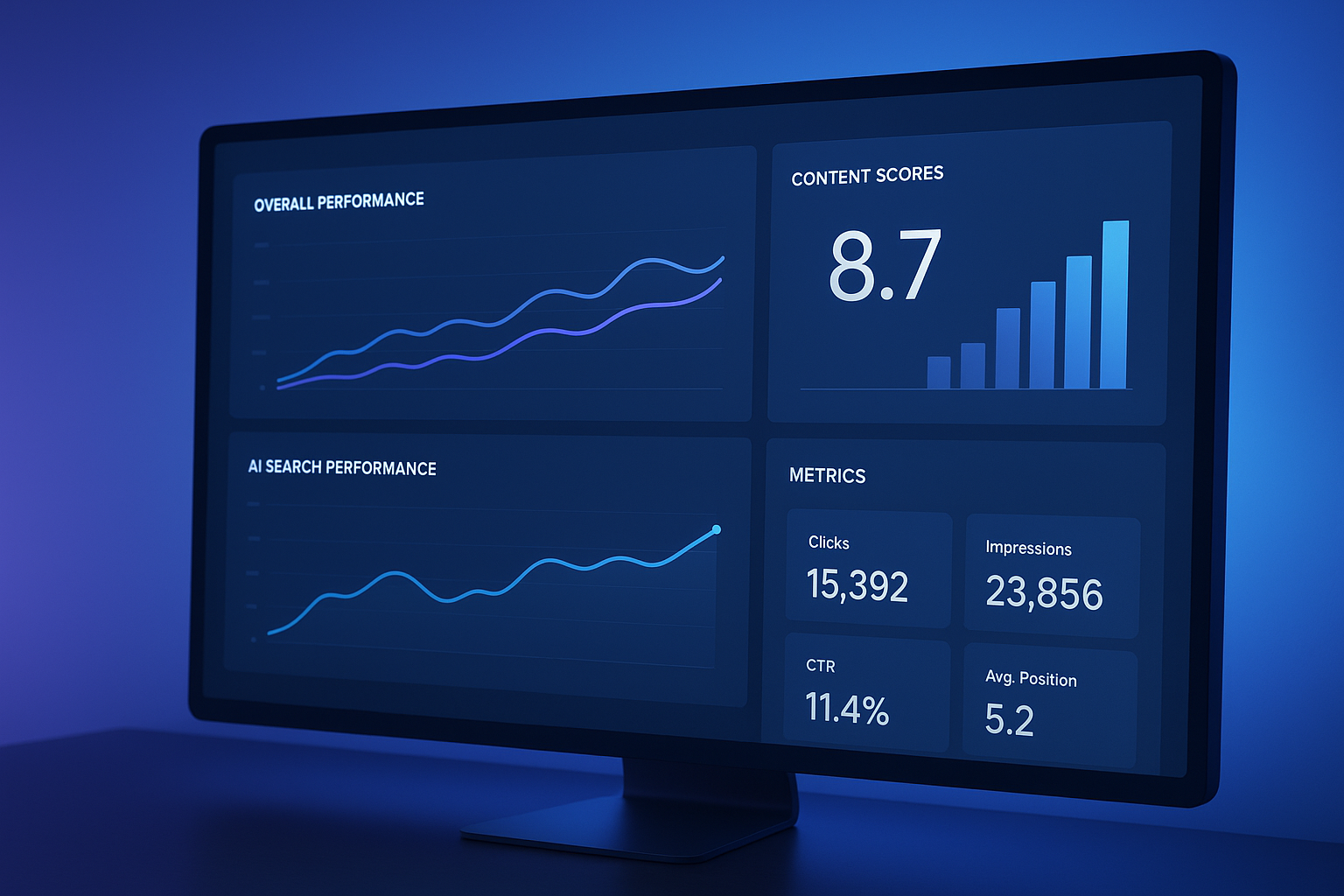
A well-structured AI visibility audit surfaces content performance gaps that traditional SEO tools simply cannot detect. For a deeper walkthrough, see our AI-Based SEO Content Tools: The Complete Guide 2024.
What Is an AI Visibility Audit?
An AI visibility audit is a structured evaluation of how discoverable, understandable, and citable your content is across AI-powered search environments — including large language models (LLMs), answer engines, and AI-generated search summaries. Unlike a traditional SEO audit that focuses primarily on crawlability, backlinks, and keyword density, an AI visibility audit examines whether your content is formatted in a way that AI systems can parse, trust, and reproduce as an answer.
The distinction matters because AI systems don’t rank pages — they extract and synthesize information. A page that ranks on page one of Google may still be completely absent from AI-generated answers if it lacks the structural and semantic signals these systems rely on. According to research on information retrieval, systems that serve direct answers prioritize content clarity, source authority, and structural coherence above raw keyword matching.
For a deeper walkthrough, see our AI-Assisted Blog Publishing for WordPress: Full Guide.
Why Your Site Needs One Right Now
The window for early adoption is narrowing. Brands that establish AI citation authority now will enjoy compounding visibility as AI search adoption grows. Those who delay will find themselves rebuilding from scratch in a landscape where the rules have already been written. Here are the core reasons to act immediately:
For a deeper walkthrough, see our Free AI Search Visibility Checker.
- Zero-click growth: AI answers reduce click-through rates — your only presence may be as a cited source inside the answer itself.
- LLM training signals: Content that is well-structured and frequently cited trains future model versions to associate your brand with topic authority. For a deeper walkthrough, see our AI-Driven Backlink Strategies That Dominate SEO.
- Competitive gap: Most competitors haven’t audited for AI visibility yet — this is a rare window to capture territory before they do.
- Algorithm alignment: Google’s own ranking systems increasingly favor content that also performs well in AI answer contexts.
The 7 Core Components of an AI Visibility Audit
1. Schema Markup and Structured Data
Schema markup is the language AI systems use to understand what your content is about without reading every word. Audit every key page for FAQPage, HowTo, Article, and Organization schema. Missing or malformed schema is one of the most common reasons well-written content gets ignored by answer engines. Use Google’s Rich Results Test and Schema.org validators to confirm implementation accuracy.
2. Direct Answer Formatting
AI systems favor content that answers questions directly and early. Audit each page for the presence of a clear, concise answer within the first 100 words of each section. If your content buries the answer in background context, restructure it so the direct answer comes first, followed by elaboration. This mirrors the inverted pyramid structure used in journalism — and it’s exactly what LLMs are trained to extract.
3. Entity Recognition and Brand Mentions
AI systems build knowledge graphs around named entities — people, brands, products, and concepts. Audit how consistently your brand name, product names, and key topics are mentioned across your own content and across external sources. Inconsistent naming, missing About pages, or a lack of third-party mentions weakens your entity authority and reduces the likelihood that AI systems will surface your brand as a definitive source.

Entity recognition is a foundational layer of any effective AI visibility audit — AI systems must know who you are before they can cite you. For a deeper walkthrough, see our How Can AI Improve My Website’s Authority?.
4. Content Freshness and Update Cadence
Stale content is a significant liability in AI search. LLMs and retrieval-augmented generation (RAG) systems actively prioritize recently updated, accurate information. As part of your audit, identify pages that haven’t been touched in six months or more and flag them for review. A disciplined approach to updating content for SEO directly improves your AI visibility by signaling that your site maintains current, trustworthy information.
5. Content Depth and Length Calibration
Content that is too thin gets ignored; content that is unfocused and bloated dilutes its own relevance signals. Your audit should evaluate whether each key page achieves the right depth for its topic. Research consistently shows that comprehensive, well-structured content outperforms thin pages in both traditional and AI-driven search. Understanding the impact of content length on SEO rankings gives you the framework to calibrate depth without padding.
6. Internal Linking and Topical Authority
AI systems evaluate topical authority by examining how comprehensively a site covers a subject area. A strong internal link structure that connects related content signals to both traditional search engines and AI retrieval systems that your site is a complete resource on a given topic. Audit your internal links for orphaned pages, broken anchor text relevance, and missing connections between thematically related content.
For a deeper walkthrough, see our AI-Driven Competitor Tracking: The Complete Guide.
7. Citation Potential and E-E-A-T Signals
Experience, Expertise, Authoritativeness, and Trustworthiness (E-E-A-T) are the backbone of AI citation decisions. Audit your author bios, About pages, editorial standards disclosures, and external backlink profile. Pages with clear authorship, verifiable credentials, and external citations are significantly more likely to be surfaced in AI-generated answers than anonymous, uncredentialed content.
Frequently Asked Questions
Why does my website need an AI visibility audit?
Traditional SEO audits focus on crawlability and keyword rankings, but AI search systems prioritize structured, authoritative, and contextually rich content. Without an AI visibility audit, you may be invisible to a growing share of users who rely on AI-generated answers rather than clicking through search results.
How often should I run an AI visibility audit?
At least once per quarter. AI search algorithms and LLM training cycles evolve rapidly, so regular audits ensure your content stays aligned with how these systems retrieve and surface information.
Can content length affect AI visibility?
Yes. Content that is too thin is often ignored by AI systems, while excessively long content without clear structure can dilute relevance signals. The ideal approach is well-structured, comprehensive content with clear headings, direct answers, and supporting detail — which AI systems can efficiently parse and cite.
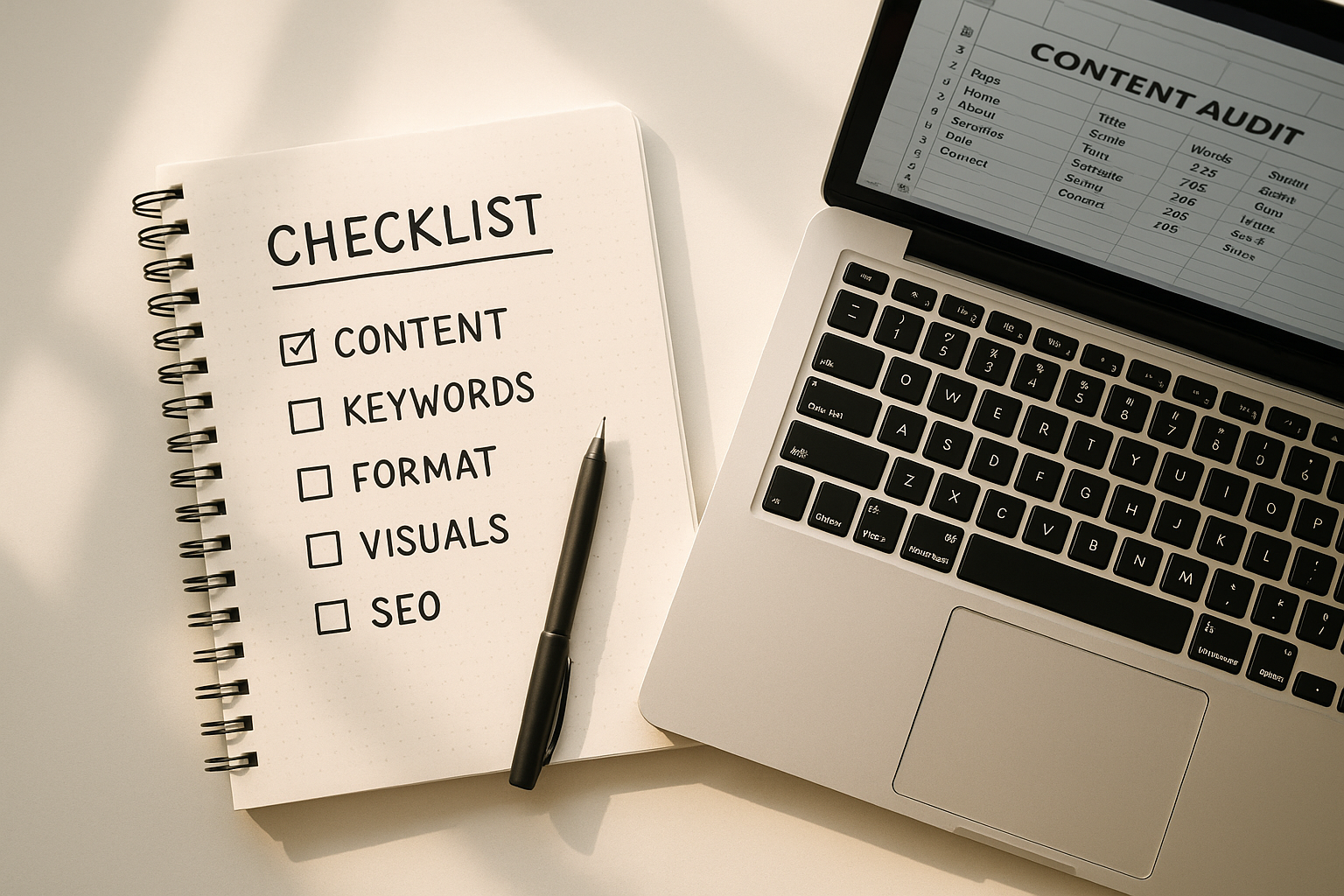
A checklist-driven approach ensures every component of the AI visibility audit is completed systematically and without gaps. For a deeper walkthrough, see our AI Visibility Checker: The Complete Guide for 2025.
Turning Audit Findings Into Action
An audit without a remediation plan is just a report. Once you’ve identified gaps across the seven components above, prioritize fixes by impact and effort. Pages that already rank well in traditional search but lack schema markup are quick wins — a single afternoon of implementation can unlock AI citation potential for dozens of pages. Content that is stale, thin, or poorly structured requires more investment but delivers the highest long-term return.
Build a rolling 90-day content calendar that incorporates AI visibility improvements alongside your existing SEO work. Track your progress by querying AI tools directly — search for your brand, your key topics, and your target questions in ChatGPT, Perplexity, and Gemini. When your content starts appearing as a cited source, you’ll know the audit is working.
Ready to start your AI visibility audit?
The team at RankAuthority provides in-depth audit frameworks, implementation guides, and content strategy resources built specifically for the AI search era. Use their tools to benchmark your current AI visibility and build a clear path to improvement.
Conclusion
The rise of AI-powered search is not a future event — it’s the present reality reshaping how content is discovered, consumed, and credited. Conducting a regular AI visibility audit is no longer optional for brands that want to maintain and grow their organic presence. By systematically evaluating your schema, content structure, entity authority, freshness, and E-E-A-T signals, you give AI systems every reason to choose your content as the answer. Start with the seven components outlined in this guide, build a remediation roadmap, and revisit your audit every quarter. The brands that invest in AI visibility today will be the ones that dominate AI-generated answers tomorrow.
For a deeper walkthrough, see our AI-Assisted Blog Publishing for WordPress: Full Guide.

