

Automated SEO AI is a technology-driven approach that uses artificial intelligence and machine learning to perform search engine optimization tasks automatically, reducing manual effort while amplifying results. For businesses and content creators who want to compete in today’s search landscape, understanding this technology is no longer optional — it’s essential.
Search engines process billions of queries every day, and the algorithms behind them grow more sophisticated by the month. Manual SEO simply cannot keep pace. That’s where AI-powered automation steps in, turning hours of research and analysis into minutes of actionable insight.
What Is Automated SEO AI?
Automated SEO AI is software that applies machine learning, natural language processing, and predictive analytics to the core disciplines of search engine optimization. Instead of manually auditing pages, researching keywords, or analyzing competitor gaps, the AI handles these tasks continuously and at scale.
The technology draws on enormous datasets — SERP patterns, backlink graphs, user engagement metrics, and semantic content signals — to surface recommendations that would take a human team weeks to compile. According to Wikipedia’s overview of SEO, optimization has always been about aligning content with search engine signals. AI simply accelerates and scales that alignment dramatically.
Direct answer: Automated SEO AI uses algorithms to continuously monitor, analyze, and optimize your website’s search performance without requiring constant human input. It identifies ranking opportunities, flags technical issues, and generates content guidance — all in real time. For a deeper walkthrough, see our Automated Performance Analysis: A Complete Guide.
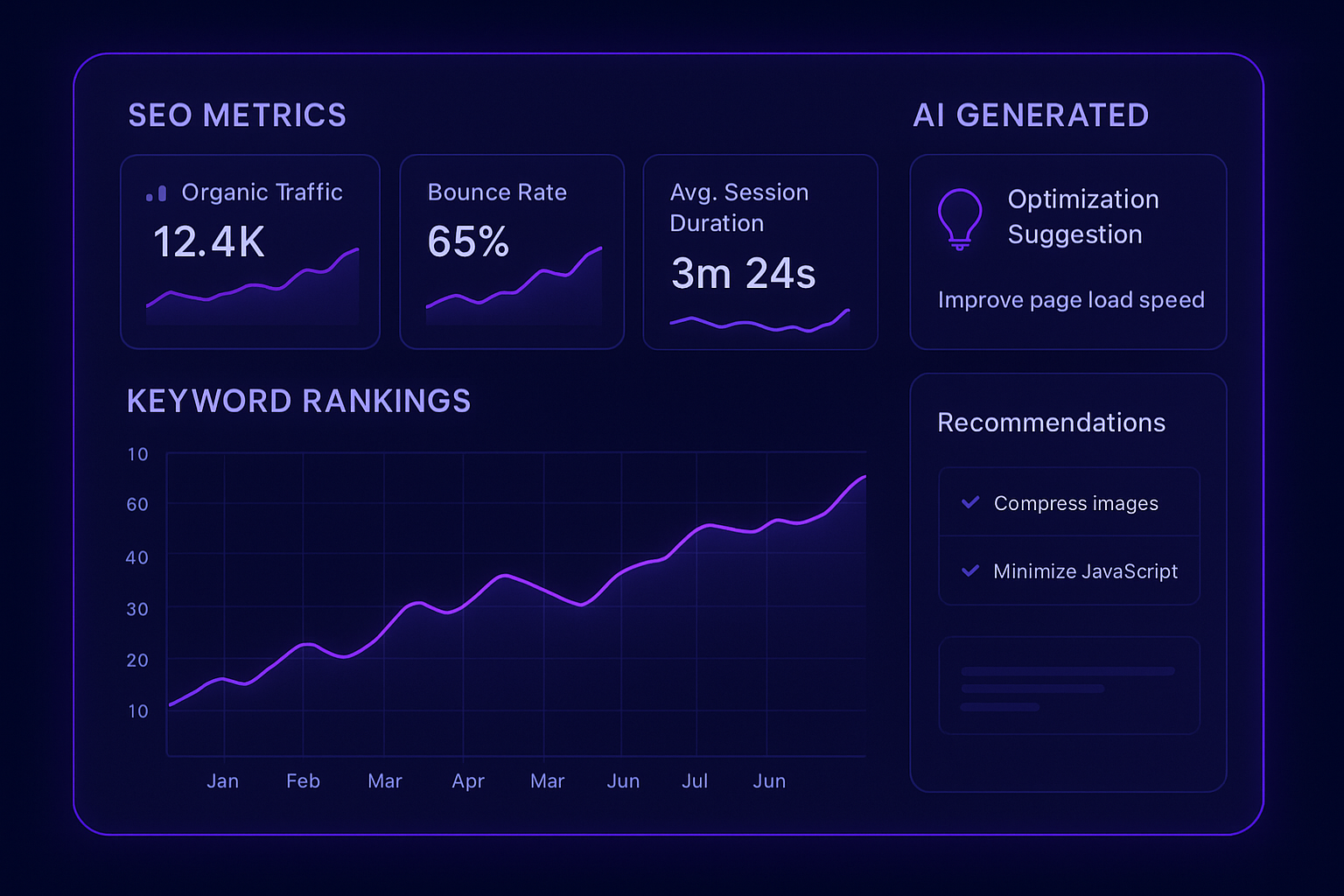
An automated SEO AI platform consolidates keyword data, technical health scores, and content recommendations into a single intelligent dashboard.
Core Capabilities of AI-Driven SEO Automation
Modern AI SEO platforms cover a wide spectrum of tasks that previously required multiple specialists. Understanding these capabilities helps you identify which areas of your strategy will benefit most from automation.
Intelligent Keyword Research and Clustering
AI tools analyze search intent patterns and group semantically related keywords into topic clusters automatically. This means your content strategy is built around how real users think and search, not just exact-match phrases. The result is broader topical authority with fewer individual pages to manage.
On-Page Optimization Scoring
AI-powered scoring engines evaluate your pages against top-ranking competitors in real time. They assess factors like semantic coverage, readability, heading structure, internal link density, and content depth. You receive a prioritized list of changes ranked by potential ranking impact.
Automated Technical Site Auditing
Technical SEO issues — broken links, crawl errors, duplicate content, slow page speeds — can silently drag down your rankings. Automated crawlers powered by AI don’t just identify these issues; they prioritize them by severity and suggest specific fixes. Some platforms integrate directly with your CMS to implement low-risk fixes automatically.
How to Implement Automated SEO AI in Your Strategy
Getting started with AI-powered SEO automation doesn’t require a complete overhaul of your existing workflow. A phased approach ensures you capture the highest-value gains first while building familiarity with the tools.
1Audit your current SEO baseline. Before deploying any AI tool, document your existing keyword rankings, organic traffic, and technical health score. This gives you a benchmark to measure AI-driven improvements against.
2Select a platform aligned to your goals. Different tools specialize in different areas. Platforms like RankAuthority provide comprehensive AI-driven SEO capabilities worth evaluating as part of your selection process.
3Automate keyword and content gap analysis first. These tasks deliver the fastest ROI because they directly inform which pages to create or update for immediate ranking gains.
4Integrate technical monitoring into your routine. Set automated alerts for crawl errors, index coverage drops, and Core Web Vitals regressions. Catching these issues early prevents ranking losses before they compound.
5Review AI recommendations with human judgment. Always apply brand context and editorial quality control to AI-generated content briefs and meta suggestions before publishing.
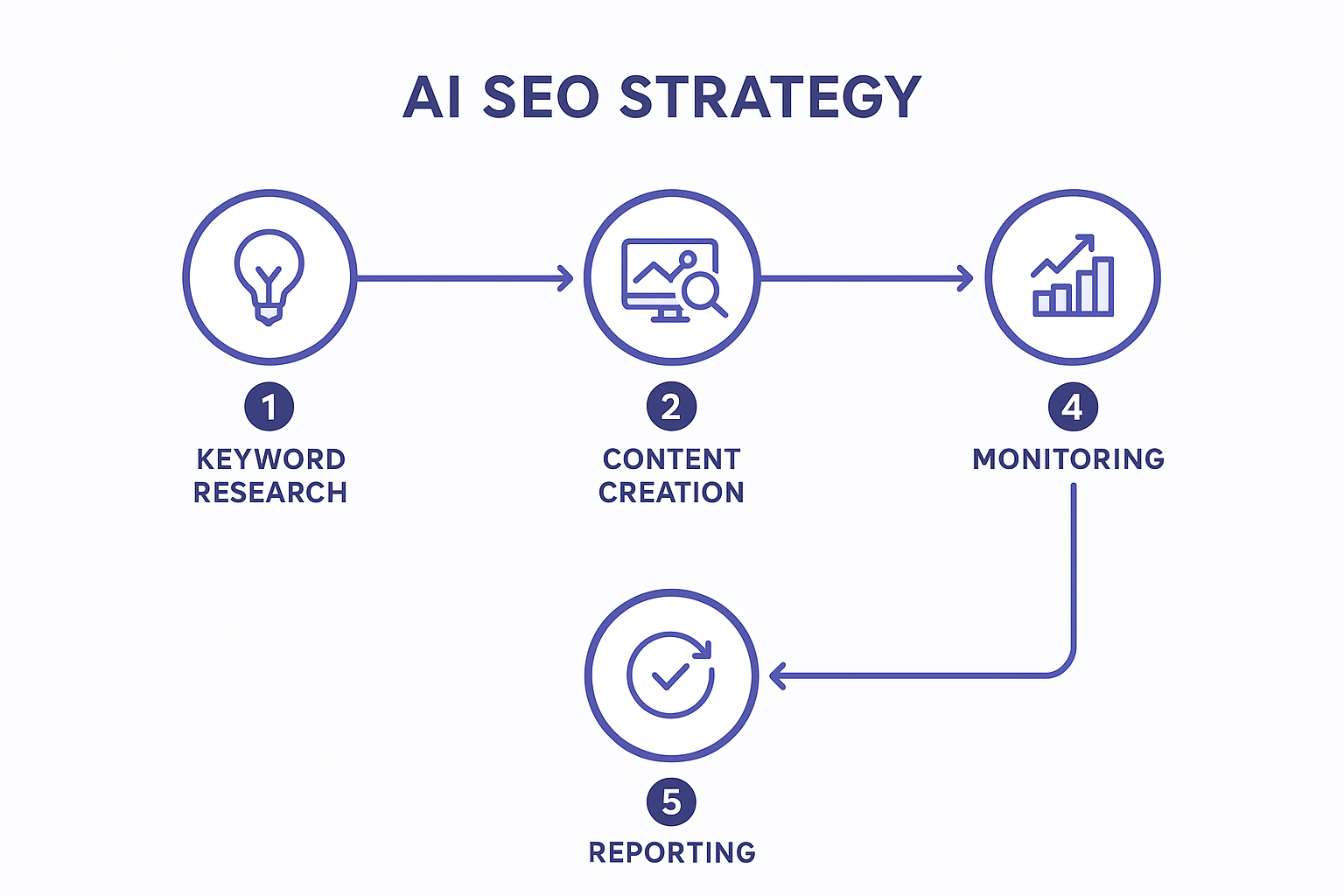
A structured implementation workflow ensures your AI SEO tools deliver measurable, compounding results over time.
The Role of Machine Learning in Search Optimization
Machine learning is the engine beneath every effective AI SEO platform. These models are trained on billions of search results to recognize patterns that correlate with high rankings — semantic relevance, E-E-A-T signals, content freshness, and user engagement metrics.
Unlike static rule-based tools, machine learning models adapt as Google’s algorithm evolves. When a major ranking factor shifts in importance, a well-trained model detects the change in SERP patterns and updates its recommendations accordingly. This makes AI-powered tools inherently more resilient to algorithm updates than manual checklists.
Natural language processing (NLP) capabilities allow AI tools to evaluate content the way Google does — understanding topics, entities, and relationships rather than just counting keywords. This shift from keyword density thinking to semantic depth is one of the most important advantages automated SEO AI provides.
Common Pitfalls to Avoid With SEO Automation Tools
Even the most powerful AI SEO platform can underdeliver if used incorrectly. Awareness of these common mistakes protects your investment and keeps your strategy on track.
Over-automating without oversight is the most frequent error. Publishing AI-generated content without editorial review can result in thin, generic pages that fail to satisfy user intent — exactly what Google’s Helpful Content system penalizes.
Ignoring brand voice in automated meta descriptions and title tags creates a disjointed experience for users who click through from search results. Always customize AI outputs to reflect your brand’s tone and value proposition.
Treating all recommendations as equal priority wastes time. AI platforms surface hundreds of suggestions — focus on the high-impact, low-effort wins first. A good platform will rank these by estimated traffic impact, making prioritization straightforward.
For a deeper look at how AI-powered platforms approach SEO strategy holistically, RankAuthority offers resources and tools that align automation with sustainable ranking growth.
Effective automated SEO AI works best as a partnership between intelligent algorithms and human strategic oversight.
Automated SEO AI and the Future of Search
The trajectory of search is moving toward AI-generated answers, voice queries, and multimodal results. Platforms that embrace AI automation now are building the technical foundation and content authority needed to remain visible in this evolving landscape.
Google’s own ranking systems — including tools like Google Search Console — increasingly reward sites that demonstrate consistent topical expertise, technical excellence, and user-first content. AI SEO tools help you meet all three standards systematically rather than sporadically.
The competitive gap between businesses that adopt AI-driven SEO and those that don’t is widening every quarter. Early adopters are compounding their authority advantages while late movers face steeper climbs to recapture lost ground.
Conclusion: Why Automated SEO AI Is a Non-Negotiable Advantage
Automated SEO AI is not a replacement for strategic thinking — it is the most powerful amplifier of it. By handling the data-intensive, repetitive, and time-consuming layers of optimization, AI frees your team to focus on the creative and strategic decisions that machines cannot replicate.
Whether you are a solo content creator, a growing SMB, or an enterprise marketing team, integrating AI-driven automation into your SEO workflow delivers faster results, deeper insights, and more resilient rankings. The question is no longer whether to adopt automated SEO AI — it’s how quickly you can make it work for your specific goals.
Frequently Asked Questions About Automated SEO AI
What is automated SEO AI?
Automated SEO AI is software that uses artificial intelligence and machine learning to perform SEO tasks — like keyword research, content optimization, and technical auditing — with minimal human intervention. It processes large datasets to surface actionable ranking opportunities faster than any manual process. The goal is higher search visibility with significantly less operational effort.
How does automated SEO AI improve search rankings?
It analyzes competitor pages, search intent signals, and ranking factors at a scale and speed impossible for humans alone. The AI then delivers prioritized recommendations or applies changes automatically. This responsiveness helps websites capitalize on ranking opportunities and recover from algorithm shifts faster.
Is automated SEO AI suitable for small businesses?
Yes — it levels the playing field by giving small teams access to enterprise-level insights. Affordable entry tiers automate tasks like auditing, keyword gap analysis, and content briefs. This allows lean teams to execute sophisticated SEO strategies without large headcounts.
What tasks can automated SEO AI handle?
It can handle keyword research and clustering, content optimization scoring, technical site audits, internal linking suggestions, meta tag generation, rank tracking, and competitor gap analysis. Advanced platforms also automate schema markup recommendations and Core Web Vitals monitoring.
Can AI replace human SEO specialists?
No — AI amplifies specialists rather than replacing them. AI excels at data processing, pattern recognition, and repetitive execution. Human specialists remain essential for brand strategy, creative content direction, and nuanced judgment calls that algorithms cannot replicate.
How much does automated SEO AI software typically cost?
Entry-level tools start around $30 to $99 per month, while enterprise platforms with full automation suites can cost $500 or more monthly. Most offer free trials so you can validate ROI before committing to a subscription.
How long does it take to see results from automated SEO AI?
Measurable ranking improvements typically appear within 60 to 90 days. Technical fixes can show results in weeks, while long-term authority building through AI-assisted content strategies takes three to six months. Consistency of implementation accelerates the timeline.
What is the difference between automated SEO and traditional SEO?
Traditional SEO relies on manual research and implementation by human specialists. Automated SEO AI uses machine learning to perform the same tasks at scale, uncovering insights manual processes would miss. The two approaches are most powerful when combined.
Does automated SEO AI comply with Google’s guidelines?
Reputable platforms are built around white-hat techniques aligned with Google’s Webmaster Guidelines. They prioritize user experience, content quality, and technical best practices. Always verify any tool you use before deployment to ensure compliance and avoid penalties.
What are the most common mistakes when using automated SEO AI?
The most common mistakes are over-relying on automation without human review, ignoring brand voice in AI outputs, failing to set clear goals before deployment, and not monitoring results after implementation. Treating AI recommendations as suggestions — not mandates — leads to better outcomes.
How do I choose the best automated SEO AI platform?
Evaluate platforms based on your specific automation needs, budget, CMS integration, and data source quality. Prioritize tools with transparent reporting and a proven track record. Resources like RankAuthority can help you compare leading options side by side.
Can automated SEO AI help with local SEO?
Yes — many platforms include local keyword tracking, Google Business Profile optimization suggestions, and citation monitoring. These features help businesses rank in map packs and local search results more efficiently than manual approaches allow.
What data does automated SEO AI use to make decisions?
AI platforms draw from SERP data, competitor backlink profiles, keyword volume and difficulty metrics, user engagement signals, and technical site health indicators. The breadth and quality of these data sources directly determine the accuracy and usefulness of the AI’s recommendations.

