
Automated SEO for digital entrepreneurs is reshaping how solo founders, side-hustle sellers, and lean marketing teams compete against companies with dedicated marketing departments. Instead of manually auditing pages, writing schema markup, and tracking rankings by hand, entrepreneurs now lean on software that scans, fixes, and monitors search performance continuously. This shift matters because search itself is evolving. Google’s algorithm updates roll out constantly, and AI answer engines now decide what gets cited before a user ever clicks a traditional blue link. As a result, keeping up with all of it manually has become nearly impossible for a one-person team.
Direct answer: Automated SEO for digital entrepreneurs is the use of AI-driven software to handle technical fixes, on-page optimization, schema markup, and rank tracking without manual, line-by-line work. Platforms like Rank Authority streamline this process through automated audits and one-click deployment, freeing founders to focus on running their business.
What Is Automated SEO for Digital Entrepreneurs?
In short, automated SEO for digital entrepreneurs means letting software handle repetitive, technical optimization tasks that would otherwise require hours of manual review. For example, a scanning tool can crawl an entire site, flag broken links, missing meta descriptions, and slow-loading pages, then apply approved fixes in minutes rather than weeks.
Search engine optimization, or SEO, has traditionally required specialized knowledge of crawling, indexing, and structured data. However, automation platforms translate that expertise into guided workflows, so a non-technical entrepreneur can still implement best practices correctly. This is particularly useful for anyone managing multiple client sites or a growing product catalog without a dedicated SEO hire.

Automated SEO for digital entrepreneurs turns hours of manual audits into a guided, one-click workflow.
How AI-Driven SEO Automation Works Behind the Scenes
Most AI-driven SEO automation platforms follow a similar sequence: crawl, diagnose, prioritize, and fix. First, the software crawls every page of a website, similarly to how a search engine bot would. Then, it compares findings against known ranking factors, technical guidelines, and structured data standards such as those documented by Google’s Search Central structured data guidelines.
Rank Authority’s 1-Click AI AutoPilot, for instance, runs this scan-and-fix cycle automatically, addressing schema markup gaps, thin content, and internal linking issues in one pass. In addition, it generates a Rank Authority Score, giving entrepreneurs a single benchmark number to track improvement over time instead of guessing whether changes are working. Because the process repeats continuously, sites stay aligned with algorithm changes rather than falling behind between manual audits.
Step-by-Step: Setting Up Automated SEO for Digital Entrepreneurs
Getting started with automation does not require a steep learning curve. The following sequence reflects how most entrepreneurs move from a raw website to an optimized, monitored one.
- Connect your website to an automated SEO platform and run a full diagnostic scan to identify technical errors, missing schema markup, slow pages, and content gaps across the site.
- Review your starting Rank Authority Score or equivalent audit score so you have a measurable benchmark to compare against after fixes are applied over the following weeks.
- Approve the technical and on-page recommendations generated by the platform, then deploy schema markup, meta tag corrections, and internal linking updates automatically.
- Use an AI content builder to publish new pages structured for both traditional search rankings and AI answer citation, including clear definitions and direct-answer formatting.
- Track how often your brand appears in AI answer platforms, monitor keyword gaps against competitors, and adjust your content strategy based on ongoing performance data.
Notably, entrepreneurs who follow a structured automation process tend to see faster, more consistent gains than those who apply fixes sporadically.
Why Entrepreneurs Need GEO and AEO, Not Just Traditional SEO
Traditional SEO alone no longer guarantees visibility. Generative Engine Optimization, or GEO, is the practice of structuring content so AI systems can cite it directly in generated answers. Meanwhile, Answer Engine Optimization, or AEO, formats content to answer specific questions concisely, using schema markup that featured snippets and voice assistants can extract.
Consequently, digital entrepreneurs who rely only on keyword-focused SEO risk losing visibility as more searches resolve inside AI-generated answers rather than a list of blue links. In particular, large language models, described in more depth on Wikipedia’s overview of large language models, draw from structured, well-organized web content when forming responses. As a result, GEO and AEO have become necessary companions to traditional SEO automation rather than optional extras.

GEO and AEO help structured content surface inside AI-generated answers, not just search results pages.
Benefits of Automated Search Optimization for Entrepreneurs
Time savings represent the most immediate benefit. Instead of spending hours each week manually checking rankings, entrepreneurs can review a single dashboard summary. Furthermore, automated platforms typically catch technical issues, such as broken links or missing alt text, faster than periodic manual audits would.
According to industry research compiled by search marketing analysts, sites with clean technical foundations and structured schema markup are cited in AI-generated answers significantly more often than sites without them. Similarly, entrepreneurs managing several client or product sites benefit from consistency, since automation applies the same optimization standards everywhere rather than depending on manual effort that varies site to site.
For a deeper look at how AI tools specifically help founders scale their marketing workload, see this guide on how entrepreneurs benefit from AI in SEO.
Common Mistakes When Automating SEO
Automation removes manual labor, but it does not remove the need for oversight. One common mistake is approving every suggested change without reviewing it first, which can occasionally lead to unwanted content edits. Another frequent gap is ignoring AI visibility tracking entirely, leaving entrepreneurs unaware of how often, or rarely, their brand appears in AI-generated answers.
In addition, some entrepreneurs treat automation as a one-time setup rather than an ongoing process. Because algorithms and AI models update frequently, sites need continuous monitoring rather than a single fix-and-forget scan. Skipping competitor keyword-gap analysis is another oversight; without it, entrepreneurs may miss opportunities their rivals are already capturing.
Choosing the Right Automated SEO Platform
When evaluating tools, look for platforms that combine traditional SEO automation with GEO and AEO capabilities, rather than treating them as separate purchases. Rank Authority, for example, brings together 1-Click AI AutoPilot fixes, RankFast competitor rewrites, RankLink internal linking automation, and an AI Blog Builder inside one dashboard, supported by a seven-day free trial for testing before committing.
CMS compatibility also matters. Because entrepreneurs often run WordPress, Shopify, Wix, GoDaddy, Webflow, or GoHighLevel sites, choosing a platform with direct integrations avoids manual code edits. If you are still comparing options, this breakdown of whether automated SEO is worth the investment for startups covers cost-versus-benefit considerations in more depth. You can also start with a free diagnostic scan directly at rankauthority.com to see where a site currently stands.
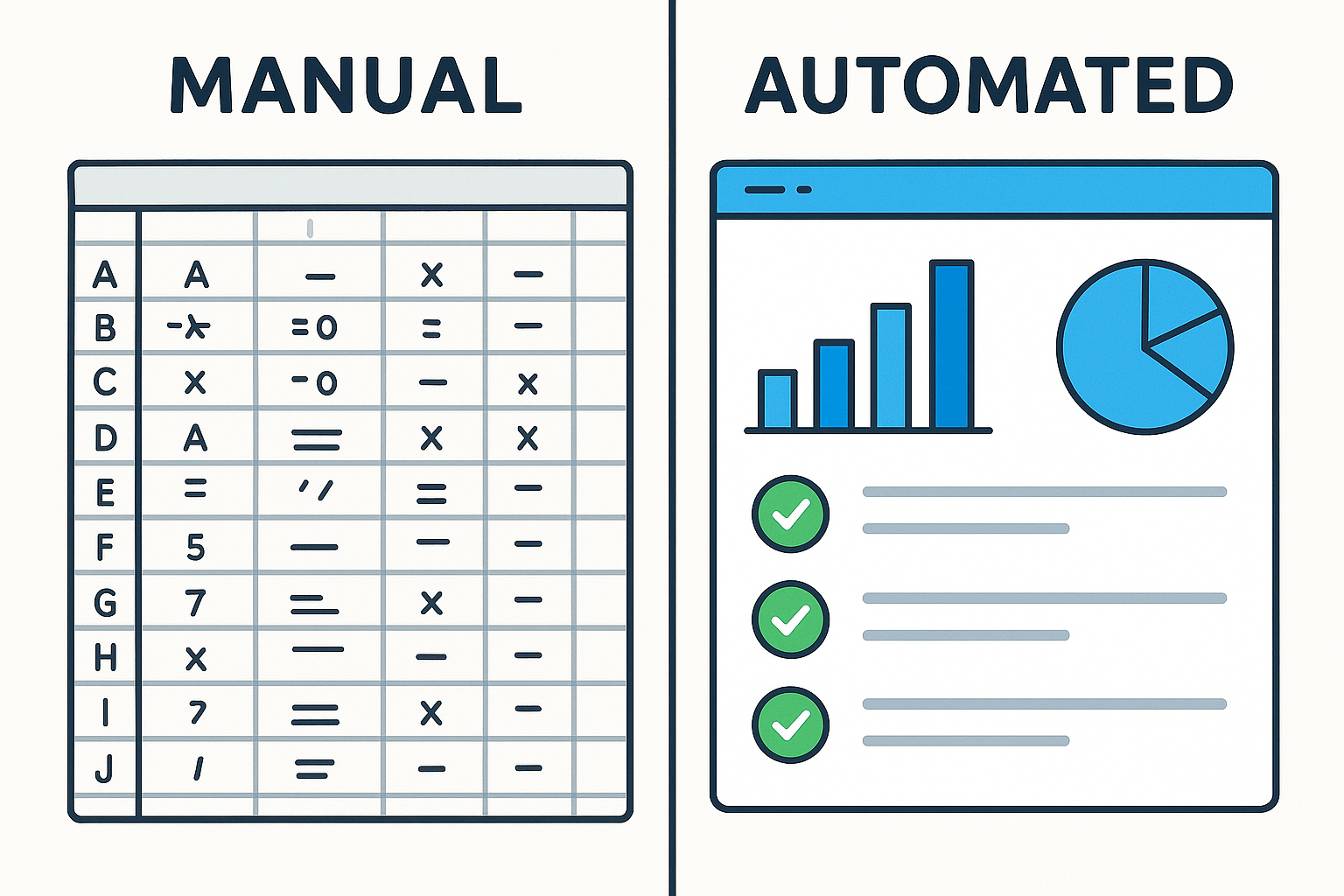
Automated dashboards replace scattered spreadsheets with a single, continuously updated view.
Frequently Asked Questions About Automated SEO for Digital Entrepreneurs
What is automated SEO for digital entrepreneurs?
Automated SEO for digital entrepreneurs is the use of software that scans a website, finds technical and content issues, and applies or recommends fixes without manual, line-by-line optimization work. It typically covers on-page fixes, schema markup, internal linking, and rank tracking in one workflow.
How does automated SEO differ from traditional SEO consulting?
Traditional SEO consulting relies on a specialist manually auditing pages, which takes time and costs more per hour. Automated platforms run continuous scans and apply many fixes instantly, though complex strategic decisions still benefit from human review.
How much does automated SEO typically cost?
Automated SEO tools generally range from free diagnostic scans to monthly subscriptions priced for small businesses, often far below the cost of hiring a full-time specialist. Pricing usually scales with the number of sites managed and features included.
How long does it take to see results from automated SEO?
Technical fixes and schema deployment can show measurable crawl improvements within a few weeks, while ranking and traffic gains usually take two to four months. Individual results vary based on site age, competition, and content quality.
Can automated SEO replace an SEO agency entirely?
For many small businesses and solo entrepreneurs, automation covers the bulk of technical and on-page work an agency would otherwise bill for. However, highly competitive niches may still benefit from added strategic guidance.
What is GEO, or Generative Engine Optimization?
Generative Engine Optimization, or GEO, is the practice of structuring content so AI systems like ChatGPT and Google AI Overviews can easily cite it as a source. It focuses on clear definitions, structured data, and answer-ready formatting.
What is AEO, or Answer Engine Optimization?
Answer Engine Optimization, or AEO, formats content to directly answer common questions using schema markup and concise response blocks that featured snippets and voice assistants can pull verbatim. It works alongside GEO and traditional SEO rather than replacing them.
What common mistakes do entrepreneurs make when automating SEO?
Common mistakes include approving every automated change without review, ignoring AI visibility tracking, and treating automation as a one-time setup instead of an ongoing process. Skipping competitor keyword-gap analysis is another frequent gap.
Is automated SEO safe for Google rankings?
Reputable automated SEO platforms follow documented search engine guidelines and apply established fixes such as schema markup, speed improvements, and internal linking. Risk mainly arises from tools that generate spammy content or manipulate links, which entrepreneurs should avoid.
Which platforms integrate with automated SEO software?
Most modern automated SEO tools connect directly to WordPress, Shopify, Wix, GoDaddy, Webflow, and GoHighLevel, allowing fixes to deploy without manual code edits. Integration depth varies by platform and by the specific SEO tool used.
Do I need technical skills to use automated SEO tools?
No, most automated SEO platforms are built for non-technical users, offering guided scans, plain-language explanations, and one-click deployment of fixes. Understanding basic SEO concepts still helps you evaluate the recommendations.
What is a Rank Authority Score and why does it matter?
A Rank Authority Score, or RA Score, is a composite metric summarizing a site’s technical health, content quality, schema coverage, and AI citation readiness in one number. It gives entrepreneurs a quick benchmark to track progress over time. For a beginner-friendly walkthrough, see this beginner’s growth guide for entrepreneurs, or explore how 1-click SEO with AI applies these fixes automatically.
Final Thoughts on Automated SEO for Digital Entrepreneurs
Ultimately, automated SEO for digital entrepreneurs is less about replacing human judgment and more about removing repetitive, time-consuming tasks so founders can focus on growth. As search shifts toward AI-generated answers, combining traditional SEO automation with GEO and AEO has become essential rather than optional. Therefore, entrepreneurs who adopt continuous, monitored automation, rather than one-time fixes, are better positioned to stay visible as algorithms and AI answer platforms keep evolving.
Individual results vary, and reviews reflect individual user experiences rather than guaranteed outcomes for every user. That said, testing a platform’s free trial remains a low-risk way to see whether automated SEO fits your workflow before committing further resources.

