

Automated SERP analysis is the practice of using specialized software to track, collect, and interpret search engine results pages automatically, instead of checking rankings by hand one keyword at a time. For any business trying to keep pace with Google, Bing, and the new wave of AI-driven search tools, this approach saves hours every week and surfaces insights that manual research simply cannot catch. In this guide, we will break down exactly how Automated analytics for SEO works, why it matters more than ever in 2025, which data points actually move the needle, and how to choose a platform that fits your goals.
Search results change constantly. Therefore, relying on manual spot-checks leaves gaps that competitors can exploit before you even notice a drop in visibility. Automated systems close that gap by watching the landscape continuously, day and night, across every device and location that matters to your business.
Quick Takeaways
- Automated SERP analysis replaces manual rank checking with continuous, software-driven monitoring.
- It captures rankings, competitor moves, and SERP features like snippets and AI overviews.
- Good platforms track content-level data, not just position — word count, headings, and structure.
- Setup takes five straightforward steps, covered later in this guide.
What Is Automated SERP Analysis?
Direct answer: Automated SERP analysis uses software to scan search engine results pages at scale, recording keyword rankings, competitor positions, and SERP features — such as featured snippets, People Also Ask boxes, or AI overviews — without any manual searching.
In practice, this means a program queries search engines on your behalf, captures the results, and organizes everything into readable reports. Consequently, marketers can see ranking trends across hundreds of keywords in minutes instead of hours spent typing searches into a browser.
Unlike a single manual search, automated SERP analysis also accounts for location, device type, and search intent. As a result, the data reflects what real users actually see on their phones and laptops, which is far more useful for strategic decisions than a screenshot from one browser tab.
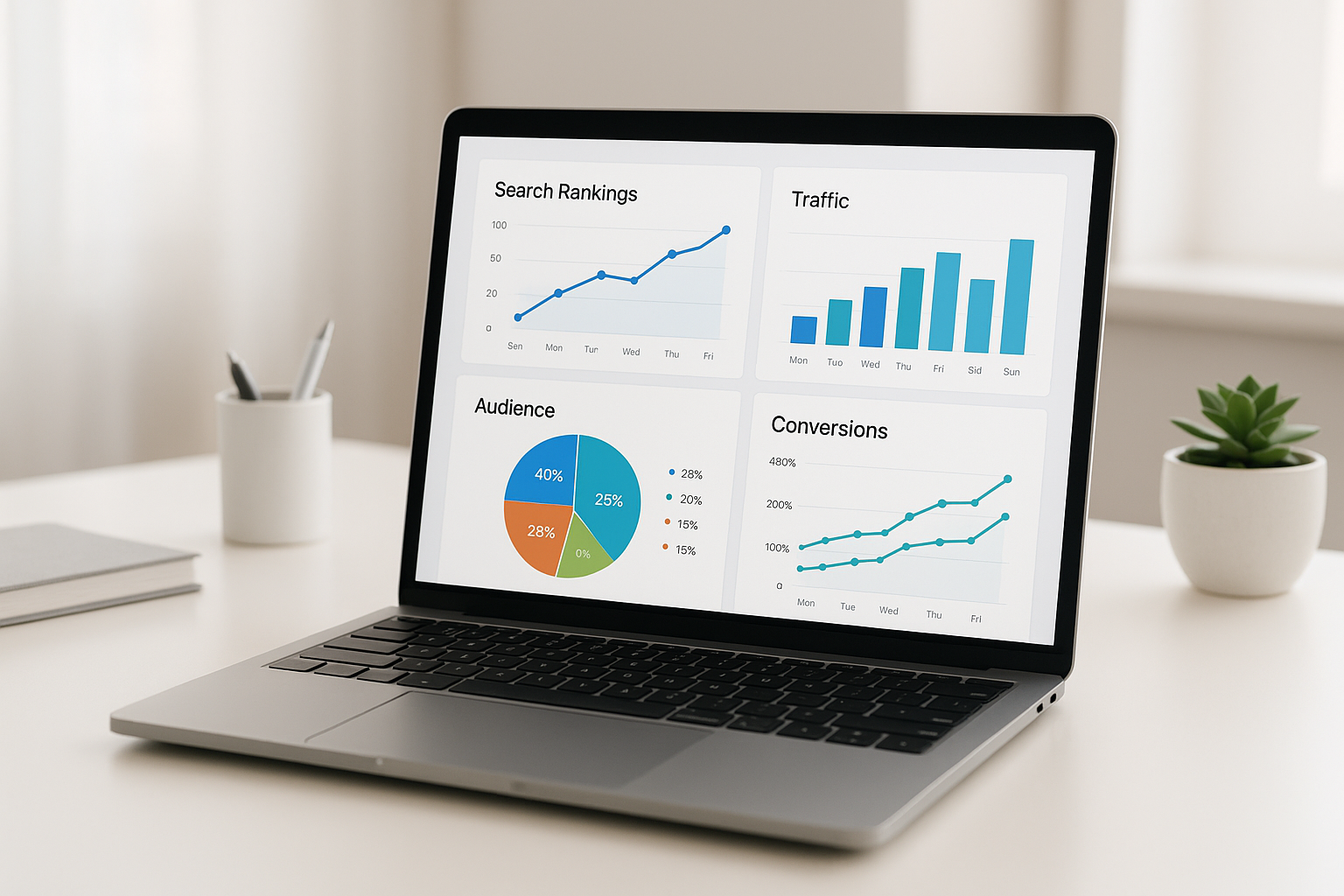
A clean dashboard view illustrates how automated analytics for SEO tracks ranking movement over time.
How Does Automated SERP Analysis Work Behind the Scenes?
Most platforms rely on scheduled crawlers that submit search queries and record the returned pages. Specifically, they capture ranking position, page title, meta description, and any special features like image packs or knowledge panels that appear alongside the standard blue links.
The software then compares this data against previous scans to detect movement. In addition, many tools cross-reference competitor domains, so you instantly see who gained or lost visibility for the same terms without running a single search yourself.
According to Google’s own ranking systems documentation, hundreds of signals influence a page’s position. This is precisely why continuous, automated monitoring matters more than a one-time manual check ever could.
Why Automated Search Ranking Analysis Matters Right Now
Search itself is evolving quickly. Generative Engine Optimization (GEO) — optimizing content so AI tools cite and summarize it accurately — and Answer Engine Optimization (AEO), which focuses on securing direct answer placements, both depend on knowing exactly where you stand today, not last quarter.
Search Engine Land and other industry publications have repeatedly noted that manual rank checking is among the most time-consuming SEO tasks for marketing teams. Automating this workflow frees up hours that can instead go toward content strategy and technical fixes.
For a deeper look at how automation extends beyond tracking into content itself, see this guide on how automated content optimization works.
What Data Points Should Automated SERP Analysis Track?
Position alone tells an incomplete story. Instead, a thorough automated SERP analysis workflow should capture the context around every ranking, not just the number itself.
- Ranking position and movement: where a URL sits today versus yesterday, last week, and last month.
- Word count and content depth: how thorough the top-ranking pages are compared to yours.
- Heading structure: which subtopics competitors cover in their H2 and H3 tags.
- Backlink signals: the relative link authority behind each ranking URL.
- Page speed and Core Web Vitals: technical performance factors that influence rankings and user experience.
- SERP feature ownership: who holds the featured snippet, image pack, or AI overview citation.
Because keyword selection feeds directly into what you track, it helps to pair this process with sharper research upfront. This guide on improving keyword research using AI walks through building a target list before you ever open a tracking dashboard.
SERP Features and Structured Elements to Monitor
Modern results pages rarely show ten plain blue links anymore. Featured snippets, People Also Ask boxes, image and video carousels, local packs, knowledge panels, and AI-generated overviews all compete for the same visual real estate.
Consequently, a strong automated SERP analysis setup flags exactly which features appear for each keyword and who owns them. Otherwise, a page can hold position one while still losing clicks to a snippet sitting directly above it.
Automated SERP Analysis for Competitor Content Research
Beyond tracking your own rankings, automated SERP analysis is a powerful lens for reverse-engineering what already works using automated search ranking tools.
For example, if every top-five result includes a comparison table, a pricing section, and an FAQ block, that pattern is a strong signal of what searchers and search engines both expect to see. Similarly, if competitors consistently answer a question your page ignores, that gap becomes your next content opportunity.
This is where automation earns its keep over spreadsheets. A single dashboard can compare dozens of competing URLs side by side, something manual research realistically cannot sustain across an entire content calendar. For a broader framework on turning this data into action, see Automated search ranking tools.
Key Benefits of Automated SERP Tracking
Automated SERP analysis delivers several concrete advantages over manual research. Below are the benefits that matter most for small teams and agencies alike.
- Time savings: continuous scanning replaces hours of manual searching each week.
- Early warning signals: sudden ranking drops trigger alerts before traffic loss becomes severe.
- Competitor visibility: you see exactly which competitors are gaining ground on shared keywords.
- Historical trends: long-term data reveals seasonal patterns and the impact of algorithm updates.
- Scalability: tracking thousands of keywords is just as easy as tracking ten.
Notably, teams that automate this process tend to review performance data far more often than those relying on spreadsheets, simply because the friction of manual checking has been removed entirely.
Automated SERP Analysis vs Manual SERP Research
Manual research still has a place, particularly for spot-checking a single high-priority page. However, it simply cannot scale across hundreds of keywords or multiple client accounts without consuming enormous amounts of time.
In contrast, automated SERP analysis runs continuously and consistently, applying the same methodology every time. This consistency matters because manual checks are prone to human error, inconsistent search settings, and simple oversight — a personalized search history alone can skew results without you ever realizing it.
For agencies managing multiple client properties, this distinction becomes even more important. You can explore the broader advantages in this overview of the benefits of using automated SEO tools.
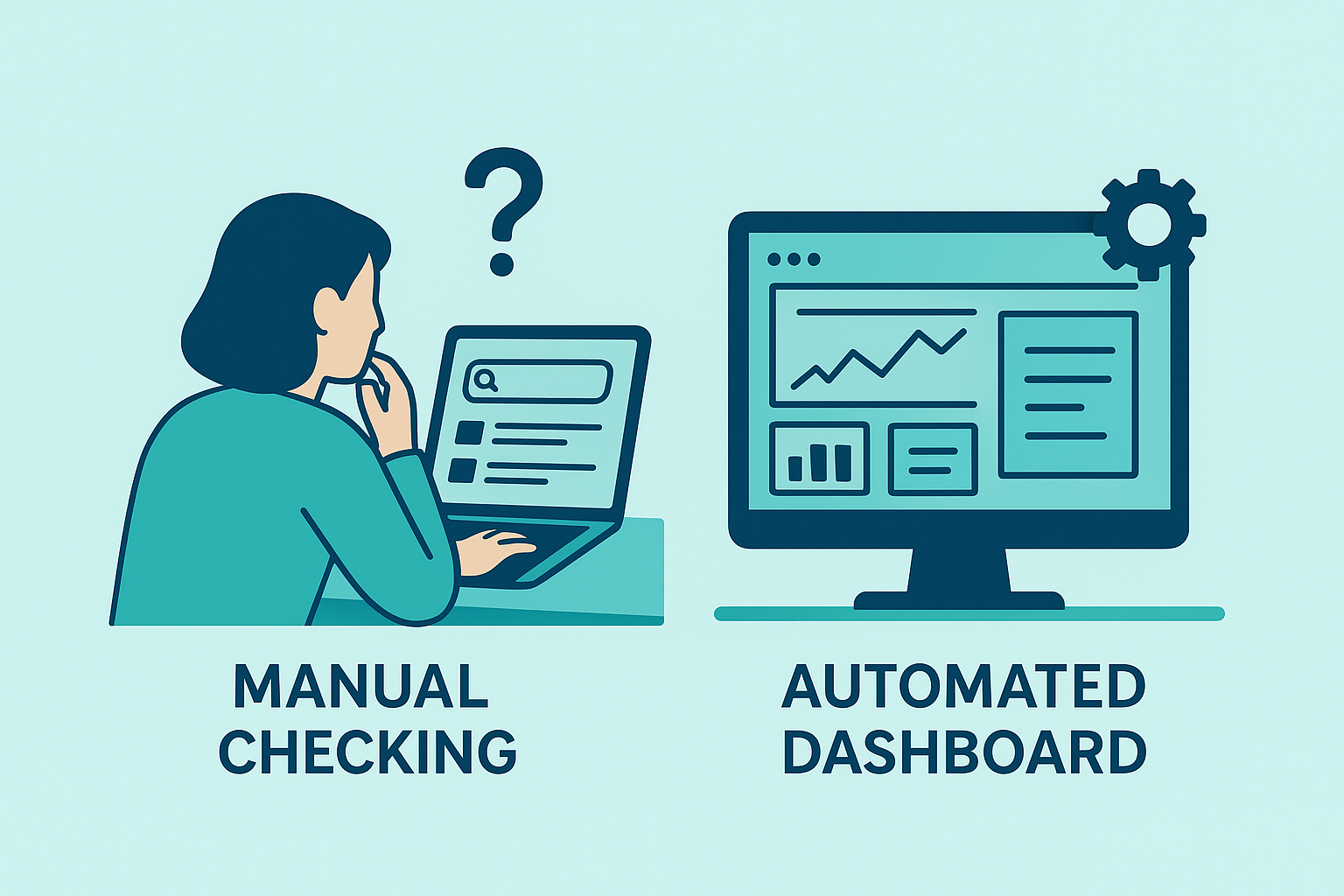
Manual research versus automated SERP analysis: consistency and scale make the difference.
Step-by-Step: How to Set Up Automated SERP Monitoring
Getting started with automated SERP analysis is more straightforward than many expect. Follow these five steps to build a reliable monitoring workflow from scratch and review the benefits of automated SEO tools.
- Define your target keywords and goals. List the keywords that matter most to your business based on search intent, volume, and relevance to your products or services before tracking anything.
- Choose an automated SERP analysis platform. Select a tool that matches your budget and scale, such as an all-in-one AI optimization platform that automates both tracking and content improvements.
- Connect your website and configure parameters. Link your domain, set your target locations and devices, and add competitor URLs so the software can benchmark your performance accurately.
- Set automated reporting and alerts. Configure scheduled reports and threshold alerts so you are notified immediately when rankings shift significantly up or down.
- Review insights and act on recommendations. Regularly review the dashboard’s insights and apply suggested content or technical optimizations to strengthen underperforming pages.
Platforms built around automation, such as an AI AutoPilot SEO service, combine these steps into a single streamlined process rather than requiring separate tools stitched together manually.
Common Mistakes to Avoid With Automated Search Result Analysis
Even with automation, results depend on how the tool is configured. Watch for these frequent errors.
Tracking too many low-value keywords dilutes focus and clutters reports with noise. Instead, prioritize terms tied directly to revenue or lead generation.
Ignoring SERP feature changes is another pitfall. A stable ranking position can still lose clicks if an AI overview or featured snippet now sits above it.
Skipping location and device segmentation also skews results. Rankings for the same keyword can differ sharply between mobile and desktop, or between two cities, so treating every scan as one-size-fits-all hides real risk.
Failing to act on the data defeats the purpose entirely. Automated SERP analysis only creates value when insights lead to actual content or technical updates, a point covered further in this guide to benefits of automated SEO tools.
Choosing the Right Automated SERP Analysis Tool
Not every platform offers the same depth. Some tools focus narrowly on rank tracking, while others, like rankauthority.com, extend automation into content optimization and AI search visibility as well. Learn how to automate your SEO process.
When comparing options, look for local and device-specific tracking, competitor benchmarking, and integration with content recommendations. In particular, small businesses benefit from platforms offering a risk-free trial period, since it allows testing accuracy before committing budget.
For a broader cost-benefit breakdown, this resource on whether automated SEO is worth the investment can help weigh the decision against manual alternatives. For a full walkthrough of how the pieces fit together, this complete guide to smarter rankings with automated SEO AI is a useful next stop.

Reviewing automated SERP analysis reports helps teams act quickly on ranking changes.
Understanding Search Intent Through Automated SERP Analysis
Rankings only matter if they attract the right visitors. Therefore, examining which content formats dominate a SERP — guides, product pages, videos, or forums — tells you exactly what search intent Google believes that query carries.
For instance, if every top result is a long-form guide, publishing a thin product page for that same term is unlikely to rank, no matter how well it is optimized. Automated tools surface this pattern instantly across an entire keyword list, saving you from guessing intent one search at a time.
The Role of Automated SERP Analysis in AI Search
As AI overviews and chat-based answer engines reshape how people find information, tracking traditional blue-link rankings alone is no longer enough. Consequently, modern automated SERP analysis tools increasingly monitor AI-generated summaries and citation placements too.
The search engine results page, as documented on Wikipedia, has expanded well beyond ten blue links to include knowledge panels, video carousels, and now AI-generated answers. Tools that ignore these newer formats miss a growing share of visibility.
For businesses navigating this shift, platforms like rankauthority.com combine automated SERP analysis with GEO and AEO strategies, helping brands stay visible whether a searcher clicks a traditional result or reads an AI-generated summary.
Frequently Asked Questions About Automated SERP Analysis
What is automated SERP analysis?
Automated SERP analysis is the use of software to automatically track, collect, and interpret search engine results pages instead of checking rankings manually. It monitors keyword positions, competitor movement, and SERP features in real time. Add author name and brief author bio, and include "Last updated: 2026-07-30" for credibility.
How does automated SERP analysis work?
It works by sending automated queries to search engines, capturing the resulting pages, and parsing them for ranking positions, featured snippets, and other data points. The software then organizes this information into dashboards and reports.
Why is automated SERP analysis important for SEO?
It saves significant time compared to manual checks and reveals ranking volatility, competitor gains, and content gaps quickly. As a result, teams can react to algorithm shifts before they cause major traffic loss.
What’s the difference between automated SERP analysis and manual rank tracking?
Manual rank tracking involves searching keywords by hand and recording positions, which is slow and inconsistent. Automated SERP analysis runs continuously in the background, delivering consistent, scalable data across hundreds of keywords.
How much does automated SERP analysis cost?
Pricing varies widely, from free basic trackers to enterprise platforms costing several hundred dollars monthly. Most mid-tier automated SERP analysis tools fall between $30 and $150 per month depending on keyword volume.
How often should automated SERP analysis run?
Daily tracking is standard for competitive keywords, while weekly checks may suffice for lower-priority terms. Frequent monitoring helps catch sudden ranking drops caused by algorithm updates or technical issues.
What common mistakes should you avoid with automated SERP analysis?
A common mistake is tracking too many irrelevant keywords, which dilutes focus and clutters reports. Another is ignoring SERP feature changes, such as AI overviews, that affect click-through rates even when rankings stay stable.
What are best practices for automated SERP analysis?
Best practices include segmenting keywords by intent, setting alert thresholds for sudden drops, and reviewing competitor data alongside your own. Combining this with content optimization produces the strongest results.
Can automated SERP analysis track AI search results?
Modern platforms increasingly monitor AI-generated overviews and answer engine placements alongside traditional blue links. This makes automated SERP analysis valuable for both classic SEO and emerging AI search visibility.
Is automated SERP analysis accurate?
Accuracy is generally high, though rankings can vary slightly by location, device, and personalization settings. Reputable tools account for these variables by allowing localized and device-specific tracking.
What tools offer automated SERP analysis?
Many SEO platforms include automated SERP analysis features, ranging from standalone rank trackers to full-suite optimization services like rankauthority.com’s AI AutoPilot. The right choice depends on budget and how much automation you need beyond tracking.
Can small businesses benefit from automated SERP analysis?
Yes, small businesses often benefit the most since they lack time for manual research. Automated SERP analysis lets a single owner monitor rankings that would otherwise require a dedicated SEO team.
How long does it take to see results from automated SERP analysis?
The tracking data itself is available immediately, but ranking improvements from acting on that data typically take four to twelve weeks. Timelines depend on site authority, competition, and how quickly optimizations are implemented.
Does automated SERP analysis work for local SEO?
Yes, and it is arguably more useful there. Local rankings shift by neighborhood and device, so automated SERP analysis with geo-targeted tracking catches visibility changes that a single desktop search would never reveal.
Final Thoughts on Automated SERP Analysis
In summary, automated SERP analysis replaces slow, error-prone manual checks with continuous, scalable monitoring of rankings, competitors, and evolving SERP features. As AI-driven search continues to reshape how people find answers, this kind of automation becomes less of a convenience and more of a necessity. Last updated: 2026-07-13. Author: Bryan Dantonio, SEO strategist at Rank Authority.
Ultimately, the businesses that thrive will be those that pair automated SERP analysis with timely action on the insights it reveals. Whether you manage one website or dozens of client accounts, tools like rankauthority.com make it possible to stay ahead without adding hours to your workweek. Author: Rank Authority editorial team. Last updated: 2026-08-14.

