

A backlink SEO checker is a tool that scans every inbound link pointing to your website, then reports on each link’s quality, authority, and risk level. Because backlinks remain one of Google’s most influential ranking signals, knowing exactly what links you have — and which ones are hurting you — is fundamental to any serious SEO strategy.
Without regular link audits, toxic links can quietly drag down your rankings while missed opportunities for link recovery go unnoticed. This guide walks you through everything you need to know: how these tools work, what metrics matter, and a clear step-by-step audit process you can follow today.
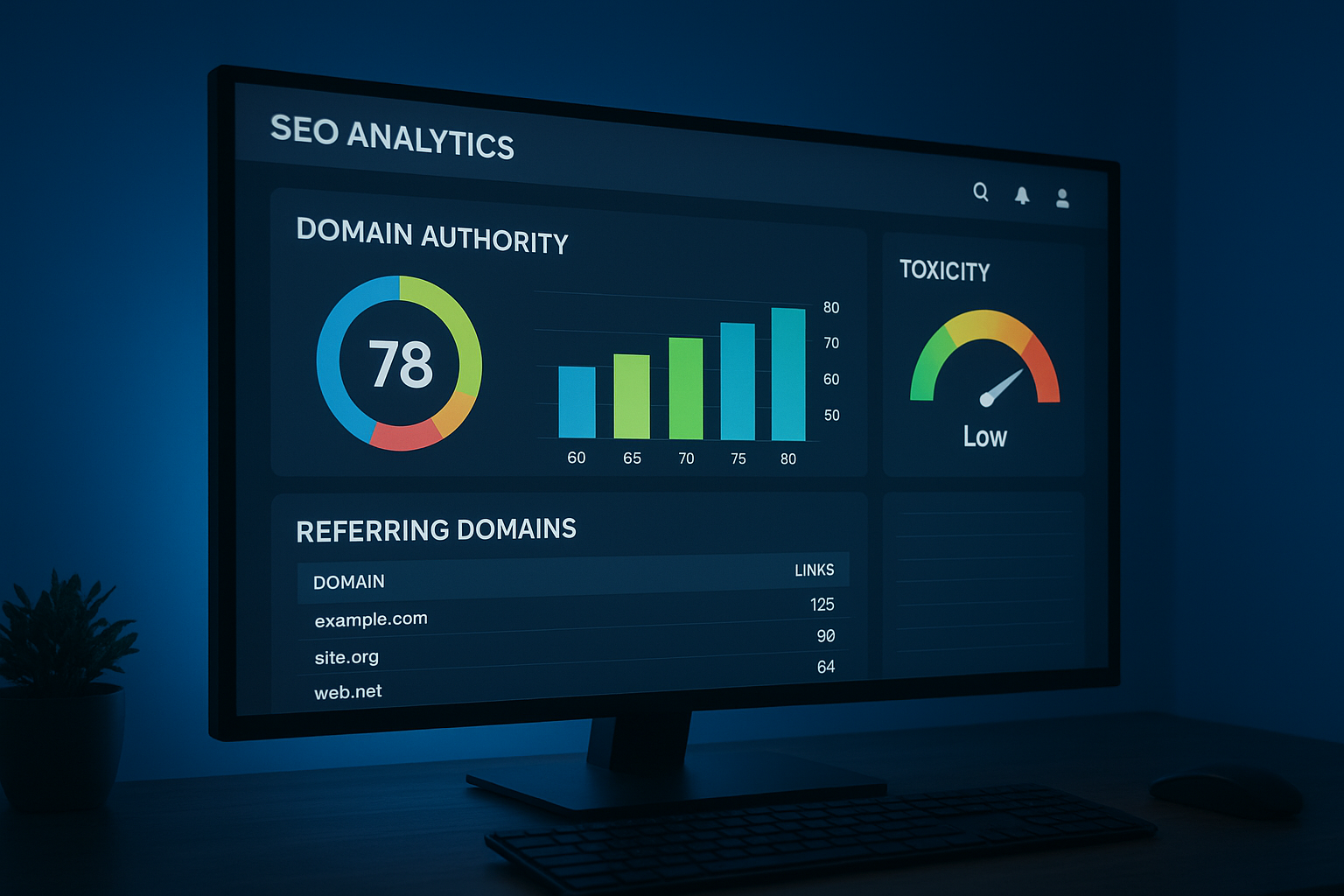
A backlink SEO checker dashboard gives you an instant overview of your link profile’s health and authority distribution. For a deeper walkthrough, see our Backlink Authority Checker: The Complete 2024 Guide.
How Does a Backlink SEO Checker Work?
A backlink SEO checker works by crawling the web continuously and building an index of hyperlinks across billions of pages. When you enter your domain, the tool queries that index and returns every link it has discovered pointing to your site. Additionally, it enriches each result with calculated metrics such as domain rating, anchor text, link type, and spam score.
According to Wikipedia’s overview of backlinks, inbound links have been a core component of search engine algorithms since the earliest days of the web. Therefore, the accuracy and freshness of a tool’s link index directly determines how actionable its data is for your site.
Key Metrics Every Link Audit Should Cover
Not all metrics carry equal weight. However, the following data points consistently separate a superficial report from a genuinely useful audit:
Domain Authority / Domain Rating
A score from 1 to 100 that estimates the overall strength of a linking domain. Higher scores generally mean more ranking power passed to your site.
Anchor Text Distribution
The clickable text used in each link. A healthy profile mixes branded, generic, and topically relevant anchors rather than repeating exact-match keywords.
Dofollow vs. Nofollow Ratio
Dofollow links pass link equity directly. Nofollow links do not pass ranking credit but still contribute to a natural-looking profile.
Toxicity or Spam Score
A risk rating that flags links from penalized, irrelevant, or manipulative sources. These are the links most likely to trigger a Google manual action.
Step-by-Step: How to Audit Your Link Profile
Running a structured audit turns raw backlink data into a clear action plan. Follow these six steps to get the most out of any backlink checker tool.
Export your full backlink list. Log into your chosen tool and download the complete list of referring domains and individual link URLs. This raw export becomes your working document for the rest of the audit.
Score each link for toxicity. Filter the export by spam score or toxicity rating. As a result, you quickly separate genuinely harmful links from the healthy majority without reviewing every row manually.
Reach out for manual removal. Contact webmasters of toxic linking domains and request that the link be removed. Although this step is time-consuming, it is always preferable to the disavow route because Google treats manual removal as more definitive.
Disavow remaining harmful links. For links that cannot be removed manually after two outreach attempts, compile a disavow file and submit it through Google Search Console. Use this option carefully, because disavowing good links by mistake can reduce your rankings.
Reclaim lost backlinks. Most tools include a lost links report showing links that previously existed but have since been removed. Therefore, reaching out to recover even a handful of high-authority lost links can produce a meaningful ranking lift.
Mine competitor backlinks for opportunities. Run your top competitors through the same checker. In contrast to building links from scratch, targeting sites that already link to similar content gives your outreach a much higher success rate.
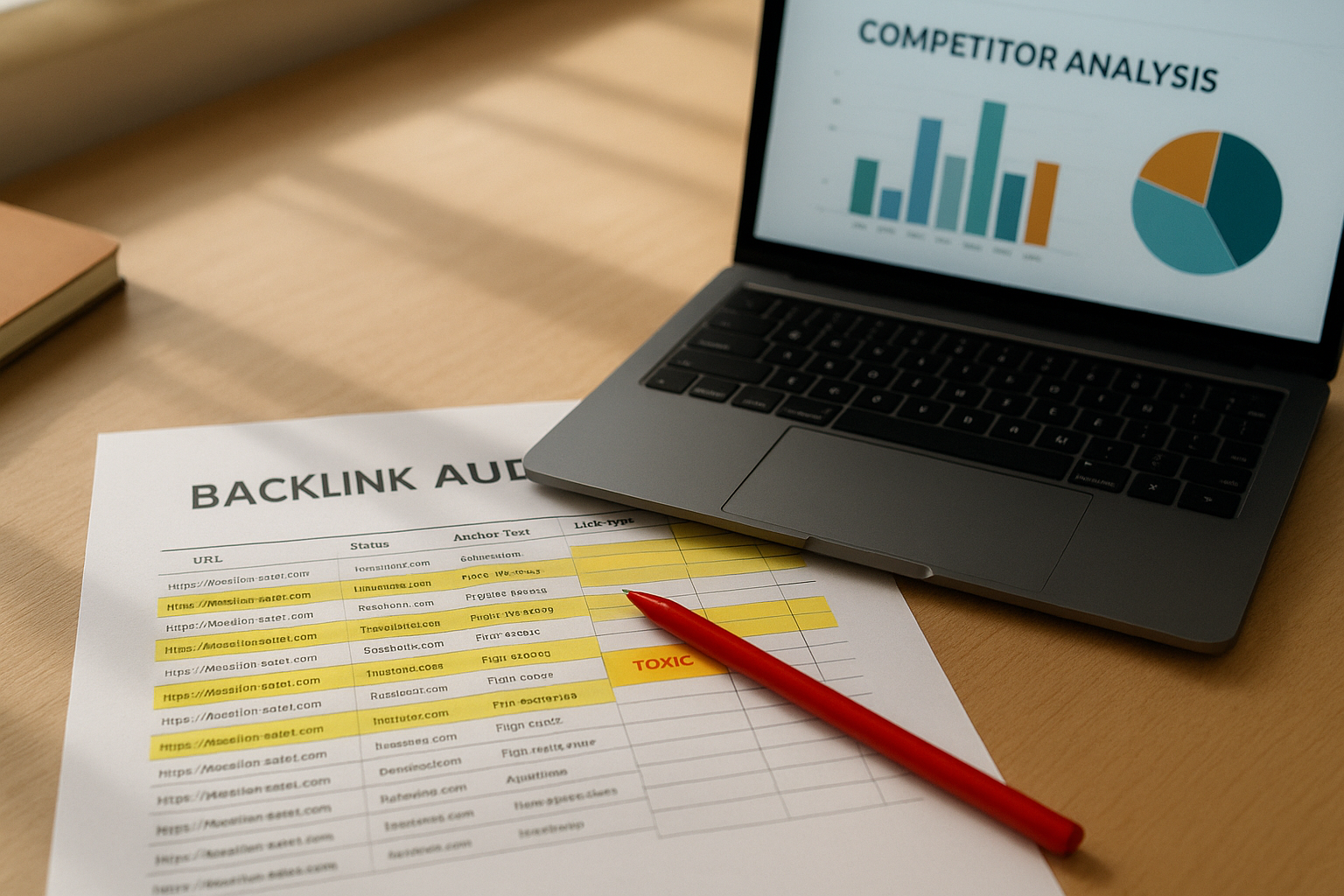
Reviewing a printed backlink audit report helps identify toxic links that need removal or disavowal.
Choosing the Right Tool for Your Needs
Several tools compete in this space, and each has distinct strengths. Ahrefs is widely regarded as having the largest and most frequently updated link index. SEMrush excels at combining backlink data with on-page and keyword analysis in a single platform. Moz, meanwhile, pioneered the Domain Authority metric and remains a reliable choice for smaller teams.
For sites that want an integrated approach to link building and auditing, RankAuthority provides a focused toolkit designed to connect backlink insights directly to actionable outreach workflows. Additionally, Google Search Console remains a free and authoritative starting point, although its link index is smaller than dedicated third-party tools.
Common Mistakes to Avoid During a Link Audit
Even experienced SEOs make predictable errors when auditing their link profiles. First, many practitioners disavow links too aggressively, accidentally removing legitimate editorial links that contribute positive authority. Second, some teams focus only on removing bad links while ignoring the equally important task of building new ones. Finally, running audits only once per year means months of toxic link accumulation go undetected.
In practice, the most effective approach combines monthly monitoring with a deeper quarterly review. This cadence ensures that new toxic links are caught early while giving your team enough time to execute meaningful outreach between audits.
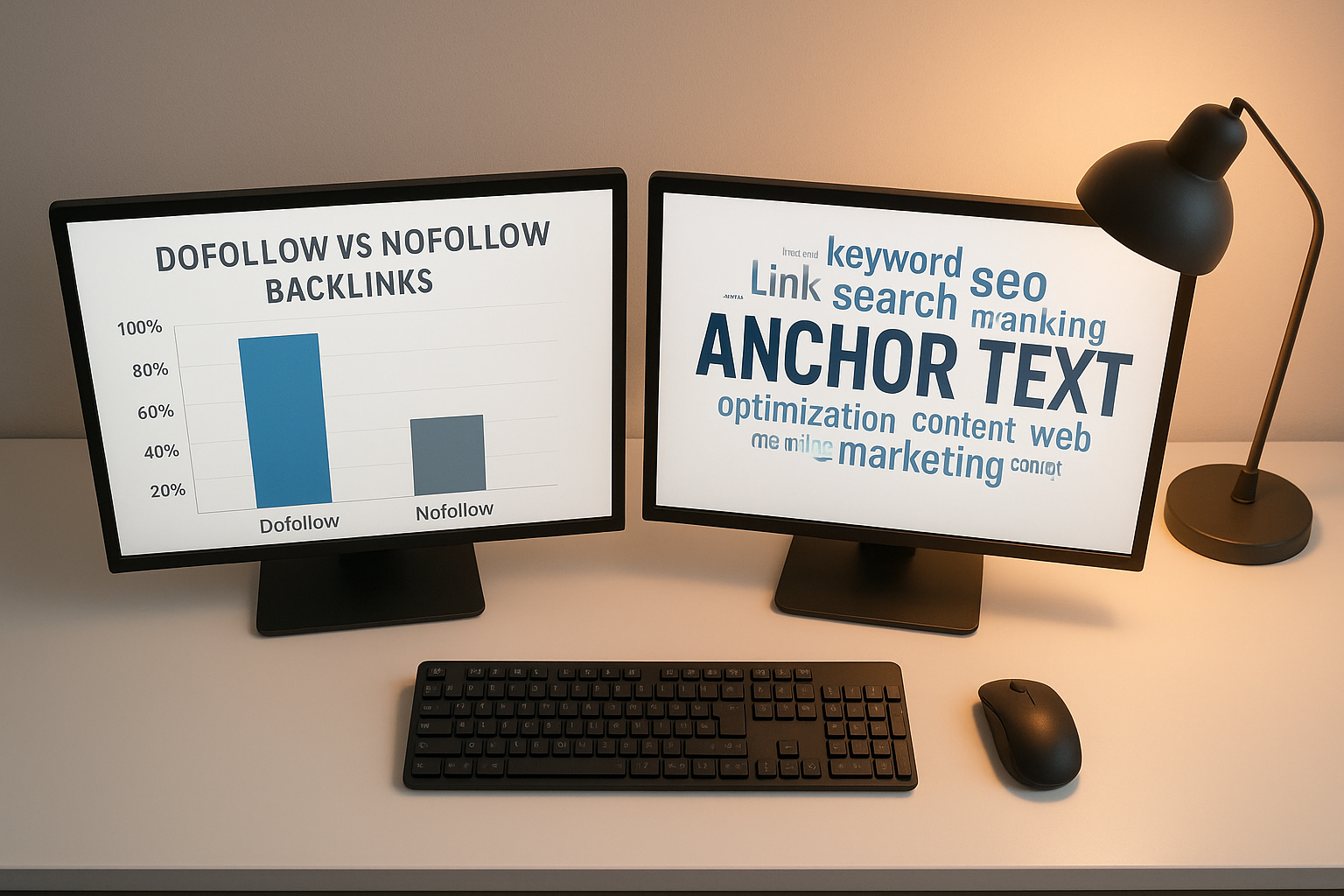
Analyzing your dofollow-to-nofollow ratio and anchor text distribution reveals whether your link profile looks natural to search engines.
Building a Stronger Link Profile After Your Audit
Cleaning up toxic links is only half the work. Because Google’s algorithm rewards sites with a growing number of high-quality links, your audit findings should feed directly into a proactive link-building plan. For example, if your competitor analysis reveals ten authoritative blogs in your niche that link to competitors but not to you, those sites become your highest-priority outreach targets.
Additionally, internal linking improvements can amplify the value of every external backlink you earn. When a new authoritative link points to a specific page, making sure that page links internally to your most important content helps distribute link equity throughout your site more efficiently. Resources like RankAuthority can help you map those internal linking opportunities alongside your external backlink strategy.
Conclusion: Make a Backlink SEO Checker Part of Your Routine
Using a backlink SEO checker consistently is one of the highest-leverage habits in technical SEO. It protects your rankings from toxic links, surfaces recovery opportunities you would otherwise miss, and gives you a data-driven foundation for every link-building decision. Therefore, whether you are managing a single blog or a large enterprise site, scheduling regular link audits should be a non-negotiable part of your SEO workflow. Start with a full export today, prioritize your highest-risk links, and build from there.
Frequently Asked Questions
What is a backlink SEO checker?
A backlink SEO checker is a tool that analyzes all inbound links pointing to your website, reporting metrics like domain authority, anchor text, link quality, and toxicity scores. It helps you understand the strength and health of your link profile so you can make informed SEO decisions.
Why are backlinks important for SEO?
Backlinks act as votes of confidence from other websites, signaling to search engines that your content is trustworthy and authoritative. High-quality backlinks remain one of Google’s top-ranking factors, directly influencing where your pages appear in search results.
How often should I run a backlink audit?
You should run a backlink audit at least once per month for active sites and once per quarter for smaller or less competitive sites. More frequent checks are recommended after a Google algorithm update or a sudden drop in organic traffic.
What are toxic backlinks?
Toxic backlinks are inbound links from low-quality, spammy, or penalized websites that can harm your domain’s search rankings. They often come from link farms, irrelevant directories, or sites with unnatural link patterns.
Can I check a competitor’s backlinks?
Yes, most backlink SEO checker tools allow you to enter any domain and view its link profile. Analyzing competitor backlinks helps you identify high-authority sites that may also link to you and uncover effective link-building strategies in your niche.
What is the disavow tool and when should I use it?
The Google disavow tool lets you ask Google to ignore specific backlinks pointing to your site. You should use it only when you have a significant number of confirmed toxic or spammy links that you cannot remove manually through outreach.
What metrics should I look at in a backlink report?
The most important metrics include domain authority or domain rating, anchor text distribution, the ratio of dofollow to nofollow links, referring domain count, and toxicity or spam scores. Together, these metrics give a complete picture of your link profile’s health.
Is Google Search Console enough for backlink analysis?
Google Search Console provides a free and reliable starting point for backlink data, but it shows only a limited sample of your links. Dedicated tools like Ahrefs or SEMrush offer larger indexes, historical data, and toxicity scoring that Search Console lacks.
What is anchor text and why does it matter?
Anchor text is the clickable, visible text used in a hyperlink pointing to your site. A natural anchor text profile mixes branded, generic, and keyword-rich anchors. Over-optimization with exact-match keyword anchors can trigger Google’s spam filters and hurt rankings.
How do I remove a bad backlink?
First, identify the toxic link using a backlink SEO checker, then contact the linking site’s webmaster and request removal. If outreach fails after two attempts, add the link to a disavow file and submit it through Google Search Console.
What is the difference between dofollow and nofollow backlinks?
Dofollow backlinks pass link equity, also called PageRank, from the linking page to your site, directly influencing rankings. Nofollow links include a rel attribute that instructs search engines not to pass ranking credit, though they can still drive referral traffic.
How many backlinks do I need to rank on page one?
There is no fixed number because ranking depends on the quality and relevance of backlinks rather than quantity alone. A single authoritative link from a high-domain-authority site can outweigh hundreds of low-quality links in competitive niches.

