

Competitive SEO tools are specialized software platforms that help businesses analyze rivals, uncover keyword opportunities, and systematically improve their search engine rankings. In 2025, the SEO landscape has shifted dramatically — AI-powered search engines now influence how millions of users discover content, making the right toolkit more critical than ever. Whether you manage a single website or a portfolio of client properties, choosing the right set of tools can determine whether you gain ground on competitors or fall further behind.
According to Statista, the global SEO services market is projected to exceed $122 billion by 2028. That growth reflects how seriously businesses now treat search visibility as a core revenue driver. Consequently, investing in the right competitive intelligence tools is no longer optional — it is a strategic necessity.
What Are Competitive SEO Tools?
Competitive SEO tools are platforms that aggregate search data, backlink intelligence, and content performance metrics to reveal exactly how your site stacks up against rivals. They go far beyond basic keyword research. Specifically, they show which pages earn the most organic traffic for your competitors, which domains link to them, and where gaps in your own content strategy exist.
For example, a well-configured competitor analysis tool can reveal that a rival ranks for 3,000 keywords you are not targeting — each one a potential traffic source you are currently missing. Furthermore, these tools surface technical weaknesses on your site that may be suppressing your rankings without your knowledge.
To understand what separates effective platforms from basic ones, explore this detailed breakdown of the features of a good SEO tool — it covers the must-have capabilities that drive real ranking improvements.

Modern competitive SEO tools display rival keyword rankings, traffic estimates, and backlink data in unified dashboards.
How to Use Competitive SEO Tools to Outrank Your Rivals
Using these tools effectively requires a structured approach. Simply purchasing access to a platform without a clear workflow produces little value. Therefore, follow this five-step process to extract maximum competitive advantage.
- Identify Your True Search Competitors. Enter your primary target keywords into your chosen tool and note which websites consistently appear in the top 10 results. These are your real competitors — they may differ entirely from your direct business rivals.
- Run a Keyword Gap Analysis. Compare your domain against two or three competitors simultaneously. Export the keywords they rank for that you do not, then prioritize by search volume and difficulty score.
- Audit Competitor Backlink Profiles. Analyze which high-authority domains link to your rivals. Use this list to build a targeted outreach campaign and pursue similar linking opportunities for your own site.
- Optimize Content Using Competitive Insights. Review the top-performing pages of competitors. Note their content depth, heading structure, and internal linking. Then create or update your own pages to match or exceed that quality.
- Track Rankings and Iterate Monthly. Set up rank tracking for target keywords. Schedule monthly competitor audits to monitor shifts and continuously refine your strategy based on real data.
Leading Platforms for Competitor Search Analysis
Several established platforms dominate the competitive intelligence space. Each offers a distinct set of strengths, so the best choice depends on your specific goals, budget, and technical comfort level.
Ahrefs
Ahrefs is widely regarded as one of the most comprehensive backlink intelligence tools available. Its Site Explorer feature reveals a competitor’s top pages by organic traffic, their backlink sources, and the exact anchor text used. Additionally, the Keywords Explorer tool surfaces thousands of keyword ideas with accurate difficulty scores, making it easier to prioritize content investments.
However, Ahrefs comes at a premium price. Plans start around $129 per month, which may be a barrier for smaller operations. Despite that cost, many agencies consider it essential for deep competitive research.
Semrush
Semrush offers one of the broadest feature sets in the industry, covering everything from keyword research and site auditing to social media tracking and PPC intelligence. Its Domain vs. Domain comparison tool makes side-by-side competitor analysis straightforward. Furthermore, the Traffic Analytics feature estimates how much organic and paid traffic a competitor receives each month.
In contrast to Ahrefs, Semrush provides slightly more marketing-focused features beyond pure SEO, making it a strong choice for digital marketing teams managing multiple channels simultaneously.
Moz Pro
Moz Pro is particularly well-suited for users who are newer to SEO. Its interface is intuitive, and its proprietary Domain Authority (DA) metric — a score from 1 to 100 predicting a site’s ranking potential — has become an industry standard for evaluating link quality. Similarly, Moz’s Link Explorer tool makes it easy to compare backlink profiles between your site and competitors.
Free Tools That Complement Your Competitive Stack
Not every useful tool carries a subscription fee. Google Search Console remains one of the most valuable free resources available. It shows exactly which queries bring users to your site, which pages earn the most clicks, and where your average ranking positions stand. As a result, it provides a reliable performance baseline before you invest in more advanced competitor intelligence.
For a broader view of the tools available at different budget levels, the guide to the best tools for SEO to boost your rankings in 2025 offers a curated breakdown of both free and paid options worth considering.

Reviewing competitor data regularly helps businesses spot ranking opportunities before rivals can capitalize on them.
Why AI-Powered Optimization Changes the Competitive Game
Traditional competitive SEO tools are powerful, but they were built for a search environment that is rapidly evolving. AI-powered search engines — including Google’s AI Overviews, Perplexity, and Bing Copilot — now surface answers directly in the search interface, bypassing traditional blue links entirely. Consequently, businesses that optimize only for classic ranking signals may find their traffic eroding even as their keyword positions hold steady.
This is where Generative Engine Optimization (GEO) and Answer Engine Optimization (AEO) become essential. GEO focuses on structuring content so AI systems can extract and cite it in generated answers. AEO, similarly, targets the formats — concise definitions, step-by-step answers, FAQ structures — that answer engines prioritize when constructing responses.
rankauthority.com addresses this shift directly. Its 1-Click AI AutoPilot technology automates both traditional SEO and next-generation GEO and AEO optimization, enabling businesses to compete across all search environments without requiring deep technical expertise. For teams managing multiple sites or client properties, that level of automation represents a significant competitive advantage.
For a broader look at how AI is reshaping search visibility strategy, explore the resource on the best tools for digital visibility improvement — it covers both traditional and AI-native approaches in one place.
Choosing the Right Search Ranking Tools for Your Business
Selecting the right platform depends on several factors: your budget, the size of your site, your technical skill level, and whether you need to optimize for traditional search, AI search, or both. Above all, the best tool is the one your team will actually use consistently.
For small business owners and entrepreneurs, ease of use and automation are typically the most important criteria. In contrast, agencies and enterprise teams often prioritize data depth, API access, and multi-site management capabilities. Consider starting with a trial period — many platforms, including rankauthority.com, offer a risk-free seven-day trial so you can evaluate real-world results before committing.
Additionally, consider how well a platform integrates with your existing workflow. The guide on top SEO marketing tools to grow your rankings fast provides a practical comparison that can help you narrow down the options that best fit your situation.
Finally, do not overlook tools designed specifically for online business visibility. The resource covering tools that help improve online visibility for businesses is especially useful for local and small business operators building their digital presence from the ground up.
Frequently Asked Questions About Competitive SEO Tools
What are competitive SEO tools?
Competitive SEO tools are software platforms that help businesses analyze their search rankings, monitor competitors, identify keyword gaps, and improve their overall visibility in search results. They combine data from multiple sources to deliver actionable insights that drive ranking improvements. Most platforms include features for backlink analysis, technical auditing, and content optimization.
How do competitive SEO tools help improve search rankings?
These tools identify which keywords competitors rank for, reveal backlink opportunities, audit technical site issues, and track ranking changes over time. By acting on these insights consistently, businesses can close the gap with top-ranking competitors. The key is implementing recommendations rather than simply reviewing reports.
What is the difference between GEO and traditional SEO tools?
Traditional SEO tools focus on ranking in standard search engine results pages. Generative Engine Optimization (GEO) tools, however, are designed to improve visibility in AI-generated answers from platforms like ChatGPT, Gemini, and Perplexity. GEO tools optimize content structure and authority signals for AI-driven search environments, which increasingly influence how users discover information.
Which competitive SEO tools are best for small businesses?
Small businesses benefit most from tools that are affordable, easy to use, and automate repetitive tasks. Platforms like rankauthority.com offer 1-Click AI AutoPilot technology that handles complex optimization without requiring deep technical expertise, making them ideal for small business owners and entrepreneurs.
How often should I use competitor SEO analysis tools?
Run competitor SEO analysis at least monthly to track ranking shifts, new backlinks, and content changes from rivals. In fast-moving niches, weekly monitoring is recommended. Consistent tracking ensures you respond quickly to competitive moves before they erode your rankings.
Are free SEO tools as effective as paid ones?
Free tools like Google Search Console provide valuable baseline data but lack the depth and automation of paid platforms. For serious competitive analysis, paid tools offer significantly more actionable insights, broader data coverage, and time-saving automation. Free tools work best as a complement to a paid platform, not as a replacement.
What features should I look for in competitive SEO tools?
Look for keyword gap analysis, backlink monitoring, technical site auditing, rank tracking, content optimization suggestions, and AI-powered insights. The best tools also include competitor traffic estimation and SERP feature tracking. Ease of use and integration with your existing workflow are equally important considerations.
How do AI-powered SEO tools differ from traditional SEO software?
AI-powered SEO tools use machine learning to surface patterns and recommendations that would take humans much longer to identify manually. They automate keyword clustering, content scoring, and technical auditing, reducing the time needed to act on competitive intelligence. As a result, they are especially valuable for teams with limited bandwidth.
What is keyword gap analysis and why does it matter?
Keyword gap analysis identifies search terms that competitors rank for but your site does not. This matters because it reveals untapped traffic opportunities and helps you prioritize content creation to close the visibility gap. It is one of the fastest ways to find low-hanging fruit in your SEO strategy.
How much do competitive SEO tools typically cost?
Entry-level plans from major platforms start around $99 to $129 per month, while enterprise solutions can exceed $500 per month. Some platforms, including rankauthority.com, offer risk-free trial periods so you can evaluate ROI before committing. The right investment depends on the size of your site and the competitiveness of your niche.
Can competitive SEO tools help with Answer Engine Optimization?
Yes. Advanced platforms now include AEO features that optimize content to appear in AI-generated answers, featured snippets, and voice search results. These capabilities are increasingly important as AI search engines reshape how users find information. Platforms like rankauthority.com are specifically designed to address both traditional and AI-native search environments.
What is the biggest mistake businesses make when using SEO competitor tools?
The biggest mistake is collecting data without acting on it. Many businesses run audits and competitor reports but fail to implement the recommended changes. Consistent execution of insights is what separates businesses that improve rankings from those that remain stagnant. Building a regular review-and-action cycle is essential for long-term success.
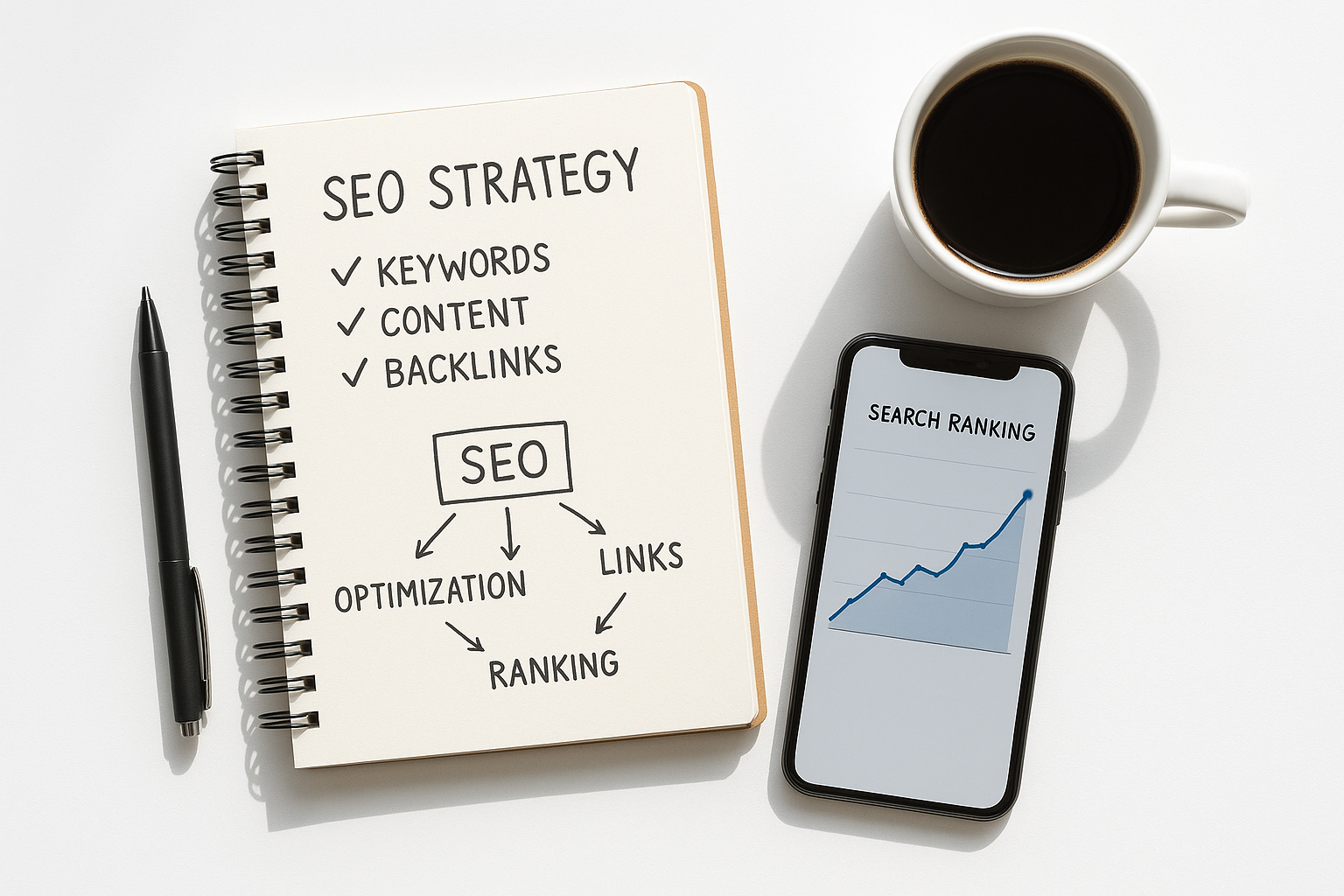
Pairing strategic planning with the right competitive SEO tools creates a repeatable system for sustained ranking growth.
Conclusion: Building a Winning Strategy With the Right Toolkit
Competitive SEO tools are no longer a luxury reserved for large enterprises with dedicated SEO teams. They are, in fact, the foundation of any serious strategy to improve search visibility in 2025 and beyond. By combining traditional competitor intelligence platforms with AI-native optimization solutions, businesses of all sizes can systematically identify opportunities, close ranking gaps, and build lasting authority in both classic and AI-powered search environments. Whether you start with a free tool like Google Search Console or invest in a full-featured automated platform, the most important step is to begin — and to act consistently on the insights you uncover.

