
SEO Fundamentals · Free Tools
DA Checker for Free: The Complete 2025 Guide to Domain Authority
A da checker for free gives every website owner — from solo bloggers to enterprise SEO teams — instant access to one of the most important competitive signals in search, without spending a single dollar. In this guide, you will learn exactly what DA is, how to check it, how to improve it, and which free tools deliver the most reliable results.
What Is a DA Checker for Free?
Direct Answer: A da checker for free is an online tool that calculates a website’s Domain Authority (DA) score at zero cost. Domain Authority is a logarithmic score from 1 to 100 — developed by Moz — that predicts how likely a site is to rank in search engine results, based primarily on the quality and quantity of its backlink profile.
Domain Authority was originally created by Moz to quantify a website’s overall link equity and ranking potential. Since then, the concept has expanded widely across the SEO industry. Multiple tools now offer their own interpretations of site authority. Specifically, using a free DA checker means you can benchmark your site, evaluate competitors, and track your SEO growth — all without a paid subscription.
Whether you are vetting a guest posting opportunity, auditing your backlink portfolio, or simply curious about where your site stands in your niche, a free domain authority checker is one of the first tools you should reach for. Furthermore, free tools have improved dramatically in recent years — many now rival the accuracy of paid alternatives for everyday use cases.
In short, the da checker for free removes every cost barrier between you and critical SEO data. Above all, understanding your authority score is a non-negotiable foundation for any data-driven SEO strategy.

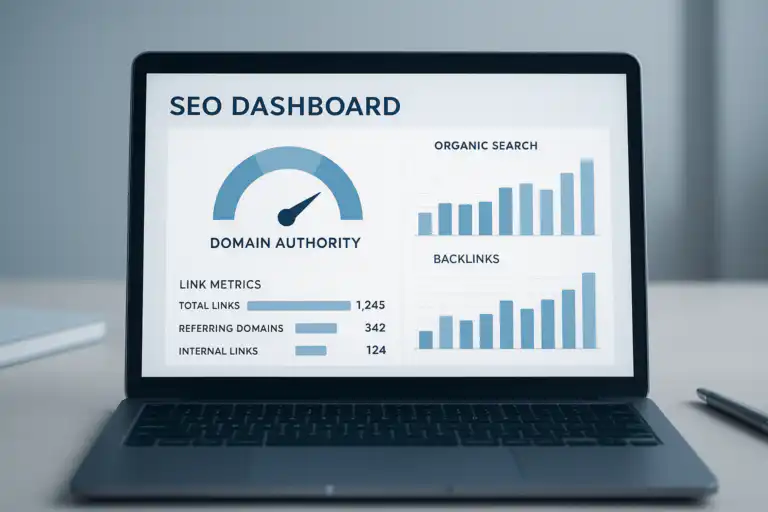
A da checker for free gives you instant visibility into your website’s authority score and backlink health.
How Domain Authority Actually Works
Domain Authority is calculated using a machine learning model. Specifically, it correlates hundreds of link-based signals with actual Google rankings to produce a single predictive score. The score is logarithmic — meaning it becomes progressively harder to improve as you move higher. For example, moving from DA 20 to DA 30 is considerably easier than advancing from DA 70 to DA 80.
According to foundational SEO research, link equity — the value passed between websites through hyperlinks — has been a core ranking signal since the earliest days of modern search. Domain Authority attempts to quantify that accumulated link equity in one easy-to-read number. As a result, it has become an industry-standard proxy for a site’s competitive strength.
Understanding the DA Score Scale
Not all DA scores are equal. In addition, context matters enormously — a DA of 30 in a highly competitive niche may be harder to achieve than DA 50 in a narrow market. Here is how scores break down across the full range:
DA 1–30
New or low-authority sites. Typical for recently launched domains or sites with minimal backlinks. However, this is a normal starting point — every authority site began here.
DA 31–60
Mid-tier authority. Most established niche blogs, small business websites, and growing content brands fall in this range. Consequently, this is where most active link-building campaigns operate.
DA 61–80
High authority. Regional news sites, leading industry publications, and well-established brand websites. Similarly, strong university and government sub-domains often land here.
DA 81–100
Elite authority. Reserved for major media outlets, global technology platforms, and government portals. In particular, sites like Wikipedia, YouTube, and BBC consistently occupy this tier.
Key Factors That Influence Your DA Score
Several specific signals feed into the Domain Authority calculation. Understanding them helps you prioritise actions that will actually move the needle:
- ▸ Linking root domains: The number of unique websites pointing to yours. Specifically, diversity of sources matters more than raw link volume.
- ▸ Quality of linking sites: A single link from a DA 80+ publication carries more weight than hundreds of links from DA 10 sites. Consequently, link quality is paramount.
- ▸ Spam score: High proportions of low-quality or manipulative links drag DA down. Therefore, regular toxic-link audits are essential.
- ▸ MozRank and MozTrust: Internal Moz metrics that measure link popularity and the trustworthiness of links in your profile, respectively.
- ▸ Overall site age and history: Older domains with established link histories typically sustain higher DA scores. However, a newer domain can still achieve competitive DA with an aggressive, quality-focused link strategy.
Why Use a Free DA Checker Instead of a Paid Tool?
Paid SEO platforms like Ahrefs, SEMrush, and Moz Pro offer comprehensive authority metrics. However, their monthly costs typically range from $99 to $449 per month — a significant barrier for freelancers, small business owners, and growing content teams. A free da checker for free bridges this gap effectively.
For most practical use cases — checking a competitor’s authority before a link-building campaign, validating a potential guest post site, or tracking your own monthly progress — a free tool delivers exactly what you need. Specifically, the free domain authority checker at RankAuthority provides instant DA scores, Page Authority (PA), and spam score data without requiring an account or credit card.
What Free DA Checker Tools Typically Show You
Beyond the core DA number, most quality free tools surface a rich set of supporting data points. In particular, look for tools that provide all of the following:
Key Data Points from a Free DA Checker
- → Domain Authority (DA): The headline score from 1–100 predicting ranking potential. For a deeper walkthrough, see our Checking Domain Authority: The Complete Guide (2025).
- → Page Authority (PA): A page-level version of DA, useful for evaluating specific URLs rather than entire domains.
- → Spam Score: A percentage indicating the likelihood a site carries manipulative or low-quality links. Scores above 30% warrant investigation.
- → Total Backlinks: The raw count of inbound links pointing to your domain.
- → Linking Root Domains: The number of unique domains linking to your site — the most meaningful diversity signal.
- → Bulk Domain Checking: The ability to check multiple URLs simultaneously — invaluable for competitive benchmarking.
Free vs. Paid: When Does It Matter?
Free DA checkers are sufficient for the majority of everyday SEO tasks. However, there are specific scenarios where a paid tool adds genuine value:
✓ Free Tool Is Enough For
- Monthly DA score tracking
- Guest post site vetting
- Quick competitor benchmarking
- Basic link prospecting
- Spam score checks before outreach
⚡ Paid Tool Adds Value For
- Deep backlink audits at scale
- Historical DA trend data
- Full toxic link identification
- Enterprise-level reporting
- Real-time index freshness

Comparing competitor DA scores is one of the most practical uses of a free domain authority checker.
How to Use a Free DA Checker: Step-by-Step
Using a da checker for free is straightforward. However, getting the most value from the results requires knowing what to look for and what actions to take next. Here is a complete, practical walkthrough:
Navigate to a Free DA Checker Tool
Go to a trusted free domain authority checker such as the one at RankAuthority. No account or payment is required. Specifically, use a tool that draws from a large, up-to-date link index for the most accurate results.
Enter Your Domain and Key Competitor Domains
Type your root domain into the input field. For maximum insight, add 3 to 5 competitor domains alongside your own. Bulk checking simultaneously reveals your relative position in the competitive landscape — a far more useful picture than checking in isolation.
Interpret the Results Correctly
Review your DA score, Page Authority (PA), total backlinks, and linking root domains. Pay particular attention to the spam score — a figure above 30% signals toxic link issues that need urgent attention. Moreover, always interpret your DA score relative to your direct competitors, not in absolute terms.
Identify Authority Gaps with Competitors
If a competitor has DA 55 and you have DA 38, that 17-point gap is your strategic target. Consequently, use that difference to set a realistic 6-to-12 month link-building goal. The gap tells you both how far you are behind and roughly how many quality backlinks are needed to close it.
Record Your Score and Track Monthly
Log your DA score in a spreadsheet each month alongside your top five competitors. Over time, this creates a trend line showing whether your link-building and content efforts are translating into measurable authority gains. Similarly, tracking competitor trends alerts you when rivals are accelerating their own link acquisition.
Pair DA Data with Keyword Research
Authority data is most powerful when combined with keyword difficulty analysis. Therefore, use a tool like the free keyword checker at RankAuthority to find terms your current DA level can realistically rank for. In particular, target keywords where the top 10 results include at least a few sites with similar or lower DA to yours.
How to Improve Your Domain Authority Score
Knowing your DA score is only the starting point. The real value comes from using that information to drive a focused improvement strategy. Here are the most impactful actions you can take — ranked broadly by their effect on your authority score:
1. Build High-Quality Backlinks
A single link from a DA 70+ publication can move the needle more than dozens of links from low-authority sources. Therefore, focus your outreach on digital PR campaigns, expert roundups, resource page link building, and original research that earns natural citations at scale. In addition, broken link building — finding dead links on high-DA pages and offering your content as a replacement — is a consistently underused tactic.
2. Audit and Remove Toxic Links
Spam links actively drag your DA down. Use your free DA checker’s spam score data as an early warning system. Subsequently, investigate any domain with a spam score above 30% using a dedicated backlink audit. Google’s Disavow Tool allows you to formally distance your site from harmful links — however, use it cautiously, as incorrectly disavowing good links causes real damage.
3. Create Genuinely Linkable Assets
Original data studies, comprehensive how-to guides, free interactive tools, and well-designed infographics attract natural backlinks at scale. Furthermore, these assets compound in value over time as more sites discover and reference them — producing ongoing authority gains long after initial publication.
4. Optimise Internal Linking Structure
While external backlinks drive DA most directly, a clean internal link structure ensures link equity flows efficiently throughout your site. As a result, individual page authority rises alongside your domain-level score. Specifically, ensure every important page is reachable within three clicks from the homepage, and that high-authority pages pass equity to key target pages.
5. Diversify Your Link Sources
A healthy backlink profile draws from a wide range of referring domains across different industries, geographies, and site types. In contrast, a profile dominated by links from one or two source types raises algorithmic red flags. Aim for natural diversity — editorial links, directory listings, forum citations, and social bookmarks all play a role.
6. Be Consistent and Patient
Domain Authority is a long-term metric. Aggressive short-term tactics rarely produce lasting gains. Above all, sites that grow DA sustainably do so through consistent content publishing, genuine relationship building, and earning links that reflect real-world credibility. Expect meaningful progress on a 6 to 18 month horizon, not overnight.

Consistent link building and quality content creation drive steady Domain Authority growth over time.
DA vs. Other Authority Metrics: What You Need to Know
Domain Authority is not the only authority metric in the SEO ecosystem. Understanding how it compares to alternatives helps you interpret your results more accurately — and choose the right tool for each specific task.
| Metric | Provider | Scale | Primary Signal | Best Used For |
|---|---|---|---|---|
| Domain Authority (DA) | Moz | 1–100 | Link equity + MozRank | General benchmarking, link prospecting |
| Domain Rating (DR) | Ahrefs | 0–100 | Referring domain strength | Backlink profile strength analysis |
| Authority Score | SEMrush | 0–100 | Links + organic traffic | Combined link and traffic signals |
| Trust Flow (TF) | Majestic | 0–100 | Link trustworthiness | Link quality and spam detection |
| Citation Flow (CF) | Majestic | 0–100 | Raw link volume | Measuring raw linking influence |
Importantly, none of these metrics are used directly by Google as a ranking factor. They are all third-party models. However, they are highly correlated with actual search performance and remain indispensable tools in any serious SEO workflow. Furthermore, using two or three metrics in parallel gives a more complete picture than relying on any single score.
Which Metric Should You Prioritise?
For most website owners using a da checker for free, Moz DA is the most accessible and widely understood metric — making it the best starting point. However, if you are working in competitive niches where link analysis is critical, cross-referencing with Ahrefs DR or Majestic Trust Flow adds meaningful precision. In contrast, chasing any single number without improving your actual backlink profile will not produce real SEO gains.
Common Mistakes When Using a DA Checker for Free
Even with the best tools available, many users misinterpret DA data in ways that lead to poor decisions. Specifically, here are the most common pitfalls to avoid:
✗ Treating DA as an Absolute Ranking Factor
DA predicts ranking potential — it does not guarantee rankings. Google uses hundreds of signals. Therefore, a DA 30 site with excellent content and strong topical authority can outrank a DA 60 competitor on specific, well-targeted keywords.
✗ Comparing DA Across Different Niches
A DA of 40 in the finance niche is significantly weaker than DA 40 in a niche hobby blog space. Consequently, always compare your DA against direct competitors in your specific niche — not against random sites or industry averages.
✗ Ignoring Spam Score Data
Many users focus exclusively on their DA number and overlook the spam score. However, a rising spam score can silently suppress your ranking potential even as your DA appears stable. Check both metrics together — every time.
✗ Checking Too Frequently
DA scores are updated periodically, not in real time. Checking daily creates noise without actionable insight. In contrast, monthly checks provide a meaningful trend line that reflects actual changes in your backlink profile.
✗ Accepting Any Outreach Based on DA Alone
Guest post brokers and link sellers often pitch placements using inflated DA numbers. As a result, always verify that a high DA site has real, relevant traffic and editorial standards — not just a temporarily inflated score from a link scheme.
Frequently Asked Questions About DA Checker for Free
Conclusion
Start Using a DA Checker for Free — Today
A da checker for free removes every barrier between you and the SEO intelligence you need to compete. Whether you are just starting to build your online presence or managing an established portfolio of sites, knowing your Domain Authority score is a non-negotiable foundation for any data-driven strategy. Use it to benchmark your position, identify competitor gaps, detect toxic links early, and set realistic growth targets.
Furthermore, the insights you gain from a free domain authority checker are only valuable if you act on them. Check your score, compare it against your top competitors, and then build a targeted link-building and content plan to close the gap systematically.
The tools are free. The data is available right now. The only variable is whether you choose to use it — and what you do next.

