

How to improve local SEO using AI automation starts with understanding that search engines and AI answer platforms now evaluate local businesses differently than they did just a couple of years ago. Today’s local search environment blends traditional Google rankings with AI-generated answers, voice search results, and map-pack listings. For small business owners and agencies, keeping pace with these changes manually is demanding. Fortunately, automation tools can now handle much of the technical and strategic work, helping local businesses stay visible without hiring a full in-house SEO team.
Quick Answer: To improve local SEO using AI automation, businesses should audit their site with AI tools, automate citation and schema consistency, publish AI-structured content for local queries, and monitor visibility across both Google and AI answer engines on an ongoing basis.
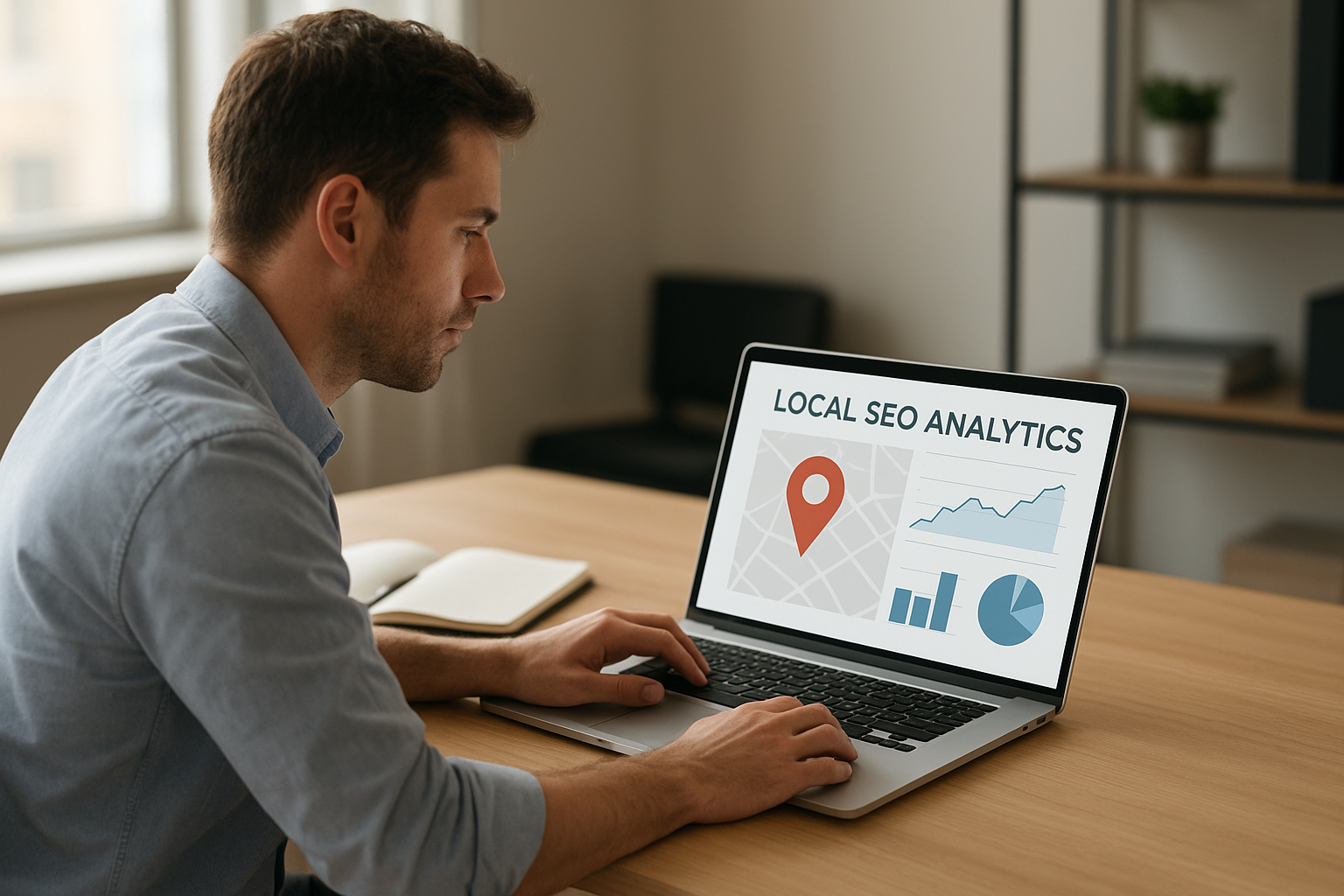
A dashboard view showing how to improve local SEO using AI automation through real-time visibility tracking.
What Is Local SEO Using AI Automation?
Local SEO using AI automation is the practice of applying artificial intelligence tools to handle the technical, content, and monitoring tasks that make a business more visible in nearby search results. Instead of manually checking citations or writing schema code line by line, software performs these functions continuously. As a result, businesses can respond faster to algorithm changes and competitor activity.
In practice, this involves combining traditional SEO with two newer disciplines. Generative Engine Optimization (GEO) is the process of structuring content so AI systems like Google’s AI Overviews or ChatGPT are more likely to cite a business as a source. Answer Engine Optimization (AEO), on the other hand, focuses on formatting content as direct answers so it can appear in featured snippets and voice search results. Together, these approaches extend local visibility beyond the traditional map pack.
How to Improve Local SEO Using AI Automation: A Step-by-Step Process
Improving local rankings with automation works best when approached as a repeatable process rather than a one-time fix. Specifically, the following steps outline how most AI-driven local SEO platforms, including Rank Authority, structure their workflow.
- Audit the site first. Begin with a full automated scan to benchmark current technical health, local citations, and a measurable visibility score, such as a Rank Authority Score, before applying any changes.
- Fix citation inconsistencies. Automatically detect mismatched business names, addresses, or phone numbers across directories, since inconsistent data directly weakens local ranking signals.
- Deploy schema markup. Generate and publish LocalBusiness schema so search engines and AI systems clearly understand location, hours, and services offered.
- Publish GEO-optimized content. Create location-specific pages written for AI citation, answering the exact questions local customers are likely to ask.
- Apply AEO formatting. Structure key sections as direct question-and-answer blocks so AI answer engines can easily extract and display the information.
- Monitor and resubmit. Track AI citation activity and submit updated pages for indexing, understanding that search engines alone decide whether and when a page is indexed.
For a deeper breakdown of automated ranking workflows, this guide on how to improve website rankings using AI automation expands on several of these steps in more technical detail.
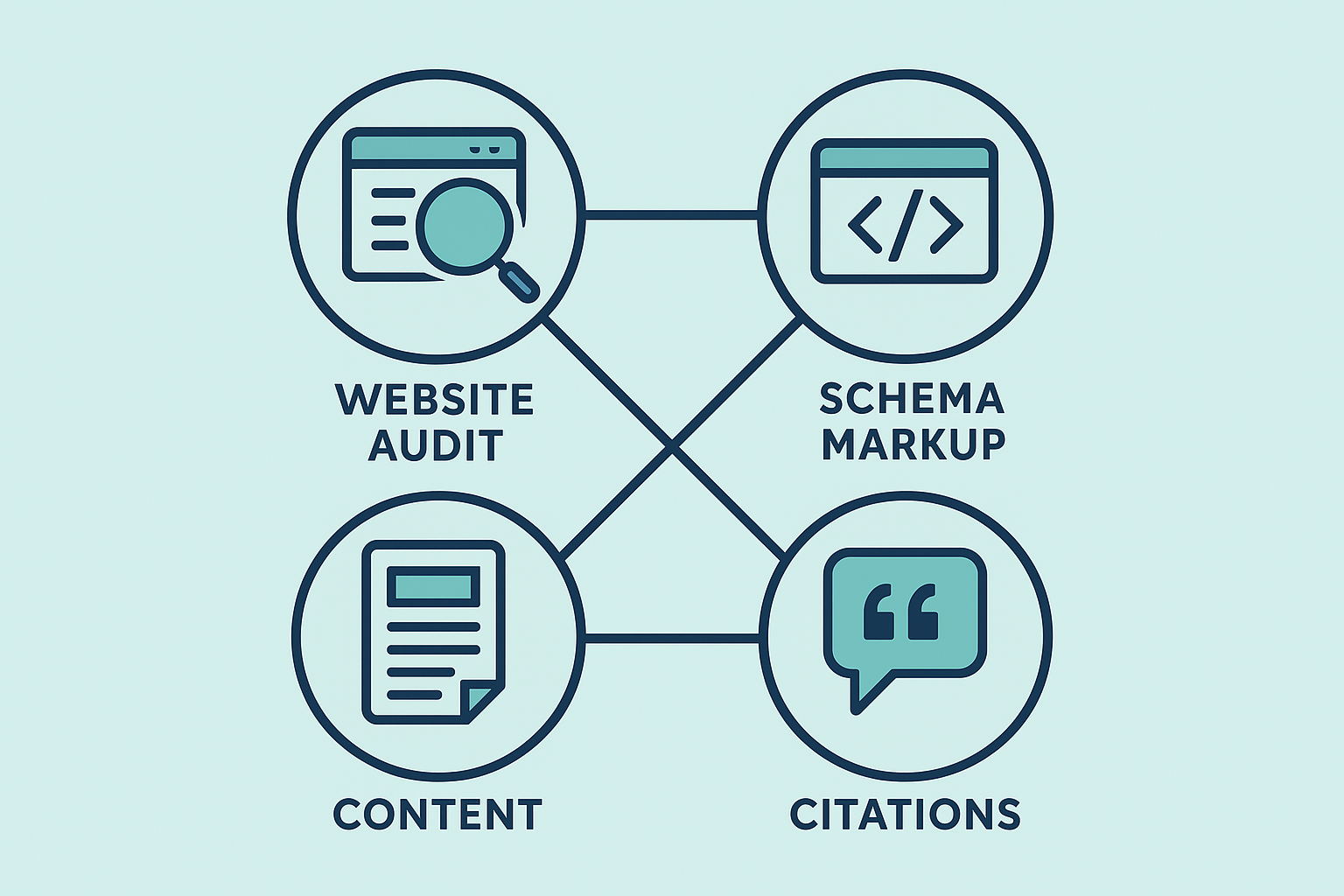
An automated workflow connecting audits, schema, and content for stronger local visibility.
Strengthening Local Visibility with GEO and AEO
Beyond basic technical fixes, GEO and AEO play an increasingly important role in local search visibility. For example, when a potential customer asks an AI assistant “best plumber near me,” the engine pulls from structured, well-cited sources rather than a simple keyword match. Consequently, businesses with clean schema markup and clearly formatted answers are more likely to be referenced.
According to a widely cited BrightLocal consumer survey, the majority of shoppers research local businesses online before making a purchase decision, which underscores why both traditional rankings and AI citations matter. In addition, structured data standards published by Schema.org and guidance from Google Search Central remain the foundation for how local business data is interpreted by both search engines and AI systems.
Agencies managing several client locations often automate this process with topical siloing and internal linking tools, similar to the approach outlined in this guide to automated SEO with AI for smarter rankings.
Common Mistakes When Automating Local SEO
Although automation removes much of the manual workload, a few mistakes can undermine results. First, some businesses apply automated changes without reviewing them, which occasionally creates conflicting schema or duplicate listings. Second, many neglect their Google Business Profile, assuming automation covers it entirely, when accurate profile data still requires periodic human confirmation.
Furthermore, teams sometimes treat automation as a single project instead of an ongoing process. Since local search conditions change frequently, continuous monitoring matters just as much as the initial setup. Finally, ignoring AI citation tracking across multiple answer engines can leave a business visible on Google but absent from newer AI-driven discovery tools.
How Rank Authority Supports AI-Driven Local SEO
Rank Authority brings traditional SEO automation together with GEO and AEO in a single platform, which helps small businesses and agencies address local visibility without needing specialized in-house expertise. Its 1-Click AI AutoPilot technology scans a website, identifies technical and content gaps, and streamlines approved fixes automatically. Meanwhile, tools like RankFast analyze competitor pages to find opportunities, and RankLink automates internal linking and topical structure across local pages.
For businesses managing multiple locations, free diagnostic tools such as the AI Visibility Checker and Site Audit Checker offer an accessible starting point before committing to a full plan. As always, individual results vary depending on competition, location, and existing site health, so these tools are best used as part of an ongoing visibility strategy rather than a one-time fix. Businesses exploring location-specific approaches can review examples such as this local AI SEO automation guide for small business growth or this regional breakdown of AI SEO strategies for local businesses in Perth.
Agencies competing in crowded markets may also benefit from reviewing how AI tools support competitive SEO strategies designed to outrank rivals faster. More detail on the platform’s full toolset is available at rankauthority.com.
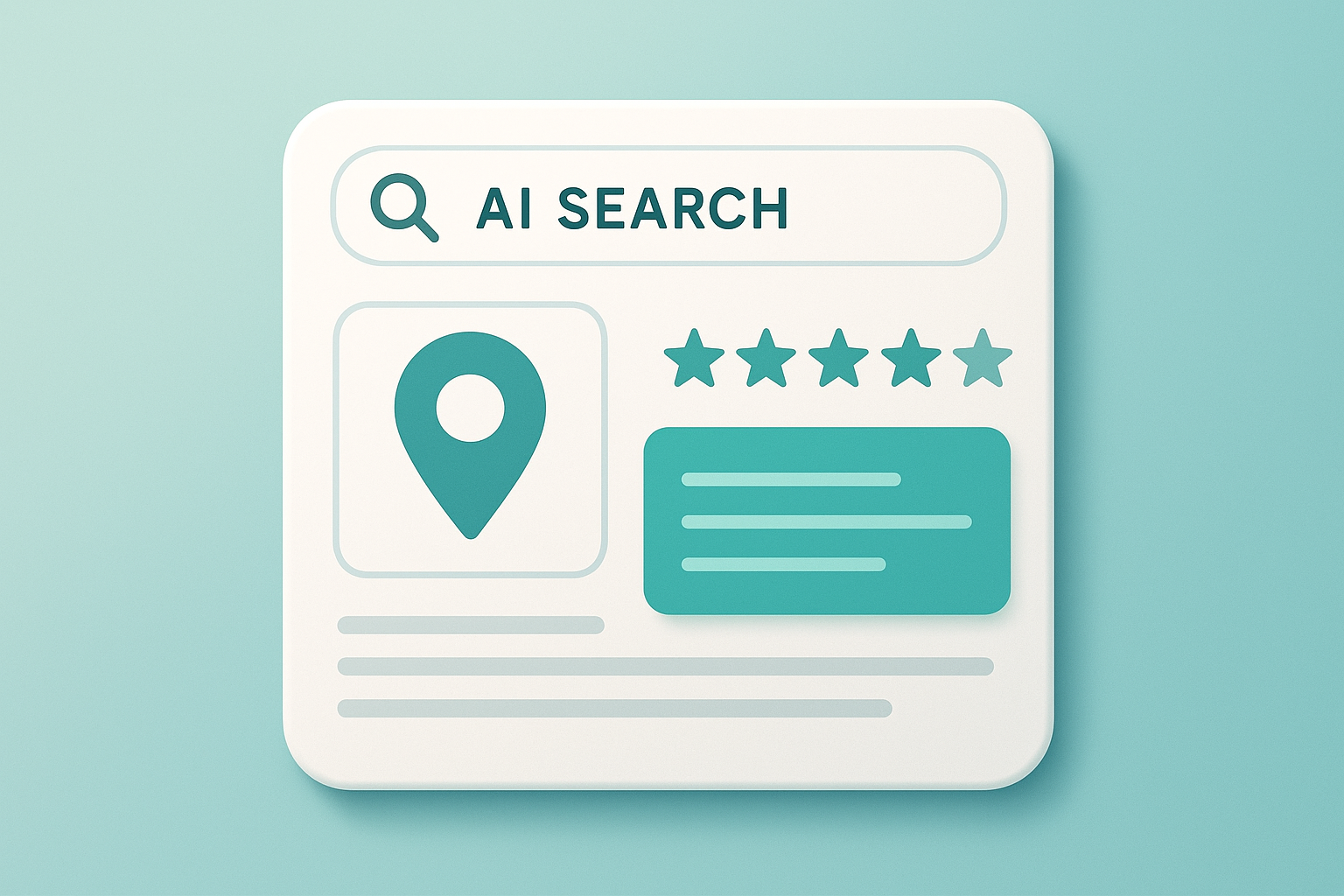
An AI answer engine interface referencing a local business through structured citations and schema.
Frequently Asked Questions About Local SEO and AI Automation
What does it mean to improve local SEO using AI automation?
Improving local SEO using AI automation means using software to handle tasks like citation checks, schema markup, and content optimization that traditionally require manual work. These tools continuously scan, fix, and monitor local search signals so a business stays visible in map packs and AI-generated answers.
How does AI automation improve local search rankings?
AI automation improves rankings by identifying technical errors, inconsistent listings, and missing schema, then applying fixes faster than manual audits allow. It also tracks how a business appears in AI answer engines, helping teams respond quickly to visibility gaps.
Why is local SEO important for small businesses?
Local SEO matters because most consumers research nearby businesses online before visiting or purchasing. Strong local visibility helps a business appear in map results, voice search, and AI-generated recommendations, which directly affects foot traffic and leads.
How is AI automation different from manual local SEO?
Manual local SEO relies on a person auditing listings and writing schema by hand, which takes significant time. AI automation performs these tasks continuously at scale, reducing the expertise and hours required while still allowing human oversight of strategy.
How much does AI-powered local SEO automation cost?
Costs vary depending on the platform and number of locations managed, ranging from free diagnostic tools to monthly subscriptions for full automation suites. Many providers, including Rank Authority, offer a risk-free trial period so businesses can evaluate results first.
How long does it take to see results from automated local SEO?
Technical fixes like schema deployment can take effect within days, while ranking and visibility improvements typically build over several weeks to months. Individual results vary based on competition, location, and existing site health.
What are common mistakes when automating local SEO?
Common mistakes include applying automated changes without review, neglecting Google Business Profile accuracy, and ignoring AI citation tracking. Businesses also sometimes treat automation as a one-time task rather than an ongoing process.
What is the difference between GEO and AEO in local search?
Generative Engine Optimization (GEO) structures content so AI systems are more likely to cite it as a source. Answer Engine Optimization (AEO) formats content as direct answers for featured snippets and voice search, and both work alongside traditional SEO.
Can AI automation replace a human SEO strategist entirely?
AI automation can handle most repetitive technical and content tasks, but human oversight still helps guide strategy and brand voice. Most businesses benefit from combining automation with periodic strategic review rather than removing people entirely.
What tools help automate local SEO tasks?
Useful tools include site audit scanners, schema markup generators, AI visibility checkers, and content publishing systems such as an AI Blog Builder. Platforms like Rank Authority combine several of these functions into one dashboard.
How does schema markup support local SEO automation?
Schema markup is structured code that helps search engines and AI systems understand business details like address, hours, and reviews. Automating schema deployment keeps this data accurate as a business grows or changes locations.
What best practices should businesses follow when using AI for local SEO?
Best practices include auditing a site before automating, keeping location data consistent across directories, and monitoring AI citation tracking regularly. Combining automation with occasional manual review produces the most reliable long-term results.
Final Thoughts
In summary, learning how to improve local SEO using AI automation comes down to combining technical accuracy with AI-ready content. Automating audits, schema, citations, and monitoring frees up time while helping a business stay visible across both traditional search and AI answer engines. However, the most durable results come from pairing automation with occasional human review rather than relying on it entirely. As AI search continues to reshape how consumers find local businesses, platforms like Rank Authority, along with reliable sources such as Wikipedia’s overview of local search, offer a practical starting point for businesses ready to strengthen their presence without building an in-house SEO team.

