

How to boost website ranking with automated tools is the question shaping strategy for countless small business owners, marketers, and agencies right now. Search no longer happens only on Google; AI-powered answer engines such as ChatGPT, Perplexity, and Gemini increasingly shape how customers discover brands. Consequently, manual optimization alone struggles to keep pace with the technical demands of modern search. Automated platforms handle the repetitive, expertise-heavy work, site audits, schema markup, content publishing, and visibility tracking, so you can focus on running your business. This guide breaks down exactly how automation improves rankings, which tools matter most, and how to build a repeatable process that works across traditional and AI search.
Quick Answer
You can boost website ranking with automated tools by running an AI-powered site audit, automating technical and schema fixes, publishing AEO- and GEO-optimized content, and tracking visibility across search and AI answer engines, all from one dashboard, such as the one offered at Rank Authority.
What Is Automated Website Ranking Optimization?
Automated website ranking optimization is the use of AI-driven software to handle the technical, structural, and content tasks that influence how search engines and AI answer engines rank and cite a website. Rather than manually auditing every page, writing schema markup, or tracking competitor movement by hand, automated tools analyze a site, identify gaps, and apply or recommend fixes at scale.
For example, schema markup is structured code added to a page that helps search engines understand its content more precisely, according to the open standard maintained at Schema.org. Generating this code by hand across dozens of pages is slow; automated tools generate and deploy it in minutes. As a result, businesses gain more consistent technical foundations without hiring a dedicated specialist.
How to Boost Website Ranking with Automated Tools
In practice, boosting rankings with automation rests on four pillars: technical SEO automation, AEO- and GEO-ready content, internal linking structure, and ongoing visibility monitoring. Each pillar reinforces the others. Technical fixes make a site easier to crawl; structured content makes it easier to cite; internal linking clarifies topic relationships; and monitoring tells you what is actually working.
Platforms such as Rank Authority combine these functions into a single workflow rather than requiring separate tools for audits, schema generation, content publishing, and rank tracking. This matters because the guide at how to improve website rankings using AI automation shows, fragmented tool stacks often create gaps where issues go unnoticed between audits.
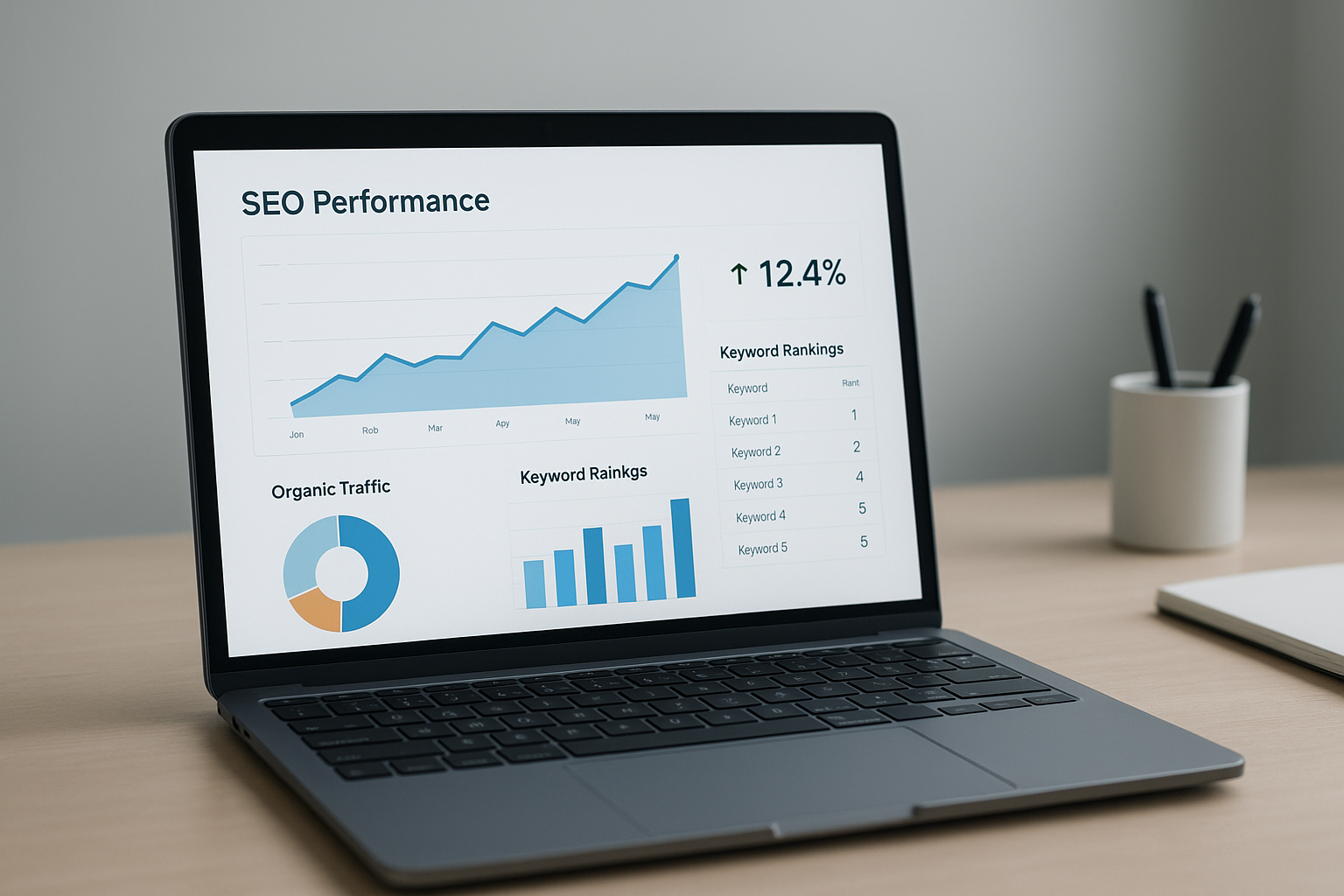
An automated SEO dashboard tracks the metrics behind how to boost website ranking with automated tools.
Which Automated Tools Actually Improve Search Visibility?
Not every tool delivers equal value. Generally, the most useful categories include diagnostic scanners, technical fix automators, content generators built for AI citation, and competitor intelligence trackers. Free diagnostic tools, in particular, are a practical starting point before investing in a full automation suite.
- AI Visibility Checker, shows whether your brand appears in AI-generated answers
- Site Audit Checker, flags technical and on-page issues automatically
- Backlink Checker and Domain Authority Checker, gauge off-page strength
- Page Speed Analyzer and Broken Link Checker, catch user experience issues
- Schema Markup Reader, builds structured data without manual coding
As explored in can AI help improve my website’s search rankings, pairing diagnostic tools with automated remediation closes the gap between finding a problem and actually fixing it.
1-Click AI AutoPilot: Automating Technical SEO Fixes
1-Click AI AutoPilot scans a website, identifies technical and content gaps, then streamlines approved fixes without requiring an in-house SEO team. Instead of manually editing meta tags or chasing broken links across hundreds of pages, the system applies corrections in bulk once you approve the recommendations. For small teams juggling multiple responsibilities, this type of automation often represents the difference between SEO getting done consistently and SEO getting postponed indefinitely.
A Step-by-Step Process to Raise Your Rankings With Automation
Although every site has unique needs, the underlying automation process generally follows the same five stages. Working through them in order helps avoid skipped steps that weaken results later.
- Run a full site audit. Start with a full site audit that scans technical SEO, schema markup, content gaps, and page speed issues across your entire website to establish a baseline RA Score.
- Automate technical and on-page fixes. Use 1-Click AI AutoPilot to automatically apply approved technical and on-page fixes, such as missing meta tags, broken links, and schema errors, without needing a developer.
- Build GEO-ready content. Publish artifact pages and structured answers designed for AI citation using GEO best practices so generative engines like ChatGPT and Perplexity can reference your content directly.
- Strengthen internal linking and topical authority. Apply automated topical siloing and internal linking to connect related pages, helping search engines understand your site’s structure and establish topical authority around core keywords.
- Monitor and track AI visibility. Track citations, keyword rankings, and your RA Score over time using AI visibility monitoring dashboards, then adjust strategy based on competitor gap analysis and performance data.
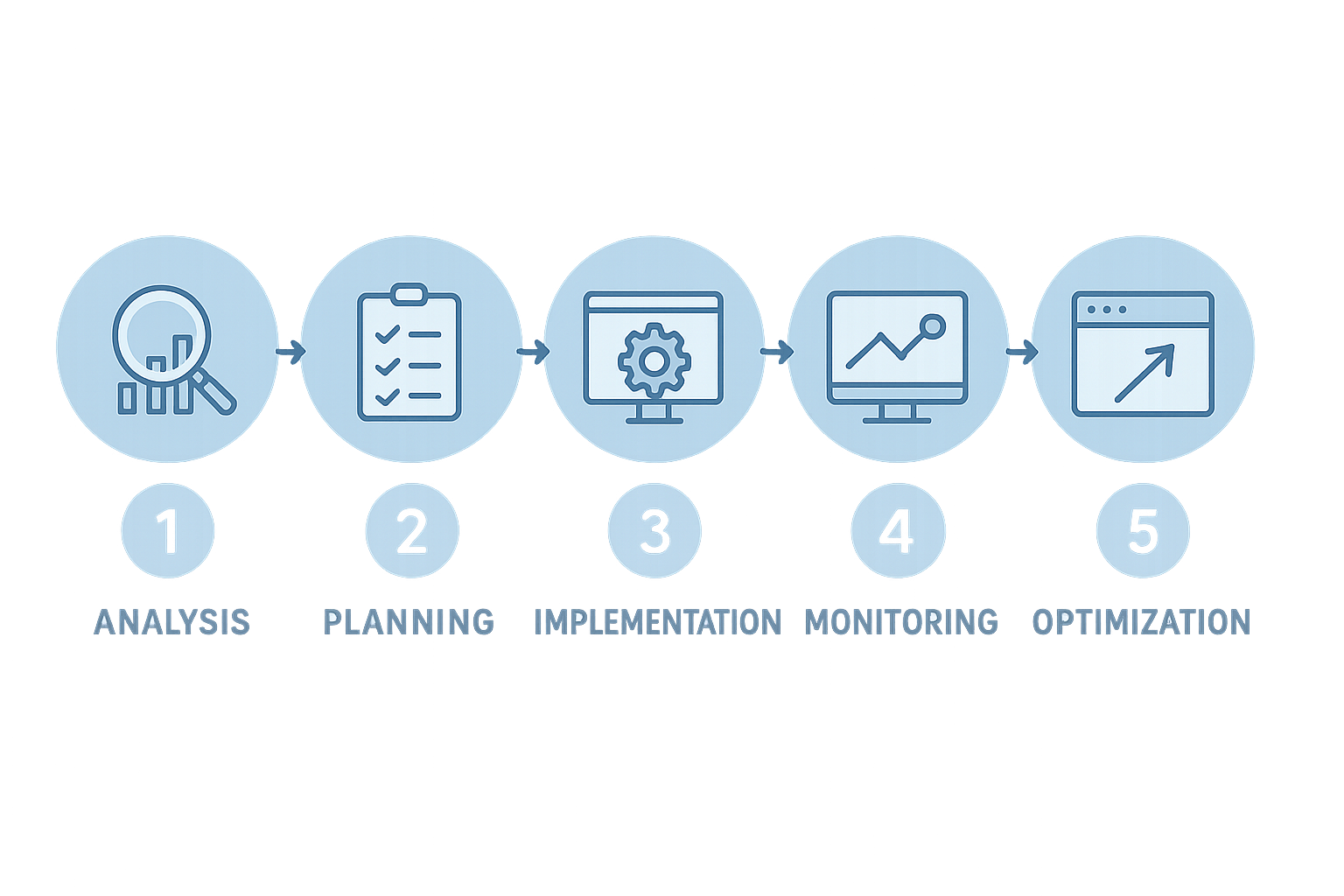
A five-step automated workflow for improving search and AI visibility.
GEO and AEO: Optimizing for AI-Powered Answer Engines
Generative Engine Optimization (GEO) is the practice of structuring content so AI systems, including chatbots and generative search tools, can understand and cite it directly in their responses. In contrast, Answer Engine Optimization (AEO) focuses on formatting content so it gets selected for featured snippets and direct-answer boxes in traditional search results.
Google’s own guidance, outlined in its SEO Starter Guide, still emphasizes clear structure, helpful content, and crawlable pages, principles that also underpin GEO and AEO. Therefore, automating these formats together, rather than treating them as separate disciplines, tends to produce stronger results. The resource at how can I use AI to enhance my website’s SEO expands further on blending these approaches.
How RankFast and RankLink Strengthen Topical Authority
Topical authority refers to how thoroughly and credibly a website covers a subject area, a signal both traditional search engines and AI systems weigh heavily. RankFast analyzes competitor pages, then rewrites and rebuilds comparable content so your pages can realistically compete for the same terms. Meanwhile, RankLink automates topical siloing and internal linking, connecting related pages so crawlers and AI systems can map your site’s expertise more clearly.
Used together, as detailed in AI for competitive SEO: how to outrank rivals fast, these tools shorten the time it takes to close a competitive content gap without requiring a full manual content audit first.
Common Mistakes to Avoid When Automating SEO
Automation removes a lot of manual work, but it is not a substitute for judgment. Specifically, businesses often run into trouble when they skip review steps or expect guarantees automation cannot provide.
- Applying bulk fixes without reviewing them for brand accuracy first
- Assuming automated indexing submission guarantees a page gets indexed, in reality, tools can submit changes for indexing, but Google alone determines whether and when a page is indexed
- Treating one audit as a finished project instead of an ongoing process
- Ignoring content quality while over-focusing on technical signals alone
Individual results vary, and reviews reflect individual user experiences rather than guaranteed outcomes for every site.
Measuring Results With Your Rank Authority Score
Measuring progress matters just as much as making changes. The Rank Authority Score (RA Score) offers a single benchmark that reflects technical health, content strength, and AI visibility signals, making it easier to see whether automation is actually moving the needle over time.
Industry click-through research has long shown that the first organic result in search typically captures roughly a quarter of all clicks, underscoring why ranking position still matters even as AI answers grow. For that reason, consistent tracking, rather than a one-time check, is essential. The guide at rank tracking automation: save time, boost rankings covers how automated monitoring reduces the manual reporting burden further. For general background on how ranking signals evolved, see the overview on Wikipedia’s search engine optimization entry.

Automated monitoring tools help track ranking progress over time.
Frequently Asked Questions About Boosting Website Rankings With Automated Tools
What is automated website ranking optimization?
Automated website ranking optimization uses AI-driven software to handle technical SEO, schema markup, content publishing, and visibility tracking at scale, reducing the manual work required to improve search and AI answer engine performance.
How do automated tools boost website ranking?
You can boost website ranking with automated tools by running an AI-powered site audit, applying technical and schema fixes automatically, publishing AEO- and GEO-optimized content, and monitoring visibility from one dashboard.
Why should I use automated SEO tools instead of doing it manually?
Automated SEO tools save time and reduce the expertise gap, since manual audits, schema coding, and competitor analysis can take weeks when done by hand. Automation applies consistent fixes faster and flags issues humans often miss.
How is GEO different from traditional SEO automation?
Generative Engine Optimization (GEO) focuses on structuring content so AI systems like ChatGPT can cite it directly, while traditional SEO automation focuses on ranking in classic search engine results pages.
How much does automated SEO software typically cost?
Pricing varies widely by provider and feature set, ranging from free diagnostic tools to monthly subscriptions for full automation suites. Many platforms, including Rank Authority, offer a risk-free trial period before committing to a paid plan.
How long does it take to see ranking improvements with automated tools?
Results depend on site size, competition, and existing technical health, but many users notice visibility and audit score improvements within a few weeks of consistent automation. Individual results vary, and search engines ultimately control indexing timelines.
What mistakes do businesses make when automating SEO?
Common mistakes include ignoring content quality, applying fixes without reviewing context, and assuming automation guarantees indexing or rankings. Automated tools support strategy; they do not replace oversight entirely.
What are best practices for combining automation with human review?
Review automated recommendations before major changes go live, prioritize fixes by impact, and keep content aligned with your brand voice. Pairing automation with periodic manual checks produces the most reliable long-term results.
Can automated tools guarantee a number one ranking?
No tool can guarantee a specific ranking position, since search engines and AI answer platforms use proprietary, constantly changing algorithms. Automated tools improve the signals that influence rankings, but outcomes vary by site and market.
Does automated indexing guarantee my pages get indexed by Google?
No. Automated tools can submit pages for indexing, but Google alone determines whether and when a page is indexed. Submission simply speeds up discovery; it does not override Google’s own evaluation process.
What is the Rank Authority Score (RA Score)?
The RA Score is a diagnostic score that reflects a website’s technical health, content strength, and AI visibility signals. It gives site owners a single benchmark to track progress as automated fixes and content updates are applied.
How do I boost website ranking with automated tools on WordPress or Shopify?
Most automated ranking platforms, including Rank Authority, integrate directly with 45 platforms, including WordPress, Shopify, Wix, Webflow, Squarespace and more, allowing fixes and schema deployment without manual code editing.
What is the difference between AEO and SEO?
SEO focuses on ranking in traditional search engine results, while Answer Engine Optimization (AEO) focuses on structuring content so it gets selected as a direct answer in featured snippets and AI-generated responses.
Are automated ranking tools suitable for small businesses and agencies?
Yes. Automated platforms are built to remove the expertise barrier, making them practical for small business owners managing one site and agencies overseeing multiple client properties simultaneously.
How do I start using automated ranking tools?
Start with a free site scan to establish a baseline, then enable automated fixes for technical and schema issues before moving on to GEO and AEO content. Most platforms, including Rank Authority, offer a ten-day trial to test the process.
Final Thoughts on Boosting Rankings With Automation
Ultimately, learning how to boost website ranking with automated tools comes down to combining four consistent habits: diagnosing issues regularly, automating technical and schema fixes, publishing content built for both search engines and AI answer platforms, and tracking progress against a clear benchmark like an RA Score. None of these steps require a dedicated in-house SEO team when the right automation platform handles the heavy lifting. As AI search continues to reshape discovery, businesses that automate these fundamentals now are better positioned to maintain visibility later. To see where your own site currently stands, visit rankauthority.com and run a free diagnostic scan before starting your trial.

