

How to use AI SEO for small business growth starts with one simple shift: stop optimizing only for Google’s blue links and start optimizing for the AI systems that now answer questions directly. Search behavior has changed. Customers increasingly ask ChatGPT, Gemini, and Perplexity for recommendations instead of scrolling through ten blue links. Therefore, small businesses that want to stay visible need a strategy that blends traditional SEO with search engine optimization fundamentals, Generative Engine Optimization (GEO), and Answer Engine Optimization (AEO).
Quick answer: To use AI SEO for small business growth, run a full site audit to find technical and content gaps, structure your pages with schema and direct answers so AI engines can cite you, then automate ongoing fixes while monitoring visibility across Google and AI platforms. Individual results vary based on industry, competition, and starting site health.
What Is AI SEO?
AI SEO is the practice of optimizing a website so both traditional search engines and AI-driven answer systems can find, understand, and recommend it. In practice, this means combining classic tactics, page speed, keyword relevance, and link quality, with newer techniques such as schema markup, structured data, and citation-ready content formatting. Specifically, AI SEO prepares your content to be quoted inside AI Overviews, chatbot answers, and voice search results, not just ranked on a results page. For small businesses, this matters because improving online visibility now means showing up in two very different environments at once.
Why Small Businesses Need AI Search Optimization Now
Gartner analysts have projected that traditional search engine volume could fall sharply by 2026 as more users turn to AI chatbots and assistants for research instead of typing queries into a search box (Gartner, 2024). As a result, a business invisible to AI systems risks losing customers before they ever see a traditional results page. Meanwhile, the U.S. Small Business Administration continues to highlight digital marketing as a core growth lever for small operators competing against larger, better-funded brands.
In addition, Google itself has published updated search guidance encouraging site owners to focus on clear, well-structured, people-first content, the same qualities AI systems look for when deciding what to cite. Consequently, businesses that invest in automated local AI SEO services early tend to build a visibility advantage before competitors catch up.
Tracking visibility across both AI and traditional search helps small businesses measure real growth.
How to Use AI SEO for Small Business Growth: A Step-by-Step Framework
Above all, success comes from following a consistent process rather than chasing isolated tactics. Here is a practical, six-step framework you can apply right away.
- Run a full AI visibility and site audit. Identify technical issues, missing schema, thin content, and crawlability problems using an automated diagnostic tool before making any changes.
- Fix technical and on-page SEO issues. Deploy schema markup, improve page speed, and resolve broken links so search engines and AI crawlers can read your site accurately.
- Build GEO-ready content. Create pages structured in a clear question-and-answer format with citable facts that generative engines like ChatGPT and Gemini can quote directly.
- Format content for AEO. Add structured answers, FAQ schema, and concise direct-answer blocks near the top of each page so content can surface in featured snippets and AI Overviews.
- Automate internal linking and publishing. Connect topically related pages with internal links and keep publishing optimized content on a consistent schedule.
- Monitor citations and rankings. Track how often AI platforms cite your brand and how keyword rankings change, then adjust your strategy based on the data you collect. For a deeper walkthrough, see our How Can I Maximize My Online Presence with AI? A Complete.
Following this sequence step by step gives small teams a repeatable process instead of guesswork, which is exactly the workflow automated SEO for digital entrepreneurs is designed to streamline.
GEO vs. AEO: Two Pillars of AI Visibility
Generative Engine Optimization (GEO) is the practice of shaping content so generative AI tools can pull it directly into a conversational answer. Answer Engine Optimization (AEO), in contrast, focuses on structuring answers and schema so search engines surface your content inside featured snippets and AI Overviews. Both disciplines rely on the same foundation: clear, factual, well-organized writing. However, GEO leans toward citation-worthy depth, while AEO leans toward concise, scannable answers near the top of a page. Similarly, both benefit from strong topical authority, a term describing how thoroughly a site covers a subject across multiple connected pages, which signals expertise to both algorithms and AI models.
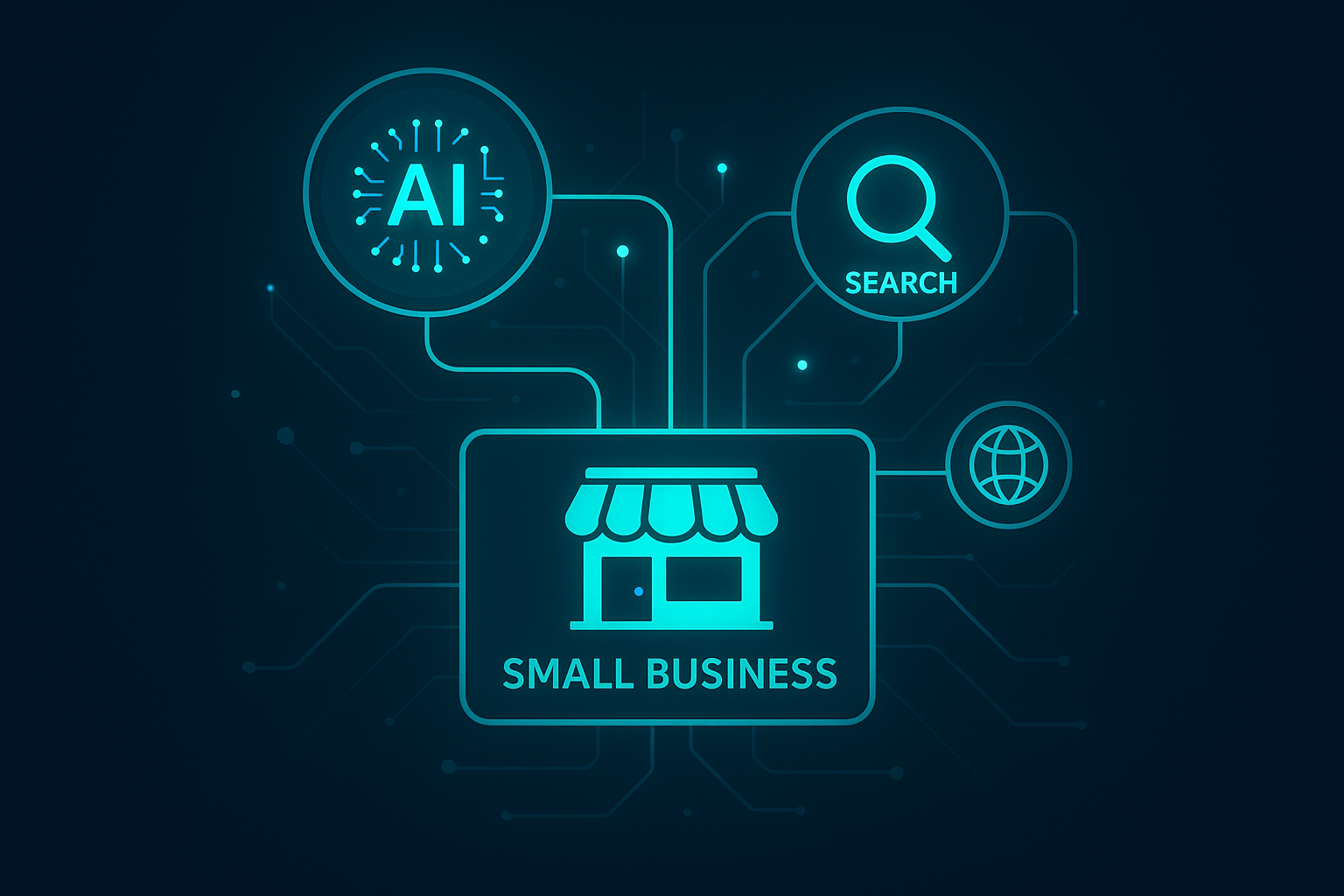
GEO and AEO work together to connect a small business website with AI answer systems.
Common Mistakes That Hold Back AI SEO Results
Even motivated business owners stumble on a few predictable issues. For example, many sites skip schema markup entirely, leaving AI systems with no structured way to understand page content. Others write long paragraphs without a direct answer near the top, which makes it harder to be quoted in an AI response. In particular, neglecting internal links between related pages weakens topical authority and confuses crawlers about which page matters most for a given topic.
Furthermore, some businesses assume one-time fixes are enough. In reality, AI SEO is ongoing work because algorithms, AI models, and competitor content all keep shifting. A simple growth guide for small business owners can help establish the habits needed to stay consistent over time.
Choosing the Right AI SEO Platform for Your Business
When comparing tools, look for platforms that handle technical fixes, schema deployment, GEO content creation, and AI citation tracking in one dashboard rather than juggling five disconnected tools. Rank Authority, for instance, combines 1-Click AI AutoPilot automation, GEO artifact pages, AEO formatting, and an RA Score diagnostic report so small teams can act on clear priorities instead of generic checklists. You can review the full approach directly at rankauthority.com or explore an easy AI SEO platform built for small businesses before committing to a plan.
Most platforms, including Rank Authority, offer a risk-free trial period, which makes it easier to test automation against your own site before paying for a longer commitment. Individual results vary based on starting site health, industry competition, and how consistently fixes are implemented.
A structured checklist makes it easier to apply AI SEO for small business growth consistently.
Frequently Asked Questions About AI SEO for Small Business Growth
What is AI SEO, and how is it different from regular SEO?
AI SEO is the practice of optimizing a website for both traditional search engines and AI-driven answer systems. Unlike classic SEO, which focuses mainly on rankings, AI SEO also prepares content to be cited inside AI Overviews, chatbot responses, and voice assistants.
How to use AI SEO for small business growth if I’m a complete beginner?
Understanding how to use AI SEO for small business growth doesn’t require a technical background if you start with automated tools that handle audits, schema markup, and content structure for you. Begin with a free diagnostic scan, fix the highest-priority issues first, then build outward from there.
Why does AI SEO matter for small businesses in 2026?
AI SEO matters because more customers now ask AI assistants for recommendations instead of browsing search results manually. Businesses that aren’t structured for AI citation risk becoming invisible in these newer discovery channels.
What’s the difference between GEO and AEO?
Generative Engine Optimization (GEO) focuses on structuring content so generative AI tools like ChatGPT and Gemini can quote your business directly. Answer Engine Optimization (AEO) focuses on formatting answers and schema so search engines surface your content in featured snippets and AI Overviews.
How much does AI SEO software typically cost for a small business?
Pricing varies widely depending on features, automation level, and the number of sites managed, with many platforms offering tiered monthly plans and free trial periods. Individual results and costs vary by provider and account needs.
How long does it take to see results from AI SEO?
Technical fixes like schema markup and page speed improvements can show measurable changes in site diagnostics within days. Ranking and citation improvements often take several weeks to a few months, and individual results vary.
What are the most common mistakes small businesses make with AI SEO?
The most common mistakes include ignoring schema markup, writing content without direct-answer formatting, and failing to track AI citation activity. Many businesses also neglect internal linking, which limits how authority flows between pages.
Can AI SEO tools guarantee first-page rankings or AI citations?
No reputable platform can guarantee specific rankings or citations, since search and AI engines control their own algorithms. A trustworthy AI SEO tool instead strengthens the technical and content signals known to improve visibility over time, though individual results vary.
What is schema markup, and why does it matter for AI search?
Schema markup is structured code added to a webpage that explains its content to search engines and AI systems in a machine-readable format. It matters because AI answer engines rely heavily on structured data to understand and trust the information they cite.
How do I know if AI platforms are citing my business?
You can track AI citations using visibility monitoring tools that scan major AI answer platforms for mentions of your brand, products, or content. Reviewing this data regularly shows which pages earn citations and which need improvement.
Does AI SEO work for local, small-town businesses?
Yes, local businesses can benefit from AI SEO by combining local schema, accurate listings, and location-specific content with the same GEO and AEO principles used by national brands. Local intent signals help AI systems match nearby searchers with relevant businesses.
How does automated indexing help with AI SEO?
Automated indexing tools can submit new or updated pages for indexing more quickly than manual methods. Submission does not guarantee indexing, since search engines like Google alone decide whether and when a page is indexed.
What’s the best first step for a small business owner starting with AI SEO?
Start with a full site audit to identify technical issues, missing schema, and content gaps before making changes. This creates a prioritized roadmap instead of guessing which fixes matter most.
Final Takeaways
Ultimately, learning how to use AI SEO for small business growth comes down to combining solid technical fixes with content built for citation, not just clicks. As AI Overviews, chatbots, and voice assistants take a bigger share of consumer search, small businesses that structure their sites for both traditional SEO and AI visibility gain a real head start. Whether you tackle audits, schema, and content manually or lean on automation platforms like Rank Authority to handle the heavy lifting, the goal stays the same: show up, get cited, and keep earning trust across every search surface your customers use.

