

Online visibility automation is the process of using AI-driven software to handle the technical, content, and structural work that determines whether a business appears in Google, AI Overviews, and answer engines like ChatGPT or Perplexity. Instead of manually auditing pages and tracking rankings by hand, businesses now rely on automated platforms to handle these tasks continuously. As a result, even small teams can compete with large in-house SEO departments. Because search itself is changing quickly, relying only on old-style SEO risks missing the shift toward AI-generated answers entirely.
Direct answer: Online visibility automation is software that continuously audits, fixes, and optimizes a website’s technical health, content, and structured data so it ranks better in traditional search and gets cited more often by AI answer engines.
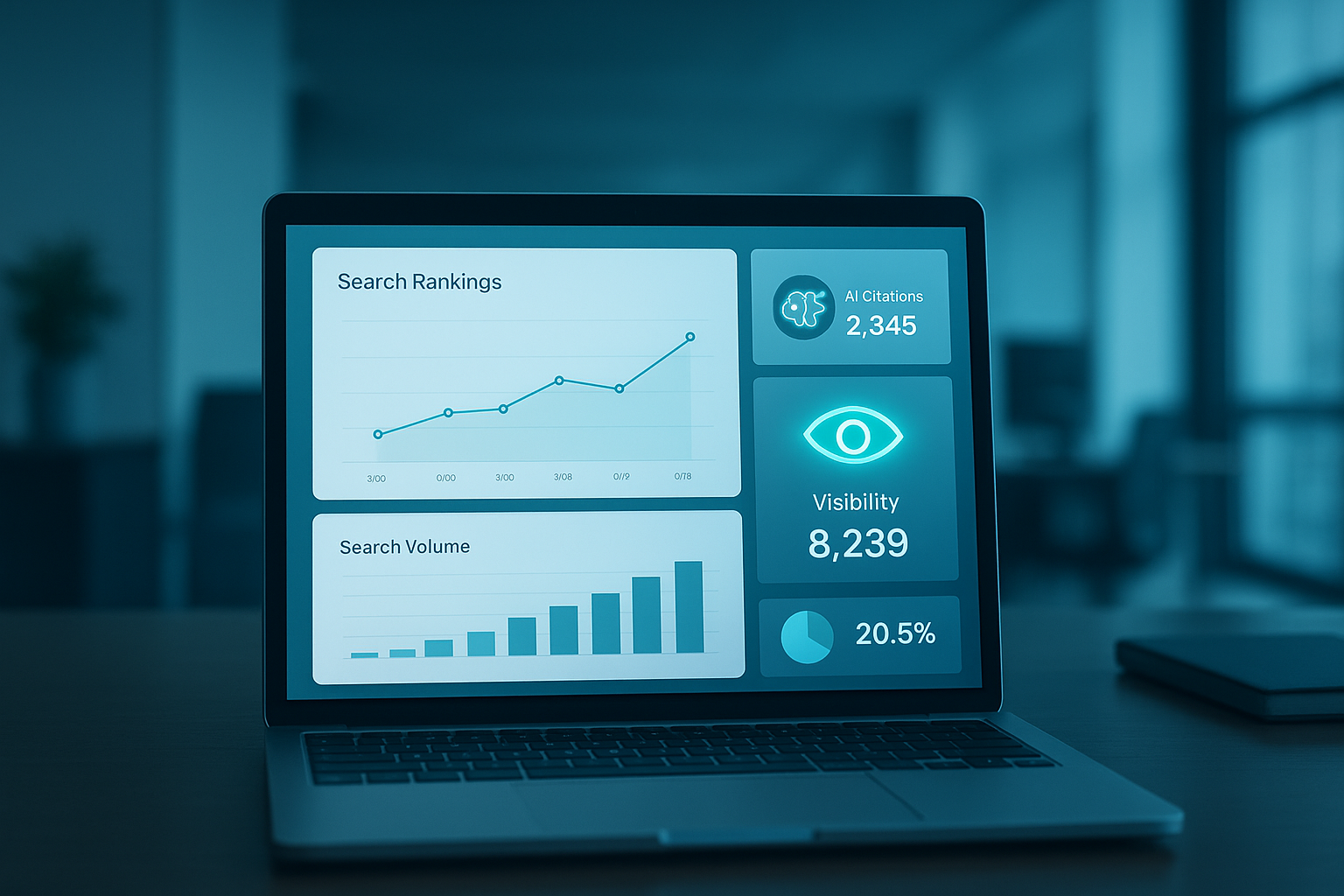
A visibility dashboard is often the control center for online visibility automation, tracking both traditional rankings and AI citations.
What Is Online Visibility Automation?
Online visibility automation is a system of AI-powered tools that continuously scan, diagnose, and fix issues holding a website back from ranking well. Rather than requiring a dedicated in-house SEO team, businesses use software to handle audits, schema generation, and content optimization automatically.
This approach usually blends three disciplines. First, traditional SEO, which focuses on keywords, links, and page speed. Second, Generative Engine Optimization (GEO) — the practice of structuring content so generative AI tools like ChatGPT cite it as a trusted source. Third, Answer Engine Optimization (AEO), which formats content so it appears directly in featured snippets, voice answers, and quick-answer boxes. According to Wikipedia’s overview of search engine optimization, ranking factors have always evolved alongside search technology, and the current shift toward AI answers is simply the newest chapter of that evolution.
Why Automated Visibility Matters for Search Rankings
Search behavior has genuinely changed. Google has publicly discussed that its AI Overviews feature now reaches well over a billion users each month, reshaping how people find answers online. Consequently, a business that only optimizes for traditional blue-link rankings is optimizing for a shrinking share of search traffic.
Furthermore, manual optimization simply cannot keep pace with how often algorithms and AI models update. Automation solves this by running audits and applying fixes on an ongoing basis rather than during occasional, manual reviews. For a deeper look at how this shift plays out in practice, see how automation affects online discoverability.
How Automated Tools Boost Online Visibility
Automated platforms typically work across several layers of a website at once. For example, they crawl a site to find broken links, missing meta tags, and slow-loading pages. In addition, they generate and deploy schema markup — code that helps search engines and Google’s own documentation confirms improves how content is understood by machines.
Beyond technical fixes, tools like 1-Click AI AutoPilot from Rank Authority streamline approved changes without requiring manual coding, while features such as RankFast analyze competitor pages and rebuild them to outrank rivals. Similarly, RankLink automates topical siloing and internal linking, which strengthens topical authority across an entire site. A detailed breakdown is available at how automated tools boost online visibility.
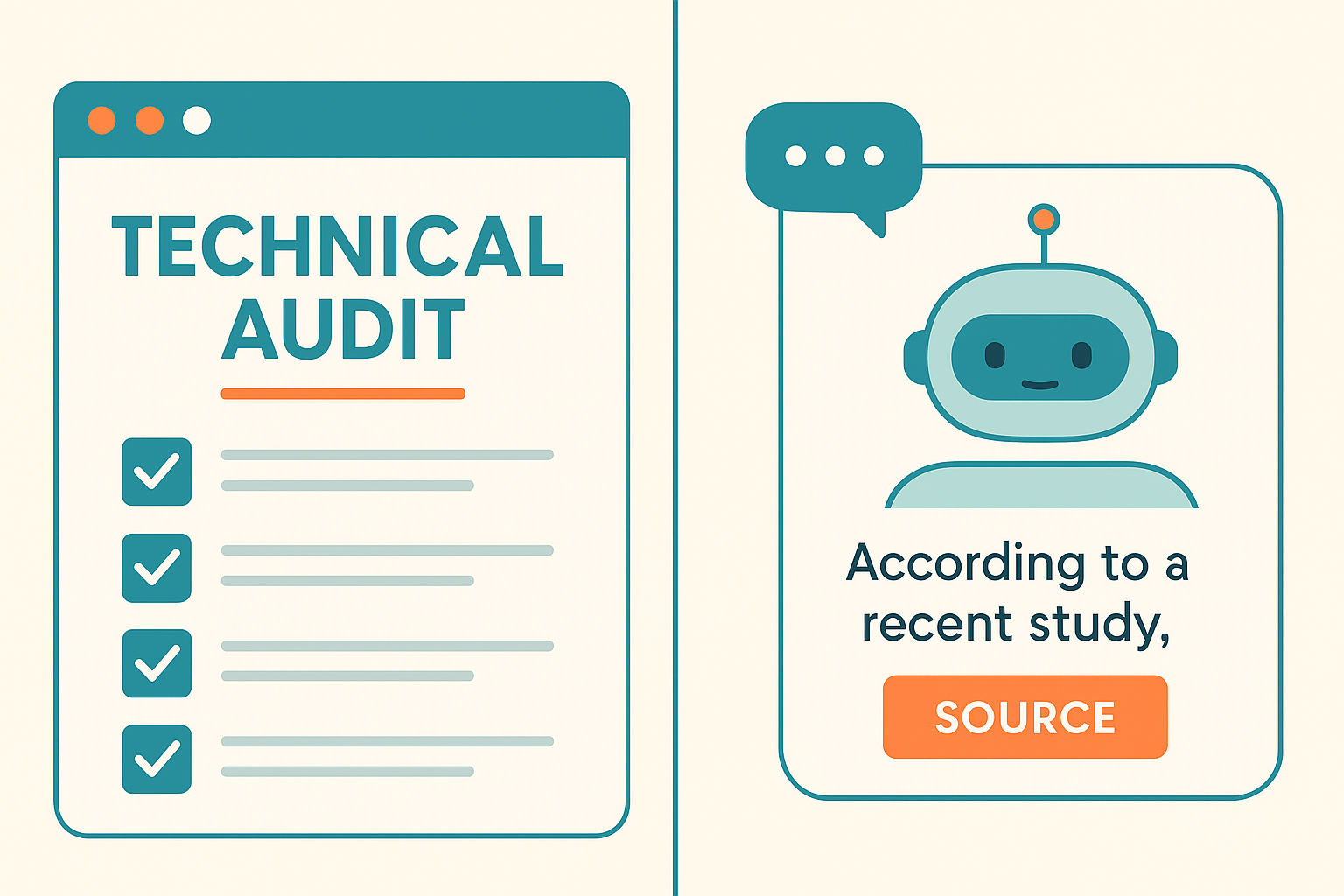
Automated audits and AI citation tracking now work side by side within modern visibility platforms.
How Does Automation Affect Online Discoverability?
Automation affects discoverability by making a website easier for both search engines and AI answer systems to crawl, understand, and cite consistently. In particular, faster indexing submissions and cleaner structured data reduce the delay between publishing content and it being found.
In contrast to manual updates, which can take weeks to propagate, automated indexing submission and continuous monitoring shorten that gap significantly. As a result, businesses can respond faster when competitors gain visibility or when search algorithms shift, as explored further in best tools for digital visibility improvement.
Setting Up an Automated Visibility Workflow: Step-by-Step
Implementing online visibility automation follows a fairly consistent process, regardless of which platform a business chooses. Below is a practical sequence to follow.
- Run a full site audit. Identify broken links, missing schema, slow pages, and structural gaps before making changes.
- Review your Rank Authority Score. This consolidated score highlights technical health, content quality, and AI citation readiness at a glance.
- Deploy automated fixes and schema. Approve fixes so search engines and AI platforms can properly read your pages.
- Publish GEO and AEO optimized content. Build pages formatted for AI citation and direct-answer placement using tools such as AI Blog Builder.
- Monitor AI visibility and citations. Track appearances across AI answer platforms and adjust based on the data over time.
Notably, this workflow works whether a business manages a single site or an agency oversees dozens of client properties, since automation scales the repetitive parts of the process.
Best Tools for Digital Visibility Improvement
Not every tool needs to be a paid subscription to start. Free diagnostic tools, such as an AI Visibility Checker, Site Audit Checker, Backlink Checker, and Page Speed Analyzer, give a useful baseline before committing to full automation. Rank Authority, for instance, offers this diagnostic layer alongside its paid automation suite, which you can explore at rankauthority.com.
Beyond diagnostics, look for platforms offering competitor intelligence, automated schema generation, and CMS integrations across WordPress, Shopify, Wix, GoDaddy, Webflow, and GoHighLevel. Agencies managing multiple client sites should specifically prioritize tools that support this kind of broad, multi-site deployment, a topic covered in more depth at what tools help streamline SEO processes.
Who Benefits Most From Visibility Automation?
Small business owners, digital marketers, entrepreneurs, and agencies tend to benefit most because they typically lack the time or budget for a full in-house SEO team. Local service businesses, in particular, often see meaningful gains from automated local optimization, as outlined in local AI SEO automation for small business growth.
Common Mistakes That Undermine Visibility Automation
Even good automation tools can underperform if used carelessly. A frequent mistake is approving automated fixes without any human review, which occasionally leads to unintended content changes. Another is focusing solely on technical fixes while neglecting the underlying content quality that AI systems evaluate before citing a source.
Similarly, businesses sometimes set up automation once and never check the resulting visibility data. However, ongoing monitoring is what actually reveals whether the automation is working. According to general research on generative AI systems, these models are updated frequently, so visibility strategies that ignore ongoing monitoring quickly become outdated.
Frequently Asked Questions About Online Visibility Automation
What is online visibility automation?
Online visibility automation is the use of AI-powered software to continuously find and fix the technical, content, and structured-data issues that prevent a website from ranking in search engines and AI answer platforms. It replaces manual audits and repetitive optimization tasks with ongoing, automated improvements.
How does online visibility automation differ from traditional SEO?
Traditional SEO usually relies on manual audits and specialist teams working over weeks or months. Automation performs many of the same diagnostic tasks continuously, often within minutes, while also covering GEO and AEO for AI-driven search.
Why is online visibility automation important for AI search?
AI answer engines pull information from structured, clearly formatted content rather than traditional ranked links. Automation helps format and tag content so these systems can understand and cite it accurately.
How much does online visibility automation cost?
Pricing varies by platform and feature set, ranging from free diagnostic tools to monthly subscriptions for full automation suites. Many providers offer a trial period, such as a seven-day trial, so businesses can evaluate results before committing.
How long does it take to see results from automated visibility tools?
Technical fixes like schema deployment can show effects within days, while ranking and AI citation improvements typically build over several weeks to a few months. Individual results vary depending on site history and competition.
What is the difference between GEO and AEO?
Generative Engine Optimization (GEO) focuses on structuring content so generative AI tools cite it as a source. Answer Engine Optimization (AEO) focuses on formatting content so it appears directly in featured snippets and quick-answer boxes.
Can small businesses benefit from visibility automation without an SEO team?
Yes, that is one of the main reasons automation platforms exist. They handle technical audits, schema generation, and content optimization automatically, reducing the specialized expertise a business would otherwise need in-house.
What common mistakes should businesses avoid with automated SEO tools?
Common mistakes include approving automated fixes without review, ignoring content quality in favor of technical tweaks, and failing to monitor AI citation tracking after changes go live.
Does online visibility automation replace the need for content strategy?
No, automation supports content strategy rather than replacing it. Tools can generate optimized drafts and structure existing pages, but businesses still benefit from defining goals and audience priorities.
How does schema markup automation improve AI citations?
Schema markup gives search engines and AI systems machine-readable context about a page’s content, such as FAQs or articles. Automated schema generation applies this structured data consistently without manual coding.
What platforms should online visibility automation tools support?
Effective tools should integrate with common content management systems such as WordPress, Shopify, Wix, GoDaddy, Webflow, and GoHighLevel, ensuring fixes can be deployed without switching platforms.
How can I track whether automation is improving my AI search visibility?
Look for platforms offering AI visibility monitoring and citation tracking across major AI answer platforms, not just traditional rank tracking. A rising visibility score or citation count over time indicates the automation is working.

A rising visibility score is often the clearest sign that online visibility automation is working as intended.
Final Thoughts on Online Visibility Automation
In summary, online visibility automation gives businesses a practical way to keep pace with both traditional search rankings and the rapidly growing world of AI answer engines. By automating audits, schema deployment, content optimization, and citation tracking, teams of any size can maintain a consistent presence across Google, ChatGPT, and other AI platforms. Ultimately, the businesses that adapt fastest to this automated approach are the ones best positioned to stay visible as search continues to evolve. Individual results vary, and pairing automation with periodic human review remains the most reliable path to sustained visibility.

