

Search ecosystem automation is the practice of using AI-driven software to continuously manage a website’s visibility across traditional search engines, generative AI platforms, and voice-based answer engines. Instead of manually tweaking metadata or chasing every algorithm update, businesses can rely on automated systems to handle keyword research, content optimization, and structured data at scale. As search shifts toward AI Overviews, chatbot answers, and conversational assistants, this shift matters more than ever. In this guide, you’ll learn exactly what search ecosystem automation involves, how it works in practice, and the specific steps you can take to put it to work for your brand.

Search ecosystem automation connects traditional search engines with generative AI platforms into one continuous workflow.
What Is Search Ecosystem Automation?
In short, search ecosystem automation is the use of AI algorithms and software to handle the technical and strategic work of search optimization—including schema markup, content structuring, and performance monitoring—across multiple search environments at once. Rather than optimizing for Google alone, this approach also accounts for generative engines like ChatGPT and Perplexity, plus traditional answer boxes and featured snippets.
Consequently, a single automated system can adjust content, track rankings, and refine structured data continuously, instead of requiring a team to update each platform by hand. For example, a well-configured system references search engine optimization principles while also formatting content so AI models can extract it reliably.
Why Search Ecosystem Automation Matters Now
Search behavior is changing faster than most marketing teams can keep up with manually. According to Gartner, search engine volume is projected to drop significantly by 2026 as users increasingly turn to AI chatbots and virtual agents for answers. As a result, brands that only optimize for classic blue-link rankings are missing a growing share of their audience.
Furthermore, generative engines pull answers from structured, well-organized content rather than simply ranking pages. In other words, visibility now depends on how easily an AI model can parse, trust, and cite your content—not just how many backlinks you’ve earned. This is precisely where automated GEO and AEO workflows become valuable, since they continuously reformat and refresh content to match what these systems reward. You can explore how automation affects online discoverability for a deeper look at this shift.
How Automated GEO and AEO Work Together
Generative Engine Optimization (GEO) and Answer Engine Optimization (AEO) both aim to make content easy for AI systems to understand, trust, and quote. However, they target slightly different outputs: GEO focuses on generative answers inside tools like ChatGPT or Google AI Overviews, while AEO targets direct answer boxes, voice assistants, and featured snippets.
When combined through automation, these two disciplines reinforce each other. For instance, structured FAQ content that answers a question directly also tends to perform well in generative AI summaries. Similarly, clear headings and concise definitions help both traditional crawlers and large language models extract accurate information.
Core Components of an Automated Search Ecosystem
An automated search ecosystem typically includes four moving parts: content structuring, schema markup generation, performance monitoring, and continuous refresh cycles. For instance, structured data markup helps search engines and AI crawlers accurately interpret page content.
Meanwhile, monitoring tools track how a brand appears in AI-generated answers, not just organic search results. Together, these components let businesses maintain visibility without manually auditing every page each time an algorithm shifts.
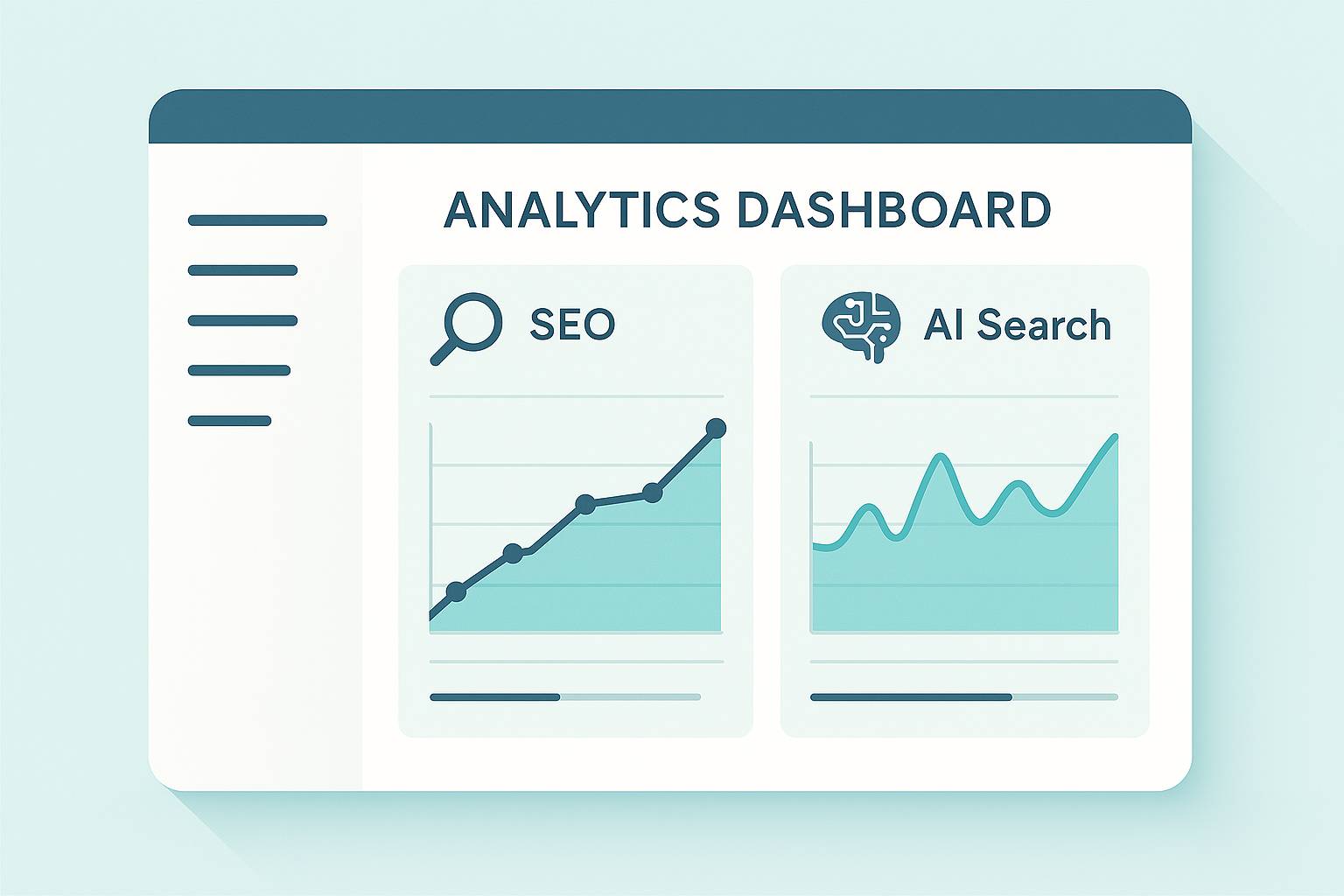
A typical automation dashboard tracks both traditional rankings and AI citation performance side by side.
How to Automate Your Search Ecosystem: A Step-by-Step Process
Getting started with search ecosystem automation doesn’t require a complete overhaul of your existing SEO strategy. Instead, follow these steps to build a system that runs largely on its own.
- Audit your current visibility. Review how your site currently performs across Google, Bing, and AI-driven platforms like ChatGPT or Perplexity so you understand your starting point before automating anything.
- Implement structured data automatically. Use a platform that generates and updates schema markup for your pages, ensuring search engines and AI models can parse your content accurately without manual coding.
- Automate content optimization. Set up tools that continuously refine headings, answer blocks, and keyword usage based on what generative engines are citing, rather than relying on a single content pass.
- Monitor AI citations and rankings. Track how often your brand is mentioned or cited inside AI Overviews, chatbot answers, and traditional search results, adjusting your strategy as patterns emerge.
- Refine on a continuous cycle. Because AI search algorithms update frequently, schedule your automation platform to re-optimize content on a recurring basis rather than treating optimization as a one-time project.
Key Benefits of Search Ecosystem Automation
Beyond saving time, search ecosystem automation offers measurable advantages for businesses managing one site or dozens of client properties. Above all, it reduces the manual workload typically required to track algorithm changes across multiple platforms.
In addition, automated systems tend to catch visibility issues faster than manual audits, since they monitor continuously rather than periodically. Consequently, brands can respond to ranking drops or missed AI citations before they significantly affect traffic. Agencies managing multiple ecommerce clients can review specific tactics in this practical automation checklist to see how these benefits play out in practice.
Choosing the Right Search Ecosystem Automation Platform
Not all automation tools address both traditional SEO and AI-driven search equally well. Therefore, it’s worth evaluating whether a platform handles GEO and AEO together, rather than treating them as separate add-ons.
For example, RankAuthority offers a 1-Click AI AutoPilot feature designed specifically to automate the technical and strategic work involved in search ecosystem automation, including schema generation, content structuring, and ongoing performance monitoring. The platform is built for small business owners, digital marketers, and agencies managing multiple properties, and it includes a risk-free seven-day trial for teams wanting to test the approach before committing.
If you’re managing an online store, automation can also extend to product pages and category structures. Resources like this guide on automating ecommerce SEO tasks and this related walkthrough go into more detail on applying these principles to product-heavy sites.

Choosing a platform that automates both technical SEO and AI search visibility saves significant review time.
Common Mistakes to Avoid When Automating Your Search Strategy
Even with strong automation in place, a few mistakes can undermine results. First, treating automation as “set and forget” often leads to stale content, since AI search algorithms shift frequently and require ongoing refinement.
Second, ignoring structured data entirely makes it harder for AI crawlers to trust your content, even if the writing itself is high quality. Finally, focusing only on one platform—such as Google—while ignoring generative engines can leave significant traffic opportunities untapped. For a deeper look at balancing these tasks, see this guide on automating SEO tasks efficiently.
Frequently Asked Questions About Search Ecosystem Automation
What is search ecosystem automation?
Search ecosystem automation is the use of AI-driven software to handle SEO, GEO, and AEO tasks across search engines and generative AI platforms without constant manual work. It typically includes automated schema markup, content optimization, and performance monitoring.
How is search ecosystem automation different from traditional SEO?
Traditional SEO usually focuses on manually optimizing pages for Google rankings, while search ecosystem automation continuously manages visibility across Google, AI Overviews, chatbots, and voice assistants. Automation also updates content on a recurring schedule rather than through one-time audits.
Is search ecosystem automation suitable for small businesses?
Yes, many automation platforms are built specifically for small business owners and solo marketers who lack the time or budget for a dedicated SEO team. Most offer accessible pricing and guided setup so non-experts can get started quickly.
How much does search automation software typically cost?
Pricing varies widely, but many platforms offer tiered monthly plans, with higher tiers for agencies managing multiple client sites. Some providers, including RankAuthority, offer a risk-free seven-day trial so businesses can test results before paying.
How long does it take to see results from automated optimization?
Most businesses begin noticing measurable changes in AI citations and search visibility within four to eight weeks. Timelines vary depending on site size, existing authority, and how competitive the industry is.
What is the difference between GEO and AEO?
Generative Engine Optimization (GEO) focuses on making content easy for AI models like ChatGPT to summarize and cite, while Answer Engine Optimization (AEO) targets direct answer boxes, featured snippets, and voice assistants. Both work together within a broader search ecosystem automation strategy.
Can automation completely replace a content team?
No, automation handles technical and repetitive tasks like schema generation and monitoring, but human writers still add expertise and brand voice that AI tools can’t fully replicate. The most effective approach combines automated infrastructure with quality human-written content.
What are common mistakes businesses make with search automation?
A common mistake is treating automation as “set and forget,” which leads to outdated content as algorithms change. Another is focusing only on Google while ignoring generative AI platforms that now influence a growing share of search traffic.
Does automation help content appear in AI Overviews?
Yes, automated structuring and schema markup make content easier for AI systems to parse, which increases the likelihood of being cited in AI Overviews and generative answers. Consistent monitoring also helps identify which pages are already being cited.
How often should automated systems refresh content?
Most platforms recommend refresh cycles every few weeks, since AI search algorithms and generative models update frequently. Continuous refinement tends to produce stronger long-term results than a single optimization pass.
Which industries benefit most from search ecosystem automation?
Ecommerce, local service businesses, and agencies managing multiple client sites tend to benefit most, since they have large volumes of pages that would otherwise require significant manual maintenance. Any business competing for online visibility can benefit from automated monitoring.
Is a free trial available for search automation platforms?
Many providers offer trial periods so businesses can evaluate results firsthand; for example, RankAuthority’s automation platform provides a risk-free seven-day trial. This allows teams to test automated GEO and AEO features before committing to a paid plan.
Final Takeaways
Search ecosystem automation is no longer optional for businesses that want consistent visibility across Google, AI Overviews, and generative chat platforms. By combining automated schema markup, continuous content refinement, and ongoing performance monitoring, brands can keep pace with an increasingly AI-driven search landscape without hiring a full in-house team.
Ultimately, the businesses that treat search ecosystem automation as an ongoing system—rather than a one-time project—will be best positioned to maintain authority as AI search technologies continue to evolve.

