

Search engine ranking software is a purpose-built digital tool that tracks, analyzes, and helps improve a website’s position in search engine results pages (SERPs) for targeted keywords. In 2024, BrightEdge research found that organic search drives 53% of all website traffic — making ranking visibility one of the highest-leverage investments any business can make. Whether you are a solo entrepreneur or an agency managing dozens of client sites, the right software can mean the difference between page one dominance and digital obscurity.
What Is Search Engine Ranking Software?
Search engine ranking software is any platform that monitors where your web pages appear in Google, Bing, or other search engines for specific search queries. At its core, it answers the question: “Where do I rank, and why?” However, modern tools go far beyond simple position tracking. They surface competitor intelligence, identify technical SEO barriers, and increasingly, they optimize for AI-generated search results — a shift that is fundamentally reshaping online discoverability.
Furthermore, these platforms automate the repetitive work of data collection, freeing SEO teams to focus on strategy and content. Without automation, manually checking hundreds of keywords across multiple search engines would consume entire workdays. Consequently, even small businesses now rely on ranking software to stay competitive without hiring large SEO departments.
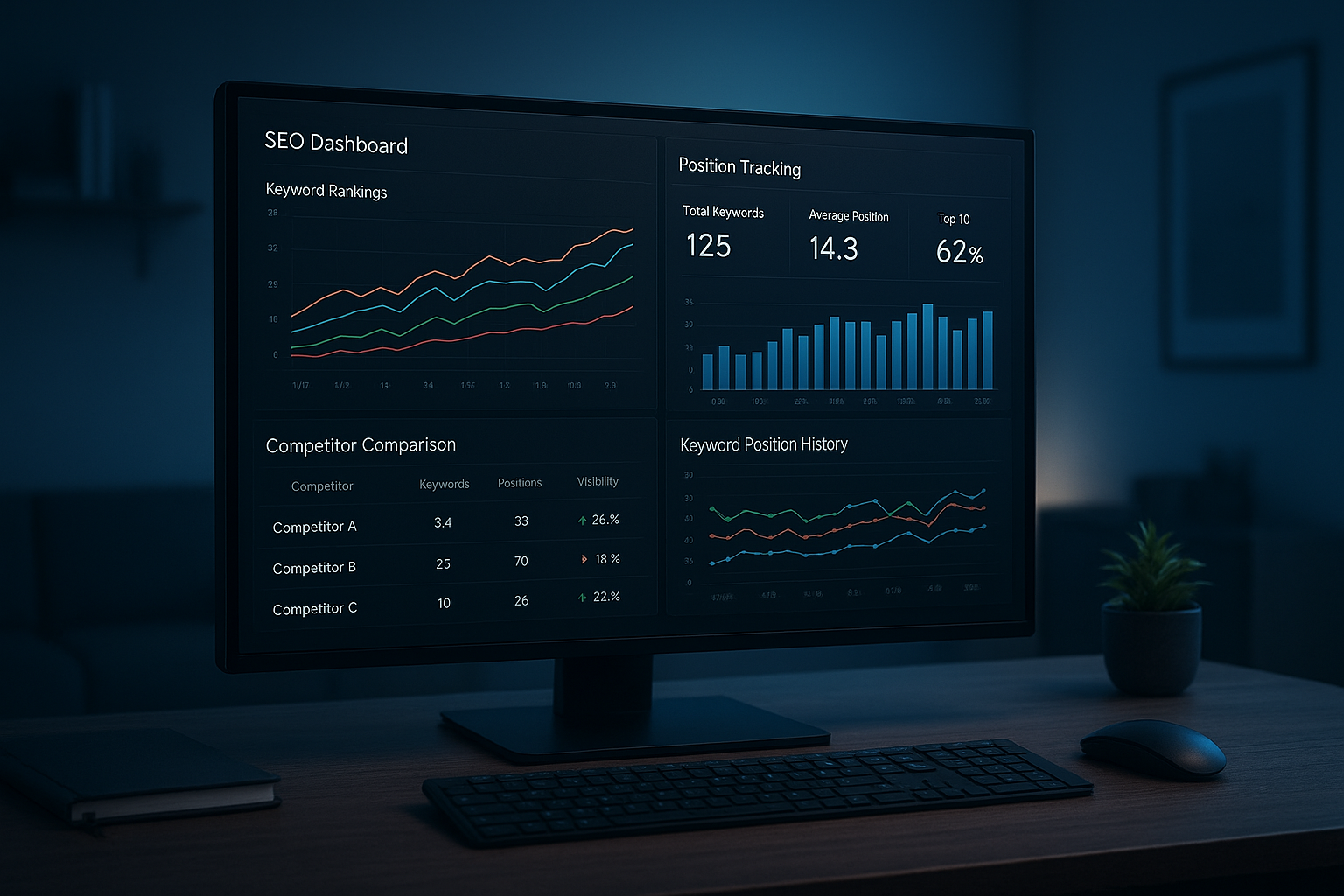
A modern search engine ranking software dashboard gives businesses a real-time view of keyword positions and competitor movements.
Key Features to Look for in SEO Ranking Tools
Not all ranking tools are created equal. Specifically, the best platforms combine several capabilities into a single workflow so that data flows seamlessly from discovery to action. Before investing in any solution, consider which of the following features align with your goals.
- Keyword rank tracking: Daily or real-time monitoring of keyword positions across multiple search engines and devices.
- Competitor analysis: Side-by-side comparison of your rankings versus direct competitors for the same target queries.
- Technical site audits: Automated scans that flag crawl errors, broken links, slow page speeds, and other issues that suppress rankings.
- Backlink monitoring: Tracking of inbound links that contribute to domain authority and ranking strength.
- AI search optimization (GEO/AEO): Features that help content appear in AI-generated answers from platforms like Google’s AI Overviews.
- Automated reporting: Scheduled reports delivered to stakeholders without manual data assembly.
In addition, ease of use matters enormously. A tool packed with features but requiring weeks of training creates friction that slows down results. Therefore, look for platforms that balance depth with accessibility. You can explore a comprehensive breakdown of capabilities in this guide to automated search ranking tools.
How to Choose and Use Ranking Software: A Step-by-Step Process
Selecting the right platform is only half the battle. Consequently, knowing how to use it effectively is what drives real ranking gains. Follow these five steps to get maximum value from any SEO ranking solution.
- Define your ranking goals and target keywords. Before evaluating any software, list your primary business goals and the keywords your audience uses. This ensures you track metrics that actually drive revenue, not vanity numbers.
- Compare software features against your needs. Evaluate each platform’s tracking frequency, competitor analysis depth, site audit capabilities, AI search features, and reporting options. Match these to the goals from step one.
- Start a free trial and run a baseline audit. Sign up for a trial and immediately run a full site audit and keyword baseline report. This benchmark lets you measure improvement as you begin optimizing. Try a free SEO analysis to get started quickly.
- Enable automated monitoring and alerts. Configure daily keyword monitoring and set alerts for significant ranking changes or technical issues. Automation ensures you never miss a critical ranking shift.
- Act on insights and track progress weekly. Review the software’s recommendations each week, implement the highest-priority fixes, and track ranking movement over time. Consistent, data-driven action compounds into sustained gains.
Why Automation Changes Everything
Manual SEO is time-consuming and error-prone. In contrast, automated ranking software runs continuously in the background, collecting data and surfacing actionable insights without human intervention. According to Search Engine Journal, businesses that adopt automated SEO workflows report up to 60% faster ranking improvements compared to purely manual approaches.
Moreover, automation scales in ways that human effort cannot. As you add more pages, products, or client sites, automated tools handle the growing data load without proportional increases in cost or time. This scalability is why agencies and growing businesses consistently turn to platforms that prioritize intelligent automation. For a deeper look at scaling your results, see this resource on scalable SEO solutions.
Automation is the defining advantage of modern SEO ranking platforms, enabling continuous optimization at scale.
AI-Powered Search: The New Frontier for Ranking Software
The rise of AI-generated search results — including Google’s AI Overviews and Bing Copilot — has introduced an entirely new dimension to search visibility. Traditional ranking software tracked positions in the classic ten blue links format. However, that format is rapidly evolving. Today, appearing in an AI-generated answer can deliver more traffic than a first-page organic listing.
This shift has given rise to two emerging disciplines: Generative Engine Optimization (GEO) — optimizing content to appear in AI-generated search results — and Answer Engine Optimization (AEO) — structuring content so AI assistants and voice search tools cite it directly. Both require specialized software capabilities that most legacy SEO tools lack.
Platforms like rankauthority.com are built specifically for this next-generation search environment. Their 1-Click AI AutoPilot technology automates both GEO and AEO optimization, helping businesses maintain visibility as search engines continue to evolve. Additionally, understanding how AI can improve your website’s search rankings is increasingly essential for any competitive digital strategy.
Rank Tracking Automation: Saving Time at Scale
Rank tracking automation is not just a convenience — it is a competitive necessity. When competitors are monitoring rankings daily and adjusting strategies in near-real time, weekly manual checks leave you perpetually behind. Automated alerts for ranking drops allow teams to respond within hours rather than weeks. Furthermore, historical ranking data reveals seasonal patterns and algorithm update impacts that would be invisible without consistent automated collection.
For a detailed look at how automation transforms rank monitoring, explore this guide on rank tracking automation. The time savings alone often justify the software investment within the first month.
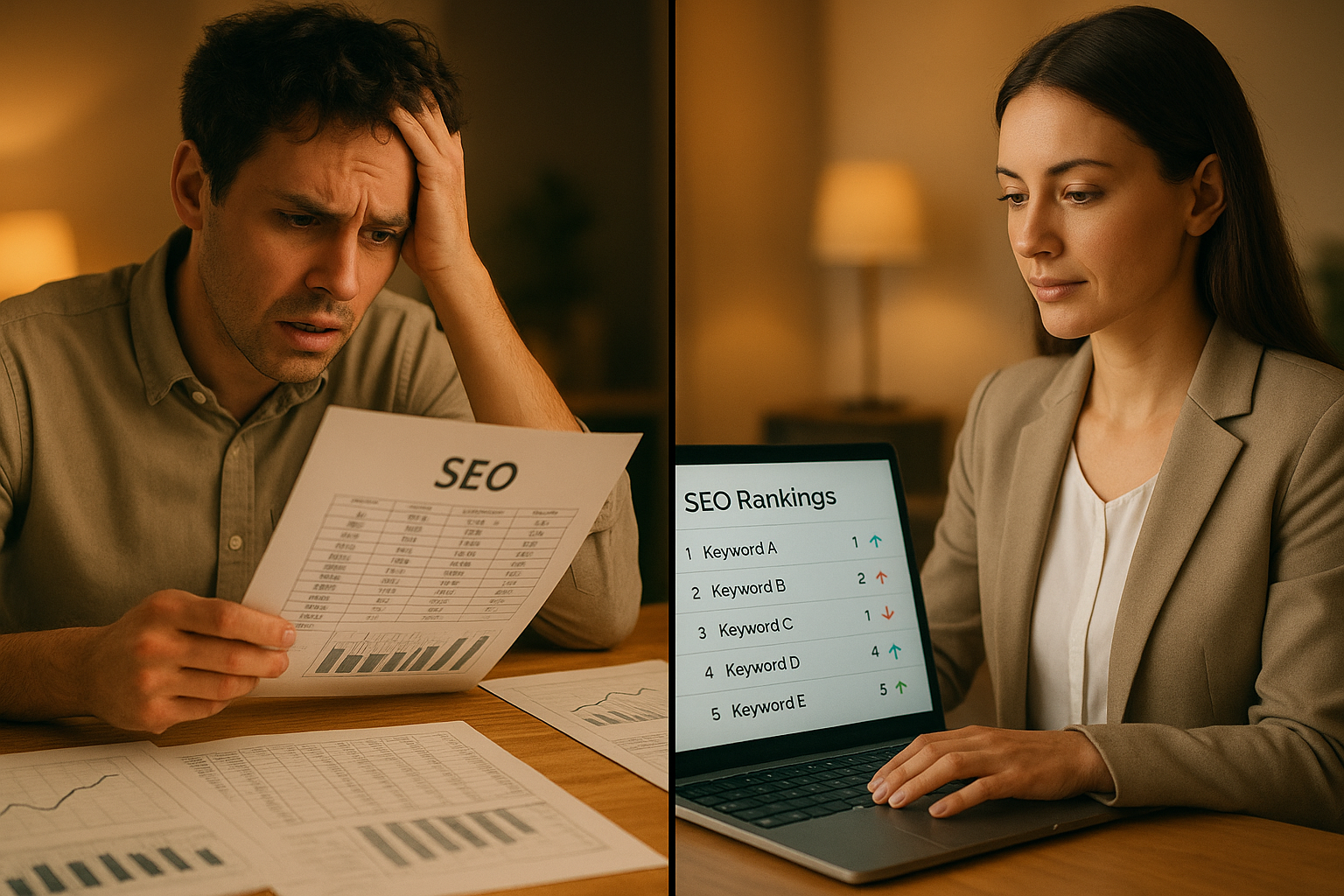
Automated ranking software eliminates the guesswork and time drain of manual keyword monitoring.
Top Considerations When Comparing SEO Platforms
The market for SEO tools is crowded. Well-known platforms like Ahrefs and Semrush offer comprehensive feature sets, but they carry steep learning curves and enterprise-level pricing. Specifically, for small business owners and agencies seeking faster ROI, the right choice balances power with practicality.
Consider these factors when making your decision:
- Pricing transparency: Understand exactly what each tier includes and what triggers additional costs.
- Data freshness: Daily tracking is significantly more valuable than weekly snapshots for fast-moving industries.
- AI search readiness: Does the platform address GEO and AEO, or only traditional SERP positions?
- Multi-site support: Essential for agencies managing multiple client properties from a single dashboard.
- Trial availability: Risk-free trials let you validate performance before committing budget.
According to Moz’s SEO learning center, the most effective SEO strategies combine technical optimization, content quality, and consistent performance monitoring — all areas where strong ranking software provides direct support.
Frequently Asked Questions About Search Engine Ranking Software
What is search engine ranking software?
Search engine ranking software is a tool that tracks, analyzes, and helps improve a website’s position in search engine results pages for targeted keywords. These platforms automate keyword monitoring, competitor analysis, and SEO reporting so businesses can act on data quickly and consistently.
How does search engine ranking software improve SEO?
It improves SEO by continuously monitoring keyword positions, identifying ranking drops early, uncovering competitor strategies, and surfacing technical issues that hold a site back. Acting on these insights helps businesses climb the SERPs faster than manual methods allow.
Is automated SEO software suitable for small businesses?
Yes. Many automated SEO platforms are specifically designed for small businesses and non-technical users. Platforms like rankauthority.com offer 1-Click AI AutoPilot technology that removes the steep learning curve typically associated with traditional SEO tools, making professional-grade optimization accessible to everyone.
What is the difference between rank tracking and full SEO software?
Rank tracking tools focus solely on monitoring keyword positions over time. Full SEO software combines rank tracking with site audits, backlink analysis, content optimization, and competitor intelligence. Full-suite tools provide a more complete and actionable picture of search performance.
How often should I check my search engine rankings?
Most SEO professionals recommend checking rankings at least weekly. However, automated ranking software can monitor positions daily and send alerts when significant changes occur, saving considerable manual effort and ensuring faster response times to algorithm shifts.
Can ranking software help with AI-powered search engines?
Yes. Advanced platforms now include GEO and AEO features that help content appear in AI-generated answers and featured snippets. rankauthority.com specializes in exactly this type of next-generation search visibility, making it well-suited for the evolving AI search landscape.
What features should I look for in SEO ranking software?
Look for keyword rank tracking, competitor monitoring, site audit capabilities, backlink analysis, reporting dashboards, and AI search optimization features. Automation and ease of use are especially important for teams with limited SEO resources or technical expertise.
How much does search engine ranking software typically cost?
Costs vary widely. Entry-level tools start around $20 to $50 per month, while enterprise platforms can exceed $500 per month. Many providers, including rankauthority.com, offer risk-free trial periods so you can evaluate real-world performance before making a financial commitment.
What are the most common mistakes when using ranking software?
Common mistakes include tracking too many irrelevant keywords, ignoring competitor data, failing to act on ranking drops, and not connecting ranking trends to actual business outcomes. Using automation to filter and prioritize insights helps teams avoid these costly pitfalls.
How long does it take to see ranking improvements with SEO software?
Most websites see measurable ranking movement within 4 to 12 weeks of consistent optimization. Highly competitive keywords may take 6 months or longer. Automated tools accelerate this timeline by continuously identifying and addressing ranking barriers without requiring constant manual attention.
Can I use ranking software to manage multiple websites?
Yes. Most professional SEO platforms support multi-site management, making them ideal for agencies and digital marketers overseeing several client properties. Centralized dashboards allow efficient monitoring across all sites from a single interface, improving team productivity significantly.
What is GEO and why does it matter for ranking software?
Generative Engine Optimization (GEO) is the practice of optimizing content to appear in AI-generated search results from platforms like Google’s AI Overviews. As AI search grows in adoption, ranking software that incorporates GEO features becomes increasingly essential for sustained online visibility and traffic.
Conclusion: Choosing the Right Ranking Software Pays Off
Investing in the right search engine ranking software is one of the most impactful decisions a business can make for its digital presence. As a result, companies that adopt automated, AI-ready ranking platforms consistently outperform competitors still relying on manual processes. The combination of real-time data, competitor intelligence, technical auditing, and emerging AI search optimization capabilities creates a compounding advantage that grows stronger over time. Therefore, whether you are just starting out or scaling an established operation, the key is to choose a platform that matches your ambitions — and then let automation do the heavy lifting. Explore how rankauthority.com can put your rankings on autopilot with a risk-free seven-day trial today.

