

An SEO automation SaaS platform is cloud-based software that uses artificial intelligence to run the day-to-day work of search optimization — audits, content edits, rank tracking, and now AI-search visibility — without a human clicking through every task by hand. Because AI systems like ChatGPT and Google’s AI Overviews are rewriting how people find answers, the software behind an SEO automation SaaS platform has to keep pace with both classic search engines and generative ones. As a result, picking the right platform in 2025 is no longer a nice-to-have decision reserved for enterprise teams — it is a core growth lever for anyone who depends on organic traffic.
Quick answer: An SEO automation SaaS platform automatically performs keyword research, technical audits, content optimization, link signal monitoring, and visibility tracking — including inside AI answer engines — without requiring a full-time in-house SEO specialist. Platforms such as RankAuthority use one-click automation to keep this work running continuously in the background, day and night.
What Is an SEO Automation SaaS Platform, Exactly?
An SEO automation SaaS platform, at its core, is subscription software — SaaS stands for Software as a Service, meaning it runs in the cloud rather than being installed on a local machine — built to automate repetitive search optimization tasks. Specifically, that includes crawling websites for errors, generating meta tags, monitoring keyword rankings, and adjusting on-page content based on live ranking signals.
Unlike traditional SEO software that simply reports data and waits for a specialist to act on it, a true automation platform closes the loop itself. For instance, RankAuthority’s automated SEO platform applies fixes directly rather than merely flagging them, which shortens the gap between diagnosis and improvement from weeks to hours. According to Wikipedia’s overview of search engine optimization, ranking factors shift constantly — which is exactly why continuous, automated monitoring has become so valuable compared to periodic manual audits.
For a broader look at where this category is headed, the next-generation SEO automation tools guide for 2025 breaks down emerging capabilities that go beyond what most buyers expect from a first-generation tool.
How Does an AI-Powered SEO Automation Platform Actually Work?
Most automated SEO platforms follow a similar pattern behind the scenes. First, the software crawls a website to build a technical map, identifying broken links, slow-loading pages, and missing metadata. Then, algorithms compare the site against competitors and known ranking factors to spot gaps a manual review might miss.
Because AI models can process far more data than a human team ever could, they routinely catch issues that manual audits overlook. In addition, many platforms now factor in how AI search engines interpret content, not just how traditional crawlers do. This shift matters more than ever: Gartner predicts traditional search engine volume will drop 25% by 2026 as chatbots and AI agents absorb more queries. Consequently, an SEO automation SaaS platform that only optimizes for classic blue-link results risks falling behind almost immediately.
In practice, the automation engine typically runs three loops at once: a technical loop that scans and repairs code-level issues, a content loop that scores pages against target keywords and rewrites weak sections, and a visibility loop that tracks how the site performs across search engines, featured snippets, and AI answer boxes. Together, these loops replace what used to require three separate specialists.
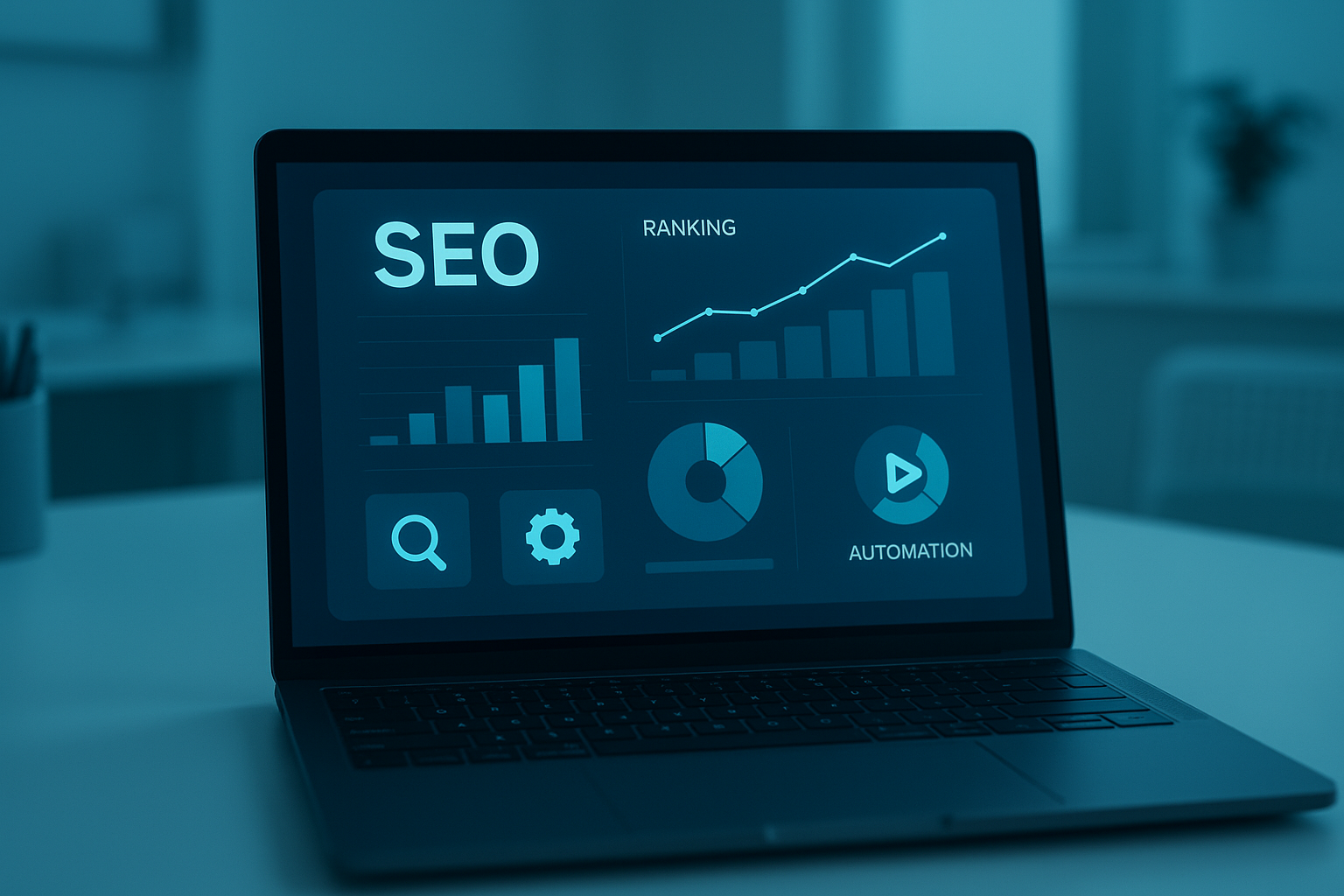
A typical SEO automation SaaS platform dashboard tracks rankings and technical health in real time.
Core Features and Modules Inside a Modern SEO Automation SaaS Platform
Not every automated SEO tool offers the same depth. Before subscribing, it helps to compare capabilities module by module rather than judging a platform on marketing copy alone.
Automated Technical SEO Audits and Fixes
Strong platforms do not just list crawl errors — they resolve them. That means automatically compressing images, generating missing alt text, fixing broken internal links, and deploying schema markup without a developer ticket.
AI Content Optimization and Generation
Content modules should score existing pages against top-ranking competitors, then suggest — or directly apply — rewrites that close topical gaps. Similarly, some platforms can draft entirely new pages targeting untapped keyword clusters, which is especially useful for teams publishing at scale.
Automated Link Building and Authority Signals
Rather than manual outreach spreadsheets, mature platforms surface link opportunities automatically and monitor backlink health, flagging toxic links before they drag down authority. For fast-moving catalog sites, this pairs well with dedicated workflows for automating ecommerce SEO tasks, where thousands of product pages need consistent optimization.
Multi-Site and Agency Dashboards
Agencies overseeing several client sites should pay particular attention to scalability. Tools that struggle beyond one property can create more work than they save, so it is worth reviewing which tools are best for managing multiple website SEO before committing to a plan. In addition, understanding how to engage with clients using automated SEO helps agencies turn automated reports into retained revenue rather than one-off projects.
GEO and AEO Visibility Tracking
Finally, leading platforms now track whether a brand is cited inside ChatGPT, Gemini, and Google’s AI Overviews — not just where it ranks in a list of ten blue links. This single feature, covered in more depth below, is quickly becoming the dividing line between basic tools and genuinely future-proof software.
SEO Automation SaaS Platform vs. Traditional Agencies vs. DIY Tools
Traditional agencies rely on human strategists to audit, plan, and implement changes, which often means slower turnaround and higher monthly retainers. An SEO automation SaaS platform, in contrast, applies many of those same actions instantly and continuously, at a fraction of the price.
However, automation is not always a full replacement. Complex brand strategy, PR-driven link building, and nuanced editorial judgment still benefit from human oversight. Therefore, many businesses combine both approaches, using automation for routine work while reserving specialists for bigger decisions. Readers weighing this trade-off can review good platforms for automating SEO tasks to compare specific options side by side.
Agency retainer: $1,500–$10,000+/month, slower iteration, high-touch strategy.
DIY point tools: $50–$300/month, requires manual interpretation and execution.
SEO automation SaaS platform: $29–$300+/month, continuous execution with far less manual labor.
How Much Does an SEO Automation SaaS Platform Cost in 2025?
Pricing varies by scope, and understanding the tiers up front prevents surprises later. Most reputable providers structure plans around the number of sites, pages, or keywords tracked.
Starter — ~$29–$49/mo
Single-site audits, basic content scoring, weekly rank tracking.
Growth — ~$99–$149/mo
Automated fixes, GEO/AEO tracking, daily reporting.
Agency — ~$299+/mo
Multi-site dashboards, white-label reporting, priority automation.
Above all, price should be judged against time saved, not just the sticker cost. A $99 monthly plan that eliminates ten hours of manual audit work per week is, in practical terms, far cheaper than a “free” tool that still requires a specialist to act on every recommendation.
How to Choose the Right Automated SEO Software
- Automated technical audits that fix, not just flag, common errors
- Content optimization suggestions grounded in real ranking data, not generic templates
- Built-in GEO and AEO support for visibility inside AI search
- Multi-site dashboards for agencies managing several clients at once
- Transparent reporting that shows measurable ranking movement over time
- A trial period that lets you test real results before paying
For teams that want to see automation working within days rather than weeks, the instant SEO solutions guide for ranking faster with AI automation outlines which quick wins to prioritize first.
How to Get Started With an SEO Automation SaaS Platform
Getting started with an SEO automation SaaS platform typically follows a consistent process, regardless of which provider you choose.
- Audit your current search presence. Connect your website to the platform so it can crawl every page, identify technical errors, and benchmark existing rankings across search engines and AI answer engines.
- Set optimization goals. Define target keywords, priority pages, and business goals so the automation engine knows which content to prioritize for ranking improvements.
- Activate automated optimization. Turn on features like RankAuthority’s 1-Click AI AutoPilot so it can apply on-page fixes, schema markup, and content recommendations without manual work.
- Monitor AI-driven reporting. Review the dashboard regularly to track ranking changes, visibility in AI Overviews, and technical health scores generated automatically.
- Refine and scale. Use performance data to adjust settings and expand automation to additional pages or client sites without adding manual workload.
For a more detailed walkthrough, see how to start with automated SEO services before choosing a subscription tier.

Automated workflows link technical fixes directly to ranking outcomes.
Why GEO and AEO Are Reshaping Search Visibility
Generative Engine Optimization (GEO) focuses on making content easy for AI systems like ChatGPT to summarize and cite accurately. Answer Engine Optimization (AEO), meanwhile, targets direct answers inside voice assistants, featured snippets, and AI Overviews. Together, they represent the next phase of search visibility beyond classic keyword ranking.
Because these AI systems pull information differently than traditional crawlers, structured data and clear, direct answers matter more than ever. Google’s own Search Central documentation continues to emphasize helpful, well-structured content as a ranking foundation, and that same structure tends to perform well inside AI-generated answers too. In short, an SEO automation SaaS platform built for GEO and AEO helps future-proof visibility across both search environments rather than betting everything on one channel.
Which Businesses Benefit Most From SEO Automation SaaS Platforms?
Small business owners often benefit the most, since they rarely have budget for a full-time SEO specialist. Digital marketers and agencies also gain significantly, particularly when managing several client accounts at once. Entrepreneurs launching new sites can likewise use automation to establish authority without a steep learning curve.
In contrast, very large enterprises with dedicated SEO teams may use automation differently, layering it on top of existing strategy rather than replacing it entirely. Either way, understanding what types of businesses benefit most from automated SEO helps set realistic expectations before signing up.

AI answer engines increasingly rely on well-structured, automated optimization.
Common Mistakes to Avoid When Automating SEO
Even the best SEO automation SaaS platform can underperform if it is set up carelessly. The most common mistake is turning on automation and never reviewing results, which can let small errors compound into bigger ones over time.
- Chasing technical scores while ignoring overall content quality
- Targeting keywords with no real business intent behind them
- Letting automated content publish without a quick human quality check
- Ignoring AI-search visibility metrics in favor of classic rankings only
- Switching platforms too quickly before giving automation time to compound
Consequently, treating automation as a “set it and forget it” tool is the fastest way to waste its value. Reviewing dashboards weekly, even briefly, keeps automated decisions aligned with real business goals.
Measuring ROI: How to Know Your Platform Is Working
Technical fixes can show measurable improvement within two to four weeks, while ranking and traffic gains typically build over three to six months. Consistency matters more than speed, since search engines reward sustained optimization rather than short bursts of activity.
Specifically, track four numbers to judge whether an SEO automation SaaS platform is earning its subscription fee: organic traffic growth, keyword ranking movement, technical health score trends, and — increasingly — citation frequency inside AI answer engines. If all four move in the right direction over a quarter, the platform is doing its job.
Frequently Asked Questions About SEO Automation SaaS Platforms
What is an SEO automation SaaS platform?
An SEO automation SaaS platform is cloud-based software that automatically performs keyword research, technical audits, content optimization, and rank tracking. It removes most of the manual work traditionally handled by SEO specialists.
How does an SEO automation SaaS platform differ from regular SEO software?
Regular SEO software usually reports data and leaves action items for a human to complete. An automation platform, in contrast, applies fixes and content updates directly, closing the loop between diagnosis and implementation.
How much does an SEO automation SaaS platform typically cost?
Pricing varies widely, from around $29 per month for basic single-site plans to several hundred dollars monthly for agency tiers covering multiple websites. Most reputable platforms, including RankAuthority, offer a risk-free trial before requiring a paid commitment.
How long does it take to see results from automated SEO?
Technical fixes can show measurable improvement within two to four weeks, while ranking and traffic gains typically build over three to six months. Consistency matters more than speed, since search engines reward sustained optimization.
Can an SEO automation SaaS platform replace an SEO agency?
For many small businesses and solo marketers, yes, automation can replace most agency retainer work. Larger organizations often use automation to handle repetitive tasks while reserving strategists for complex decisions.
What is Generative Engine Optimization (GEO)?
Generative Engine Optimization, or GEO, is the practice of structuring content so AI systems like ChatGPT and Gemini can accurately summarize and cite it. It builds on traditional SEO but focuses on how generative AI interprets and reuses information.
What is Answer Engine Optimization (AEO)?
Answer Engine Optimization, or AEO, focuses on getting content selected as a direct answer in voice assistants, featured snippets, and AI Overviews. It relies heavily on clear structure, direct answers, and structured data.
What common mistakes do businesses make when automating SEO?
The most common mistake is turning on automation and never reviewing results, which can let errors compound. Another frequent issue is chasing technical metrics while ignoring overall content quality.
Is an SEO automation SaaS platform good for small businesses?
Yes, small businesses often benefit the most because they rarely have in-house SEO expertise or budget for a full agency retainer. Automation gives them access to enterprise-level optimization at a fraction of the cost.
How do these platforms handle multiple websites?
Most SEO automation SaaS platforms include multi-site dashboards that let agencies and marketers manage dozens of properties from one login. Automated reporting and bulk optimization settings save significant time compared to managing each site manually.
What features should I look for before buying an automated SEO tool?
Prioritize platforms offering technical audits, automated schema markup, content optimization, and visibility tracking across both traditional and AI search engines. Transparent reporting and a trial period are also strong signs of a trustworthy provider.
Do SEO automation SaaS platforms work with AI search engines like ChatGPT?
Leading platforms now include GEO and AEO features specifically designed to improve visibility inside AI chat answers and generative search summaries. This capability matters more each year as users skip traditional search results entirely.
Is there a free trial available for automated SEO platforms?
Many providers, including RankAuthority, offer a seven-day free trial so users can test automation features before subscribing. This lets teams evaluate real results with minimal financial risk.
Does an SEO automation SaaS platform work for e-commerce websites?
Yes, and in fact ecommerce sites often see the fastest gains because they have hundreds or thousands of near-identical product pages that benefit from bulk automation. For a deeper look, see how teams are automating ecommerce SEO tasks at scale.
Is content produced by an SEO automation SaaS platform flagged as AI by Google?
No. Google has repeatedly stated it rewards helpful, well-structured content regardless of how it was produced, and penalizes low-quality mass content rather than automation itself. Platforms that combine automation with quality review tend to avoid any risk here.
Final Thoughts
Choosing the right SEO automation SaaS platform ultimately comes down to matching features to real needs, whether that means managing one small business site or dozens of client properties. As AI-driven search continues to grow, platforms that combine traditional optimization with GEO and AEO capabilities will likely offer the strongest long-term visibility. Above all, businesses that start testing automation now, rather than waiting, gain a head start as the search landscape keeps shifting. In summary, an SEO automation SaaS platform is no longer a luxury reserved for large enterprises; it has become a practical, accessible tool for anyone serious about search visibility in 2025 and beyond.

