

SEO performance prediction is quickly becoming the most valuable skill in a marketer’s toolkit. Search engines are leaning harder on artificial intelligence to decide what ranks. Instead of publishing content and hoping for the best, teams now forecast rankings, traffic, and engagement before a single page goes live. This shift matters because search itself is changing fast, and guessing is no longer good enough.
Quick Answer: SEO performance prediction is the practice of using historical data, machine learning, and algorithmic models to forecast how well a page will rank and how much organic traffic it will earn, before or shortly after publication. It helps teams prioritize content investments and reduce wasted effort.
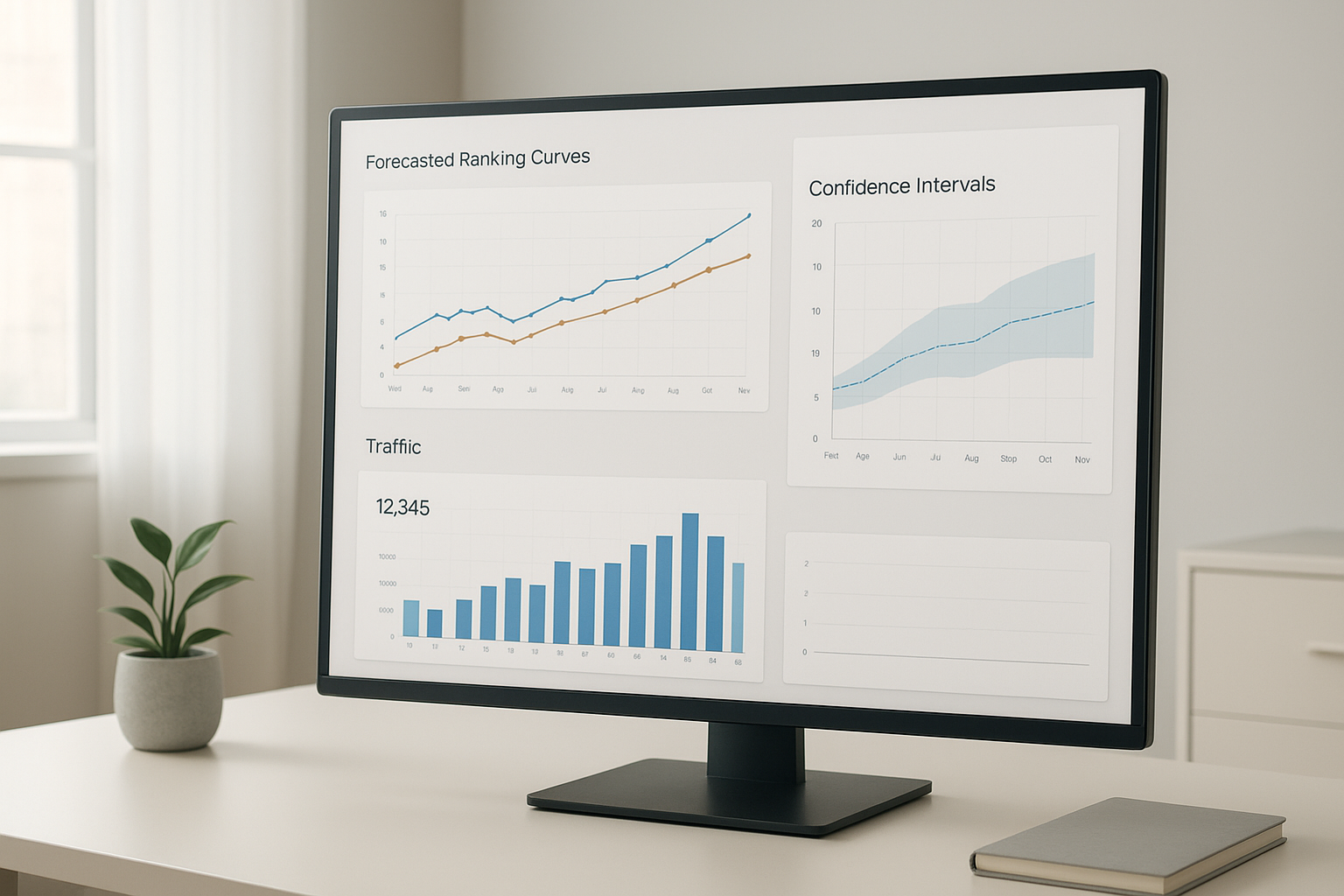
A predictive dashboard is often the first place SEO performance prediction becomes visible to marketers.
What Is SEO Performance Prediction?
SEO performance prediction is a data-driven method for estimating how a webpage will rank and perform in search results before or immediately after it goes live. In simple terms, it takes signals like backlink strength, content quality, and historical ranking patterns, then runs them through a model to produce a forecast. Because search engines process billions of pages, predictive models help narrow down what is most likely to succeed.
Unlike traditional rank tracking, which only reports what already happened, prediction looks forward. Therefore, teams can test multiple content ideas against a model and choose the option with the strongest projected outcome. This approach saves time and reduces the risk of investing in topics that were never going to rank well in the first place.
Why Forecasting SEO Performance Matters in 2025
Search has changed dramatically over the past two years. In addition to traditional blue-link results, users now encounter AI Overviews, chat-based answers, and generative summaries that pull from fewer sources than before. As a result, ranking prediction has become essential for understanding not just where a page will land on page one, but whether it will be selected as a source for an AI-generated answer at all.
According to industry research compiled by Search Engine Journal, organic click-through rates have dropped on many queries as AI-generated summaries answer questions directly within the results page. Consequently, businesses that can forecast visibility across both traditional and AI-powered search channels gain a meaningful competitive advantage. This is precisely why platforms are building Generative Engine Optimization and Answer Engine Optimization signals directly into their forecasting models.
For a deeper look at how automated systems are reshaping this space, see this guide to AI analytics for smarter rankings.
How SEO Performance Prediction Models Work
Most prediction models rely on a combination of historical data and pattern recognition. Specifically, the model examines what factors correlated with high rankings in the past, then applies those patterns to new content before it publishes. In particular, three data categories tend to carry the most predictive weight.
Key Data Inputs for Accurate Predictions
First, content quality signals such as depth, readability, and topical coverage help the model estimate relevance. Second, backlink profiles indicate authority, since pages with stronger link signals historically rank higher. Third, competitor benchmarking shows what the current top-ranking pages already do well, giving the model a realistic ceiling to measure against. Together, these three inputs form the backbone of most modern forecasting systems, including the automated analysis described in this complete guide to automated performance analysis.
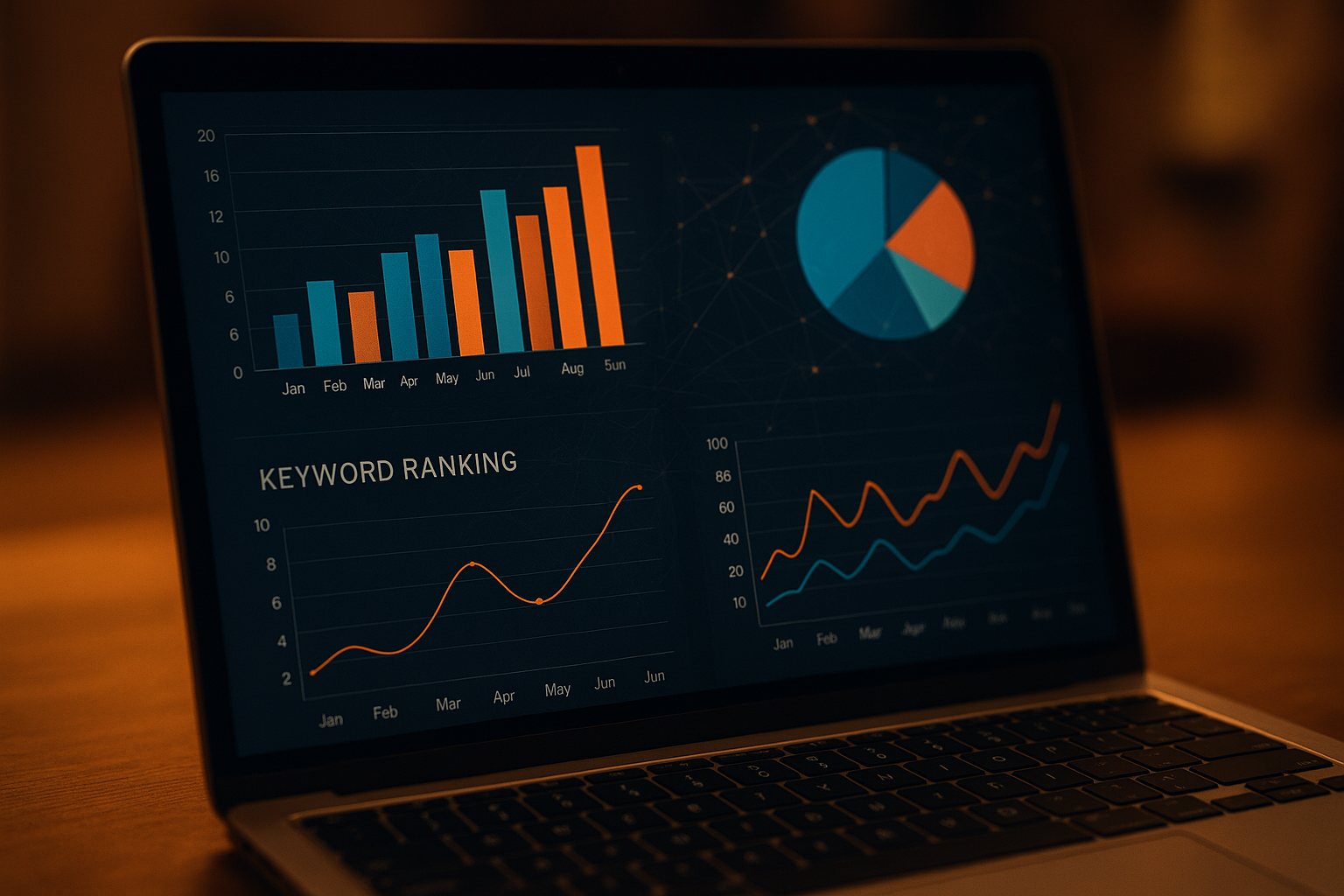
Layered data inputs like these help refine SEO performance prediction over time.
Step-by-Step Process to Predict SEO Performance
Building a reliable forecast does not require a data science degree. However, it does require a consistent process. Below is a practical sequence that most teams can follow, regardless of company size.
- Gather historical performance data. Pull at least six months of ranking positions, traffic, and click-through rates for related pages so the model has enough context.
- Analyze competitor benchmarks. Study the top-ranking pages for your target keyword to understand content depth and authority signals.
- Run the prediction model. Input your content brief and historical data into a forecasting tool to generate an estimated ranking range and traffic projection.
- Adjust your content strategy. Refine headlines, structure, and internal links based on what the forecast suggests will perform best.
- Monitor and recalibrate. After publishing, compare actual results to the forecast weekly and feed new data back into the model.
Notably, this cycle never truly ends. Instead, each round of data improves the next forecast, which is why continuous monitoring matters so much. To understand which metrics deserve the closest attention during this process, review this breakdown of automated performance metrics and why they matter.
Tools That Automate SEO Performance Prediction
Manually running these calculations across dozens of pages quickly becomes impractical. That is why automated platforms have gained traction among small business owners, agencies, and in-house marketers alike. For example, rankauthority.com’s 1-Click AI AutoPilot technology automates the technical and strategic work behind SEO performance prediction, continuously analyzing content and search signals without requiring a steep learning curve.
Furthermore, because the platform accounts for both traditional ranking factors and emerging GEO and AEO signals, forecasts stay relevant even as AI-generated answers reshape how users find information. Businesses managing multiple client sites can apply the same automated forecasting across every property, which is particularly useful for agencies balancing several accounts at once. A risk-free seven-day trial makes it easy to test forecasting accuracy before committing further.
To see how AI-driven insights fit into a broader strategy, check out this resource on using AI insights within an SEO strategy.
Common Mistakes in SEO Forecasting
Even strong models fail when the underlying process is flawed. One frequent mistake is relying on incomplete or outdated data, which skews forecasts toward inaccurate conclusions. Another is assuming growth will always follow a straight line, when in reality search visibility often moves in bursts tied to algorithm updates.
Additionally, many teams ignore competitor movement entirely, forecasting in a vacuum rather than accounting for what rivals are actively publishing. As a result, their predictions look reasonable on paper but miss real-world shifts in the competitive landscape. Avoiding these pitfalls simply requires refreshing your data regularly and cross-checking forecasts against actual search results at least once a month.
SEO Performance Prediction vs Traditional Rank Tracking
It helps to distinguish prediction from tracking clearly. Rank tracking reports where a page currently sits in search results, essentially describing the past and present. Prediction, on the other hand, estimates where a page is likely to land in the future, before that outcome has actually occurred.
In practice, the two work best together. Tracking data feeds the prediction model, and prediction results guide what content gets created next. For readers who want a broader view of how these disciplines fit into a modern content calendar, this collection of SEO tips for 2025 offers additional context. For general background on how search ranking works, the Wikipedia entry on search engine optimization provides a useful foundation, while Google’s own SEO Starter Guide outlines the fundamentals search engines expect from quality content.
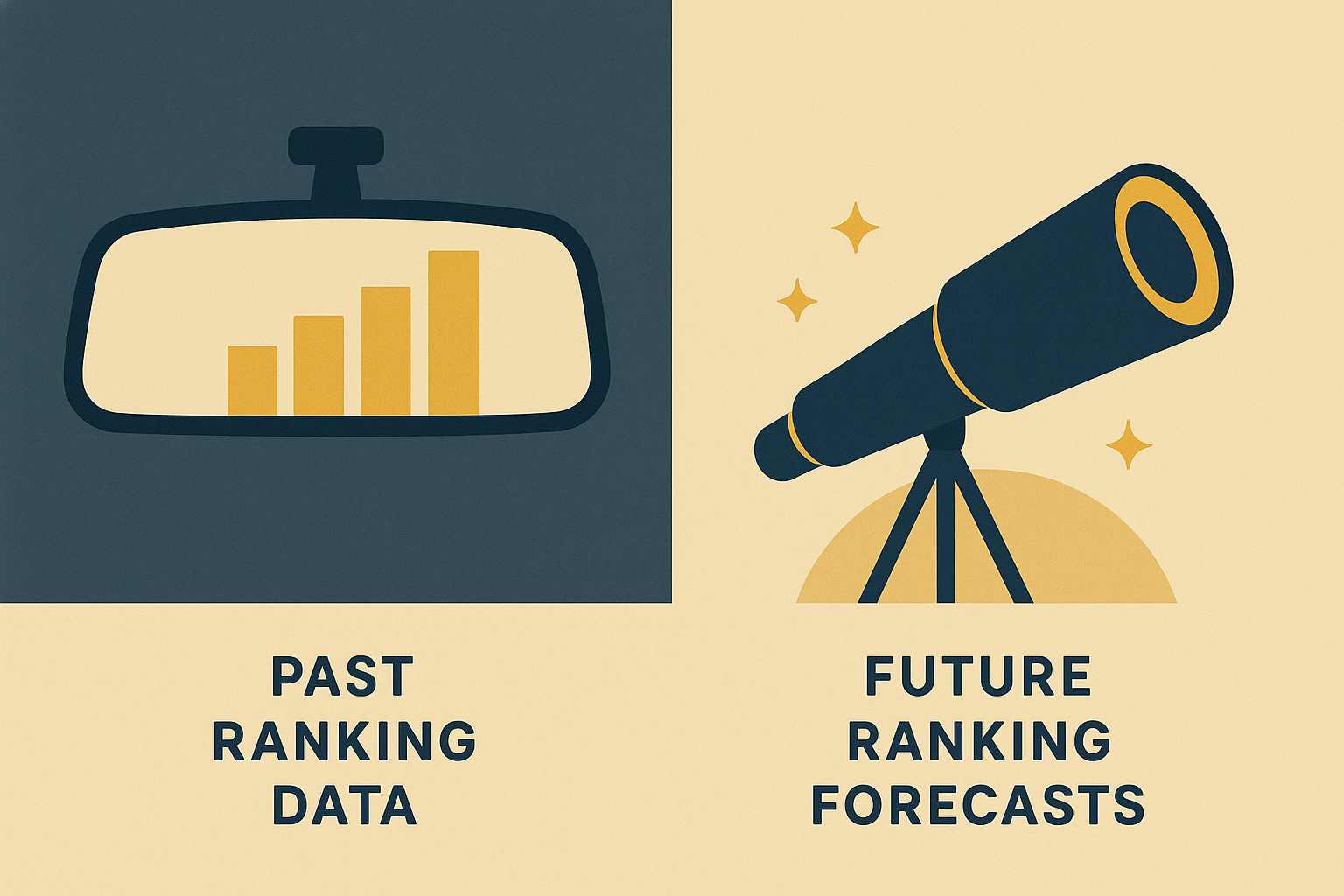
Understanding the difference between tracking and forecasting sharpens how teams apply SEO performance prediction.
Frequently Asked Questions
What is SEO performance prediction?
SEO performance prediction is the process of using historical data, algorithms, and machine learning models to forecast how a webpage or keyword will rank, and how much traffic it will generate, before or shortly after publishing content.
How accurate is SEO performance prediction?
Accuracy varies by tool and data quality, but well-trained models can predict ranking ranges within reasonable confidence intervals. Most platforms report accuracy improvements of 20% to 40% over manual estimates when historical data spans at least six months.
Why does SEO performance prediction matter for businesses?
It matters because it lets teams prioritize content and budget before investing time in low-value pages. As a result, marketers avoid wasted effort and focus resources on opportunities most likely to rank.
What data is needed to predict SEO performance?
You typically need historical ranking data, backlink profiles, content quality signals, search volume, and competitor benchmarks. Combining these inputs gives prediction models enough context to produce reliable forecasts.
Can AI tools predict SEO performance automatically?
Yes, many AI-driven platforms automate SEO performance prediction by analyzing large datasets continuously. Automated tools like 1-Click AI AutoPilot streamline this process without requiring manual spreadsheet work.
How is SEO performance prediction different from rank tracking?
Rank tracking reports what has already happened, while SEO performance prediction forecasts future outcomes. In other words, tracking is retrospective and prediction is forward-looking.
What are common mistakes in SEO forecasting?
Common mistakes include relying on incomplete data, ignoring algorithm updates, and assuming linear growth patterns. Consequently, forecasts built on outdated signals often overestimate real-world results.
How long does it take to see accurate predictions?
Most models need at least three to six months of consistent data before predictions stabilize. However, automated platforms with larger training datasets can shorten this timeline significantly.
Does SEO performance prediction work for AI search engines too?
Yes, modern prediction models increasingly account for Generative Engine Optimization and Answer Engine Optimization signals. This ensures forecasts remain relevant as search shifts toward AI-generated answers.
How much does SEO performance prediction software cost?
Pricing ranges from free basic tools to enterprise platforms costing hundreds of dollars monthly. Many providers, including rankauthority.com, offer a risk-free seven-day trial so teams can test accuracy first.
What metrics improve SEO performance prediction accuracy?
Click-through rate trends, dwell time, backlink velocity, and content freshness all improve prediction accuracy. Together, these metrics give algorithms a fuller picture of ranking potential.
Can small businesses benefit from SEO performance prediction?
Absolutely, small businesses often benefit the most since they have limited budgets for trial and error. Predictive insights help them focus on content most likely to convert traffic into leads.
What is the best way to start using SEO performance prediction?
Start by auditing your existing content performance, then apply a prediction tool to forecast new topics before publishing. This approach reduces guesswork and builds a data-backed content calendar.
Final Thoughts on Predicting SEO Success
Ultimately, SEO performance prediction gives businesses a way to plan content with confidence instead of guessing. By combining historical data, competitor benchmarks, and automated forecasting tools, teams can identify which topics deserve investment before writing a single word. As search continues shifting toward AI-generated answers, this forward-looking approach will only become more valuable.
In short, whether you manage one website or dozens of client properties, building a habit of forecasting before publishing pays off. Therefore, starting with a structured process, and pairing it with automated platforms like those available at rankauthority.com, positions your content for stronger visibility across both traditional and AI-powered search.

