
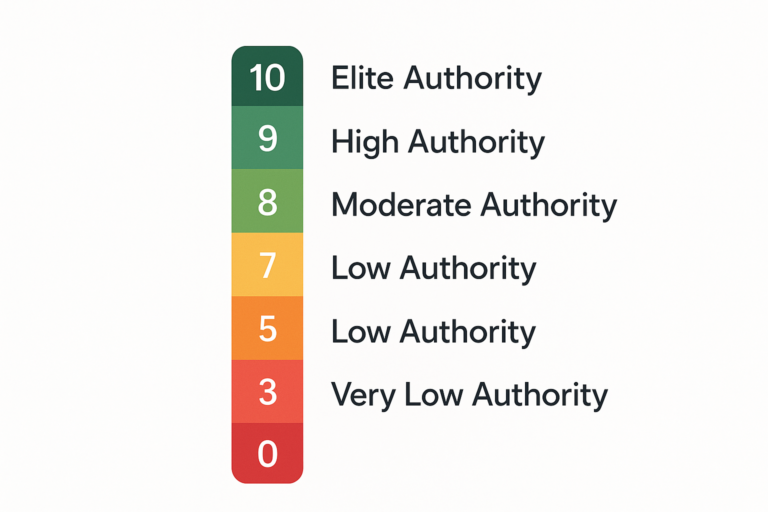
Why Moz Rank matters is one of the most common questions among marketers and website owners who are just starting to dig into SEO metrics. Simply put, Moz Rank is a link popularity score developed by Moz that measures the quality and quantity of backlinks pointing to a given webpage or domain on a logarithmic scale from 0 to 10.
Understanding this metric helps you benchmark your site’s link authority, evaluate competitors, and prioritize your link-building efforts. Because it draws on principles similar to Google’s original PageRank algorithm, MozRank offers a familiar and practical lens for analyzing how the web values your content. See What is MozRank for a focused primer.
How the MozRank Score Scale Works
Moz Rank Explained runs on a logarithmic scale, which means the difference between a score of 7 and a score of 8 is far greater than the difference between 2 and 3. In practice, this structure makes it progressively harder to move up the scale as your score increases.
Most newly launched websites start near 0. As they earn backlinks, their score climbs gradually. A score between 4 and 5 is considered average for an What is MozRank, while scores above 6 indicate strong authority. Scores of 8 or higher are typically reserved for globally recognized domains such as major news outlets or academic institutions.
Quick Answer: MozRank is a third-party SEO metric scored from 0 to 10 that reflects the strength of a page’s backlink profile. A score of 4–5 is average, 6+ is strong, and 8+ is elite. It is calculated logarithmically, so quality links matter far more than sheer volume. Last updated: 2026-06-17. Author: Rank Authority.
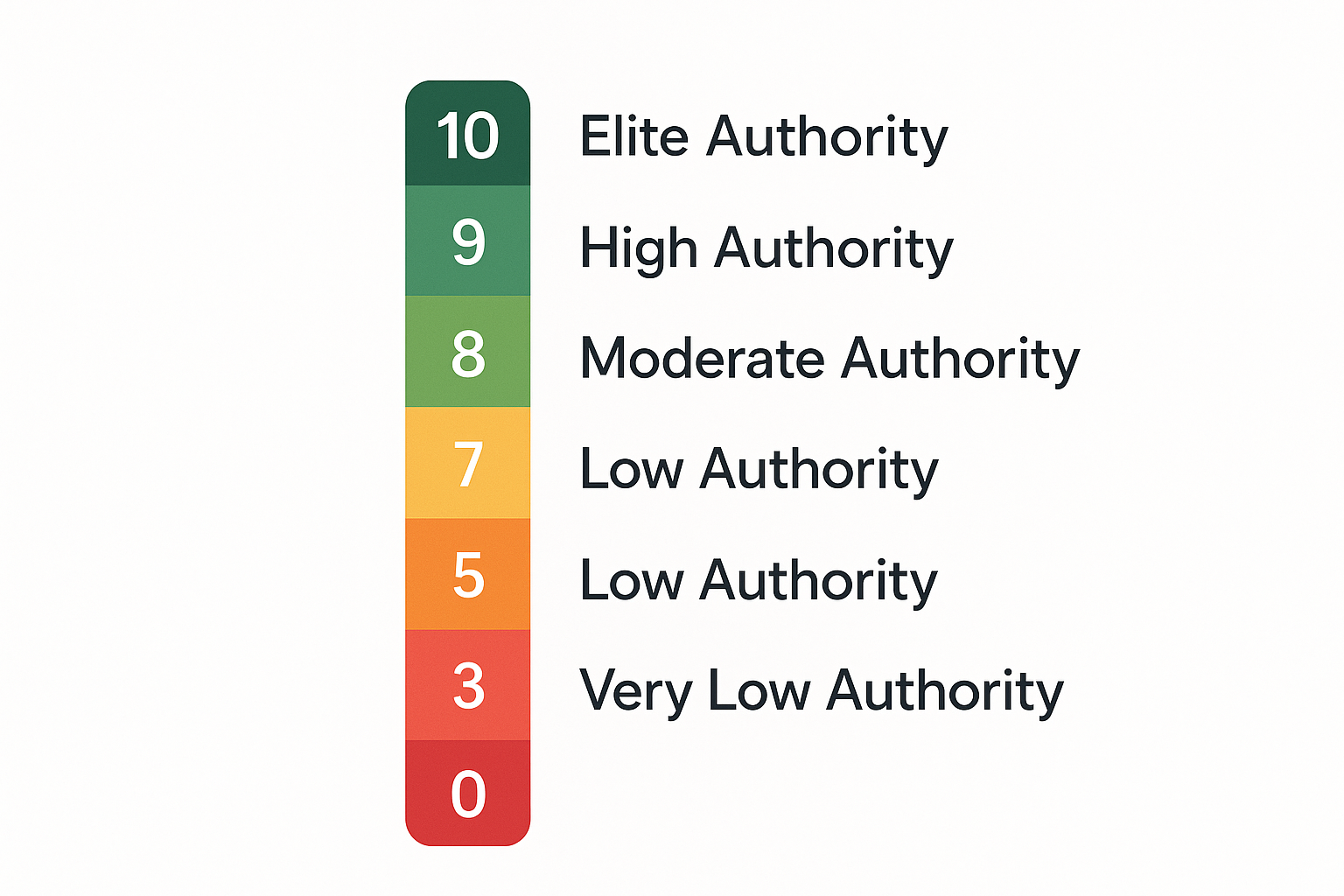
The MozRank scale uses a logarithmic structure, meaning each point upward requires exponentially more link equity.
What Factors Influence Your MozRank?
Two primary factors determine your MozRank: the number of backlinks pointing to your page and the quality of those linking pages. However, quality consistently outweighs quantity in this calculation.
For example, a single editorial link from a high-authority publication can move your score more than 200 links from low-quality directories. Additionally, the relevance of the linking page plays a supporting role — topically related backlinks tend to carry stronger signals than unrelated ones.
Furthermore, toxic or spammy backlinks can dilute your score. Therefore, regularly auditing your link profile and disavowing harmful links is an important part of maintaining a healthy MozRank.
The Role of Link Equity Distribution
Link equity, sometimes called “link juice,” is distributed across all the outbound links on a given page. As a result, a link from a page that links to only a few other sites passes more authority than a link from a page with hundreds of outbound links.
This means that when evaluating a potential backlink opportunity, you should consider not just the linking page’s MozRank but also how many other sites it links to. In contrast, a highly selective linking page is far more valuable even if its overall score is slightly lower.
MozRank vs. Domain Authority vs. Page Authority
Many people confuse MozRank with Domain Authority (DA) and Page Authority (PA), but these are distinct metrics. Understanding the difference helps you use each one appropriately in your SEO workflow. See our comparison on Ahrefs vs. Rank Authority and metric differences.
MozRank
Measures link popularity of a single page based on backlink quality and quantity.
Domain Authority
Predicts the overall ranking strength of an entire domain across all pages.
Page Authority
Predicts how well a specific page will rank, incorporating more signals than MozRank alone.
In practice, most SEO professionals use all three together. MozRank gives you a focused view of link popularity, while DA and PA provide a broader predictive picture. For a deeper look at how these metrics interact with your overall SEO strategy, resources like Moz Domain Rank offer practical guidance on applying them effectively.
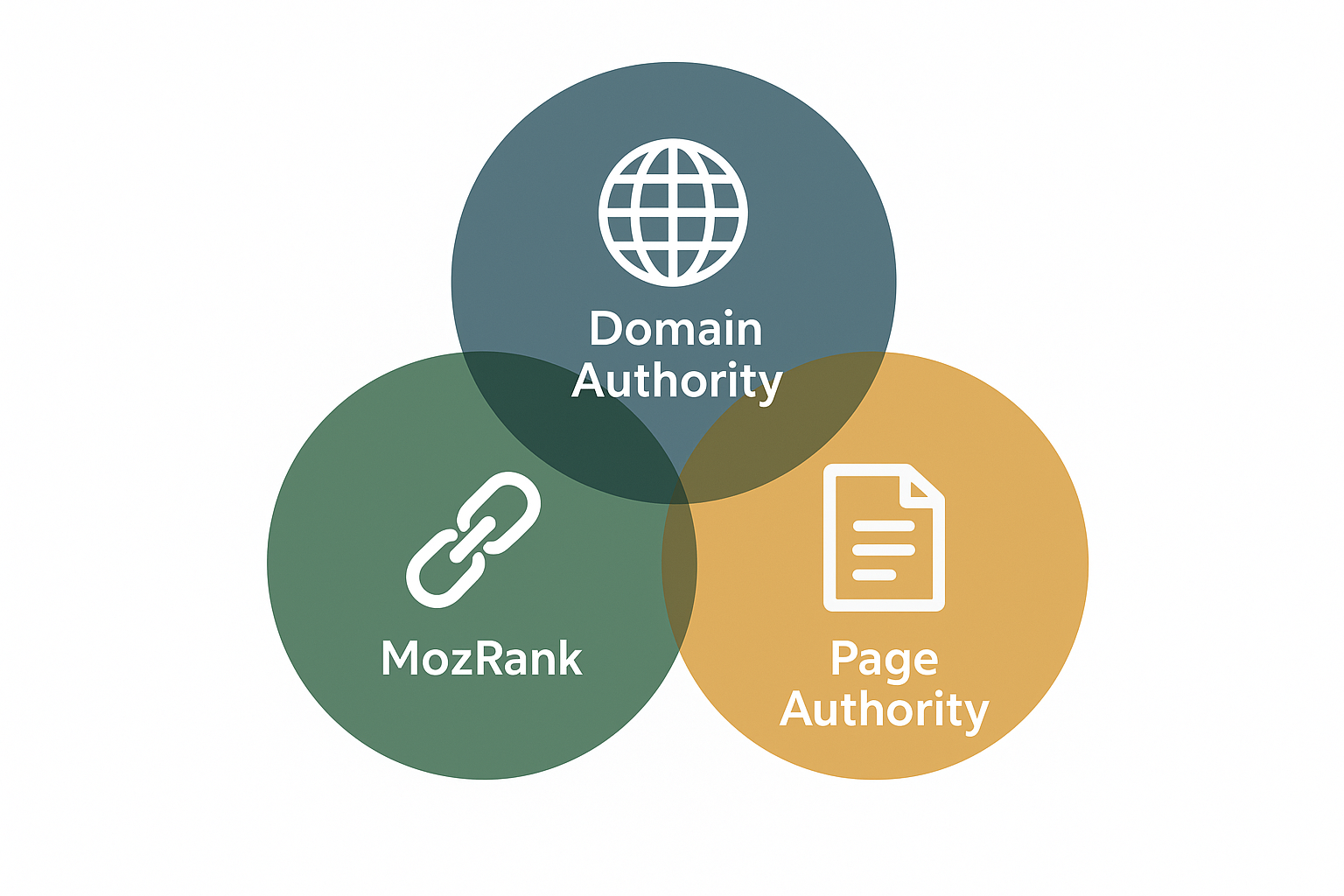
Understanding how MozRank relates to Domain Authority and Page Authority helps you build a more complete picture of your site’s SEO health.
Practical Steps to Improve Your Score
Improving your MozRank requires a deliberate and sustained link-building strategy. Below are the most effective approaches that SEO professionals rely on consistently.
- Earn editorial backlinks — Publish original research, data studies, or in-depth guides that authoritative sites want to reference. These organic links carry the highest weight.
- Guest post on reputable sites — Contributing high-quality articles to established publications in your niche builds relevant, authoritative links over time.
- Audit and clean your link profile — Use Moz’s Link Explorer to identify toxic or spammy backlinks, then disavow them through Google Search Console to prevent them from dragging down your score. For hands-on fixes, see the Broken Links Test guide.
- Build internal links strategically — While internal links do not directly boost MozRank, they distribute link equity across your site, helping important pages accumulate more authority.
- Pursue broken link building — Find broken links on high-authority pages in your niche and offer your content as a replacement. This technique is efficient and mutually beneficial.
Additionally, consistency matters more than intensity. A steady cadence of quality link acquisition over months will outperform a burst of low-quality links every time. Therefore, treat link building as a long-term investment rather than a short-term tactic.
Common Mistakes When Using This Metric
One of the most frequent errors is treating MozRank as a direct ranking signal in Google. Because it is a third-party metric, Google does not use it in its algorithm. However, the backlink quality it reflects does correlate strongly with actual search performance.
Another common mistake is chasing volume over quality. Some site owners pursue hundreds of low-authority links hoping for a score increase. In contrast, this approach often backfires, as link spam can trigger penalties and actually lower your standing over time.
Finally, many marketers check MozRank too frequently and panic over minor fluctuations. Because the metric updates on a rolling basis and Moz regularly recrawls the web, small changes are normal. Instead, focus on tracking trends over 30 to 90 day windows for meaningful insights. You can find additional context on interpreting these trends at RankAuthority.
Why MozRank Still Matters in Modern SEO
Despite the evolution of SEO tools and Google’s own algorithm updates, MozRank remains a relevant and widely used benchmark. Because Google no longer publicly shares PageRank scores, third-party metrics like MozRank fill an important gap for practitioners who need a standardized way to compare link authority across sites.
Moreover, MozRank is particularly useful during competitor analysis. By comparing your score against competing pages, you can quickly identify authority gaps and understand how much link-building work is needed to become competitive in a given keyword space.
In summary, while no single metric tells the whole SEO story, MozRank provides a reliable and actionable data point that helps you make smarter decisions about link acquisition, content strategy, and competitive positioning.
Frequently Asked Questions About MozRank
What is a Moz rank exactly?
Moz Domain Ranking is a link popularity score developed by Moz that measures the quality and quantity of backlinks pointing to a webpage or domain. It runs on a logarithmic scale from 0 to 10, where higher scores reflect stronger link authority.
How is MozRank calculated?
MozRank is calculated using a logarithmic algorithm that evaluates both the number of backlinks and the quality of the pages linking to you. A single link from a high-authority page can be worth more than hundreds of links from low-authority sources.
What is considered a good MozRank score?
A MozRank between 4 and 5 is considered average for most websites. Scores above 6 are strong, and anything above 7 or 8 is typically reserved for very high-authority domains like major news sites or established industry leaders.
Is MozRank the same as Domain Authority?
No, they are different metrics. MozRank focuses specifically on the link popularity of an individual page, while Domain Authority predicts the overall ranking strength of an entire domain. Both are created by Moz but serve different analytical purposes.
How does MozRank differ from Google PageRank?
MozRank is inspired by Google’s original PageRank algorithm but is a third-party metric maintained by Moz, not Google. Google no longer publicly displays PageRank scores, making MozRank a widely used alternative for gauging link authority.
Can I improve my MozRank quickly?
Improving MozRank takes consistent effort and is not typically a quick process. The most effective strategies include earning high-quality backlinks, creating link-worthy content, and removing or disavowing toxic links pointing to your site.
Does MozRank directly affect Google rankings?
MozRank does not directly influence Google rankings because it is a third-party metric. However, the underlying factors it measures — backlink quality and quantity — do correlate strongly with ranking performance in Google search results.
Where can I check my MozRank score?
You can check your MozRank using Moz’s Link Explorer tool or through the MozBar browser extension. Several third-party SEO platforms also display MozRank data alongside other authority metrics.
What is a low MozRank score?
A MozRank below 3 is generally considered low and suggests that a page has few or weak backlinks. New websites typically start near 0 and build their score over time as they earn more quality links.
How often does MozRank update?
Moz updates its link index and associated metrics including MozRank on a regular basis, typically every few weeks. However, significant changes in your score may take longer to reflect depending on crawl frequency.
Is MozRank still a relevant SEO metric today?
Yes, MozRank remains a useful comparative metric for evaluating link authority, especially when auditing competitors or assessing link-building progress. Many SEO professionals use it alongside Domain Authority and Page Authority for a fuller picture.
What types of backlinks improve MozRank the most?
Backlinks from high-authority, topically relevant websites improve MozRank the most. Editorial links from trusted publications, industry blogs, and government or educational sites carry significantly more weight than directory or forum links.
Understanding Moz Page Rank is an essential step toward building a smarter, data-driven SEO strategy. By tracking this metric consistently, comparing it against competitors, and focusing on earning high-quality backlinks, you give your site the best possible foundation for long-term search visibility and authority growth.

