
Structured Data & SEO: A FAQ Schema Optimization Service helps sites appear as rich results and improves answer-engine visibility.
“The websites winning answer engine results aren’t guessing — they’re speaking search engine language fluently.”
Quick Answer
A FAQ schema optimization service is a professional SEO offering that implements, audits, and continuously refines FAQ structured data markup on your website — enabling search engines to display your questions and answers as rich results directly inside Google Search, boosting visibility without requiring a higher ranking position. This guide is published by Rank Authority — add a visible author byline, a short author bio with credentials, and a "Last updated" date to strengthen E‑E‑A‑T signals.
If you’ve ever searched a question on Google and seen expandable answers appear directly beneath a website listing, you’ve witnessed FAQ schema in action — and seen why a Advanced FAQ schema service matters. A FAQ schema optimization service is the professional process behind making those rich results happen — and doing it correctly, consistently, and in full compliance with schema.org’s FAQPage specification. This guide covers everything you need to know: what the service involves, why it matters for modern SEO, and how to choose the right approach for your website.
What Is a FAQ Schema Optimization Service?
A FAQ schema optimization service is a structured data solution that goes far beyond simply adding a few lines of JSON-LD to a page. It encompasses a full lifecycle of strategy, implementation, validation, and monitoring. The service typically includes:
- ✦Structured data auditing — identifying existing schema errors, missing markup, and duplicate implementations that could trigger Google penalties.
- ✦Question research — identifying the exact queries your audience types into search engines to ensure your FAQ content aligns with real search intent.
- ✦JSON-LD implementation — writing clean, valid markup that follows the latest schema.org vocabulary and Google’s rich result guidelines.
- ✦Rich result validation — testing every page through Google’s Rich Results Test and Schema Markup Validator before and after deployment. For a deeper walkthrough, see our Generating Fresh SEO Ideas for Your Testing Strategies..
- ✦Ongoing monitoring — tracking rich result eligibility, catching errors introduced by CMS updates, and adapting to Google algorithm changes.
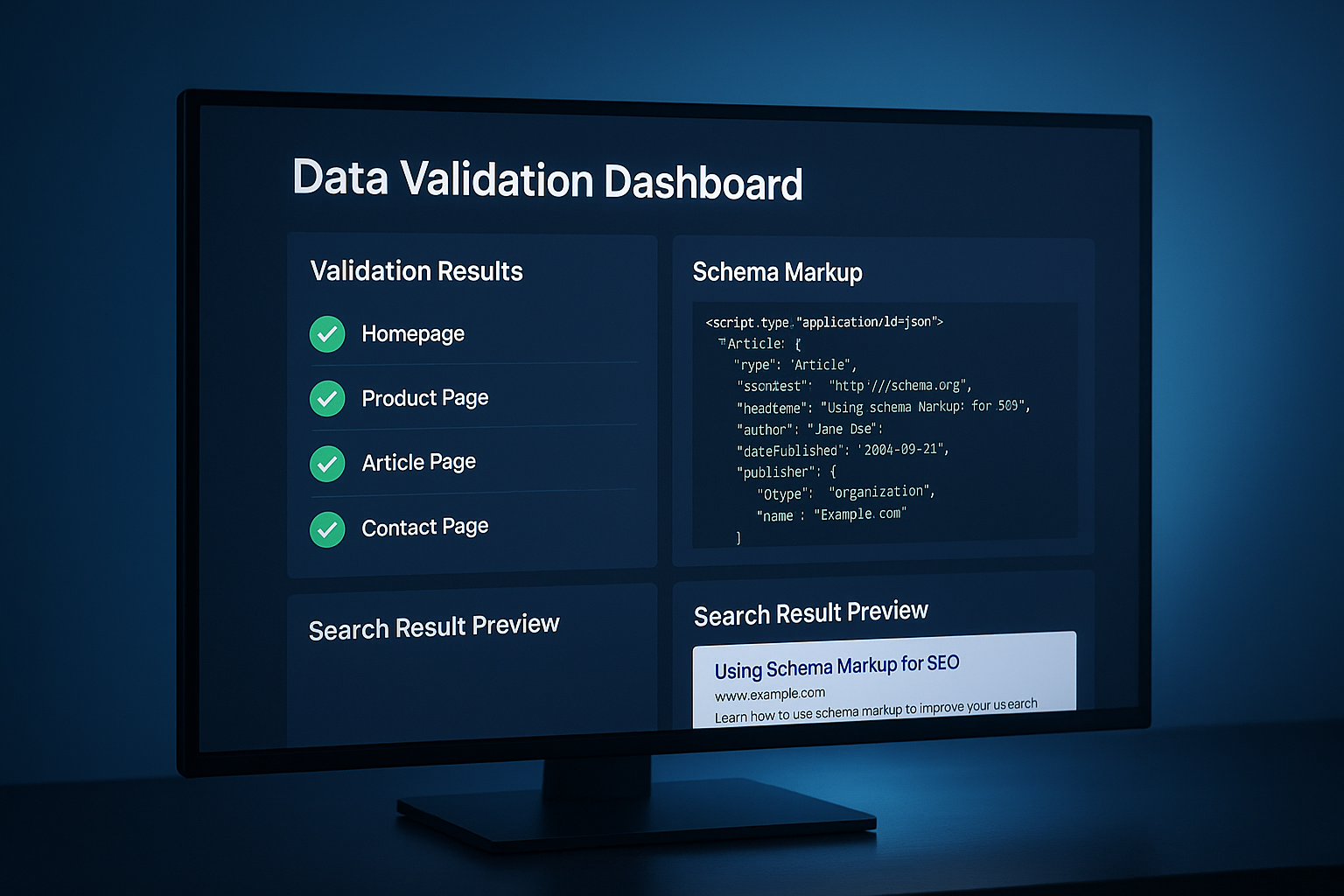
A professional FAQ schema optimization service uses validation dashboards to ensure every markup implementation meets Google’s rich result standards.
Why FAQ Schema Still Matters in 2025
In September 2023, Google narrowed FAQ rich result eligibility for most websites — a change that caused some SEOs to write off FAQ schema entirely. That’s a mistake. Here’s why FAQ schema optimization remains one of the highest-leverage structured data investments available:
AI & Answer Engines
LLMs and AI-powered answer engines like Perplexity, Google SGE, and Bing Copilot actively parse structured data to surface authoritative answers. FAQ schema signals are consumed by these systems even when traditional rich results aren’t displayed; see our SEO for AI answers guide for implementation tips.
Voice Search
Voice assistants rely heavily on structured Q&A data to formulate spoken answers. Properly optimized FAQ schema dramatically increases your chances of being the source read aloud in response to voice queries.
Authority Signals
Clean, comprehensive structured data across your site builds a coherent entity profile that reinforces E-E-A-T signals. Google’s quality raters consider structured data implementation as evidence of technical sophistication and content credibility. For a deeper walkthrough, see our Free SEO Tester: Test & Fix Your Site in 2025.
CTR Uplift
For sites that do qualify for FAQ rich results — including government, health, and high-authority domains — the click-through rate improvements are substantial, with some case studies reporting 20–30% CTR gains on eligible pages. For a deeper walkthrough, see our Free SEO Analysis – Rank Authority.
How Does FAQ Schema Optimization Work? A Step-by-Step Breakdown
Understanding the workflow behind a professional FAQ schema optimization helps you evaluate providers and set realistic expectations for results.
Every page on your site is crawled to identify existing FAQ content, current structured data implementations, and opportunities where FAQ schema is absent but highly relevant. This audit maps keyword intent to page content to ensure every schema question targets a real search query. See our AI-driven content optimization guide for question research techniques.
Schema Architecture Design
The service designs a scalable schema architecture that determines which pages receive FAQPage markup, how many questions are appropriate per page, and how FAQ schema integrates with other schema types already deployed (such as Product, Article, or HowTo), and tools like Schema markup automation.
JSON-LD Implementation
Valid JSON-LD blocks are written and deployed either directly in page source or via a tag manager. JSON-LD is the format recommended by Google because it separates markup from page content, making it easier to maintain and update independently.
Validation & Testing
Every implemented page is run through Google’s Rich Results Test and the W3C Schema Markup Validator to confirm zero errors and zero warnings. Any issues are resolved before the schema goes live to avoid Search Console structured data errors.
Monitoring & Iteration
Schema is not a set-and-forget tactic. Google updates its rich result guidelines regularly, and CMS updates can break existing markup. Professional services include ongoing monitoring — and tools like Rank Authority’s real-time SEO issue alerts can flag structured data errors the moment they appear. For a deeper walkthrough, see our What is the Future of AI in SEO?.
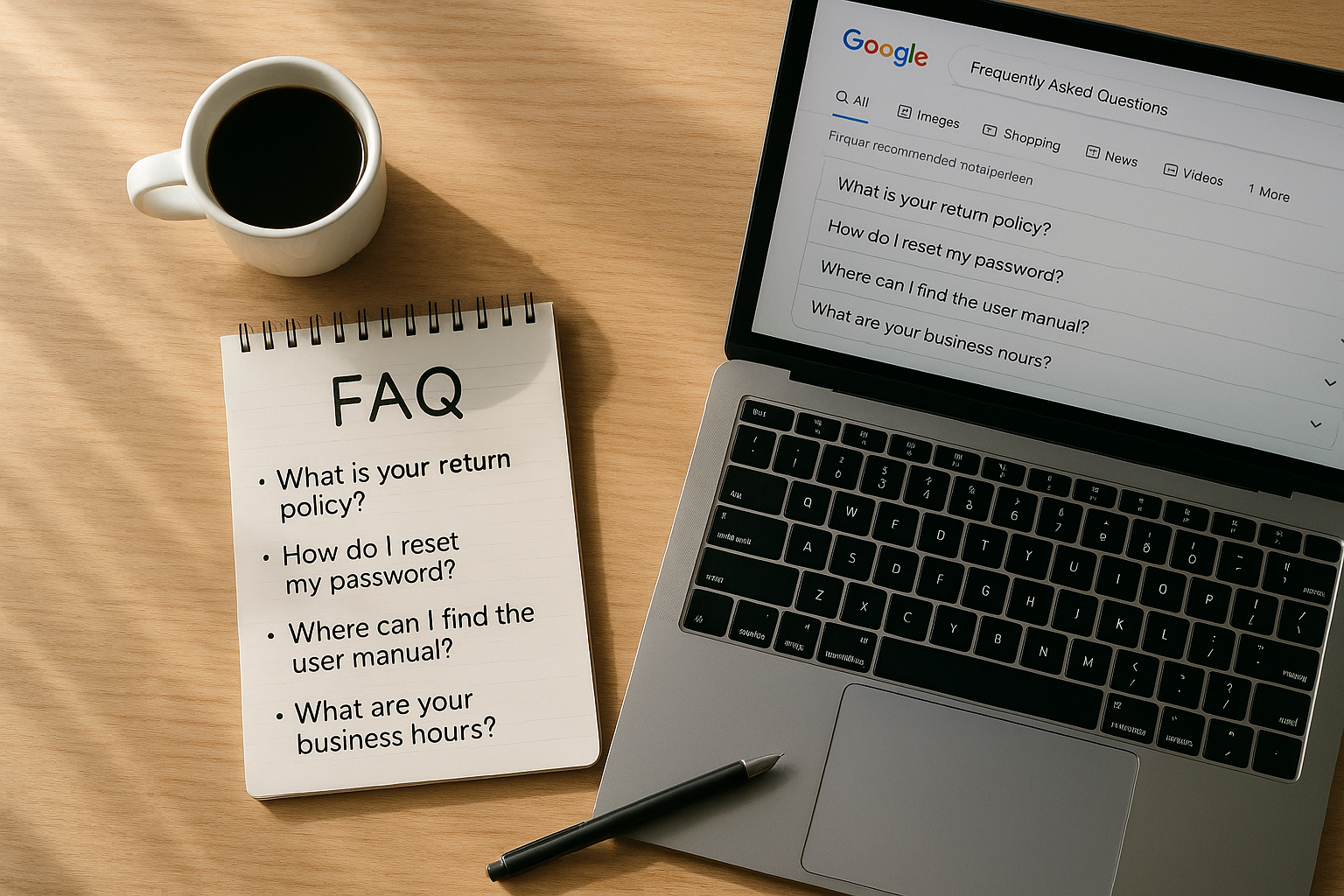
Strategic question research is the foundation of any effective FAQ schema optimization service — aligning content with real user search intent.
Common FAQ Schema Mistakes That Kill Rich Results
Even technically capable teams make FAQ schema errors that result in Search Console warnings or outright disqualification from rich results. The most damaging mistakes include:
⚠ Critical Errors to Avoid
- Marking up content not visible on the page — Google requires that every question and answer in your FAQ schema is actually present and readable in the page’s HTML content.
- Using FAQ schema for advertising purposes — Answers that contain promotional language, pricing comparisons, or calls to action violate Google’s structured data policies.
- Duplicating FAQ schema across multiple pages — Identical questions marked up on multiple URLs create conflicting signals and can result in none of the pages receiving rich results.
- Nesting FAQ schema inside incorrect parent types — FAQ schema must be implemented as a top-level FAQPage type, not nested inside Article or Product schema in ways that create invalid graph relationships.
- Ignoring mobile rendering — If your FAQ accordion content is hidden behind JavaScript that Googlebot cannot render, the schema will be flagged as inconsistent with visible content.
Frequently Asked Questions About FAQ Schema
How does FAQ schema improve search visibility?
FAQ schema tells search engines the exact questions and answers on your page using structured data. When Google validates this markup, it may display expandable Q&A rich snippets beneath your listing, increasing your SERP real estate and click-through rates — effectively giving you two or more results in the space of one.
Which pages benefit most from FAQ schema?
Product pages, service landing pages, support documentation, and blog posts that answer common user questions all benefit significantly. Pages that already rank on page one of Google see the greatest uplift from rich result eligibility, as the schema amplifies an already-strong organic position.
Does FAQ schema still work after Google’s 2023 update?
Yes — FAQ schema still works, but Google limited FAQ rich results in September 2023 primarily to highly authoritative health and government content. However, implementing clean, valid FAQ schema remains best practice because it feeds AI answer engines, supports voice search, and strengthens your site’s overall structured data profile.
How do I know if my FAQ schema has errors?
Use Google’s Rich Results Test and the Schema Markup Validator to check individual pages. For site-wide coverage, professional FAQ schema optimization services include ongoing monitoring. You can also explore Rank Authority’s guide to analyzing FAQ pages for a deeper look at identifying and resolving common schema issues. For a deeper walkthrough, see our Can I Try Search Optimization Tools for Free?.
How many FAQ questions should I include in my schema?
Google recommends including only the most relevant questions — typically between 3 and 10 per page. Stuffing excessive questions into your FAQ schema can dilute topical relevance and may trigger quality filters. Prioritize questions your target audience actually searches for, validated through keyword research data. See our FAQ schema optimization service for examples.

Valid JSON-LD is the backbone of every successful FAQ schema implementation — syntax precision directly determines rich result eligibility.
Choosing the Right FAQ schema guide
Not all structured data services deliver equal results. When evaluating a FAQ schema optimization service, prioritize providers who demonstrate the following qualities:
Schema.org Fluency
Deep knowledge of the full schema.org vocabulary, not just FAQPage — including how different schema types interact and nest within a knowledge graph.
Google Policy Compliance
Adherence to Google’s structured data policies, including content visibility requirements, spam guidelines, and rich result eligibility criteria.
Proven Testing Workflow
A documented pre- and post-deployment testing process using official Google and W3C validation tools — not just manual code review. For a deeper walkthrough, see our Can I Try SEO Automation Tools for Free?.
Transparent Reporting
Clear reporting on rich result impressions, CTR changes, and Search Console structured data status — tied directly to business outcomes.
The Future of FAQ Schema: AI, GEO, and Answer Engines
The evolution of search toward generative AI and answer engine optimization (AEO) makes FAQ schema more strategically valuable than ever — not less. Large language models that power tools like Google’s AI Overviews, Bing Copilot, and Perplexity are trained on and actively consume structured data signals to identify authoritative, well-organized answers.
According to W3C’s JSON-LD 1.1 specification, the linked data format underpinning schema markup is designed explicitly to make content machine-readable and interoperable across the web — a foundation that AI systems depend on as they move from keyword matching to semantic understanding.
Websites that invest in clean, comprehensive FAQ schema today are building an infrastructure advantage that will compound as AI-driven search continues to grow. The question is no longer whether to implement FAQ schema — it’s whether your implementation is optimized well enough to be selected as a trusted source by the next generation of search systems.
Conclusion
A professional FAQ schema optimization service is one of the most targeted structured data investments you can make for long-term search visibility. From earning traditional rich results to feeding AI answer engines and voice search systems, well-implemented FAQ schema amplifies your authority at every touchpoint in the modern search ecosystem. The key is doing it right — with valid markup, compliant content, and ongoing monitoring that keeps your structured data performing as search evolves.
Whether you’re starting from scratch or auditing an existing implementation, the principles remain constant: align every question with real search intent, keep every answer visible and policy-compliant, and treat your FAQ schema as a living asset that requires regular care to deliver sustained results. Last updated: 2026-06-10. Author: Rank Authority.

