

Direct Answer
An analysis backlink checker is a specialized SEO tool that crawls the web to discover, catalog, and evaluate every external link pointing to a domain or page. It surfaces critical data — domain authority, anchor text patterns, toxic link signals, referring domain counts, and link velocity — so you can make data-driven decisions about your link profile, outreach strategy, and competitive positioning. In short, an analysis backlink checker turns raw link data into a clear ranking action plan.
What Is an Analysis Backlink Checker?
An analysis backlink checker is a tool — or suite of tools — that systematically maps every hyperlink pointing to your website from external sources. According to Wikipedia’s definition of backlinks, these inbound links function as votes of confidence in the eyes of search engines, directly influencing how pages are ranked in organic search. The checker translates that raw link data into actionable intelligence you can act on immediately.
However, a basic link count only tells you how many links you have. A full analysis backlink checker tells you which links matter, why they matter, and precisely what to do next. It distinguishes high-authority editorial links from low-quality directory spam. It identifies anchor text patterns that could trigger algorithmic penalties. Furthermore, it benchmarks your entire profile against direct competitors so you can close the gap strategically.
Specifically, the best tools index hundreds of billions of URLs, update their databases weekly or even daily, and cross-reference link signals with topical relevance scores. As a result, you get a multi-dimensional picture of your link health — not a single number.
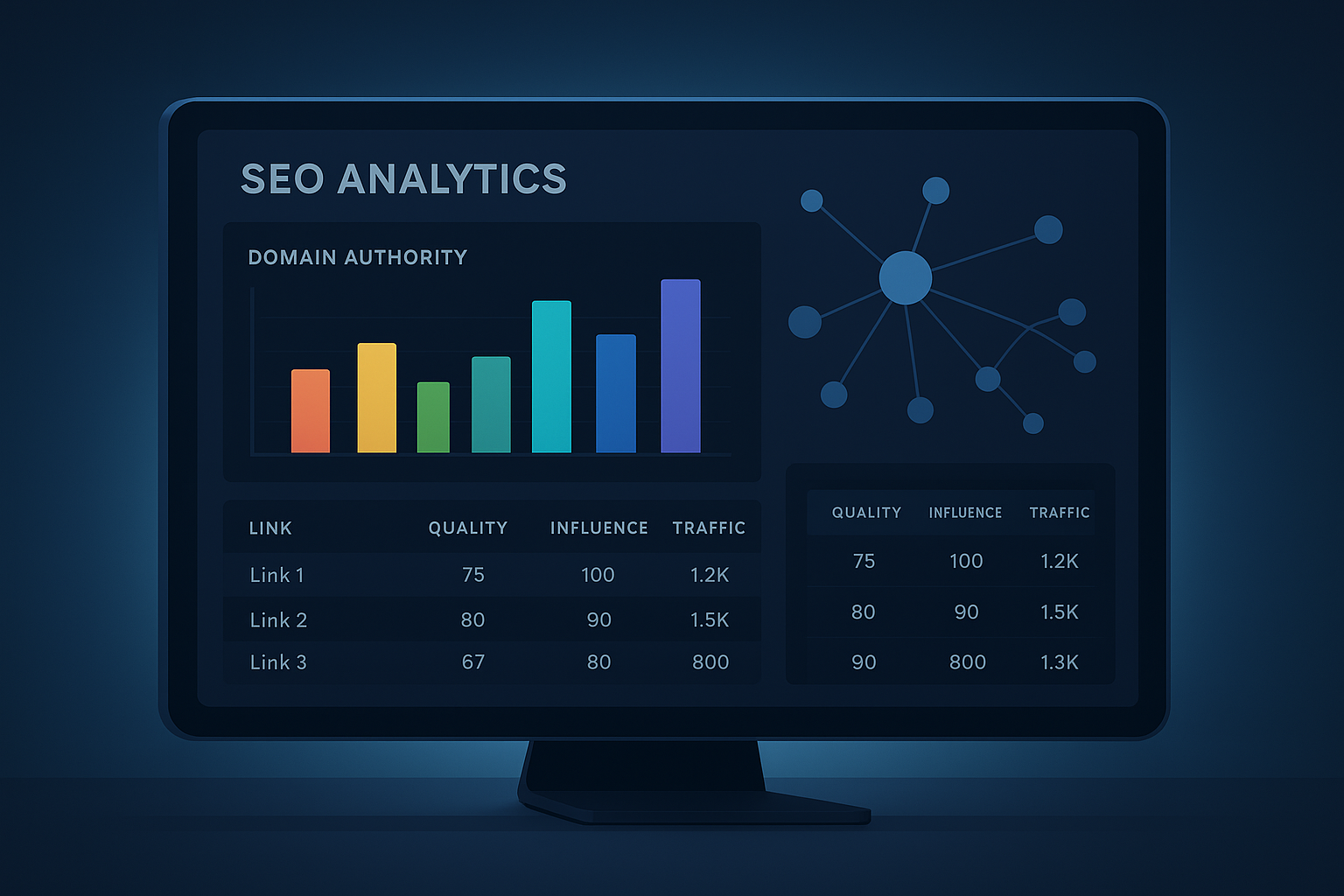
A professional analysis backlink checker dashboard displaying link metrics, domain authority scores, and referring domain data in real time.
Why Backlink Analysis Is Non-Negotiable in 2025
Google’s algorithms have grown exponentially more sophisticated at evaluating link quality. Quantity alone no longer moves the needle — relevance, authority, and link diversity now determine whether your backlink profile lifts rankings or triggers manual actions. Therefore, running a thorough analysis backlink checker audit is one of the highest-ROI activities in modern SEO.
In addition, Google’s Helpful Content and Spam updates in 2024 placed renewed scrutiny on manipulative link patterns. Consequently, sites that had coasted on historical link equity are now dropping — while sites with clean, diverse, authoritative profiles are rising. A regular backlink audit is your early-warning system.
Three Core Advantages of Regular Backlink Auditing
Risk Reduction
Identify and neutralize toxic links before they trigger penalties or sudden ranking drops.
Competitive Edge
Reverse-engineer competitor link profiles to find untapped high-authority link sources. For a deeper walkthrough, see our Answer Engine Optimization: The Complete Guide.
Strategic Growth
Prioritize outreach toward domains that will deliver the greatest ranking impact per effort.
Key Metrics Every Analysis Backlink Checker Must Surface
Not all metrics carry equal weight. A rigorous analysis backlink checker audit should surface the following data points for every link in your profile. Understanding each one is essential before you act on the data.
How to Perform a Complete Analysis Backlink Checker Audit in 6 Steps
Follow this structured process to extract maximum value from your backlink analysis. Each step builds on the last — so complete them in order for the best results.
Choose Your Analysis Backlink Checker Tool
Select a reliable platform. Ahrefs and Semrush lead the market for index size and data freshness. Moz Link Explorer offers a strong free tier. Majestic provides unique Trust Flow and Citation Flow metrics that complement authority scores from other tools. Always cross-reference with Google Search Console, which reflects Google’s own link data directly. For independent tool comparisons and SEO auditing frameworks, RankAuthority is a comprehensive resource.
Pull and Export the Full Backlink Report
Enter your root domain and export the complete dataset — every referring URL, linking page, anchor text, link attribute, and first/last-seen date. Work with the raw export rather than the filtered dashboard view. Consequently, you avoid missing outliers that could indicate penalty risks or hidden opportunities.
Evaluate Domain Authority and Link Quality
Sort by domain authority or domain rating. Flag all links from domains scoring below DR 10 for closer inspection. In addition, check topical relevance — a DR 25 link from a niche-specific blog often outperforms a DR 60 link from an unrelated general directory. Document your highest-value links separately as “link equity anchors.”
Audit Anchor Text Distribution
Generate an anchor text frequency table. If any single exact-match keyword anchor accounts for more than 20% of your total anchors, you are likely over-optimized. Natural profiles skew heavily toward branded and generic anchors, with keyword-rich anchors forming a small minority. Therefore, adjust future link acquisition to rebalance the distribution before Google flags the pattern.
Identify and Disavow Toxic Backlinks
Compile your toxic link list. First, attempt email outreach for removal — document every attempt. For links that cannot be removed, submit a disavow file through Google Search Console. Disavow at the domain level only when an entire site is problematic. Use page-level disavows for isolated cases. Above all, do not disavow low-DA links indiscriminately — low authority alone is not grounds for removal.
Find Link Building Opportunities via Competitor Analysis
Run the same analysis backlink checker process on your top three competitors. Use a link gap or content gap report to surface domains linking to multiple competitors but not to you. These are your highest-priority outreach targets because they have already demonstrated willingness to link within your niche. Similarly, look for competitor broken links — pages that have been deleted — where you can offer your content as a replacement.
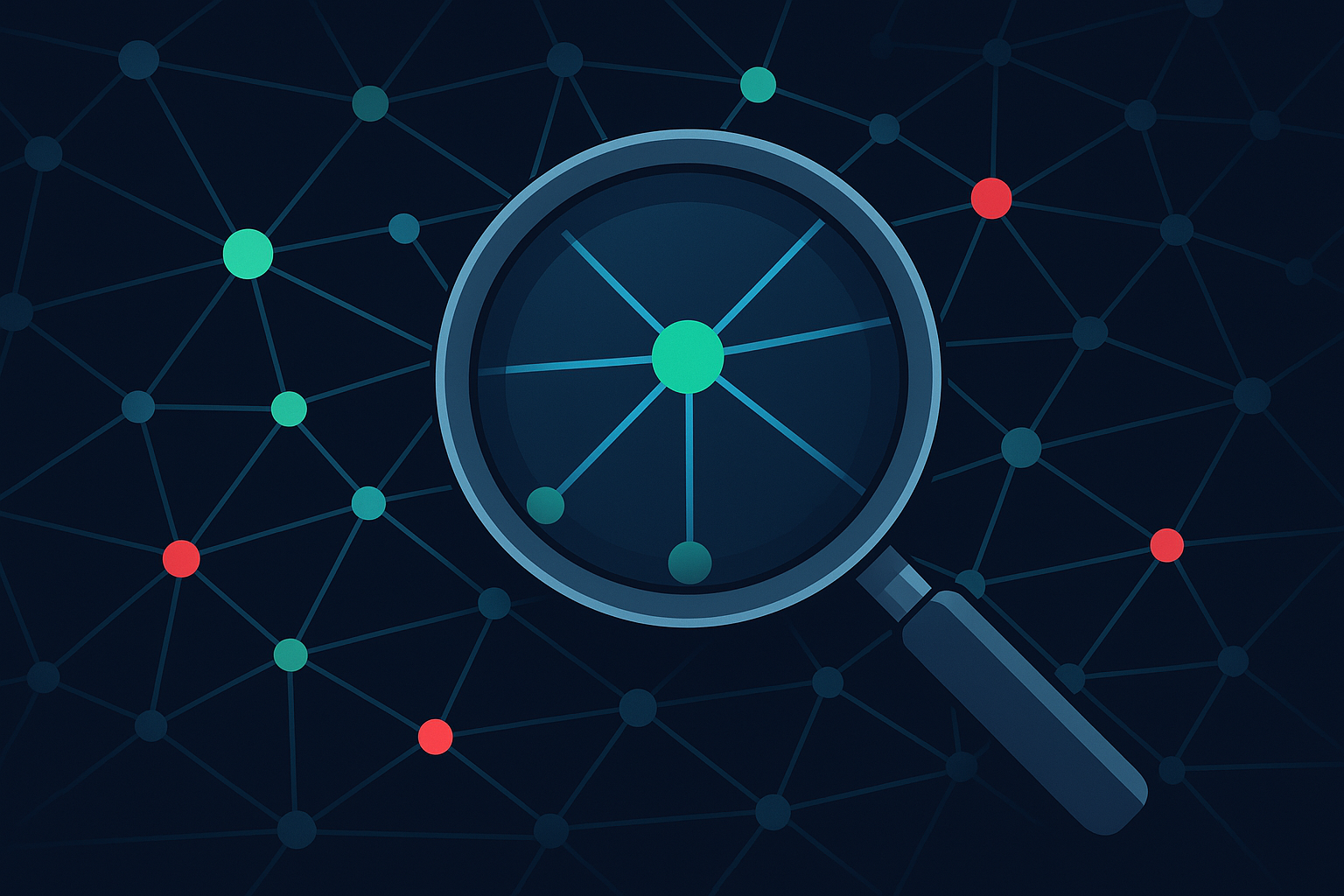
Visualizing healthy versus toxic links is a core output of any thorough backlink network analysis.
Top Analysis Backlink Checker Tools Compared (2025)
The tool you choose directly shapes the quality and completeness of your analysis. Below is an expanded comparison across all the metrics that matter most, including tools the competitor page omits entirely.
Which Tool Should You Start With?
For most SEO practitioners, the best starting point depends on your budget and primary goal. Specifically, if you are running toxic link audits, Semrush’s Backlink Audit tool offers the most automated workflow. For link prospecting and competitor gap analysis, Ahrefs is widely considered the industry standard. Furthermore, always verify findings against Google Search Console data — it reflects what Google actually sees, which is the ultimate ground truth.
In contrast, if budget is a constraint, combining the free tiers of Moz Link Explorer, Google Search Console, and Ahrefs Webmaster Tools gives you a surprisingly comprehensive picture at zero cost. Similarly, Ubersuggest provides a beginner-friendly interface for those new to backlink analysis.
Free Analysis Backlink Checker Options: What You Get and What You Miss
Free tools are a legitimate starting point — particularly for new sites or low-budget campaigns. However, understanding their limitations helps you know when to upgrade. Below is an honest assessment of the best free backlink checker options available in 2025.
Google Search Console — Best Free Verification Tool
Google Search Console shows the links Google has actually indexed for your site. Therefore, it is the most authoritative free source available. However, it does not provide competitor data, domain authority scores, or toxicity ratings. Use it primarily as a verification layer alongside paid tools.
Best for: Verifying which links Google sees · Limitation: No competitor data, no toxicity scoring
Ahrefs Webmaster Tools — Best Free Tier for Site Owners
Ahrefs Webmaster Tools (AWT) is free for verified site owners. It gives full backlink data for your own domains, including DR scores, anchor text, and new/lost link tracking. In contrast, you cannot analyze competitor domains without a paid plan. Nevertheless, for auditing your own site, AWT is remarkably powerful at no cost.
Best for: Full self-site audits · Limitation: No competitor analysis
Moz Link Explorer — Best Free Spam Score Tool
Moz’s free tier allows 10 queries per month on any domain. Importantly, it surfaces Spam Score — Moz’s proprietary toxicity metric — alongside Domain Authority, making it useful for quick health checks on linking domains. However, the monthly query limit restricts its use for continuous monitoring.
Best for: Quick spam score checks · Limitation: 10 queries/month on free plan
Semrush Free Plan — Best Entry-Level Competitor Peek
Semrush’s free plan allows 10 searches per day. Consequently, you can check competitor backlink profiles, though with limited rows of data per report. For small sites or occasional checks, this is sufficient. For ongoing monitoring of a competitive landscape, a paid plan is necessary.
Best for: Occasional competitor checks · Limitation: Very limited data rows per report
Advanced Analysis Backlink Checker Techniques
Once you have mastered the foundational audit, these advanced strategies unlock additional competitive advantages from your backlink analysis data. These techniques go well beyond what most beginner guides cover.
📈 Link Velocity Monitoring
Track the rate at which new backlinks are acquired over time. Sudden spikes — especially from low-quality domains — can signal negative SEO attacks or algorithmic scrutiny. A consistent, gradual growth curve is the hallmark of an organic link profile. Therefore, set up weekly velocity alerts in Ahrefs or Semrush to catch anomalies early.
🔗 Lost Link Recovery
Most analysis backlink checker tools flag recently lost links. When a high-authority link disappears, investigate immediately. The linking page may have been updated, redirected, or deleted. A timely outreach email can often recover a valuable link before it is permanently lost. In addition, monitor for HTTP-to-HTTPS migration issues that silently break link equity transfers.
🔍 Link Intersection Analysis
Identify domains that link to three or more competitors but not to you. These sites have already demonstrated willingness to link within your niche — making them exponentially warmer prospects than cold outreach targets. Similarly, use content gap analysis to understand why those sites linked to competitors, then create superior content to earn the same links.
🏛️ Internal Link Equity Mapping
After identifying which pages attract the most external links, use internal linking to channel that equity toward pages you want to rank. This is one of the highest-ROI tactics from backlink analysis data — specifically because it requires no external outreach whatsoever. For example, a blog post with 50 referring domains can funnel authority to a product page through a single well-placed internal link.
💔 Broken Link Building
Use your analysis backlink checker to find high-authority pages in your niche that have been deleted or moved — leaving other sites linking to a 404 error. Contact those linking sites and offer your content as a replacement. This technique converts existing broken links into new links pointing to you, providing value to both parties.
📊 Longitudinal Trend Analysis
Store each monthly export in a dated folder. Month-over-month comparison reveals trends invisible in any single snapshot. Above all, correlating link acquisition dates with ranking movements gives you the longitudinal data needed to prove — or disprove — which link types are actually driving your rankings.
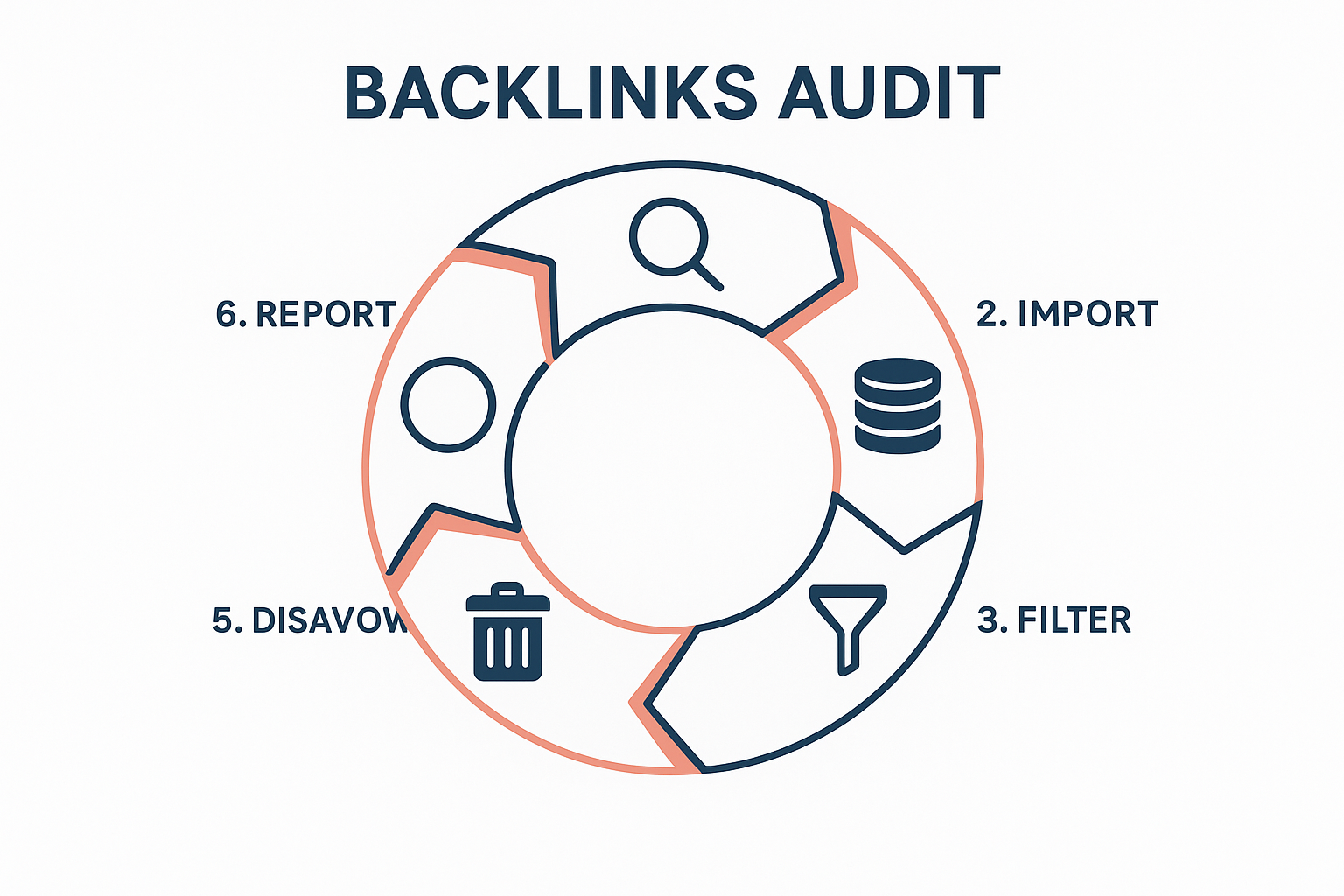
A structured six-step workflow makes the analysis backlink checker process repeatable and scalable for any team size.
Frequently Asked Questions About Analysis Backlink Checkers
How often should I run a backlink analysis?
For most websites, a full backlink analysis monthly is sufficient. However, high-traffic or highly competitive sites may benefit from bi-weekly checks. Always run an analysis immediately after a Google algorithm update or a sudden ranking drop. Specifically, link-related issues are a common but overlooked cause of post-update traffic losses.
Can I perform an analysis backlink checker audit for free?
Yes. Google Search Console provides free backlink data directly from Google’s index — the most authoritative source available. In addition, free tiers of Moz Link Explorer, Ahrefs Webmaster Tools, and Semrush also offer limited backlink analysis. For comprehensive audits with full toxic detection and competitor data, however, paid tools are necessary.
What is a healthy number of referring domains?
There is no universal benchmark. What matters is growth trajectory and quality relative to your competitors. A new site with 50 high-quality, topically relevant referring domains can outrank an established site with 500 low-quality ones. Consequently, focus on steady, consistent growth in unique referring domains rather than chasing raw link counts.
Should I disavow all low-DA links?
No. Low domain authority alone is not grounds for disavowal. A new blog with a DA of 8 that publishes genuinely relevant content can still pass meaningful signals. Disavow only when links come from clearly spammy, irrelevant, or penalized domains — particularly those with high toxicity scores and no topical connection to your site.
What is the difference between Domain Authority and Domain Rating?
Domain Authority (DA) is Moz’s proprietary 0–100 score predicting how well a domain may rank in search results. Domain Rating (DR) is Ahrefs’ equivalent metric, calculated differently using their own link index. Neither is a Google metric. However, both are widely used as proxies for link strength. For this reason, it is best to use both alongside Google Search Console data rather than relying on either score in isolation.
How do I identify negative SEO attacks using a backlink checker?
Look for sudden spikes in new referring domains — specifically from domains with high spam scores, non-English content, or irrelevant niches. Furthermore, watch for a rapid increase in exact-match keyword anchors from unrelated sites. If you identify an attack, compile the toxic domains and submit a disavow file to Google Search Console promptly.
Is backlink analysis still relevant with AI-driven search?
Yes — perhaps more so. Google’s AI-powered ranking systems, including RankBrain and newer generative AI features, still rely heavily on link signals to evaluate page authority and trustworthiness. In addition, AI Overviews (Google’s featured AI summaries) tend to cite authoritative sources — which are precisely the sites with strong, clean backlink profiles. Therefore, backlink analysis remains a cornerstone of competitive SEO in 2025.
Key Takeaways
- → An analysis backlink checker reveals link quality, toxic signals, velocity trends, and competitive gaps — not just link counts.
- → Unique referring domains and topical relevance are the two most predictive metrics for ranking impact.
- → Anchor text over-optimization is a common penalty trigger that backlink analysis can catch before Google acts.
- → Free tools — including Google Search Console and Ahrefs Webmaster Tools — provide genuine value for self-site audits.
- → Advanced techniques like broken link building and link intersection analysis multiply the ROI of every audit.
- → Monthly audits with longitudinal comparisons reveal ranking-correlated link trends invisible in any single snapshot.
Conclusion: Make Your Analysis Backlink Checker a Core SEO Habit
A disciplined, recurring analysis backlink checker process is one of the highest-leverage activities available to any SEO practitioner. It protects your site from link-based penalties, surfaces competitive opportunities that keyword research alone cannot reveal, and provides a clear, data-driven roadmap for your link building investment.
The six-step audit framework outlined above — from tool selection through competitor gap analysis — is designed to be repeatable and scalable, whether you manage a single site or an agency portfolio of dozens. Furthermore, pairing it with advanced techniques like link velocity monitoring, lost link recovery, broken link building, and link intersection analysis keeps you consistently ahead of competitors who treat backlink analysis as a one-time task.
Above all, remember that the analysis backlink checker is not just a defensive tool — it is your most powerful lens for understanding exactly how your competitive landscape is structured and where your best growth opportunities lie. Used consistently and strategically, it transforms raw link data into a sustainable ranking advantage.
For deeper SEO auditing resources, strategy guides, and independent tool comparisons, visit RankAuthority — a comprehensive resource for evidence-based search optimization.

