

Digital Marketing Strategy — Audience Targeting Strategy explains how to reach the right customers and improve ROI with practical audience targeting methods.
Reaching the right people at the right moment is the single most powerful lever in modern marketing — and audience targeting is how you pull it.
Quick Answer
Audience targeting is the practice of using data signals — such as demographics, behavior, interests, and intent — to identify and reach the specific groups of people most likely to respond to your message. It replaces broad, wasteful broadcasting with precision delivery, ensuring your budget works harder and your campaigns convert more effectively. See AI insights for marketers for techniques that use AI to refine targeting signals.
Audience targeting is the foundation of every high-performing digital campaign. Whether you are running paid search, social ads, display, or email, your ability to identify, segment, and reach the right people determines whether your marketing investment returns a profit or disappears into noise. This guide and our digital marketing strategies resources explain every major targeting method, how to build a strategy, and how to improve results over time.
What Is Audience Targeting?
Audience targeting is the process of defining who should see your marketing content based on specific data attributes. Rather than showing an ad to everyone on the internet, you narrow your reach to the users whose characteristics, behaviors, or intentions align with your offer. Wikipedia’s overview of targeted advertising explains how this practice evolved alongside digital data collection and AI technology in digital marketing, enabling marketers to move from broad demographic buckets to highly individualized signals.
The result is a more relevant experience for the user and a more efficient use of budget for the advertiser. When done well, audience targeting increases click-through rates, lowers cost per acquisition, and produces campaigns that feel helpful rather than intrusive.

Audience targeting isolates the most relevant segment from a broader population, focusing resources where they matter most. AI solutions for marketing
The 7 Core Types of Audience Targeting
Different targeting methods use different data signals. Understanding each type lets you choose the right tool for each campaign objective and each stage of the buyer journey. Learn more about geo technology benefits when location matters.
Type 01
Demographic Targeting
Segments audiences by age, gender, income, education, marital status, or occupation. This is the most foundational layer and is available on virtually every major ad platform. It is best used as a filter alongside other targeting methods rather than as a standalone approach.
Type 02
Behavioral targeting techniques
Uses past online actions — browsing history, purchase behavior, app usage, and content consumption — to infer current interests and intent. Behavioral targeting is exceptionally powerful because it reflects what people actually do, not just who they are on paper.
Type 03
Psychographic Targeting
Goes deeper than demographics by targeting based on values, attitudes, lifestyle choices, and personality traits. Psychographic targeting helps brands connect with audiences on an emotional level, making it particularly effective for brand-building campaigns.
Type 04
Geographic Targeting
Restricts or adjusts ad delivery based on a user’s physical location — country, region, city, or even a radius around a specific address. Essential for local businesses and campaigns with geographic relevance, and useful for excluding markets where your offer does not apply.
Type 05
Contextual Targeting
Matches ads to the content of the page or environment where they appear, rather than to user-level data. A user reading an article about running shoes sees an ad for athletic gear. Contextual targeting has regained importance as third-party cookie deprecation reduces behavioral data availability.
Type 06
Retargeting
Re-engages users who have previously interacted with your brand — visited your site, watched a video, or abandoned a cart. Retargeting audiences are already warm and familiar with your offer, making them among the highest-converting segments available to any advertiser.
Type 07
Lookalike Audiences
Platforms like Meta Ads and Google Ads analyze your best existing customers and find new users who share similar characteristics. Lookalike targeting is one of the most efficient ways to scale a campaign while maintaining quality, because you are essentially cloning your ideal customer profile at scale.
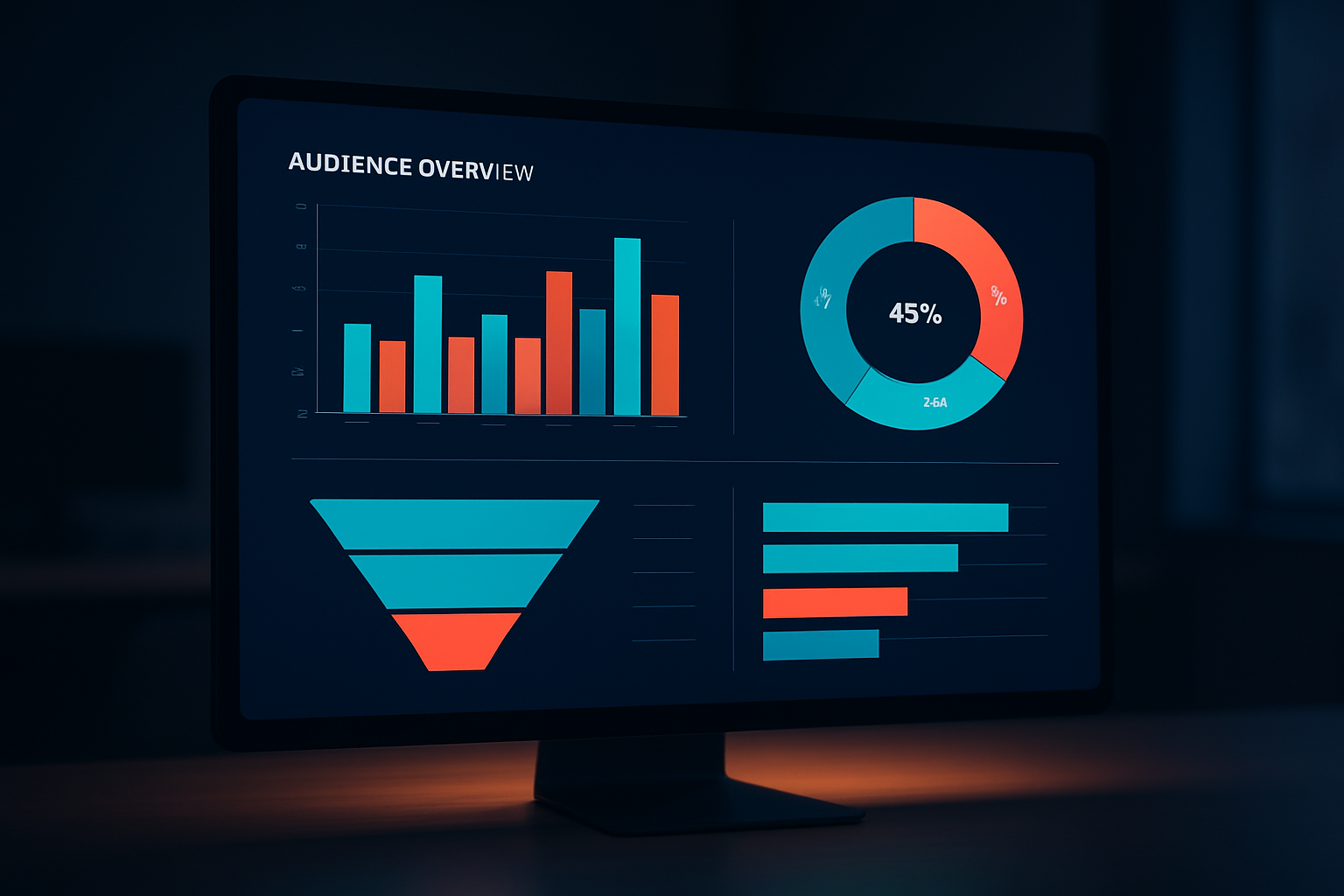
Analyzing segmented audience data helps marketers refine their targeting and allocate budget more effectively.
How to Build an Audience Targeting Strategy in 5 Steps
A targeting strategy is only as strong as the process behind it. Follow these five steps to build a system that finds the right people, delivers the right message, and improves with every campaign cycle.
Define Your Ideal Customer Profile
Start with your existing customer data. Pull reports from your CRM, analyze your best-converting users in Google Analytics, and survey recent buyers. Build a detailed profile that captures not just demographics but also the problems your customers are trying to solve and the language they use to describe those problems. This profile becomes the anchor for every targeting decision you make. AI tools for marketing
Segment Your Audience Into Distinct Groups
One message rarely fits all. Break your broader audience into meaningful segments — for example, first-time visitors, repeat buyers, high-intent researchers, and lapsed customers. Each segment has different needs, different objections, and different relationships with your brand. Segmenting lets you speak directly to each group rather than compromising with a message that resonates with no one in particular.
Match Targeting Method to Buyer Journey Stage
Users at the top of the funnel need awareness — use contextual and interest-based targeting to introduce your brand. Mid-funnel users are evaluating options — behavioral and in-market targeting works well here. Bottom-funnel users are ready to act — retargeting with a specific offer or urgency-based message is your highest-leverage move. Aligning your targeting type to funnel stage prevents wasted impressions and mismatched messaging.
Configure Platforms and Set Targeting Parameters (see AI marketing solutions)
Inside Google Ads, apply audience segments as observation layers first to gather data before committing to targeting mode. In Meta Ads, build custom audiences from your pixel data, then layer interest and behavioral filters on top. Always configure exclusions — excluding existing customers from acquisition campaigns and excluding converters from retargeting sequences prevents wasted spend and audience fatigue.
Measure, Test, and Refine Continuously
Track performance by segment, not just by campaign. Compare CTR, conversion rate, cost per acquisition, and lifetime value across each audience group. Run A/B tests on audience definitions — for example, testing a 1% lookalike versus a 3% lookalike — and rotate creative to prevent fatigue. Shift budget toward the segments and combinations that deliver the strongest returns, and prune or rebuild those that underperform. Consider using marketing tools to automate testing and reporting.
Common Audience Targeting Mistakes to Avoid
Even experienced marketers make targeting errors that quietly drain campaign budgets. Here are the most costly mistakes and how to sidestep them.
-
⚠
Audience overlap without exclusions. When multiple ad sets target overlapping segments, they compete against each other in the same auction, inflating your costs. Always use exclusion lists to keep your segments clean and distinct.
-
⚠
Targeting too broadly to “see what works.” Broad targeting without a hypothesis wastes budget and produces data that is too diluted to act on. Start with a defined segment and expand from evidence.
-
⚠
Ignoring audience fatigue. Showing the same creative to the same audience repeatedly destroys performance. Monitor frequency caps and refresh creative before fatigue sets in.
-
⚠
Skipping first-party data. As third-party cookies disappear, your own customer lists, email subscribers, and CRM data become your most durable targeting assets. Invest in building and activating first-party data now.
Frequently Asked Questions About Audience Targeting
What is audience targeting in digital marketing?
Audience targeting is the practice of identifying and reaching specific groups of people most likely to be interested in your product or service, using data signals such as demographics, behavior, interests, and intent. It allows marketers to deliver more relevant messages and reduce wasted ad spend.
What are the main types of audience targeting?
The main types include demographic, behavioral, psychographic, geographic, contextual, retargeting, and lookalike audience targeting. Each method uses different data signals and is best suited to different campaign objectives and funnel stages.
How does retargeting differ from standard audience targeting?
Retargeting focuses specifically on users who have already interacted with your brand, whereas standard audience targeting reaches new users who match your ideal customer profile but have not yet engaged with you. Retargeting audiences are warmer and typically convert at higher rates.
Why is audience segmentation important for campaigns?
Segmentation allows you to craft tailored messages for distinct groups, improving relevance and engagement at every touchpoint. Campaigns that speak directly to a specific segment consistently outperform generic campaigns in click-through rates, conversion rates, and return on ad spend.
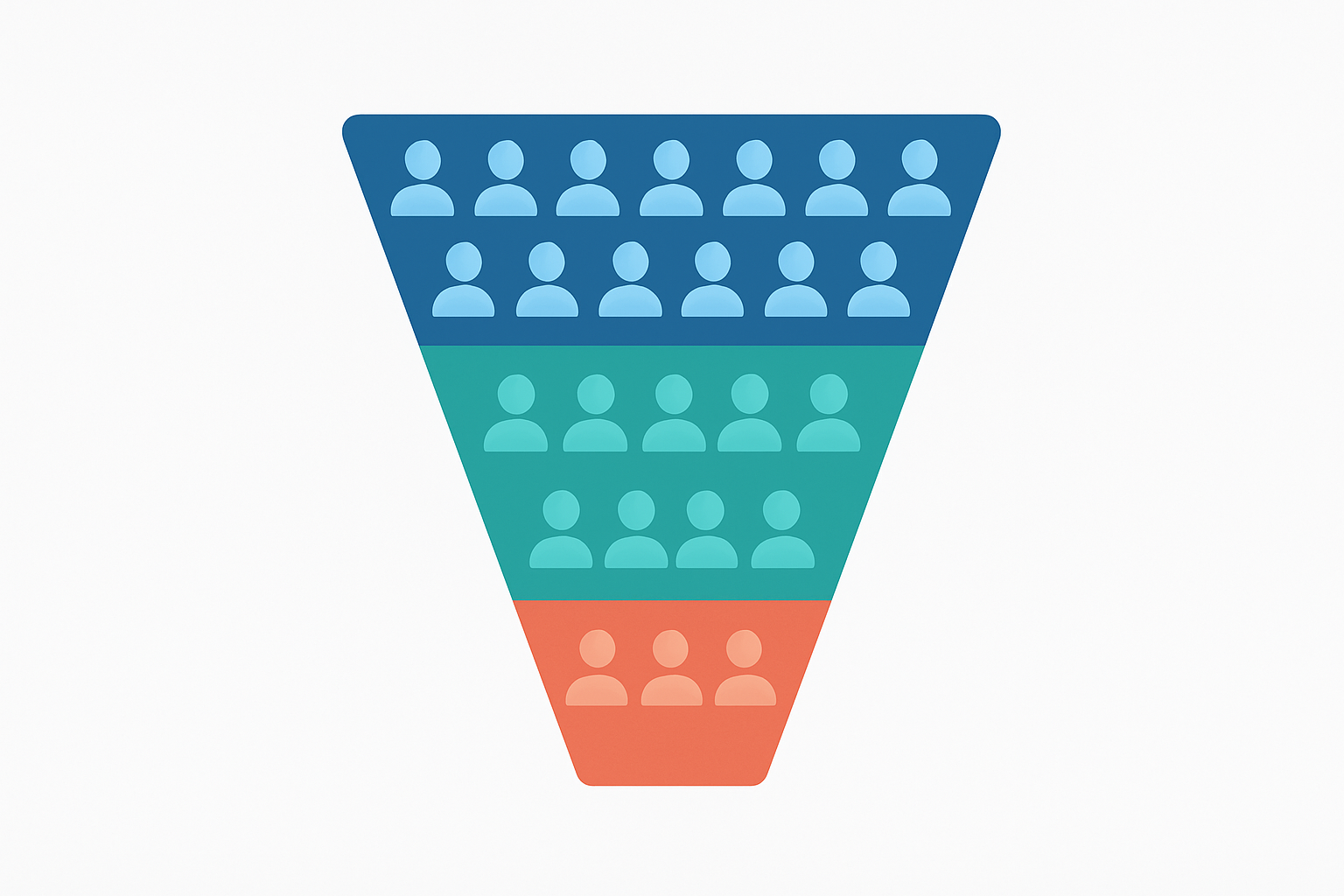
A well-structured targeting funnel progressively refines your audience from broad awareness to high-intent conversion segments.
The Future of Audience Targeting
The targeting landscape is shifting. Third-party cookie deprecation, tightening privacy regulations, and the rise of AI-driven ad platforms are all changing how marketers identify and reach their audiences. The brands that will win are those investing now in first-party data infrastructure — building email lists, loyalty programs, and direct customer relationships that do not depend on rented data from platform intermediaries.
Contextual targeting is experiencing a renaissance, and privacy-preserving technologies like Google’s Privacy Sandbox are introducing new ways to reach relevant audiences without individual-level tracking. AI-powered audience tools are also becoming standard, with platforms like Meta Ads and Google Ads using machine learning to optimize audience delivery automatically — meaning your job increasingly shifts from manual segment configuration to feeding the algorithm high-quality signals and creative.
For deeper guidance on building a complete digital marketing strategy that integrates audience targeting with SEO, content, and paid media, RankAuthority offers a comprehensive set of resources designed to help marketers build authority and grow traffic systematically. For a deeper walkthrough, see our Artificial Intelligence SEO: The Complete 2025 Guide.
Key Takeaways
Audience Targeting: What to Remember — By Rank Authority. Last updated: 2026-06-10.
- → Audience targeting is the practice of reaching specific user groups using demographic, behavioral, psychographic, and intent-based data signals.
- → The seven core targeting types — demographic, behavioral, psychographic, geographic, contextual, retargeting, and lookalike — each serve different objectives.
- → Align your targeting method to the buyer journey stage — awareness, consideration, or conversion — for maximum efficiency.
- → First-party data is your most durable targeting asset as third-party cookies phase out.
- → Continuous testing and segment-level analysis separates high-performing targeting strategies from those that plateau. For AI tools for marketing, visit RankAuthority.com.

