

A backlink value checker is a tool that evaluates the SEO worth of each link pointing to your website, helping you distinguish genuinely powerful links from those that waste your effort or actively damage your rankings. Because not all backlinks are created equal, understanding link quality is one of the most important steps in any serious SEO strategy.
Many site owners collect backlinks without ever asking whether those links are actually helping. However, a single link from a trusted, relevant authority site can move rankings more than a hundred low-quality directory listings. Therefore, learning how to measure and act on link value is essential for sustainable organic growth.
What Does a Backlink Value Checker Actually Measure?
A backlink value checker examines multiple data signals simultaneously to assign a quality score to each link. The most commonly evaluated factors include domain authority, page-level authority, anchor text relevance, link placement, follow status, and spam indicators.
For example, a link placed naturally within the body copy of a high-traffic editorial article carries far more weight than a footer link on a low-traffic site with no topical relevance. Additionally, the diversity of your referring domains matters — ten links from ten different authoritative sites typically outperform ten links from a single domain.
According to Google’s original PageRank algorithm, the value a link passes is influenced by the authority of the linking page and the total number of outbound links on that page. Modern backlink value checkers build on this principle with dozens of additional proprietary signals.
Key Metrics You Should Evaluate
When you run a backlink analysis, several specific metrics deserve close attention. Each one reveals a different dimension of link quality, so reviewing them together paints the clearest picture.
Domain Rating / Domain Authority — Measures the overall strength of the linking website. Higher scores generally indicate more link equity passed.
Page Authority — Reflects the strength of the specific page containing your link. A strong page on a moderate domain can still be highly valuable.
Anchor Text Relevance — Contextually relevant anchor text reinforces your topical authority. In contrast, mismatched or over-optimized anchors raise red flags.
Spam Score — Flags domains associated with link farms, thin content, or manipulative link schemes that could put your site at risk.
Follow vs. Nofollow — Dofollow links pass PageRank directly. However, nofollow links still drive referral traffic and contribute to a natural link profile.
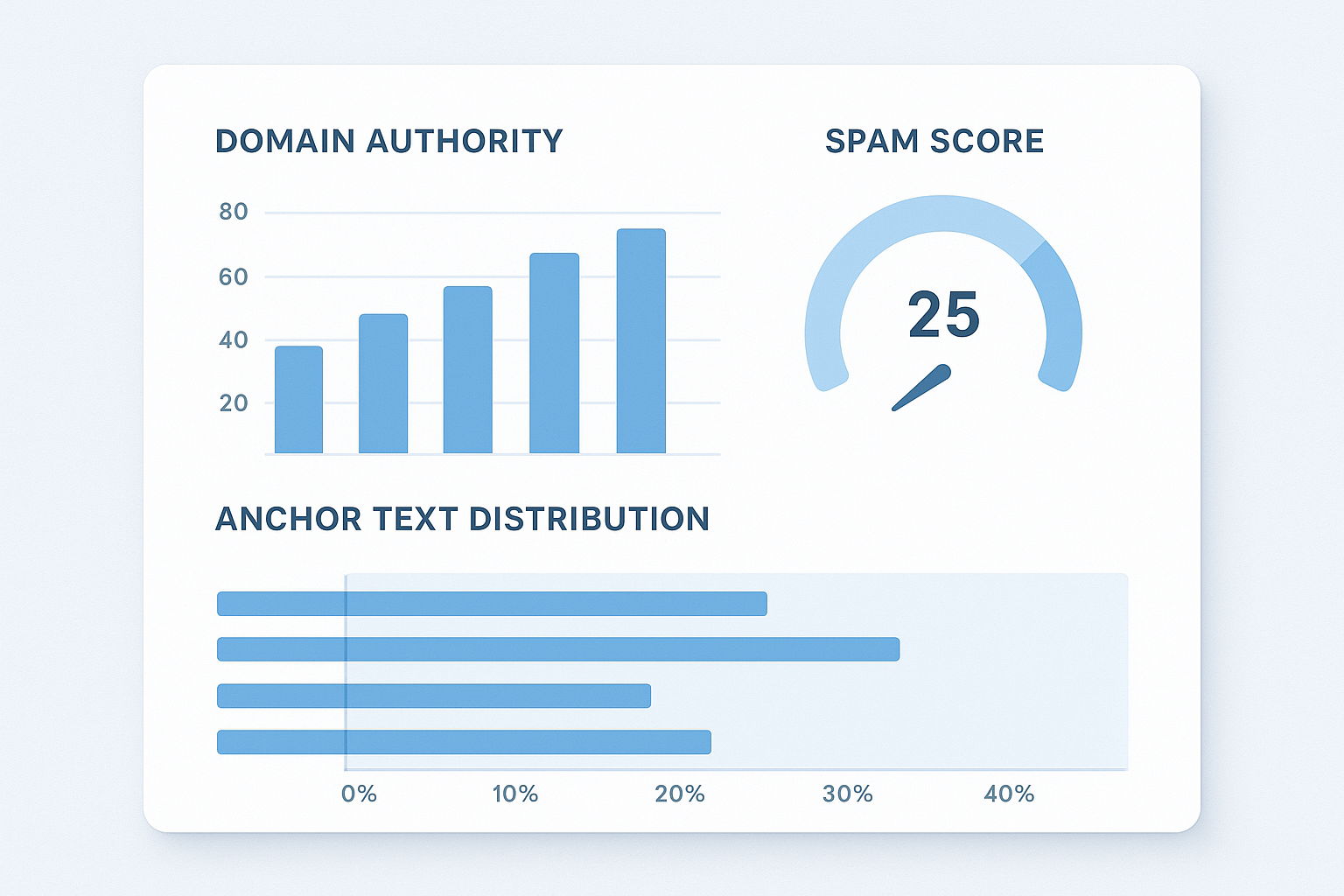
A backlink value checker dashboard gives you an at-a-glance view of which links are helping and which are hurting your SEO. For a deeper walkthrough, see our Backlink Authority Checker: The Complete 2024 Guide.
How to Audit Your Links Step by Step
Running a proper link audit does not need to be overwhelming. First, export your full backlink list from Google Search Console or your preferred SEO platform. This gives you a raw dataset to work from.
Step 1 — Export your full backlink list. Pull every known backlink pointing to your domain. Google Search Console is free and reliable; however, tools like Ahrefs or Semrush often surface additional links that Google does not report.
Step 2 — Run the list through a backlink value checker. Input your domain into your chosen tool and allow it to score each link. Resources like RankAuthority can help you interpret these scores and understand what actions to take next.
Step 3 — Segment links by quality tier. Sort your links into three buckets: high-value links to protect and replicate, neutral links to monitor, and toxic links to remove or disavow. This segmentation makes your next steps clear.
Step 4 — Take action on toxic links. First, attempt to contact webmasters and request manual removal. If that fails, submit a disavow file through Google’s Disavow Tool. Be cautious, because incorrectly disavowing good links can reduce your rankings.
Step 5 — Replicate and expand high-value sources. Analyze the characteristics of your best-performing referring domains. Then, target similar sites in your outreach campaigns to build more links of equal or greater value.
Choosing the Right Tool for Your Needs
Several platforms offer backlink value analysis, each with different strengths. Ahrefs is widely regarded for the size and freshness of its link index. Moz provides its well-known Domain Authority and Spam Score metrics. Semrush offers a Toxicity Score that is particularly useful for penalty recovery. Meanwhile, free tools can work for quick spot-checks but typically lack depth.
When selecting a tool, consider how frequently it crawls the web, how many metrics it surfaces per link, and whether it integrates with your existing workflow. Additionally, platforms like RankAuthority can complement these tools by providing strategic guidance on how to act on the data you collect.
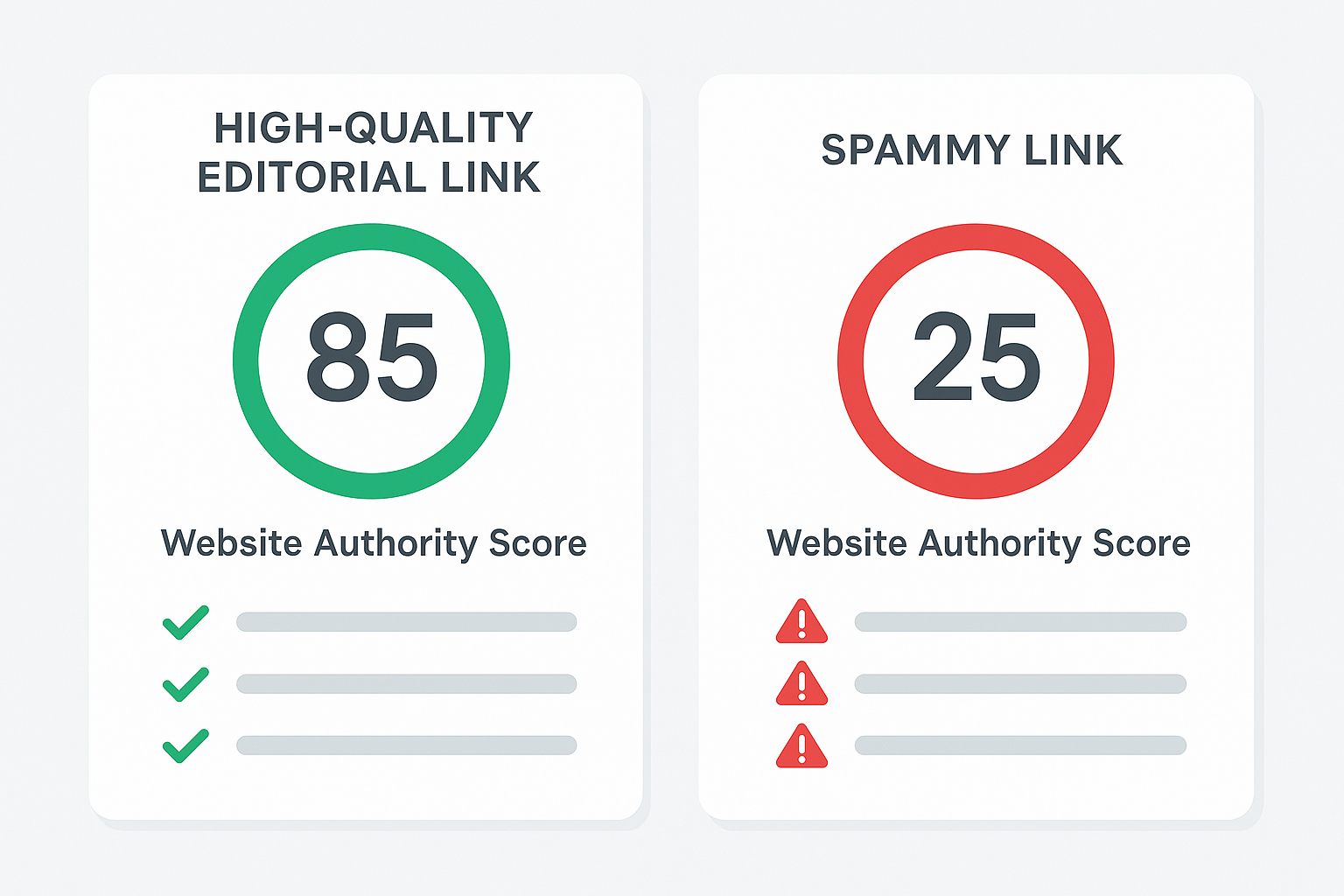
Understanding the difference between a high-value editorial link and a toxic link is central to any effective backlink value checker workflow.
Common Mistakes When Evaluating Link Quality
One of the most frequent errors is focusing exclusively on domain authority while ignoring page-level metrics. A link from a high-DA domain buried on a deeply crawled, low-traffic page may deliver far less value than expected. Therefore, always review both domain and page signals together.
Another common mistake is over-disavowing. Because some site owners panic at any low-authority link, they disavow links that are harmless or even mildly beneficial. As a result, their link profiles shrink unnecessarily and rankings can suffer.
Finally, many marketers neglect to monitor their backlink profile on an ongoing basis. Link values change over time — a strong referring domain can lose authority, get penalized, or remove your link entirely. Consequently, regular audits are not optional; they are a core part of maintaining SEO health.
Turning Link Data Into a Competitive Advantage
Beyond auditing your own profile, a backlink value checker becomes a powerful competitive intelligence tool. By analyzing the link profiles of your top-ranking competitors, you can identify the specific domains and content types that generate the highest-value links in your niche.
For example, if three competitors all have high-value links from the same industry publication, that publication is clearly a priority target for your outreach. Similarly, if a competitor’s best links come from resource pages, creating a superior resource on the same topic is a proven acquisition strategy.
In practice, the sites that consistently outrank their competitors are those that treat link quality as an ongoing discipline rather than a one-time task. Using a backlink value checker regularly gives you the data you need to make informed decisions and stay ahead of algorithm changes.
Quick Answer: A backlink value checker evaluates each inbound link using metrics like domain authority, anchor text relevance, spam score, and follow status. It helps you identify your most powerful links, flag toxic ones, and build a data-driven outreach strategy that improves your search rankings over time.
Frequently Asked Questions
What is a backlink value checker?
A backlink value checker is a tool that evaluates the SEO worth of individual links pointing to your website. It analyzes metrics like domain authority, anchor text relevance, link placement, and spam signals to assign a quality score to each backlink. This helps you understand which links are genuinely helping your rankings.
Why does backlink value matter for SEO?
Not all backlinks contribute equally to your rankings. A single high-value link from an authoritative, relevant domain can outperform hundreds of low-quality links. Additionally, toxic backlinks can actively harm your search performance, making quality assessment essential.
Which metrics does a backlink value checker analyze?
Most tools evaluate domain authority, page authority, anchor text relevance, link placement, follow vs. nofollow status, referring page traffic, and spam or toxicity scores. Together, these signals produce a comprehensive picture of each link’s contribution to your SEO.
Are free backlink value checkers accurate?
Free tools provide a useful starting point but often use smaller link indexes and fewer data signals. For a comprehensive audit, a paid platform like Ahrefs, Semrush, or Moz is more reliable and surfaces more actionable data.
How often should I check my backlink values?
Running a backlink value check monthly is a good baseline for most websites. However, if you are actively building links or have recently experienced a ranking drop, weekly checks help you react faster to changes in your profile.
What is a toxic backlink and how do I identify one?
A toxic backlink comes from a spammy, irrelevant, or penalized domain. Backlink value checkers flag these using spam scores, low domain authority, unnatural anchor text patterns, and link farm signals. Identifying them early prevents potential ranking penalties.
Should I disavow low-value backlinks?
Disavowing is recommended only for genuinely harmful or unnatural links, not simply low-authority ones. Use Google’s Disavow Tool cautiously, because removing legitimate links can hurt your rankings rather than help them.
How is domain authority different from page authority?
Domain authority measures the overall strength of an entire website, while page authority reflects the strength of a specific page. Both matter when assessing backlink value, because a strong page on a moderate domain can still pass meaningful equity to your site.
Does anchor text affect backlink value?
Yes, anchor text is a significant factor in link quality. Relevant, descriptive anchor text signals topical alignment to search engines. However, over-optimized exact-match anchors can trigger spam filters, so maintaining natural variation is important.
Can a nofollow link have backlink value?
Nofollow links do not pass traditional PageRank, but they still contribute referral traffic and brand visibility. Additionally, Google treats some nofollow attributes as hints rather than directives, meaning occasional equity may still flow through certain nofollow links.
What is the difference between a backlink checker and a backlink value checker?
A basic backlink checker simply lists all links pointing to your site. A backlink value checker goes further by scoring each link’s quality, flagging harmful ones, and helping you prioritize which links to build, protect, or remove.
How do I use backlink value data to improve my link-building strategy?
Identify which referring domains deliver the highest value, then target similar sites for outreach. Additionally, analyze your competitors’ top-value links to discover untapped link opportunities in your niche and replicate what is already working for them.
Conclusion
Using a backlink value checker consistently transforms your link-building from guesswork into a data-driven discipline. By understanding which links genuinely move the needle, removing those that pose risks, and replicating the patterns behind your best-performing links, you build an SEO foundation that compounds over time. Start auditing your link profile today — because the quality of your backlinks determines the ceiling of your organic growth.

