

Moz page rank is the collective term for Moz’s proprietary authority metrics — Domain Authority (DA) and Page Authority (PA) — that estimate how likely a website or individual page is to rank in Google search results. Understanding these scores is essential for anyone building a competitive SEO strategy.
Unlike Google’s internal PageRank algorithm, Moz’s metrics are publicly accessible and updated regularly. As a result, they have become the industry standard for benchmarking link authority and comparing competitive positioning across websites.
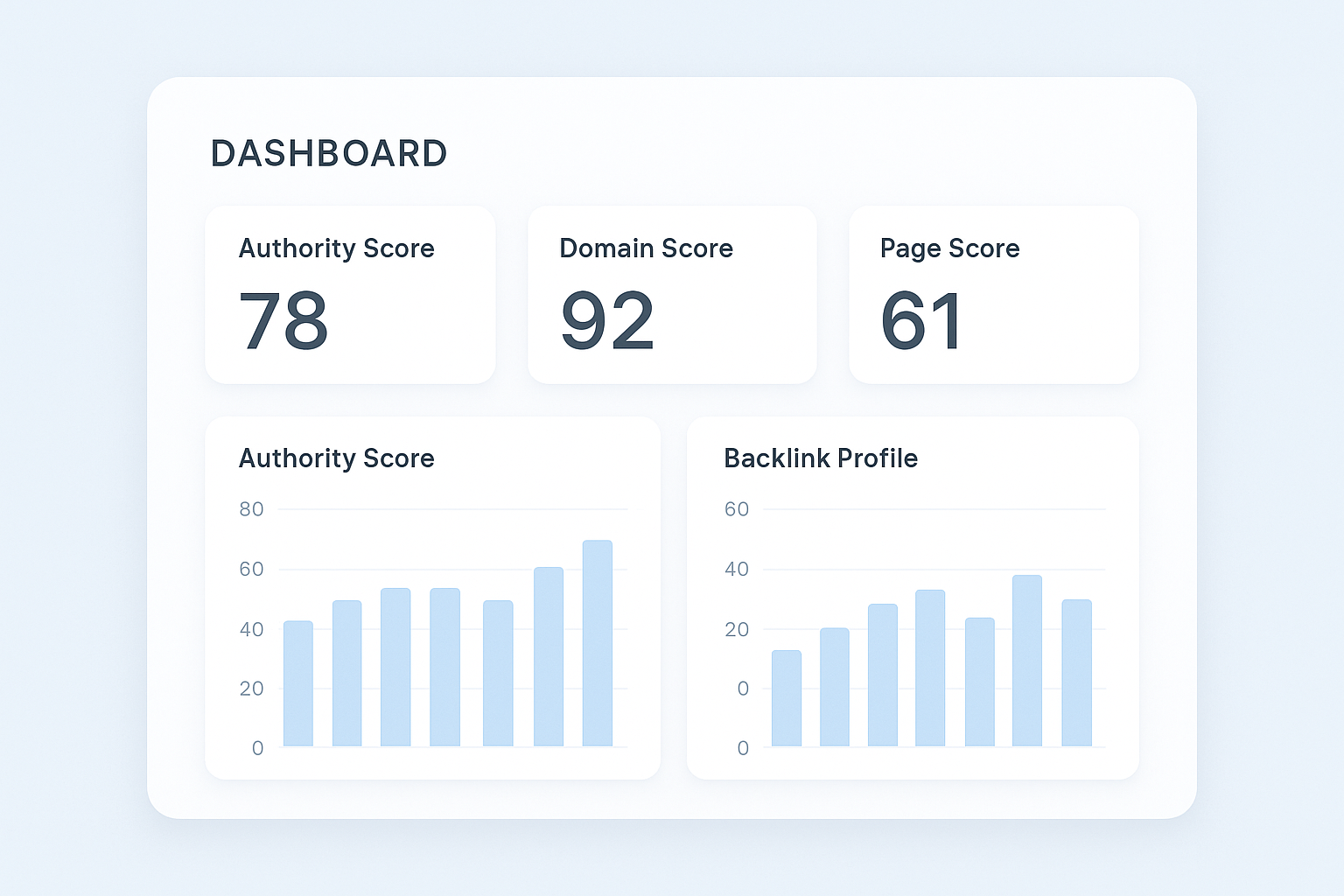
Moz page rank metrics like Domain Authority and Page Authority are displayed in dashboards to help SEOs track link-building progress. For a deeper walkthrough, see our What Is Moz Rank? A Complete SEO Guide (2024).
What Does Moz Page Rank Actually Measure?
Moz page rank is not a single number — it encompasses two distinct but related scores. Domain Authority (DA) evaluates the ranking strength of an entire domain or subdomain. Page Authority (PA), however, measures the ranking potential of one specific URL.
Both scores run on a logarithmic scale from 1 to 100. Because the scale is logarithmic, moving from a DA of 20 to 30 is considerably easier than moving from 60 to 70. Therefore, the higher your current score, the more effort each incremental gain requires.
Moz calculates these scores using a machine-learning model trained on thousands of real Google search results. The model weighs dozens of signals, but the quantity and quality of inbound backlinks remain the dominant factors in both DA and PA calculations.
Domain Authority vs. Page Authority: Key Differences
Although DA and PA are closely related, they serve different analytical purposes. Domain Authority gives you a broad view of how competitive your entire website is. In contrast, Page Authority lets you evaluate whether a specific piece of content can outrank competitors for a target keyword.
Quick Comparison
| Metric | Scope | Best Used For |
|---|---|---|
| Domain Authority | Entire domain | Competitor benchmarking |
| Page Authority | Single URL | Keyword-level competition |
For example, a high-DA site might have individual pages with low PA if those pages have few internal or external links pointing to them. Additionally, a new page on a strong domain can still struggle to rank if it lacks targeted link equity.
Why These Scores Matter for Your SEO Strategy
While Google does not use Moz’s metrics directly, DA and PA are strong proxies for the factors Google does care about — namely, the quality and volume of backlinks. Therefore, improving your Moz scores almost always correlates with improved organic search performance.
SEO professionals rely on these scores to prioritize link-building targets, evaluate guest post opportunities, and audit the health of their backlink profiles. For instance, before pursuing a link from a new site, checking its DA helps you quickly assess whether that link will meaningfully contribute to your authority.
Tools like Rank Authority integrate authority metrics into broader SEO workflows, making it easier to track DA and PA trends over time alongside other ranking signals.

Analyzing your backlink profile is the most direct way to understand and improve your authority metrics.
How to Improve Your Scores Step by Step
Improving DA and PA requires consistent, strategic effort. The following steps outline the most reliable approach to raising your scores over time.
Audit your existing backlink profile
Use Moz’s Link Explorer to identify toxic or spammy links. Next, submit a disavow file to Google Search Console to prevent low-quality links from dragging down your authority.
Earn high-authority backlinks
Focus on acquiring links from domains with DA scores higher than your own. Guest posting, digital PR, and creating linkable assets like original research are the most reliable methods.
Strengthen your internal link structure
Internal links distribute Page Authority throughout your site. Therefore, link from your highest-PA pages to the pages you most want to rank. This passes authority efficiently without requiring new external links.
Fix broken links and redirect chains
Broken links waste link equity. Meanwhile, long redirect chains dilute the PA that flows from external sources. Resolving both issues ensures that every inbound link passes its full authority value.
Diversify your link sources
A natural backlink profile includes links from a wide variety of domains and content types. In contrast, a profile with links from only a handful of sources can appear manipulative and may limit score growth.
Common Mistakes That Hurt Your Authority Scores
Many site owners inadvertently damage their DA and PA through avoidable errors. First, buying links from private blog networks (PBNs) may produce a temporary score lift, but Moz’s algorithm frequently identifies and devalues these links in subsequent updates.
Additionally, obsessing over DA as an absolute number rather than a competitive benchmark leads to misguided strategy. Because DA is relative, a DA of 35 is excellent if your competitors average 25. Finally, neglecting to monitor for lost backlinks means you may not notice when high-value links disappear — a common cause of unexplained score drops.
How to Check Your Current Scores
Checking your scores is straightforward and free. Moz’s Link Explorer tool at moz.com provides DA, PA, and a full backlink report for any domain. The free MozBar browser extension also displays DA and PA scores directly in your browser as you browse competitor sites.
For deeper analysis, Rank Authority offers additional tools for tracking authority trends and identifying link-building opportunities across your niche. Using multiple tools together gives you a more complete picture of your competitive position.
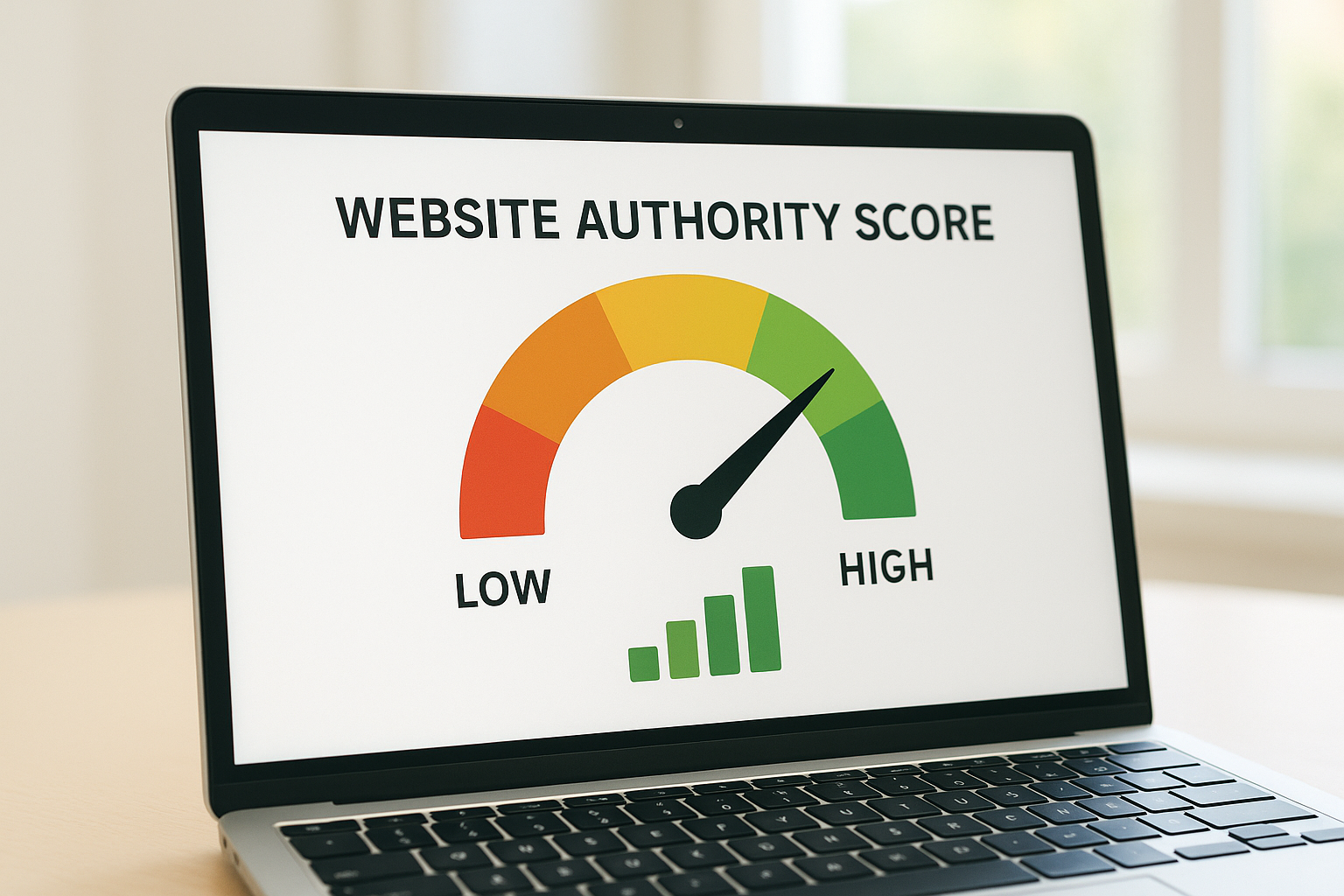
Tracking your authority score over time reveals whether your link-building strategy is producing measurable results.
Setting Realistic Expectations for Score Growth
Because the scale is logarithmic, growth timelines vary significantly depending on where you start. A new site can realistically move from DA 10 to DA 30 within six to twelve months of consistent link-building. However, pushing from DA 50 to DA 60 may take two or more years of sustained effort.
In practice, the best approach is to focus less on the raw number and more on outpacing your specific competitors. If your top competitor has a DA of 45 and you are at 38, closing that gap should be your primary benchmark rather than chasing an arbitrary target score.
Conclusion: Using Moz Page Rank as a Competitive Advantage
Understanding moz page rank — both DA and PA — gives you a measurable, actionable framework for improving your site’s search competitiveness. These metrics are not a direct reflection of Google’s algorithm, but they reliably correlate with the link-quality factors that drive organic rankings.
By consistently earning authoritative backlinks, maintaining a clean link profile, and using internal linking strategically, you can grow your scores in a way that translates into real ranking improvements. The key is treating DA and PA as directional guides rather than endpoints — and always measuring your progress relative to the competition you actually face.
Frequently Asked Questions About Moz Page Rank
What is Moz page rank?
Moz page rank refers to Moz’s proprietary scoring system — primarily Domain Authority and Page Authority — that predicts how well a domain or page will perform in search engine results. Scores range from 1 to 100 on a logarithmic scale.
How is Moz Page Authority calculated?
Page Authority is calculated using a machine-learning model that weighs dozens of signals, with backlink quantity and quality being the most influential. The model is trained on actual Google search results to maximize predictive accuracy.
What is a good Moz Domain Authority score?
A DA between 40 and 50 is considered average, 50 to 60 is good, and above 60 is strong. However, DA is most useful as a relative comparison against your direct competitors rather than as a standalone benchmark.
What is the difference between Moz DA and PA?
Domain Authority measures the ranking strength of an entire domain, while Page Authority measures the ranking strength of a single URL. Use DA for broad competitive benchmarking and PA for evaluating individual page competitiveness.
Does Google use Moz page rank in its algorithm?
No. Google does not use Moz’s DA or PA metrics in its ranking algorithm. These are third-party predictive scores. Google uses its own internal PageRank system, which is not publicly available.
How can I improve my Page Authority score?
Earn high-quality backlinks from authoritative domains pointing to that specific URL. Additionally, improving internal linking from high-PA pages and removing toxic backlinks through disavow files will support PA growth over time.
How often does Moz update DA and PA scores?
Moz updates scores approximately every few weeks as it recrawls the web. Because updates are batch-processed, recent link-building activity may not be reflected immediately in your scores.
Why did my Moz DA score drop suddenly?
A sudden DA drop most often results from a Moz algorithm update that recalibrates scores across all sites simultaneously. It can also be caused by losing high-authority backlinks or an influx of spammy links pointing to your domain.
What tools can I use to check my Moz page rank metrics?
You can check DA and PA for free using Moz’s Link Explorer or the MozBar browser extension. Platforms like Rank Authority also provide authority metrics and backlink analysis to support ongoing SEO tracking.
How many backlinks do I need to raise my DA?
There is no fixed number. Because DA is logarithmic and relative, quality outweighs quantity at every level. A single link from a DA 80 domain can move your score more than dozens of links from low-authority sites.
Is Moz DA the same as Google PageRank?
No. Google PageRank is Google’s internal link-evaluation algorithm and is not publicly available. Moz DA is a third-party metric designed to approximate ranking potential, not to replicate Google’s internal calculations.
Can internal linking improve my authority metrics?
Yes. Internal linking distributes Page Authority across your site and helps Moz’s crawler discover more of your pages. Linking strategically from high-PA pages to lower-PA pages can meaningfully boost the authority of your most important content.

