
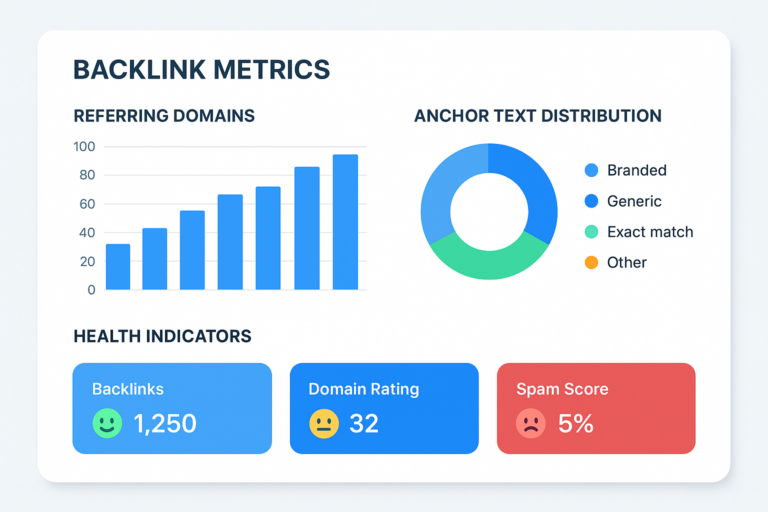
Website backlinks analysis is the systematic process of examining every inbound link pointing to your domain in order to evaluate link quality, spot harmful links, and uncover new opportunities to strengthen your search presence. Because backlinks remain among the most powerful ranking signals in Google’s algorithm, understanding your link profile is not optional — it is foundational to any serious SEO strategy.
In practice, a thorough backlink audit can reveal why a page is underperforming, highlight competitor advantages, and guide your outreach campaigns. Therefore, whether you manage a small business site or a large e-commerce platform, regular link analysis delivers measurable returns.
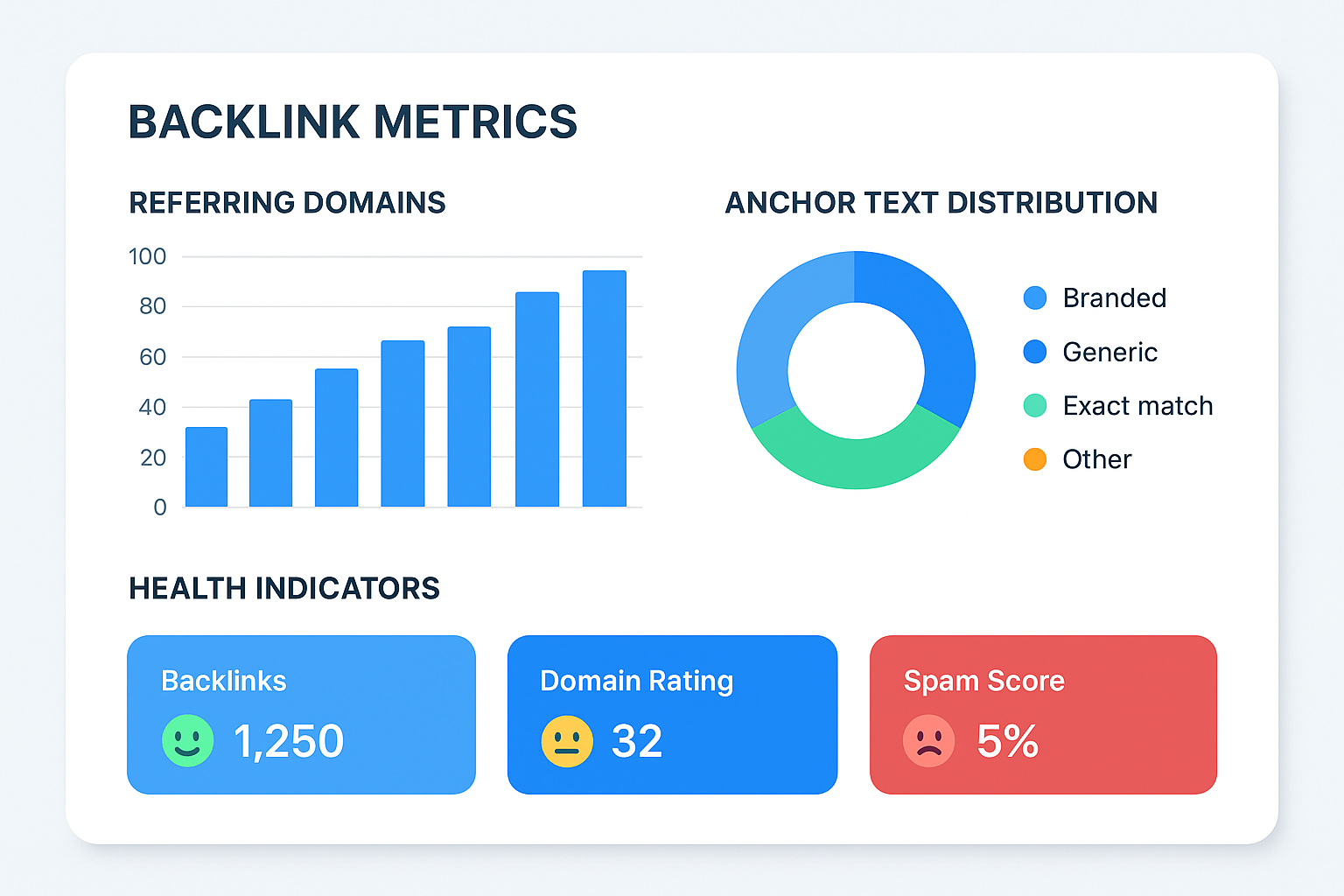
A well-structured website backlinks analysis dashboard gives you an at-a-glance view of link health and growth trends. For a deeper walkthrough, see our Website SEO Health Checker: Diagnose, Fix, and Grow Fast.
What Does a Backlink Profile Actually Tell You?
Your backlink profile is a complete picture of every external site that links to yours. According to Google’s PageRank algorithm, links act as editorial votes — and the quality of those votes matters far more than the raw quantity. A single link from a high-authority, relevant domain can outperform hundreds of links from low-quality directories.
Additionally, your profile reveals patterns that search engines notice. For example, a sudden spike in links from unrelated foreign domains is a red flag, whereas a steady growth of links from niche-relevant publishers signals organic authority. Understanding these patterns is what separates reactive SEO from proactive strategy. For a deeper walkthrough, see our What is AI Visibility?The Complete 2026 Guide.
Key Metrics to Examine First
Before diving into individual links, focus on these high-level indicators:
- Referring Domains: The number of unique websites linking to you. More unique domains generally correlate with stronger authority. For a deeper walkthrough, see our Website Traffic Slowed – 6 Reason Why!.
- Domain Rating / Domain Authority: A score (0–100) estimating the overall link strength of a site. For a deeper walkthrough, see our Website Authority Checker: Rank Authority.
- Anchor Text Distribution: The mix of branded, generic, and keyword-rich anchor texts across your links.
- Dofollow vs. Nofollow Ratio: Dofollow links pass ranking equity; nofollow links do not, but both contribute to a natural-looking profile.
- Link Velocity: How quickly new links are being acquired over time.
How to Perform a Website Backlinks Analysis Step by Step
Following a structured process ensures you capture every insight and take the right corrective actions. Here is a proven five-step workflow used by professional SEO teams.
Step 1 — Export Your Full Backlink Profile
Start by pulling all inbound links using a dedicated tool. Ahrefs, Semrush, and Google Search Console are the most widely used options. Export the data to a spreadsheet so you can sort and filter efficiently.
Step 2 — Evaluate Domain Authority and Relevance
For each referring domain, check its authority score and assess topical relevance. A link from a high-DA cooking blog carries little value for a cybersecurity firm. Therefore, relevance and authority must be evaluated together, not in isolation. For a deeper walkthrough, see our What is AISEO and How Does It Work?.
Step 3 — Audit Your Anchor Text Distribution
An over-optimized anchor profile — where too many links use exact-match keywords — can appear manipulative to Google. In contrast, a healthy profile includes a mix of branded anchors, partial-match phrases, generic terms like “click here,” and bare URLs.
Step 4 — Identify and Address Toxic Links
Flag links from penalized domains, link farms, or irrelevant foreign sites. First, attempt manual removal by contacting webmasters. If that fails, compile a disavow file and submit it through Google Search Console as a last resort.
Step 5 — Analyze Competitor Backlinks for Opportunities
Enter competing domains into your backlink tool to discover who links to them. Sites that link to multiple competitors but not to you represent high-priority outreach targets. As a result, competitor analysis often becomes the most productive part of the entire audit.

Manually reviewing exported backlink data helps surface toxic links that automated tools might score ambiguously.
Spotting and Removing Toxic Backlinks
Toxic backlinks are links that come from spammy, irrelevant, or algorithmically penalized sources. Although Google’s algorithm has become better at ignoring low-quality links on its own, a concentrated cluster of harmful links can still trigger a manual penalty or suppress rankings algorithmically.
Common warning signs include links from domains with extremely low authority scores, sites in unrelated languages or niches, link networks, and pages that contain no real content. Additionally, links with over-optimized anchor text pointing to money pages are a classic manipulation signal that auditors must flag.
When you identify a toxic link, the preferred first step is outreach — contacting the site owner and requesting removal. However, because many spammy sites are abandoned or unresponsive, the disavow tool becomes necessary. Resources like RankAuthority provide guidance on building effective disavow files and managing the full remediation process.
Turning Competitor Gaps Into Link Opportunities
Competitive backlink analysis is one of the highest-ROI activities in SEO. By identifying domains that link to your top three competitors but not to you, you create a pre-qualified outreach list — these publishers have already demonstrated a willingness to link to content in your niche.
Furthermore, studying the type of content that earns the most links for competitors reveals content gaps you can fill. For instance, if several authoritative sites link to a competitor’s original research report, producing a more comprehensive or updated study gives you a strong reason to reach out and request a link replacement or addition.
Link Building Tactics That Earn Quality Links
- Digital PR: Publish original data, surveys, or research that journalists and bloggers want to cite.
- Guest Posting: Contribute expert articles to relevant industry publications with a contextual link back to your site.
- Broken Link Building: Find broken links on authoritative pages and offer your content as a replacement.
- Resource Page Outreach: Identify curated resource pages in your niche and pitch your best content for inclusion.
- Skyscraper Technique: Create a demonstrably superior version of a heavily linked piece of content, then reach out to those linking to the original.
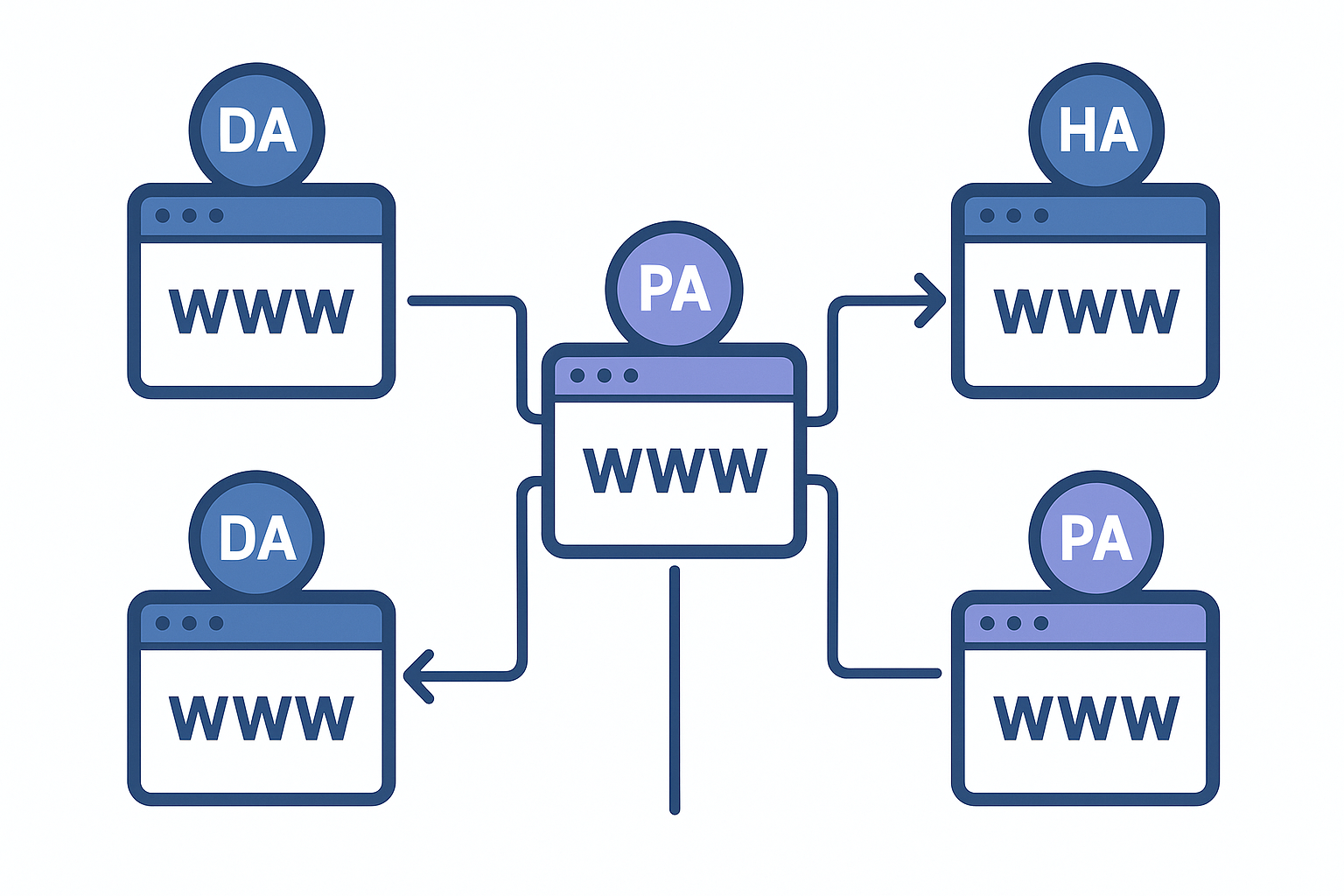
Understanding how link equity flows between sites helps you prioritize which relationships to build first. For a deeper walkthrough, see our What is AISEO and How Does It Work?.
Choosing the Right Tools for the Job
No single tool captures every backlink on the web, so professionals often combine two or more data sources. Ahrefs is widely regarded as having the largest live link index, making it the go-to for comprehensive audits. Semrush excels at combining backlink data with keyword and competitive intelligence in one platform.
Meanwhile, Google Search Console remains the only tool that shows you exactly what Google has crawled and indexed from your link profile. Because it comes directly from the source, it is invaluable for verifying whether links you expect to see are actually being recognized. Moz Link Explorer is another solid option, particularly for its Spam Score metric that helps flag potentially toxic links quickly.
For ongoing monitoring and actionable link-building strategy, RankAuthority offers expert resources and service frameworks designed to help site owners build authority systematically rather than reactively. For a deeper walkthrough, see our Are There Any Testimonials for rankauthority.com?.
Common Mistakes That Undermine Your Analysis
Even experienced SEOs make avoidable errors during backlink audits. First, relying on a single tool means missing links that only appear in competing crawl indexes. Therefore, always cross-reference at least two data sources before drawing conclusions.
Second, many practitioners focus exclusively on removing bad links while neglecting to build new ones. In reality, both activities must run in parallel. Additionally, ignoring internal links is a missed opportunity — a strong internal linking structure distributes the equity from your best backlinks across the entire site more effectively.
Finally, treating backlink analysis as a one-time project rather than an ongoing process is perhaps the most costly mistake. Link profiles change constantly as sites gain, lose, and update their links. As a result, monthly monitoring is the minimum cadence for any site competing in a moderately to highly competitive niche.
Quick Answer: Website backlinks analysis is the process of auditing all inbound links to a domain to assess quality, relevance, and SEO impact. Effective analysis involves evaluating domain authority, anchor text diversity, and toxic link risk — then acting on findings through outreach, disavowal, and strategic link building.
Frequently Asked Questions
What is website backlinks analysis?
Website backlinks analysis is the process of examining all inbound links pointing to a site to evaluate their quality, relevance, and impact on search rankings. It helps SEOs identify link-building opportunities, detect harmful links, and benchmark performance against competitors.
Why are backlinks important for SEO?
Backlinks act as votes of confidence from other websites, signaling to search engines that your content is trustworthy and authoritative. High-quality backlinks from relevant domains remain one of the strongest ranking factors in Google’s algorithm.
How do I perform a backlink audit?
Use a tool such as Ahrefs, Semrush, or Google Search Console to export your full link profile. Then evaluate each link for domain authority, relevance, anchor text, and spam signals before deciding whether to keep, disavow, or pursue removal.
What are toxic backlinks and how do they harm rankings?
Toxic backlinks are low-quality, spammy, or manipulative links from irrelevant or penalized domains. They can trigger Google manual actions or algorithmic penalties, causing significant drops in organic search visibility.
How often should I analyze my backlink profile?
Most SEO professionals recommend reviewing your backlink profile at least once per month. However, after a major algorithm update or a sudden traffic drop, you should perform an immediate audit to identify any new harmful links.
What metrics matter most in a backlink analysis?
The most important metrics include Domain Authority or Domain Rating of the linking site, the number of unique referring domains, anchor text distribution, link placement context, and whether links are dofollow or nofollow. For a deeper walkthrough, see our Which Tool Checks Website Authority Most Accurately?.
What is the difference between dofollow and nofollow backlinks?
Dofollow links pass link equity (PageRank) to the destination page and directly influence search rankings. Nofollow links include a rel attribute that instructs search engines not to pass link equity, though they can still drive referral traffic and brand awareness.
How do I find competitor backlinks?
Enter a competitor’s domain into a backlink analysis tool such as Ahrefs or Semrush to view their full link profile. Look for high-authority referring domains that link to your competitors but not to you, as these represent prime outreach targets.
What is anchor text and why does it matter?
Anchor text is the clickable text of a hyperlink. Search engines use it as a relevance signal to understand what the linked page is about. An over-optimized anchor text profile with too many exact-match keywords can look manipulative and trigger penalties. For a deeper walkthrough, see our What is AISEO and How Does It Work?.
Should I use Google’s disavow tool for bad backlinks?
Use Google’s disavow tool only as a last resort after attempting manual link removal requests. It is most appropriate when you have a large volume of clearly spammy or manipulative links that you cannot get removed and that may be causing a ranking penalty.
What free tools can I use for backlink analysis?
Google Search Console offers a free Links report showing your top linking domains and pages. Moz Link Explorer and Ahrefs both offer limited free lookups, making them useful for quick checks without a paid subscription.
How many backlinks do I need to rank on page one?
There is no universal number, as the required backlinks depend heavily on the competitiveness of your target keyword. In practice, you need enough high-quality links from relevant domains to match or exceed what top-ranking competitors already have. For a deeper walkthrough, see our What is AISEO and How Does It Work?.
Final Thoughts on Building a Stronger Link Profile
Consistent website backlinks analysis is one of the most direct paths to sustainable search ranking improvements. Because link profiles evolve constantly, treating your audit as a living process — rather than a one-time checklist — is what separates sites that grow steadily from those that plateau or decline.
Start by establishing your baseline with a comprehensive export, then prioritize removing harmful links and building new ones from relevant, authoritative sources. Over time, the compound effect of a clean, growing backlink profile translates directly into higher rankings, more organic traffic, and greater domain authority across your entire site.

