
The Best Tool for SEO is software designed to help website owners research keywords, audit technical issues, track rankings, and analyze backlinks — all to improve visibility in organic search results. Without the right tool, even well-written content can fail to reach the audience it deserves. Therefore, choosing the correct platform is one of the most impactful decisions you can make for your online presence.
This guide walks through every major category of SEO software, explains what each type does, and helps you make a confident, informed choice — whether you are a solo blogger, a growing business, or an agency managing dozens of clients. For deeper keyword tactics see AI-powered keyword research.
Quick Answer: The best tool for SEO combines keyword research, site auditing, backlink analysis, and rank tracking in one platform. Google Search Console is the essential free starting point, while Ahrefs and Semrush are the leading paid all-in-one options for serious growth.
Why Every Website Needs an SEO Tool
Search engine optimization involves hundreds of variables — from page speed and crawlability to content relevance and link authority. Additionally, Google updates its algorithm thousands of times per year, meaning what worked six months ago may no longer be enough. As a result, manual tracking is simply not scalable.
SEO tools automate data collection, surface actionable insights, and help you prioritize fixes that deliver the greatest ranking impact. For example, a site audit tool can scan thousands of pages in minutes and flag broken links, duplicate meta tags, and slow-loading resources — tasks that would take days to complete by hand.
According to Wikipedia’s overview of SEO, organic search remains one of the highest-converting traffic channels available to businesses online, making investment in the right tooling a logical priority.
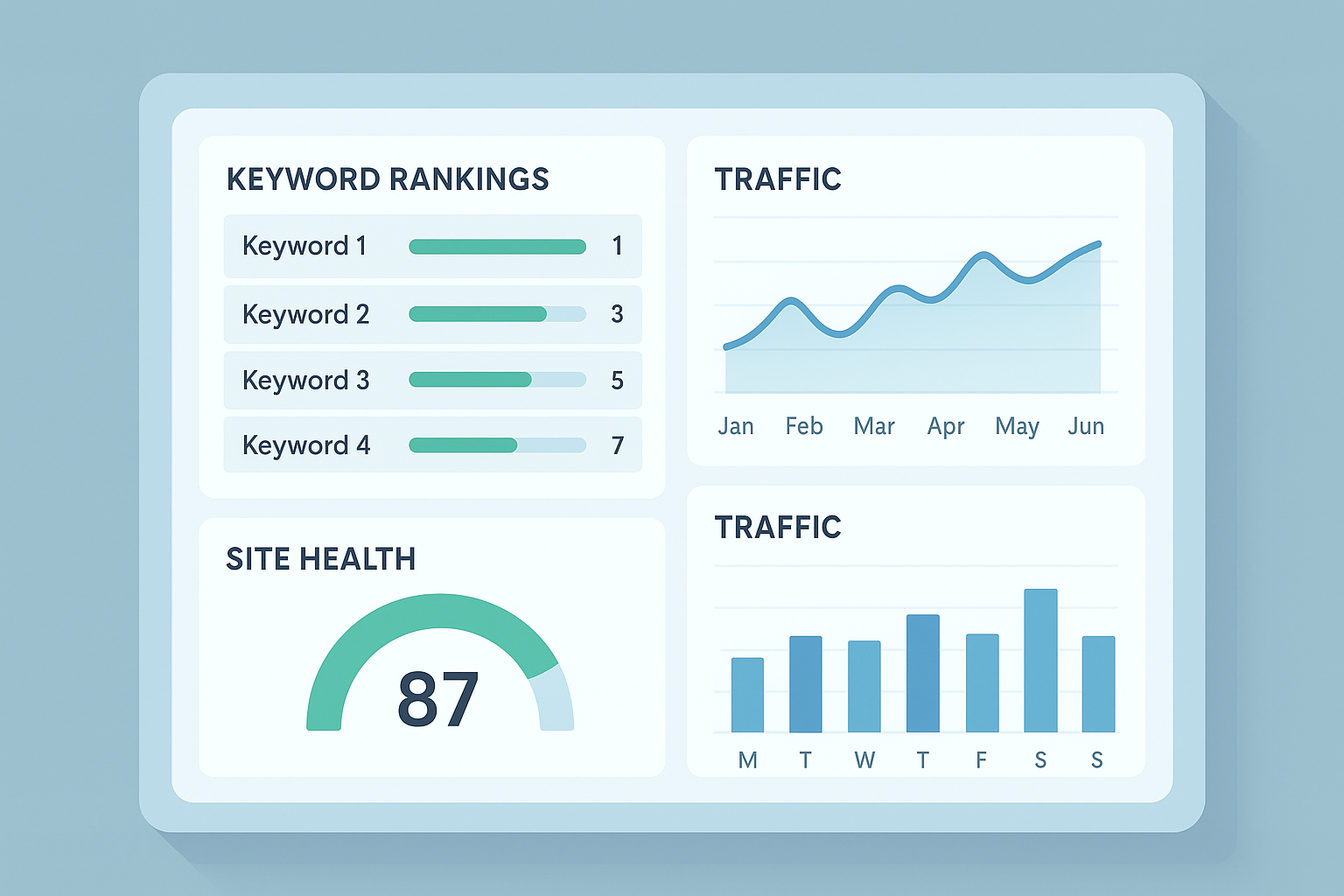
A well-designed tool for SEO centralizes keyword data, ranking positions, and site health in one actionable dashboard.
The Core Categories of SEO Software
Before comparing specific platforms, it helps to understand the four main functional categories. Each addresses a different layer of the SEO process, and together they form a complete workflow.
Keyword Research Tools
Keyword research tools reveal what your target audience is searching for, how often, and how competitive those terms are. In practice, they help you find low-difficulty keywords with meaningful search volume — the sweet spot for new and growing sites. Most platforms display a keyword difficulty score from 0 to 100, where lower scores indicate easier ranking opportunities.
Technical Site Audit Tools
A technical audit tool crawls your website the way a search engine would, then reports every issue that could hurt indexing or ranking. Common findings include missing title tags, broken internal links, slow page load times, and improper canonical tags. Because technical issues can silently suppress rankings for months, running regular audits is non-negotiable.
Backlink Analysis Tools
Backlinks remain one of Google’s strongest ranking signals. However, not all links are equal — a single link from a high-authority publication outweighs hundreds of low-quality directory links. Backlink analysis tools let you evaluate your own link profile, identify toxic links to disavow, and reverse-engineer competitor link strategies to find new opportunities.
Rank Tracking Tools
Rank trackers monitor where your pages appear in search results for target keywords over time. They allow you to measure the direct impact of your SEO work, catch sudden ranking drops before they damage traffic, and compare your position against competitors through AI competitor tracking. Most modern trackers update rankings daily and segment data by country, device, and location.
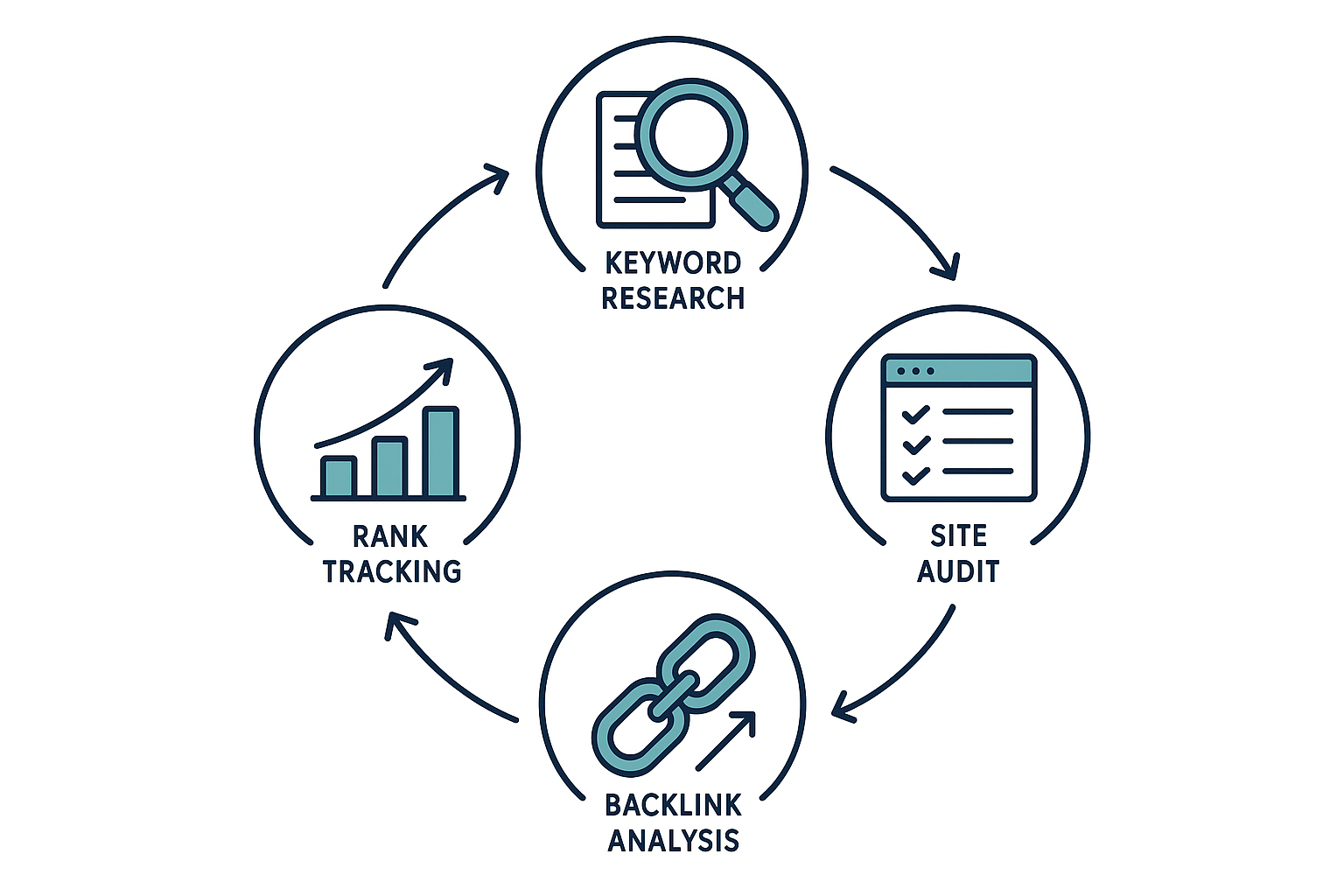
Understanding the four core categories helps you evaluate any best SEO optimisation tool against your actual workflow needs.
Top Platforms Worth Evaluating
Several platforms dominate the market, each with distinct strengths. Below is a focused comparison to help you match the right option to your goals.
| Platform | Strongest Feature | Starting Price | Best For |
|---|---|---|---|
| Google Search Console | Index coverage & query data | Free | All websites, essential baseline |
| Ahrefs | Backlink database | ~$129/month | Link building & content research |
| Semrush | Keyword & competitor data | ~$139/month | Agencies & content marketers |
| Moz Pro | Domain Authority metric | ~$99/month | Beginners & local SEO |
How to Choose the Right Option for Your Situation
Choosing the right platform depends on your budget, team size, and primary SEO focus. First, identify whether your biggest challenge is keyword discovery, technical health, or link acquisition — then match the tool to that priority.
For example, a new blog with limited budget should start with Google Search Console and a free keyword planner, then upgrade to a paid platform once organic traffic begins generating revenue. In contrast, an established e-commerce site competing in a saturated niche will benefit immediately from Ahrefs’ deep backlink intelligence or Semrush’s competitive gap analysis — read our Best SEO Optimisation Tool review for a side-by-side feature comparison.
Resources like RankAuthority provide practical guidance on evaluating SEO platforms and building workflows that turn data into real ranking improvements. Additionally, most paid tools offer free trials, so testing two or three options before committing is always a smart approach.
Common Mistakes to Avoid
Even experienced marketers fall into predictable traps when using SEO software. Being aware of these pitfalls helps you extract more value from whichever platform you choose.
Chasing high-difficulty keywords too early. Many users filter for the highest search volume without checking keyword difficulty. As a result, they create content that has no realistic chance of ranking for months or years. Instead, prioritize keywords with a difficulty score below 30 while your domain authority grows.
Ignoring audit warnings. Site audit tools generate reports that are often reviewed once and then forgotten. However, technical issues compound over time — a slow page today becomes a significant ranking liability six months from now. Therefore, schedule a recurring audit review into your monthly workflow.
Collecting data without acting on it. The most expensive mistake is paying for a premium tool and using it only to generate reports. In practice, the value comes from implementing changes based on what the data reveals, then measuring the outcome.

Acting on audit findings — rather than simply collecting data — is what separates effective SEO from expensive guesswork. For a deeper walkthrough, see our What Strategies Yield the Best Results in SEO Today?.
Building a Practical SEO Tool Stack
Most successful SEO practitioners use a layered stack rather than relying on a single platform. A practical starting stack combines Google Search Console for index monitoring, one all-in-one paid platform for keyword and backlink research, and a dedicated rank tracker if your chosen platform’s tracking feature lacks granularity.
Meanwhile, supplemental tools like Google Analytics 4 provide behavioral data — session duration, bounce rate, and conversion paths — that pure SEO platforms do not capture. Together, these tools give you a 360-degree view of how organic traffic behaves after it arrives on your site.
Finally, revisit your stack every six months. The SEO tool landscape evolves quickly, and newer platforms occasionally leapfrog established ones in specific feature areas. Staying current ensures you are always working with the most accurate data available. For ongoing reviews and comparisons, SEO tools 2026 guide is a reliable resource to bookmark.
What Is the Best Tool for SEO in 2025?
The best tool for SEO in 2025 is the one that aligns with your specific goals, budget, and technical comfort level. For most businesses, Semrush or Ahrefs paired with Google Search Console covers the full SEO workflow effectively. However, smaller sites and solo creators can achieve strong results starting with free tools and upgrading strategically as growth demands it.
The key principle is consistency — using any good tool regularly and acting on its recommendations will outperform using a premium tool sporadically. Because SEO compounds over time, steady, data-driven effort always wins over occasional bursts of activity.
Frequently Asked Questions
What is a tool for SEO?
A tool for SEO is software that automates keyword research, site auditing, rank tracking, and check backlink profile analysis to improve a website’s visibility in organic search results. These platforms replace hours of manual work with actionable, data-driven insights.
Which free SEO tool should beginners start with?
Beginners should start with Google Search Console because it is free, directly connected to Google’s index, and shows exactly which queries bring traffic to your site. It also alerts you to crawl errors and manual penalties that could suppress rankings.
How much does a professional SEO tool cost?
Professional SEO tools typically range from $99 to $500 per month depending on features and data limits. Ahrefs and Semrush both offer entry-level plans near $130 per month, while enterprise tiers can exceed $400 per month.
Can one SEO tool replace all others?
No single tool covers every SEO need perfectly. However, all-in-one platforms like Semrush and Ahrefs come close by combining keyword research, backlink analysis, site auditing, and rank tracking in one dashboard.
What is the difference between Ahrefs and Semrush?
Ahrefs vs Rank Authority is widely regarded as the strongest backlink analysis tool, while Semrush excels at competitive keyword research and PPC data. The best choice depends on whether link building or keyword strategy is your primary focus.
How often should I run an SEO site audit?
You should run a full SEO site audit at least once per month. If you publish content frequently or make structural changes to your website, running an audit every two weeks helps catch issues before they affect rankings.
What features matter most in an SEO tool?
The most important features are keyword research accuracy, backlink database size, site audit depth, rank tracking frequency, and competitor analysis. A clear reporting interface also saves significant time when presenting results to clients or stakeholders.
Is Google Search Console enough for SEO?
Google Search Console is essential but not sufficient on its own. It lacks competitor data, deep backlink analysis, and proactive keyword discovery. Most professionals combine it with a paid platform like Ahrefs or Semrush for complete coverage.
What is keyword difficulty in SEO tools?
Keyword difficulty is a score from 0 to 100 that estimates how hard it is to rank on the first page for a given search term. Higher scores indicate more competitive keywords that typically require stronger domain authority and more backlinks to rank.
How do SEO tools track keyword rankings?
SEO tools track rankings by periodically querying search engines for target keywords and recording where your URL appears in the results. Most tools allow you to track rankings by country, device type, and location for granular insights.
What common mistakes do people make when using SEO tools?
The most common mistakes are targeting high-difficulty keywords before building domain authority, ignoring technical audit warnings, and collecting data without acting on it. Consistent implementation is what converts tool data into actual ranking gains.
Can SEO tools help with local SEO?
Yes, many SEO tools include local rank tracking and citation analysis features. Semrush and Moz Pro both offer local SEO modules that monitor Google Business Profile performance and local keyword positions.

