

By Rank Authority Team — Last updated: 2026-06-17. Keyword research research is the process of systematically discovering, evaluating, and prioritizing the exact search terms your target audience types into Google and other search engines. Without this foundation, even the most polished content strategy will struggle to generate consistent organic traffic. Author: Rank Authority. Last updated: 2026-07-02.
In practice, most websites skip the deeper analytical layer — they pick keywords based on gut feeling rather than data. As a result, they publish content that ranks for nothing. This guide walks you through every stage of a rigorous SEO search keywords process so you can make smarter, evidence-based decisions about every page you create.

A structured keyword research process transforms guesswork into a data-driven content strategy.
What Is Keyword Research Research and Why Does It Matter?
Keyword research is more than generating a list of phrases — it is a disciplined investigation into how real people phrase their needs online. Explore AI-powered keyword research approaches that speed analysis and surface non-obvious opportunities. According to Wikipedia’s overview of search engine optimization, keyword selection directly influences a page’s ability to appear in relevant search results.
Therefore, when you research keywords thoroughly, you gain three critical advantages. First, you understand exactly what your audience wants. Second, you identify gaps your competitors have missed. Third, you allocate your content budget toward terms that can realistically drive conversions.
The Difference Between Basic and Deep Keyword Analysis
Basic keyword research stops at search volume. Deep keyword research, however, layers in keyword difficulty, click-through rate potential, search intent classification, and competitive SERP analysis. For example, a keyword with 10,000 monthly searches but a difficulty score of 85 may be far less valuable to a new site than a 500-search term with a difficulty of 12.
Additionally, deep analysis considers whether the top-ranking pages are genuinely beatable — meaning they have weak backlink profiles or thin content that you can outperform with a comprehensive resource.
Step-by-Step: How to Conduct Thorough Keyword Research
Follow these five steps to build a keyword list that is both realistic and strategically sound.
Step 1 — Define Your Core Topics Begin by brainstorming five to ten broad subjects central to your business. These seed topics become the starting point for generating hundreds of specific keyword ideas (see how to research keywords). For instance, a digital marketing agency might start with topics like “SEO,” “content marketing,” and “paid advertising.”
Step 2 — Expand With a Keyword Tool Next, enter each seed topic into keyword research tools such as Google Keyword Planner, Ahrefs, or Semrush. These platforms generate hundreds of related phrases, along with monthly search volume and competition data.
Step 3 — Analyze Search Volume and Difficulty
Filter your expanded list by search volume and keyword difficulty. As a general rule, newer sites should prioritize keywords with a difficulty score below 30, while established domains can compete for mid-range terms between 30 and 60.
Step 4 — Evaluate Search Intent
Review the top five to ten results for each keyword. If the SERPs are dominated by product pages but your content is a blog post, the intent mismatch will prevent you from ranking regardless of quality. Match your content format to what Google already rewards.
Step 5 — Group and Prioritize Keywords Finally, organize your approved keywords into topic clusters. Assign one primary keyword per page and support it with three to five semantically related secondary terms. This structure signals topical authority to search engines and improves your internal linking architecture. See our Keyword research guide for an extended workflow.

Organizing keywords into clusters before writing saves hours of rework and sharpens content focus.
Understanding Search Intent: The Hidden Layer of Keyword Strategy
Search intent is the single most overlooked element in keyword strategy. Google classifies user intent into four categories: informational, navigational, commercial, and transactional. Each category demands a different type of content.
For example, someone searching “how does SEO work” has informational intent — they want an explanation, not a product page. In contrast, someone searching “buy SEO software” has clear transactional intent. Therefore, targeting the right intent is just as important as targeting the right keyword.
How to Identify Intent Quickly
The fastest way to identify intent is to examine the current SERP. If Google shows mostly blog posts, the intent is informational. If it shows product listings or category pages, the intent is commercial or transactional. Meanwhile, if results point to branded homepages, the intent is navigational.
Tools like AI-powered keyword research also help you analyze intent signals and competitive landscape data efficiently, giving you a clearer picture of what Google expects for each query.
Long-Tail Keywords: Your Fastest Path to Early Rankings
Long-tail keywords — phrases typically containing three or more words — account for the majority of all search queries. Although each long-tail term attracts fewer monthly searches, collectively they drive enormous traffic. More importantly, they convert at a higher rate because searchers using specific phrases tend to be further along in their decision-making process. Use an advanced keyword tool to surface high-value long-tail variations quickly.
For example, “keyword research” is a head term with massive competition. However, “keyword research for local service businesses” is a long-tail variation that a new site can realistically rank for within weeks of publishing a quality article.
Where to Find Long-Tail Opportunities
Several sources surface long-tail ideas quickly. Google’s “People Also Ask” boxes and autocomplete suggestions reveal real queries users type. Additionally, Reddit threads, Quora answers, and niche forums expose the exact language your audience uses — language that often doesn’t appear in standard keyword tools.
Furthermore, your own Google Search Console data is invaluable. It shows which queries already bring impressions to your site, revealing low-hanging fruit you can optimize immediately without creating new content.
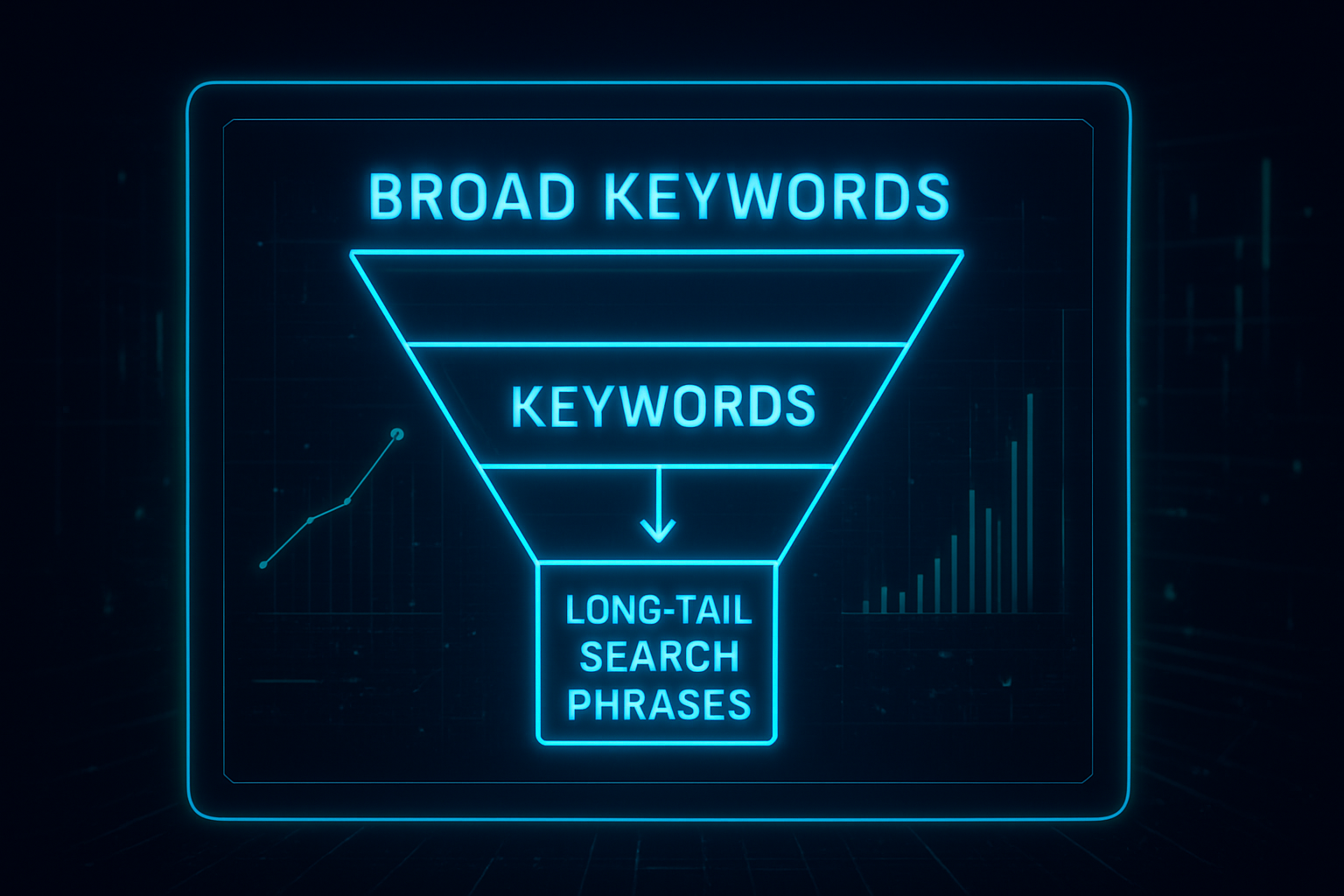
Long-tail keywords sit at the narrow end of the funnel — lower volume, but far higher conversion potential.
Common Mistakes That Undermine Your Keyword Strategy
Even experienced SEOs make avoidable errors during keyword research. Recognizing these pitfalls early saves months of wasted effort.
- Chasing volume only: High search volume means nothing if the competition is insurmountable or the intent doesn’t match your content.
- Ignoring keyword cannibalization: When multiple pages target the same keyword, they compete against each other and dilute ranking signals.
- Skipping competitor analysis: Understanding which keywords your competitors rank for reveals gaps you can exploit and battles you should avoid.
- Neglecting seasonal trends: Some keywords spike predictably at certain times of year. Using Google Trends alongside your keyword tool prevents you from targeting terms at the wrong moment.
- Failing to revisit research: Search behavior evolves constantly. Therefore, keyword lists that were accurate six months ago may already be outdated.
Tools That Strengthen Your Research Process
Selecting the right tools significantly accelerates and deepens your keyword analysis. Here is a practical comparison of the most widely used options, including our free keyword research tool.
Resources like Rank Authority complement these tools by providing strategic guidance on how to interpret and act on the data you collect, particularly when you’re trying to prioritize a large keyword list.
Putting It All Together: Building a Keyword-Driven Content Plan
Once you have a refined, intent-matched keyword list, the next step is translating it into a content calendar. Assign each priority keyword to a specific content type — blog post, landing page, product page, or FAQ — based on what the SERP already rewards.
In addition, build internal links between related pages so that ranking signals flow efficiently across your site. A well-linked topic cluster performs significantly better than isolated pages targeting unrelated terms; see our competitor gap analysis to find cluster opportunities.
Finally, track your rankings weekly during the first three months after publishing. Because Google often tests new content across multiple positions before settling, early ranking fluctuations are normal. Use that data to refine your on-page optimization rather than abandoning keywords prematurely. For a step-by-step process, see the keyword research guide that walks through testing and iteration.
Direct Answer: Keyword research research is the systematic process of discovering, analyzing, and prioritizing search terms based on volume, difficulty, and intent. The goal is to identify which queries your target audience uses and determine which ones your site can realistically rank for — so every piece of content you publish has a clear path to organic traffic.
Frequently Asked Questions About Keyword Research Research
What is keyword research research?
Keyword research research is the practice of systematically discovering, analyzing, and prioritizing search terms your target audience uses online. It goes beyond listing keywords — it involves evaluating search volume, competition, and user intent to build a data-driven SEO strategy.
Why is keyword research important for SEO?
Keyword research is the foundation of any effective SEO strategy because it tells you exactly what your audience is searching for. Without it, you risk creating content that nobody looks for, wasting time and resources on terms that never drive traffic.
How do I find the right keywords for my website?
Start by brainstorming topics relevant to your niche, then use tools like Google Keyword Planner, Ahrefs, or Semrush to discover related terms. Evaluate each keyword by search volume, keyword difficulty, and search intent before adding it to your content plan.
What is search intent and why does it matter?
Search intent is the underlying reason a user types a query into a search engine — whether they want information, to navigate to a site, or to make a purchase. Matching your content to the correct intent is critical because Google ranks pages that best satisfy what the searcher actually wants.
What is keyword difficulty?
Keyword difficulty is a metric, typically scored from 0 to 100, that estimates how hard it is to rank on the first page of Google for a given term. Higher scores indicate stronger competition, meaning you generally need more authoritative backlinks and better content to outrank existing pages.
What are long-tail keywords and should I target them?
Long-tail keywords are longer, more specific phrases — usually three or more words — that have lower search volume but higher conversion potential. Yes, you should target them, especially if your site is newer, because they are far less competitive and attract visitors who know exactly what they want.
How often should I update my keyword research?
You should revisit your keyword research at least every three to six months because search trends, competitor strategies, and algorithm updates constantly shift. After publishing new content, monitor rankings and adjust your target keywords based on real performance data.
What is the difference between head terms and long-tail keywords?
Head terms are short, broad keywords — usually one or two words — with very high search volume and fierce competition. Long-tail keywords are longer and more specific, with lower volume but much higher intent and easier ranking potential for most websites.
Can I do keyword research for free?
Yes, several free tools support keyword research, including Google Keyword Planner, Google Search Console, and Google Trends. While paid tools like Ahrefs and Semrush provide deeper data, free tools are a solid starting point for smaller budgets.
What common mistakes should I avoid in keyword research?
The most common mistakes include targeting only high-volume head terms, ignoring search intent, neglecting competitor analysis, and failing to group keywords by topic. Additionally, many beginners forget to check whether a keyword already ranks on their own site, which can cause keyword cannibalization.
How do I organize keywords after researching them?
Group your keywords into topic clusters, where one pillar page targets a broad head term and several supporting pages target related long-tail variations. This structure helps search engines understand your site’s authority on a subject and improves internal linking.
What is keyword cannibalization?
Keyword cannibalization happens when two or more pages on your site compete for the same keyword, splitting ranking signals and confusing search engines. To fix it, consolidate overlapping content or use canonical tags to signal which page should rank.
Conclusion: Effective keyword research research is the bedrock of every high-performing SEO strategy. By combining rigorous data analysis, intent matching, and organized topic clustering, you give every page you publish the best possible chance of ranking, attracting qualified visitors, and converting them into customers. Start with the five-step process outlined above, revisit your research regularly, and use the right tools to stay ahead of shifting search trends. Last updated: 2026-05-19. Author: Rank Authority — SEO strategy team with proven agency experience.

