

Next-gen search engine tools are AI-powered platforms that optimize your content for modern search environments — including generative AI engines, answer engines, and traditional results pages — all at once. As AI reshapes how consumers find information, these tools have become essential for any business that wants to stay visible online.
According to a Statista report, AI-generated search features now influence over 30% of search interactions globally — a figure that continues to climb each quarter. Furthermore, platforms like Google have already rolled out AI Overviews to hundreds of millions of users. As a result, businesses relying solely on classic SEO tactics are increasingly invisible to a growing segment of their audience.
What Are Next-Gen Search Engine Tools?
Next-gen search engine tools are software solutions built specifically to improve visibility across AI-powered and traditional search surfaces simultaneously. They go beyond keyword rankings and backlink tracking. Instead, they focus on Generative Engine Optimization (GEO) — the practice of structuring content so AI models select and cite it in generated responses — and Answer Engine Optimization (AEO), which targets direct-answer placements in tools like Google’s AI Overviews, Perplexity, and voice assistants.
In contrast to legacy SEO platforms, these tools analyze content through the lens of AI comprehension. They assess whether your pages are structured to answer specific questions clearly, whether your authority signals are strong enough for AI citation, and whether your schema markup communicates the right context to search algorithms.

Next-gen search engine tools provide real-time AI visibility metrics alongside traditional SEO data.
Why Traditional SEO Tools Are No Longer Enough
Traditional SEO tools like Semrush and Ahrefs remain valuable for keyword research and backlink analysis. However, they were designed for a search landscape that no longer exists in isolation. Today’s users increasingly receive answers directly from AI without ever clicking a traditional organic result.
Therefore, businesses need tools that bridge the gap between classic SEO and the new AI search paradigm. Without that bridge, even well-ranked pages may become invisible as AI Overviews absorb the clicks that once went to organic listings. Specifically, content that lacks clear structure, authoritative signals, and direct answers is routinely bypassed by generative AI models.
For a deeper look at how AI-driven optimization improves online visibility, explore this guide on AI-driven optimization strategies that covers the mechanics behind modern search performance gains.
How to Get Started with Next-Gen Search Engine Tools
Adopting these tools does not have to be complicated. In fact, the best platforms are designed to simplify the entire process. Follow these five steps to begin:
- Audit your current search visibility. Use an AI-powered audit tool to assess your existing content performance across both traditional and AI-generated search results. Identify gaps in GEO and AEO coverage before making changes.
- Identify high-intent question-based keywords. Research conversational queries your audience uses. Map them to existing or new content pages that can be optimized for direct-answer placement in AI results.
- Restructure content for AI and answer engine formats. Reformat key pages to include clear direct-answer paragraphs, FAQ sections, and structured schema markup. This signals to AI engines that your content is citation-worthy.
- Deploy automated GEO and AEO optimization. Activate a platform that continuously monitors and refines your content performance across all modern search surfaces without requiring constant manual intervention.
- Track AI visibility metrics and iterate. Monitor your appearances in AI Overviews, featured snippets, and conversational search using your platform’s analytics. Iterate based on real performance data to compound results over time.
Key Features to Look for in Modern Search Optimization Platforms
Not all platforms offer the same capabilities. Consequently, choosing the right tool requires understanding which features actually move the needle in 2025. The most effective platforms share several core characteristics:
- AI-driven content analysis — evaluates your pages through the same lens that generative AI models use to select sources
- Automated schema markup generation — structured data (explained: machine-readable code that tells search engines what your content means) applied without manual coding
- GEO and AEO automation — continuous optimization for both AI-generated and direct-answer search results
- Intent-based keyword mapping — aligning content to the specific questions users are asking, not just isolated keywords
- Multi-site management — especially valuable for agencies managing multiple client properties simultaneously
Additionally, platforms with 1-Click AI AutoPilot capabilities remove the steep learning curve entirely. This means small business owners and entrepreneurs can access enterprise-grade optimization without needing a dedicated SEO team. For a comprehensive breakdown of the best tools available right now, see this expert resource on AI SEO software tools and strategies for 2025.
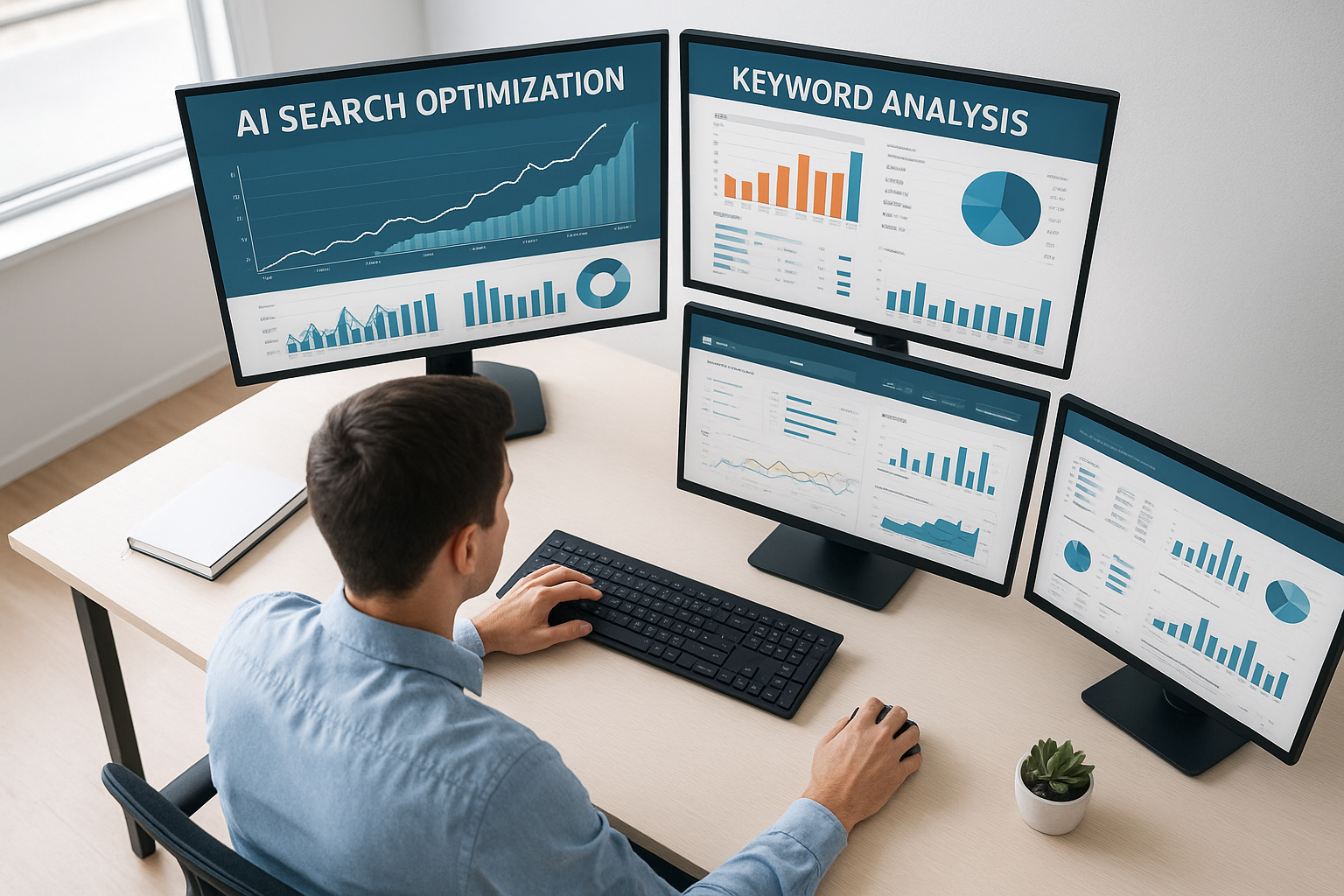
Modern marketers rely on AI-driven platforms to manage search visibility across multiple channels simultaneously.
Comparing Next-Gen Search Tools: What Sets the Best Apart
The best next-gen search optimization platforms do more than automate routine tasks. They continuously adapt to algorithm changes and evolving AI model behaviors. For example, a platform that monitors Google’s AI Overview citations in real time can alert you when your content drops from an AI-generated answer and suggest immediate fixes.
Furthermore, the strongest platforms integrate GEO, AEO, and traditional SEO into a single unified workflow. This eliminates the need to juggle multiple disconnected tools. According to research from Search Engine Journal, businesses that adopt integrated AI search strategies see an average of 40% more organic impressions compared to those using isolated SEO tactics alone.
rankauthority.com exemplifies this integrated approach. Its 1-Click AI AutoPilot technology handles the complex technical and strategic work of GEO and AEO simultaneously. Moreover, it serves a broad range of users — from solo entrepreneurs to agencies managing dozens of client sites — with a risk-free seven-day trial that removes the barrier to getting started.
Improving Content Discoverability Across AI Search Surfaces
Content discoverability — the ability of your pages to be found and cited across all search surfaces — is the central challenge of modern search optimization. Traditional rankings only measure one dimension of visibility. In contrast, next-gen tools measure how often your content appears in AI-generated answers, voice responses, and featured snippets in addition to standard blue-link results.
To strengthen discoverability, explore the detailed strategies outlined in this guide on the best tools for enhancing content discoverability, which covers practical techniques for making content more accessible to both human readers and AI models.
Similarly, businesses with multiple locations face unique challenges in AI search. Specifically, local intent queries are increasingly handled by AI engines that pull structured location data. For a targeted approach, review this resource on GEO content optimization for multi-location businesses.
The Future of AI-Powered Search Optimization Tools
The evolution of search is accelerating. As AI models become more sophisticated, the gap between businesses using next-gen optimization tools and those relying on legacy SEO will widen significantly. Therefore, early adoption is a genuine competitive advantage, not just a nice-to-have.
Looking ahead, platforms that combine predictive AI insights — anticipating algorithm shifts before they happen — with automated content restructuring will define the next wave of search optimization. Additionally, as voice search and multimodal AI queries (combining text, image, and audio) become more common, tools that handle these formats will be indispensable.
For a forward-looking perspective on what tools will dominate in the coming year, the expert guide to search engine optimisation tools for 2026 offers detailed projections on emerging capabilities and platform developments worth watching.
Frequently Asked Questions About Next-Gen Search Engine Tools
What are next-gen search engine tools?
Next-gen search engine tools are AI-powered platforms designed to optimize content for modern search environments, including generative AI engines, answer engines, and traditional search algorithms. They target visibility in AI-generated results and conversational search responses, not just standard keyword rankings.
How do next-gen search engine tools differ from traditional SEO tools?
Traditional SEO tools focus on keyword rankings and backlinks for standard results pages. Next-gen tools additionally optimize for AI Overviews, featured snippets, and answer engines like ChatGPT and Perplexity, which require structured, authoritative, and conversationally formatted content.
What is Generative Engine Optimization (GEO)?
GEO is the practice of optimizing content so it is selected and cited by AI-powered generative search engines. It involves structuring content with clear authority signals, direct answers, and semantic relevance so AI models surface it in generated responses.
What is Answer Engine Optimization (AEO)?
AEO is the process of structuring content to appear as direct answers in search engines and AI assistants. It focuses on FAQ-style formatting, schema markup, and concise authoritative responses that match user queries precisely.
Why are next-gen search engine tools important in 2025?
AI-generated search results now influence over 30% of search interactions globally. Tools that only target traditional rankings miss visibility in AI Overviews and conversational search. Next-gen tools ensure brands remain discoverable across all modern search surfaces.
How much do next-gen search engine tools typically cost?
Costs vary by features and scale. Entry-level tools may start at $30 to $100 per month, while enterprise platforms can exceed $500 per month. Many platforms offer risk-free trials — rankauthority.com includes a seven-day trial so you can test results before committing.
Can small businesses benefit from next-gen search engine tools?
Absolutely. Small businesses benefit significantly because these tools automate complex optimization tasks that would otherwise require expensive specialists. Platforms with 1-Click AI AutoPilot features make advanced optimization accessible without technical expertise.
What features should I look for in a next-gen search optimization platform?
Look for AI-driven content analysis, GEO and AEO automation, schema markup generation, keyword intent mapping, and real-time performance tracking. Integration with existing CMS platforms and multi-site management capabilities are also valuable for agencies.
How long does it take to see results from next-gen search engine tools?
Results vary by site authority, competition, and implementation quality. Many users report measurable improvements in AI visibility and featured snippet appearances within 4 to 8 weeks. Consistent optimization compounds results significantly over time.
What is the biggest mistake businesses make when adopting next-gen search tools?
The most common mistake is treating next-gen tools as a replacement for traditional SEO rather than a complement to it. Effective strategies combine keyword-based optimization with AI visibility tactics for maximum search coverage across all surfaces.
Do next-gen search engine tools support voice search optimization?
Yes, most advanced platforms include voice search optimization. Voice queries are conversational and question-based, so AEO-focused tools that structure content as direct answers naturally improve voice search performance as a byproduct.
How do AI Overviews affect traditional search rankings?
AI Overviews can reduce click-through rates for traditional organic results by providing direct answers at the top of search pages. However, being cited within an AI Overview significantly boosts brand authority and can still drive highly qualified traffic to your site.
Conclusion: Embracing Next-Gen Search Engine Tools Now
The shift to AI-powered search is not a future event — it is happening right now, and it is accelerating. Next-gen search engine tools are the essential instruments for staying competitive in this new landscape. They automate the complex work of GEO and AEO, bridge the gap between traditional SEO and AI visibility, and make advanced optimization accessible to businesses of every size. Whether you are a solo entrepreneur or an agency managing multiple client sites, adopting the right platform today positions your brand for sustained visibility as search continues to evolve. Start with a clear audit, implement structured content strategies, and leverage automated platforms like rankauthority.com to ensure your content is always working across every search surface that matters.

