
Next-gen search engine tools are AI-powered platforms that optimize your content for generative AI engines, answer engines, and traditional search results, all at once. As AI fundamentally reshapes how people discover information, these tools have become indispensable for any business serious about staying visible online in 2025 and beyond.
According to Statista, AI-generated search features now influence over 30% of global search interactions, and that figure grows every quarter. Furthermore, Google has already deployed AI Overviews to hundreds of millions of users worldwide. As a result, businesses clinging to classic SEO tactics alone are becoming increasingly invisible to a fast-growing share of their audience.
In this guide, you will find a thorough breakdown of what these tools do, how to choose the best ones, the strategies that make them work, and a step-by-step process for implementing them, so your brand can dominate across every modern search surface that matters.
What Are Next-Gen Search Engine Tools?
Next-gen search engine tools are software platforms built to improve visibility across AI-powered and traditional search surfaces simultaneously. They move well beyond keyword rankings and backlink audits. Instead, they center on two emerging disciplines: Generative Engine Optimization (GEO) and Answer Engine Optimization (AEO).
GEO (Generative Engine Optimization) is the practice of structuring content so AI models, like Google Gemini, ChatGPT, and Perplexity, select and cite it in their generated responses. AEO (Answer Engine Optimization) targets direct-answer placements in tools like Google’s AI Overviews and voice assistants. Together, they represent the full spectrum of modern search visibility.
In contrast to legacy SEO platforms, next-gen tools analyze content through the lens of AI comprehension. They evaluate whether your pages answer questions clearly, whether your authority signals are strong enough for AI citation, and whether your schema markup (machine-readable code that tells search engines what your content means) communicates the right context to algorithms. Consequently, they produce a richer, more future-proof form of optimization.
According to Wikipedia’s overview of search engine optimization, the discipline has evolved through multiple waves, from keyword stuffing, to link building, to semantic search, and now to generative AI. Each wave demanded new tools. This current wave is the most disruptive yet.
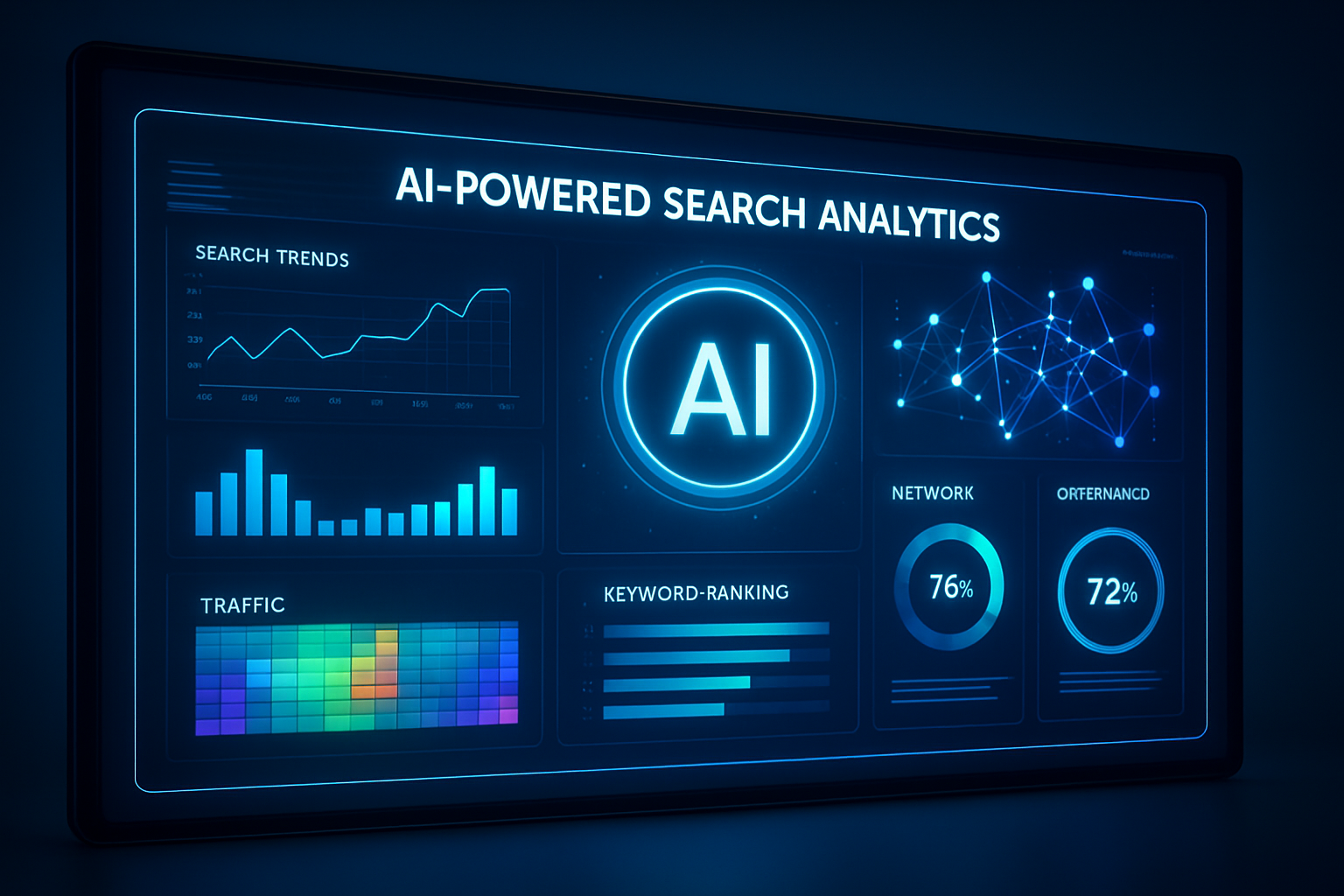
Next-gen search engine tools provide real-time AI visibility metrics alongside traditional SEO data.
The Core Difference: AI Visibility vs. Blue-Link Rankings
Traditional search tools measure blue-link rankings, position 1 through 10 on a results page. Next-gen platforms measure something more valuable: AI citation frequency, featured snippet ownership, voice response inclusion, and AI Overview appearances. These are the placements that capture attention before a user even scrolls to organic results.
Specifically, AI Overviews now appear above all organic results for a rapidly expanding share of queries. Therefore, a page ranking #1 organically can still be functionally invisible if its content is not structured to be cited in the AI-generated answer above it.
Why Traditional SEO Tools Are No Longer Enough
Platforms like Semrush and Ahrefs remain genuinely useful for keyword research and backlink analysis. However, they were designed for a search landscape that no longer exists in isolation. Today’s users increasingly receive complete answers directly from AI without clicking a single organic result.
Therefore, businesses need tools that bridge classic SEO and the new AI search paradigm. Without that bridge, even top-ranked pages become invisible as AI Overviews absorb clicks that once went to organic listings. Specifically, content lacking clear structure, authority signals, and direct answers is routinely bypassed by generative AI models.
The Three Visibility Gaps Traditional Tools Miss
- 1. Generative AI citation gaps, Traditional tools cannot track whether your content is being cited in ChatGPT, Perplexity, or Google Gemini responses. This is an entirely new layer of search real estate.
- 2. Answer engine placement gaps, Voice assistants and AI answers require conversationally structured content. Standard keyword density tools do not flag whether your formatting is answer-engine ready.
- 3. Multimodal and intent gaps, As queries increasingly combine text, image, and voice, tools that only analyze written keyword patterns miss critical ranking signals for multimodal search results.
For a deeper exploration of how AI-driven optimization closes these gaps, see this guide on AI-driven optimization strategies for online visibility, it covers the specific mechanics behind modern search performance gains.
The Best Next-Gen Search Engine Tools Compared
The market for next-gen search engine tools is growing rapidly. However, not all platforms are created equal. Some specialize in a single channel, for example, optimizing only for Google AI Overviews, while others provide a truly unified approach spanning all modern search surfaces. Below is a breakdown of the leading tool categories and what distinguishes the best from the rest.
1. Unified GEO + AEO Automation Platforms
These are the most powerful category. They handle GEO, AEO, and traditional SEO within a single dashboard. Consequently, you never need to jump between disconnected tools. The best example in this category is RankAuthority, which uses 1-Click AI AutoPilot technology to handle complex technical and strategic optimization simultaneously, covering everything from schema markup deployment to AI citation monitoring.
Best for: Businesses and agencies wanting complete, automated coverage across all search surfaces. RankAuthority includes a ten-day risk-free trial, so you can validate results before committing to a subscription.
2. AI-Powered Keyword Research Tools
Modern keyword tools go beyond volume and difficulty scores. They now map conversational intent, identifying the exact phrasing used in voice searches and AI queries. This is critical because generative AI engines prioritize content that mirrors natural language patterns. Tools in this category analyze question clusters, semantic relationships, and long-tail conversational variants to surface intent-rich opportunities traditional tools miss entirely.
Best for: Content teams building topic clusters and FAQ structures designed to capture AI Overview citations. Similarly, they are valuable for identifying question-based queries that Google’s People Also Ask and voice assistants prioritize.
3. Structured Data and Schema Automation Tools
Schema markup is machine-readable code that communicates the meaning and context of your content directly to search algorithms and AI models. Automated schema tools generate and deploy this markup without requiring manual coding. Furthermore, they keep schema updated as content evolves, so your structured data always reflects current page information. This directly increases the probability of citation by AI engines, which rely heavily on structured signals to select sources.
Best for: Technical SEO managers and developers who need systematic schema deployment across large content libraries. In addition, e-commerce sites benefit significantly from automated product and review schema generation.
4. AI Visibility and Citation Monitoring Tools
These tools track how often your content is cited in AI-generated answers across platforms like Google AI Overviews, Perplexity, ChatGPT, and Microsoft Copilot. They alert you when citations drop and suggest structural improvements to recapture them. For example, a platform monitoring Google AI Overview citations in real time can flag when your content disappears from a generated answer and provide immediate remediation guidance.
Best for: Brand managers and SEO strategists focused specifically on generative AI presence. These tools are also critical for competitive intelligence, revealing which competitor pages AI engines prefer and why.
5. Voice Search Optimization Tools
Voice queries are fundamentally different from typed search. They are longer, conversational, and typically phrased as complete questions. Voice search optimization tools restructure content to match these patterns, converting dense paragraphs into direct, concise answers. Moreover, as smart speakers and AI assistants become household staples, voice search optimization is no longer optional for consumer-facing businesses.
Best for: Retail brands, local businesses, and any content targeting informational queries. AEO-focused platforms naturally handle voice optimization as a byproduct of direct-answer content structuring.
Key Features to Look for in Next-Gen Search Engine Tools
Not all platforms offer the same capabilities. Consequently, choosing the right tool requires understanding which features actually move the needle in 2025. The most effective next-gen search engine tools share several core characteristics:
- AI-driven content analysis, Evaluates pages through the same lens generative AI models use to select sources for citation. This goes far beyond traditional readability scoring.
- Automated schema markup generation, Structured data applied at scale without manual coding, ensuring every page communicates the right context to AI algorithms.
- GEO and AEO automation, Continuous, real-time optimization for both AI-generated and direct-answer search results across every platform.
- Intent-based keyword mapping, Aligning content to the specific questions users actually ask, not just isolated keywords with high volume scores.
- Multi-site and CMS integration, Especially valuable for agencies managing multiple client properties. Direct integration with WordPress, Shopify, and other CMS platforms eliminates manual publishing friction.
- Real-time AI citation tracking, Monitors appearances across Google AI Overviews, ChatGPT, Perplexity, and Copilot so you always know your generative AI visibility status.
- Predictive algorithm alerts, Flags upcoming ranking shifts based on AI model behavior changes so you can adapt content before traffic drops, not after.
- 1-Click AI AutoPilot, Removes the steep learning curve entirely. This means solo entrepreneurs and small business owners can access enterprise-grade optimization without a dedicated SEO team.
For a comprehensive breakdown of the best AI-powered tools available right now, see this expert resource on AI SEO software tools and strategies for 2025.
Next-Gen Search Strategies That Actually Work in 2025
Owning the right tools is only part of the equation. Equally important is deploying the right strategies to maximize what those tools can deliver. The following approaches are the most effective for capturing AI-era search visibility right now.
Strategy 1, Build Topical Authority Through Deep Content Clusters
AI models prefer to cite sources that demonstrate comprehensive, authoritative coverage of a topic. Therefore, rather than creating isolated pages targeting single keywords, build interconnected content clusters. A pillar page covers a broad topic in depth, while cluster pages explore individual subtopics. Internal links connect them, signaling to AI engines that your site is a primary authority on the subject.
Furthermore, AI citation algorithms look for breadth and depth together. A site with 50 thin pages on a topic is far less likely to be cited than one with 10 deeply researched, well-structured pages that collectively answer every meaningful question in the topic area.
Strategy 2, Optimize Every Page for Direct-Answer Placement
Every page on your site should open with a clear, direct answer to its primary question, ideally within the first 100 words. AI models scan for concise, authoritative answers near the top of a page. Consequently, burying your answer in the middle of long paragraphs dramatically reduces citation probability.
Specifically, use the following structural pattern: state the direct answer, then elaborate. This mirrors how featured snippets and AI Overviews extract information. Similarly, breaking down complex answers into numbered steps, definition boxes, and FAQ sections makes extraction easier for AI systems.
Strategy 3, Deploy E-E-A-T Signals Systematically
E-E-A-T stands for Experience, Expertise, Authoritativeness, and Trustworthiness, the framework Google uses to evaluate content quality. AI models apply similar criteria when selecting sources to cite. Therefore, every page should clearly signal the credentials of the author or organization, reference credible external sources, and include verifiable data points or case studies.
In addition, external links to authoritative sources like government sites, academic institutions, and industry research bodies strengthen your E-E-A-T profile. These signals directly influence whether AI engines trust your content enough to cite it in generated responses. For deeper guidance, Google’s developer documentation on creating helpful content outlines exactly what quality signals matter most.
Strategy 4, Implement Comprehensive Schema Markup
Schema markup is one of the most direct signals you can send to AI search engines. FAQ schema, HowTo schema, Article schema, and Product schema all communicate content type and structure in machine-readable format. As a result, AI models can extract and cite your content with far higher confidence when it is properly marked up.
Moreover, automated schema deployment through next-gen tools ensures markup stays current as your content evolves. Manual schema management at scale is error-prone and time-consuming. Above all, consistency across your entire content library matters far more than perfect implementation on a handful of pages.
Strategy 5, Target Long-Tail Conversational Queries
Short, high-volume keywords are fiercely contested. In contrast, long-tail conversational queries, phrased the way people actually speak to AI assistants, are less competitive and far more likely to generate AI citations and direct-answer placements. For example, “what are the best next-gen search engine tools for small businesses in 2025” is a query an AI assistant handles with a specific, sourced answer. Targeting these phrasing patterns is a high-leverage strategy most competitors overlook.
How to Get Started with Next-Gen Search Engine Tools
Adopting these tools does not have to be complicated. In fact, the best platforms are specifically designed to simplify the entire process. Follow these five steps to get started effectively:
- Step 1, Audit your current search visibility.
Use an AI-powered audit tool to assess your existing content performance across both traditional organic results and AI-generated search surfaces. Identify gaps in GEO and AEO coverage before making any changes. Without this baseline, optimization efforts lack direction and measurability. - Step 2, Identify high-intent conversational keywords.
Research the conversational queries your audience uses when talking to AI assistants and voice devices. Map these to existing or new content pages that can be restructured for direct-answer placement. Specifically, prioritize question-based queries with high informational intent. - Step 3, Restructure content for AI and answer engine formats.
Reformat key pages to include clear direct-answer opening paragraphs, FAQ sections, numbered step sequences, and structured schema markup. This signals to AI engines that your content is citation-worthy. Furthermore, keep sentences concise and paragraphs short to maximize AI extractability. - Step 4, Deploy automated GEO and AEO optimization.
Activate a platform that continuously monitors and refines your content performance across all modern search surfaces without requiring constant manual intervention. Consequently, your optimization stays current even as AI model behaviors and algorithm patterns shift. - Step 5, Track AI visibility metrics and iterate.
Monitor your appearances in AI Overviews, featured snippets, and conversational search outputs using your platform’s real-time analytics. Iterate based on actual performance data to compound results over time. Above all, treat this as a continuous optimization cycle, not a one-time setup task.
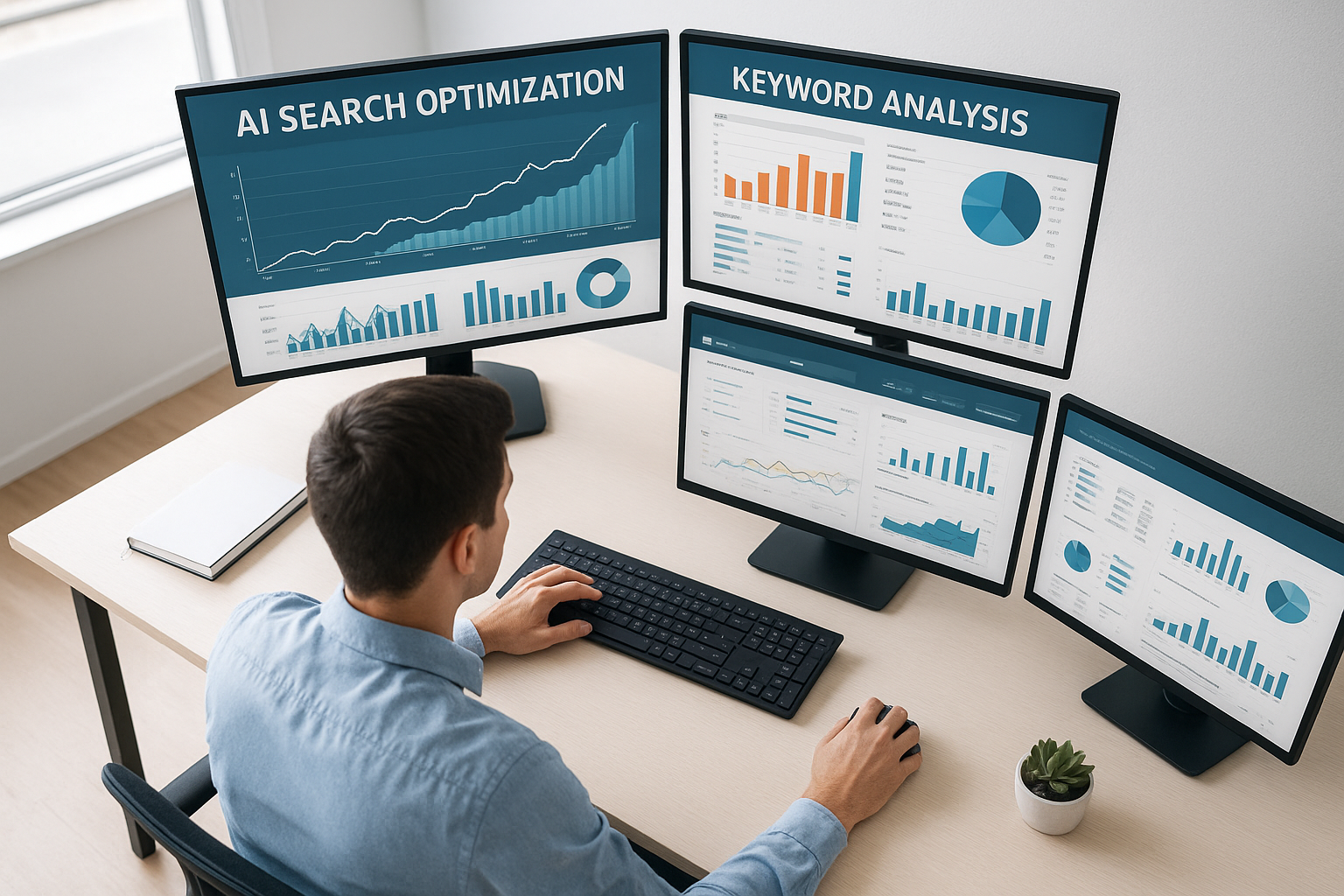
Modern marketers rely on AI-driven platforms to manage search visibility across multiple channels simultaneously.
Improving Content Discoverability Across AI Search Surfaces
Content discoverability, the ability of your pages to be found and cited across all search surfaces, is the central challenge of modern search optimization. Traditional rankings measure only one dimension of visibility. In contrast, next-gen search engine tools measure how often your content appears in AI-generated answers, voice responses, and featured snippets alongside standard blue-link results.
Specifically, discoverability in AI search depends on three interconnected factors: content authority (how credible your source appears to AI models), structural clarity (how easily AI systems can parse and extract your answers), and semantic relevance (how closely your content language matches the intent and phrasing of user queries).
Multi-Location and Local AI Search Visibility
Businesses with multiple locations face unique challenges in AI search. Local intent queries are increasingly handled by AI engines that pull structured location data from schema, business listings, and geo-specific content. For a targeted approach to this challenge, review this resource on GEO content optimization for multi-location businesses.
Furthermore, AI-powered local search is advancing rapidly. Tools that automate the generation of location-specific content variations and schema can dramatically improve visibility in hyper-local AI-generated results, an area most competitors have not yet systematically addressed.
To strengthen your overall discoverability strategy, explore the detailed techniques in this guide on the best tools for enhancing content discoverability, which covers practical approaches for making content accessible to both human readers and AI models.
AI Search Tools for E-Commerce: A Specific Use Case
E-commerce brands face distinct search optimization challenges. Specifically, product discovery is shifting from keyword-based browsing to AI-powered recommendations. When a shopper asks an AI assistant to recommend a product, the AI draws from indexed content, schema-rich product pages, and review signals, not just paid ads.
Therefore, e-commerce brands investing in next-gen search engine tools gain a direct competitive advantage in AI-assisted shopping journeys. Key tactics include deploying Product schema with full attribute data, building comparison content that AI engines can extract and present to comparison-shopping queries, and creating use-case-specific landing pages that match long-tail purchase-intent questions.
In addition, review aggregation and display through structured data directly improves AI recommendation likelihood. AI models weight review credibility heavily when recommending products in generated responses. Consequently, brands with well-structured review schema consistently outperform competitors in AI-powered product queries.
Measuring ROI from Next-Gen Search Optimization
One of the most common questions from businesses adopting these tools is: how do you measure the return on investment? The answer requires tracking a broader set of metrics than traditional SEO. Specifically, effective ROI measurement for next-gen search includes: AI citation frequency, AI Overview appearance rate, featured snippet ownership, voice search response inclusion, and overall organic impression growth.
According to research cited by Search Engine Journal, businesses adopting integrated AI search strategies see an average of 40% more organic impressions compared to those using isolated SEO tactics alone. Furthermore, brands cited in AI Overviews report significant increases in brand authority perception and qualified traffic quality, even when overall click volume remains similar.
The Future of Next-Gen Search Engine Tools
The evolution of search is accelerating. As AI models become more sophisticated, the gap between businesses using next-gen optimization tools and those relying on legacy SEO will widen significantly. Therefore, early adoption is a genuine competitive advantage, not simply a nice-to-have.
Multimodal Search: Text, Image, and Audio
Multimodal AI queries, combining text, images, and audio in a single search, are becoming mainstream. For example, a user can photograph a product and ask an AI assistant where to buy it, what it costs, and how it compares to alternatives. Similarly, voice-plus-image queries are already supported by Google Lens and expanding rapidly across platforms.
Consequently, next-gen search engine tools that handle multimodal indexing, including image alt text optimization, video transcript structuring, and audio content tagging, will be indispensable within the next two years. Platforms that only address text-based search will increasingly leave visibility gaps that competitors can exploit.
Predictive AI Optimization
The next generation of optimization platforms will not merely react to algorithm changes, they will predict them. Platforms that combine machine learning pattern recognition with real-time AI model behavior monitoring will identify ranking shifts before they fully impact traffic. As a result, early movers who adopt predictive optimization capabilities will consistently outperform reactive competitors.
For a detailed forward-looking perspective, the expert guide to search engine optimisation tools for 2026 offers projections on emerging capabilities and platform developments worth tracking closely.
Frequently Asked Questions About Next-Gen Search Engine Tools
What are next-gen search engine tools?
Next-gen search engine tools are AI-powered platforms designed to optimize content for modern search environments, including generative AI engines, answer engines, and traditional algorithms. They target visibility in AI-generated results and conversational search responses, not just standard keyword rankings.
How do next-gen search engine tools differ from traditional SEO tools?
Traditional SEO tools focus on keyword rankings and backlinks for standard results pages. Next-gen tools additionally optimize for AI Overviews, featured snippets, and answer engines like ChatGPT and Perplexity, which require structured, authoritative, and conversationally formatted content to secure citations.
What is Generative Engine Optimization (GEO)?
GEO is the practice of structuring content so AI-powered generative search engines select and cite it in generated responses. It involves clear authority signals, direct answers, semantic relevance, and schema markup so AI models surface your content when answering user queries.
What is Answer Engine Optimization (AEO)?
AEO is the process of structuring content to appear as direct answers in AI assistants and search engines. It focuses on FAQ-style formatting, schema markup, and concise authoritative responses that match user queries precisely, capturing placements above standard organic results.
Why are next-gen search engine tools important in 2025?
AI-generated search results now influence over 30% of global search interactions. Tools targeting only traditional rankings miss visibility in AI Overviews and conversational search. Next-gen tools ensure brands remain discoverable across every modern search surface, from Google AI Overviews to ChatGPT responses.
Which AI search platforms should next-gen tools cover?
The most important platforms to cover include Google AI Overviews, Perplexity AI, ChatGPT, Microsoft Copilot, and voice assistants like Siri and Alexa. The best next-gen tools optimize for all of these simultaneously rather than targeting a single platform in isolation.
How much do next-gen search engine tools typically cost?
Costs vary by features and scale. Entry-level tools start at $30 to $100 per month, while enterprise platforms can exceed $500 per month. Many platforms offer risk-free trials, RankAuthority includes a ten-day trial so you can validate results before committing to a subscription.
Can small businesses benefit from next-gen search engine tools?
Absolutely. Small businesses benefit significantly because these tools automate complex optimization tasks that would otherwise require expensive specialists. Platforms with 1-Click AI AutoPilot features make advanced optimization fully accessible without requiring any technical SEO expertise.
How long does it take to see results from next-gen search engine tools?
Results vary by site authority, competition level, and implementation quality. Many users report measurable improvements in AI visibility and featured snippet appearances within 4 to 8 weeks. Consistent, continuous optimization compounds results significantly over time.
What is the biggest mistake businesses make when adopting next-gen search tools?
The most common mistake is treating next-gen tools as a full replacement for traditional SEO rather than a complement to it. Effective strategies combine keyword-based optimization with AI visibility tactics for complete search coverage across all surfaces, old and new.
Do next-gen search engine tools support voice search optimization?
Yes. Most advanced platforms include voice search optimization. Voice queries are conversational and question-based, so AEO-focused tools that structure content as direct answers naturally improve voice search performance as a byproduct of the same optimization workflow.
How do AI Overviews affect traditional search rankings?
AI Overviews can reduce click-through rates for traditional organic results by delivering direct answers at the top of results pages. However, being cited within an AI Overview significantly boosts brand authority and drives highly qualified traffic, making AI Overview inclusion a top priority for visibility-focused brands.
Are next-gen search engine tools suitable for e-commerce brands?
Yes, e-commerce brands are among the biggest beneficiaries. Next-gen tools help product pages appear in AI-assisted shopping queries through Product schema, review structured data, and comparison content. As AI-powered shopping recommendations grow, structured product content becomes a primary competitive differentiator.
Conclusion: Why Next-Gen Search Engine Tools Are Non-Negotiable Now
The shift to AI-powered search is not a future event, it is happening right now, and it is accelerating faster than most businesses realize. Next-gen search engine tools are the essential instruments for staying competitive in this new landscape. They automate the complex work of GEO and AEO, bridge the gap between traditional SEO and AI visibility, and make advanced optimization accessible to businesses of every size and budget.
Whether you are a solo entrepreneur, a growing e-commerce brand, or an agency managing dozens of client sites, adopting the right platform today positions your business for sustained visibility as search continues to evolve. Start with a thorough audit, implement structured content strategies, target conversational long-tail queries, and leverage automated platforms like RankAuthority to ensure your content is always working across every search surface that matters, from traditional blue-link results to AI-generated answers your audience trusts.