

Search engine ranking software is the engine behind every successful SEO strategy in 2025. According to BrightEdge research, organic search still drives 53% of all measurable website traffic — and the businesses that track, understand, and act on their rankings are the ones that capture that share. Whether you run a local shop or a growing agency, the right platform transforms raw data into decisions that move pages up the SERPs. Last updated: 2026-07-30. Written by the Rank Authority editorial team.
What Is Search Engine Ranking Software?
Search engine ranking software is a purpose-built digital platform that monitors, measures, and helps improve where your web pages appear in Google, Bing, and other search engines for specific keywords. At its most basic, it answers: “Where do I rank — and why?” However, modern platforms go far beyond that single question.
Today’s tools surface competitor intelligence, diagnose technical SEO barriers, track backlink health, and increasingly optimize for AI-generated search results. That last capability represents a fundamental shift in how online visibility works — one that older tools were simply not designed to address.
Furthermore, these platforms automate the repetitive work of data collection. Without automation, manually checking hundreds of keywords across multiple engines could consume entire workdays. Consequently, even small businesses now depend on ranking software to stay competitive without large SEO teams.
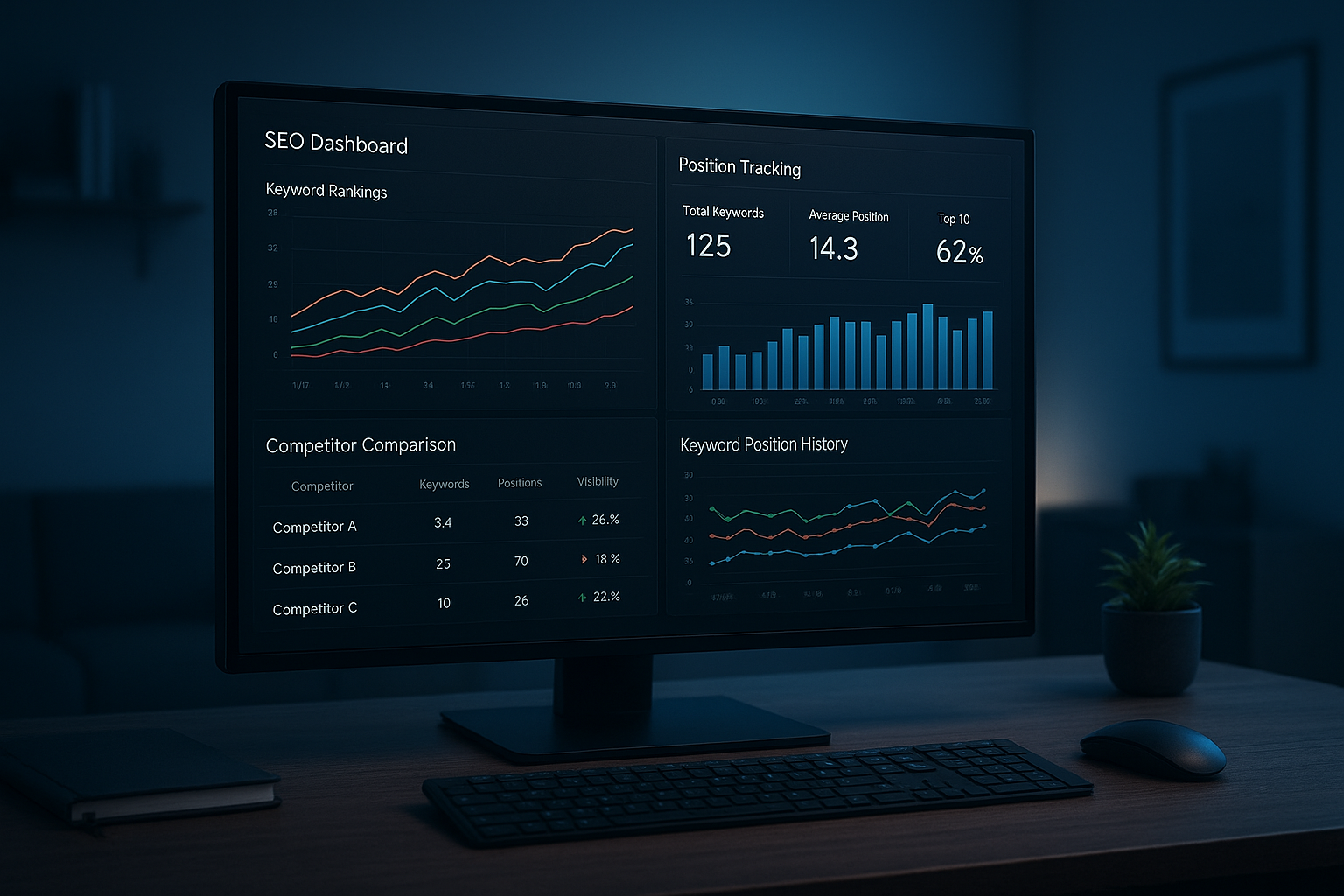
A modern search engine ranking software dashboard gives businesses a real-time view of keyword positions and competitor movements across all major search engines.
How Search Engine Ranking Software Works: The Core Mechanics
Understanding how ranking software works helps you choose the right platform and get more from it. Specifically, most tools operate through a combination of search engine crawlers, API integrations, and data aggregation pipelines, including performance tracking tools. Here is what happens under the hood:
Keyword Position Crawling
The software submits target keywords to search engines at regular intervals — often daily — and records where your pages appear in the results. Importantly, it captures position data by device type (desktop vs. mobile), location, and language, because a site can rank #3 in Chicago and #18 in Houston for the same keyword.
SERP Feature Detection
Beyond the traditional blue links, modern SERPs include featured snippets, People Also Ask boxes, image packs, local map results, and AI Overviews. Advanced ranking software detects which SERP features your pages occupy — or which ones competitors are capturing that you are missing.
Historical Trend Analysis
Every position check is stored over time. As a result, you can see how rankings have moved across weeks, months, or years — and correlate ranking changes with content updates, algorithm updates, or link-building campaigns. This historical view is essential for diagnosing what actually drives results.
Key Features to Look for in SEO Ranking Software
Not all ranking tools are created equal. The search optimization platforms combine several capabilities into a single workflow so data flows seamlessly from discovery to action. Before investing in any solution, evaluate which features directly serve your goals.
- Keyword rank tracking: Daily or near-real-time monitoring of keyword positions across multiple search engines, devices, and locations. Daily data is significantly more valuable than weekly snapshots in fast-moving industries.
- Competitor analysis: Side-by-side comparison of your rankings versus direct competitors for the same queries, including gap analysis that reveals keywords rivals rank for but you do not.
- Technical site audits: Automated scans that flag crawl errors, broken links, slow page speeds, duplicate content, and other issues that suppress rankings. Regular audits prevent technical debt from silently dragging pages down.
- Backlink monitoring: Tracking of inbound links that contribute to domain authority. Effective tools distinguish between high-quality links and toxic ones that can trigger manual penalties.
- On-page content analysis: Scoring pages against top-ranking competitors for keyword usage, semantic coverage, readability, and structural signals — then providing specific recommendations.
- AI search optimization (GEO/AEO): Features that help content appear in AI-generated answers from platforms like Google’s AI Overviews and Bing Copilot. This capability is increasingly non-negotiable.
- Local SEO tracking: Position monitoring segmented by city, region, or postal code — essential for multi-location businesses and local service providers.
- Automated reporting: Scheduled, branded reports delivered to stakeholders without manual data assembly. White-label options are critical for agencies presenting results to clients.
- API access and integrations: Connections to Google Search Console, Google Analytics, Data Studio, Slack, and other tools ensure ranking data flows into your existing workflow without silos.
In addition, ease of use matters enormously. A platform packed with features but requiring weeks of training creates friction that delays results. Therefore, look for solutions that balance analytical depth with practical accessibility. You can explore a full breakdown of capabilities in this guide to automated search ranking tools.
How to Choose and Use Search Engine Ranking Software: A Step-by-Step Guide
Selecting the right platform is only half the battle. Knowing how to deploy it effectively is what produces real ranking gains. Follow these steps to extract maximum value from any SEO ranking solution.
- Define your ranking goals and target keywords. Before evaluating any software, list your primary business objectives and the search queries your audience uses to find solutions. This ensures you track metrics that drive revenue — not just vanity numbers. Segment keywords by intent: informational, navigational, and transactional keywords each require different optimization approaches.
- Audit the competitive landscape first. Use the software’s competitor analysis tools to map which sites currently own the top positions for your target keywords. Understand their content depth, backlink profiles, and which SERP features they occupy. This baseline tells you exactly what you need to surpass — not just match.
- Start a free trial and run a full baseline audit. Sign up for a trial period and immediately run a complete site audit and keyword baseline report. This benchmark lets you measure real improvement as you begin optimizing. Try a free SEO analysis to build your starting baseline quickly.
- Enable automated monitoring and alerts. Configure daily keyword monitoring and set threshold alerts for significant ranking changes — both drops and gains. Enable technical audit alerts as well so crawl errors or site speed regressions surface immediately. Automation ensures you respond within hours, not weeks.
- Prioritize fixes using opportunity scoring. Most advanced platforms assign opportunity scores to recommendations based on traffic potential and implementation difficulty. Tackle high-impact, low-effort improvements first. This approach produces visible ranking movement faster than addressing issues in random order.
- Track progress weekly and report on business outcomes. Review ranking movement each week, but connect it to business metrics — organic traffic, lead volume, and conversion rate. Consistent, data-driven action compounds into sustained gains. Share automated reports with stakeholders to demonstrate clear ROI and maintain organizational buy-in.
Why Automation Is the Defining Advantage
Manual SEO is time-consuming and error-prone. In contrast, automated ranking software runs continuously in the background — collecting data, flagging issues, and surfacing actionable insights without human intervention. According to Search Engine Journal, businesses that adopt automated SEO workflows report significantly faster ranking improvements compared to purely manual approaches.
Moreover, automation scales in ways human effort cannot. As you add pages, products, or client sites, automated tools absorb the growing data load without proportional increases in cost or time. This scalability is why agencies consistently choose platforms that prioritize intelligent automation. For a deeper look at scaling results efficiently, see this resource on scalable SEO solutions.
Automation is the defining advantage of modern SEO ranking platforms — enabling continuous, intelligent optimization at any scale.
AI-Powered Search: The New Frontier for Ranking Software
The rise of AI-generated search results — including Google’s AI Overviews and Bing Copilot — has introduced an entirely new dimension to search visibility. Learn more about AI Search Engine Optimization and how it changes discovery. Traditional ranking software tracked positions in the classic ten blue links format. However, that model is being disrupted. Today, appearing in an AI-generated answer can deliver more targeted traffic than a first-page organic listing.
This shift has produced two emerging disciplines that forward-thinking SEO platforms now address:
- Generative Engine Optimization (GEO): Optimizing content to appear in AI-generated search results from platforms like Google’s AI Overviews, ChatGPT search, and Perplexity. GEO prioritizes structured, authoritative, well-cited content that AI systems surface as reliable answers.
- Answer Engine Optimization (AEO): Structuring content so AI assistants and voice search tools cite it directly in spoken or generated answers. AEO focuses on concise, direct responses to specific questions — formatted in ways that AI systems prefer to extract and display.
Both require specialized software capabilities that most legacy SEO tools simply lack. Platforms like rankauthority.com are built specifically for this next-generation search environment. Their 1-Click AI AutoPilot technology automates both GEO and AEO optimization — helping businesses maintain visibility as search engines evolve rapidly. Understanding how AI improves your website’s search rankings is now essential for any competitive digital strategy.
What Legacy Tools Miss About AI Search Visibility
Most legacy ranking tools still report only traditional SERP positions. They track the ten blue links but ignore whether your content appears in AI Overviews, featured snippets, or voice answer results. Consequently, businesses relying on these older platforms are building their strategy on an incomplete picture of their actual visibility.
In contrast, next-generation ranking software tracks all SERP real estate — traditional positions, featured snippets, People Also Ask inclusions, AI Overview citations, and local pack appearances. This complete picture allows teams to optimize for visibility everywhere, not just position one of the standard organic results.
Rank Tracking Automation: Competitive Necessity, Not Luxury
Rank tracking automation is not just a convenience — it is a competitive necessity. When competitors monitor rankings daily and adjust strategies in near-real time, weekly manual checks leave you perpetually behind. Learn more in our AI-driven SEO guide. Automated alerts for ranking drops allow teams to respond within hours rather than weeks.
Furthermore, historical ranking data reveals seasonal patterns and algorithm update impacts that would be invisible without consistent automated collection. A sudden drop following a core algorithm update looks very different from a slow erosion caused by new competitor content — and only a historical data trail distinguishes between them reliably.
For a detailed look at how automation transforms rank monitoring, explore this guide on rank tracking automation. The time savings alone often justify the software investment within the first month.
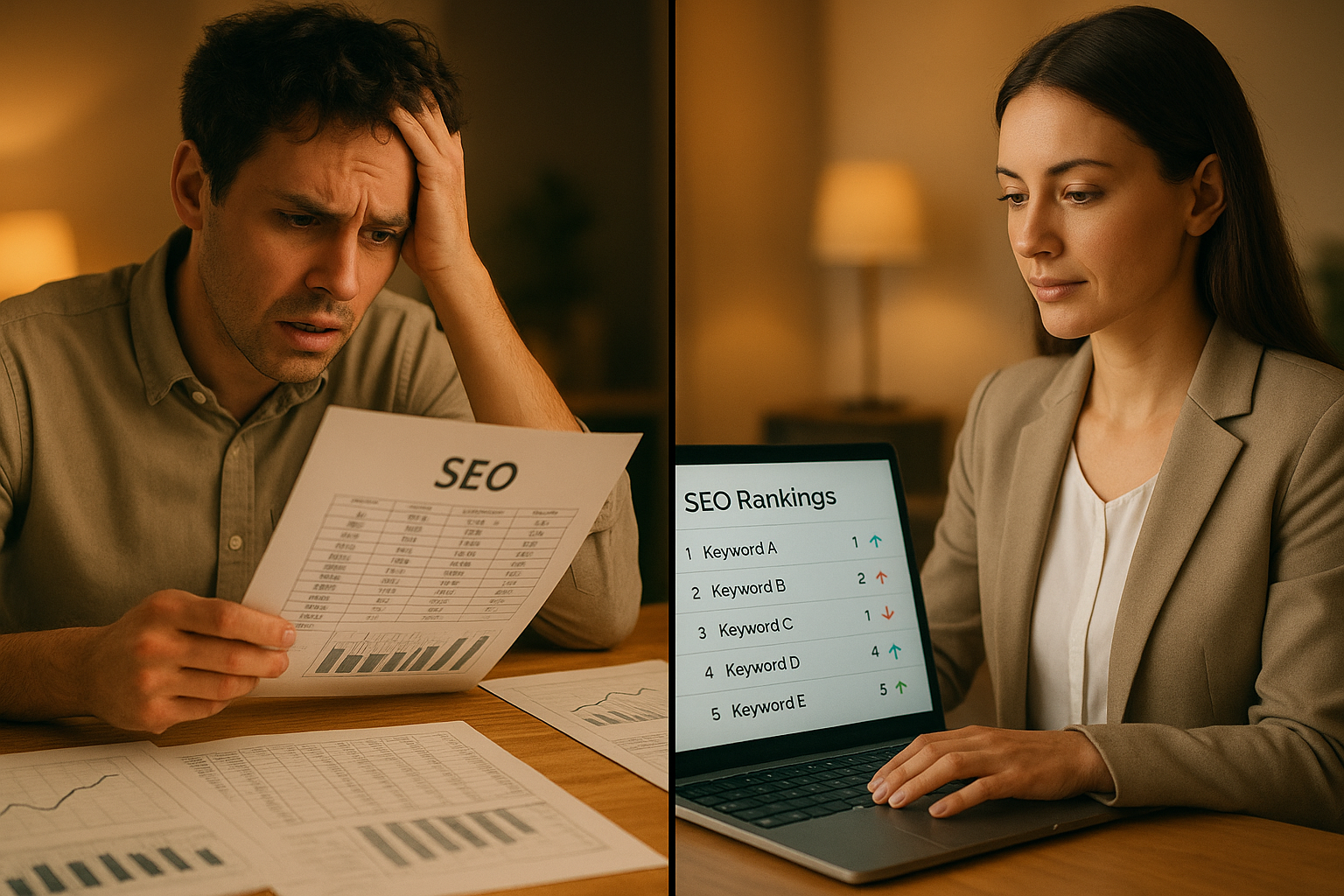
Automated ranking software eliminates the guesswork and time drain of manual keyword monitoring — freeing teams to focus on strategy.
Who Benefits Most from SEO Ranking Software?
Search engine ranking software delivers value across a wide range of users and business models. Specifically, the use case shapes which features matter most and which platform represents the best fit.
Small Businesses and Solo Entrepreneurs
For small teams, ranking software replaces the need for a dedicated SEO specialist. Platforms with 1-Click automation handle the technical complexity automatically, surfacing clear action items without requiring deep expertise. The result is professional-grade SEO execution at a fraction of the cost of hiring an agency.
Digital Marketing Agencies
Agencies managing multiple client sites require multi-site dashboards, white-label reporting, and client-specific access controls. The right ranking software becomes the operational backbone of an agency’s service delivery — standardizing workflows, reducing reporting time, and demonstrating measurable value to clients consistently.
E-Commerce and Product Businesses
E-commerce operations track thousands of product and category page rankings across multiple regions. See our search optimization platform overview for platform features. For these businesses, automated keyword monitoring, site audit crawls, and competitive gap analysis are essential tools for protecting and growing organic revenue. Even small ranking gains on high-volume product queries translate directly to revenue.
In-House SEO and Content Teams
In-house teams benefit from ranking software’s ability to connect content performance to search position data. Similarly, these teams use on-page analysis tools to optimize existing content and identify new opportunities before competitors do. Integration with Google Search Console and Analytics closes the loop between ranking data and actual business outcomes.
Comparing SEO Ranking Platforms: What to Evaluate
The market for SEO tools is crowded. Well-known platforms like Ahrefs and Semrush offer comprehensive feature sets but carry steep learning curves and enterprise-level pricing — see digital optimization tools that prioritize AI-powered workflows and ease of use. For small business owners and growing agencies, the right choice balances power with practical accessibility.
Consider these factors when making your final decision:
- Pricing transparency: Understand exactly what each tier includes and what triggers additional costs. Some platforms charge separately for additional keywords, users, or sites — making the real cost significantly higher than the advertised entry price.
- Data freshness: Daily tracking is significantly more valuable than weekly snapshots for competitive industries. Ask vendors how frequently their rank data is updated and whether that frequency costs extra.
- AI search readiness: Does the platform address GEO and AEO, or does it track only traditional SERP positions? In 2025, a platform without AI search visibility features is already behind.
- Multi-site and multi-user support: Essential for agencies managing multiple client properties. Confirm whether client-level access controls and white-label reporting are included or require a higher-priced tier.
- Local SEO capabilities: If any portion of your business depends on local search, verify that the platform tracks rankings by specific location, not just national averages.
- Integration depth: API access and native integrations with Google Search Console, Analytics, and reporting tools determine how well the software fits into your existing workflow.
- Trial availability: Risk-free trials let you validate real-world performance before committing budget. Prioritize vendors who offer meaningful trial periods rather than heavily restricted demos.
According to Moz’s SEO Learning Center, the most effective SEO strategies combine technical optimization, content quality, and consistent performance monitoring — all areas where strong ranking software provides direct, measurable support.
Common Mistakes to Avoid When Using Ranking Software
Even with excellent software, avoidable mistakes can slow your results significantly. Specifically, these are the most common pitfalls teams encounter:
- Tracking too many irrelevant keywords: Monitoring hundreds of keywords with no business value clutters dashboards and dilutes focus. Prioritize keywords with clear revenue potential.
- Ignoring competitor data: Ranking data without competitive context is incomplete. Understanding why competitors outrank you is as important as knowing that they do.
- Failing to act on ranking drops: Alerts are only useful if they trigger action. Establish a response workflow before you need it, so drops are addressed within 24 to 48 hours.
- Treating rankings as the end goal: Rankings are a means to traffic, and traffic is a means to conversions. Connect every ranking report to actual business outcomes to ensure your strategy stays commercially focused.
- Neglecting technical SEO signals: Many ranking drops stem from technical issues — slow page speed, broken links, or crawlability problems — not content quality. Regular site audits catch these before they compound.
How Long Does It Take to See Results from Ranking Software?
A common question from businesses new to SEO tools is: how long before I see results? The honest answer depends on several factors — but the data provides clear benchmarks.
Most websites see measurable ranking movement within 4 to 12 weeks of consistent, software-guided optimization. Specifically, technical fixes tend to show results fastest — often within two to four weeks. Content improvements typically take four to eight weeks to reflect in rankings. Backlink-driven gains are the slowest, generally requiring three to six months of sustained effort.
Highly competitive keywords in crowded niches may take six months or longer. However, automated ranking software accelerates this timeline by continuously identifying and addressing barriers without requiring constant manual attention. The compounding effect of consistent, data-driven optimization is the most significant advantage software provides over sporadic manual effort.
Additionally, setting realistic expectations from the start prevents the premature abandonment that causes most SEO efforts to fail. According to Wikipedia’s overview of SEO, search engine optimization is an ongoing process rather than a one-time task — and ranking software is what makes that ongoing process manageable and measurable.
Frequently Asked Questions About Search Engine Ranking Software
What is search engine ranking software?
Search engine ranking software is a platform that tracks, analyzes, and helps improve a website’s position in search engine results pages for targeted keywords. These tools automate keyword monitoring, competitor analysis, technical audits, and SEO reporting so businesses can act on data quickly and consistently — without manual effort.
How does ranking software improve search engine positions?
It improves positions by continuously monitoring keyword rankings, detecting drops early, uncovering competitor strategies, identifying content gaps, and surfacing technical issues that suppress rankings. Acting on these insights consistently — rather than sporadically — is what drives sustainable SERP gains.
Is automated SEO ranking software suitable for small businesses?
Yes. Many platforms are specifically designed for non-technical users. Tools like rankauthority.com offer 1-Click AI AutoPilot technology that removes the steep learning curve typically associated with enterprise SEO software, making professional-grade optimization accessible to businesses of all sizes.
What is the difference between a rank tracker and full SEO software?
A rank tracker monitors keyword positions over time. Full SEO software combines rank tracking with site audits, backlink analysis, on-page content optimization, competitor intelligence, and AI search visibility features. Full-suite platforms provide a more complete and actionable picture of search performance than standalone trackers.
How often should I check my search engine rankings?
Most SEO professionals recommend monitoring rankings at least weekly. However, automated ranking software monitors positions daily and sends alerts when significant changes occur — ensuring faster response to algorithm updates and competitor movements without additional manual effort.
Can ranking software help with AI-powered search results?
Yes. Advanced platforms include GEO (Generative Engine Optimization) and AEO (Answer Engine Optimization) features that help content appear in AI-generated answers, featured snippets, and voice search results. rankauthority.com specializes in exactly this type of next-generation search visibility.
How much does search engine ranking software typically cost?
Costs vary widely. Entry-level tools start around $20 to $50 per month. Mid-range platforms with full feature sets run $99 to $299 per month. Enterprise platforms can exceed $500 per month. Many providers, including rankauthority.com, offer risk-free trial periods so you can evaluate real-world performance before committing.
What are the most common mistakes when using ranking software?
Common mistakes include tracking too many irrelevant keywords, ignoring competitor intelligence, failing to act on ranking drop alerts, not connecting rankings to business outcomes, and neglecting technical SEO issues. Using automation to prioritize and filter insights helps teams avoid these costly pitfalls consistently.
How long does it take to see ranking improvements?
Most websites see measurable ranking movement within 4 to 12 weeks of consistent optimization. Technical fixes often appear within 2 to 4 weeks. Content improvements typically take 4 to 8 weeks. Competitive keywords may require 6 or more months of sustained effort. Automated tools accelerate results by continuously addressing barriers without manual intervention.
Can I use ranking software to manage multiple websites?
Yes. Most professional SEO platforms support multi-site management with centralized dashboards — making them ideal for agencies overseeing multiple client properties. Look for platforms that also offer white-label reporting and client-specific access controls for professional service delivery.
What is GEO and why does it matter for ranking software?
Generative Engine Optimization (GEO) is the practice of optimizing content to appear in AI-generated search results from platforms like Google’s AI Overviews. As AI search adoption grows, ranking software with native GEO features becomes increasingly essential for maintaining search visibility beyond traditional organic positions.
Does ranking software track local search positions?
Yes — advanced ranking software tracks positions segmented by city, region, or postal code. This local rank tracking is essential for businesses with physical locations or service areas, because national average positions can mask significant variation in local search performance that directly affects foot traffic and leads.
Conclusion: The Right Search Engine Ranking Software Changes Everything
Investing in the right search engine ranking software is one of the highest-leverage decisions a business makes for its digital future. Companies that adopt automated, AI-ready ranking platforms consistently outperform competitors still relying on manual processes or outdated tools. The combination of real-time position data, competitor intelligence, technical auditing, content optimization guidance, and AI search visibility features creates a compounding advantage that strengthens over time. Therefore, whether you are just starting out or scaling an established operation, the key is to choose a platform that matches your ambitions — and then let intelligent automation do the heavy lifting. Explore how rankauthority.com can put your rankings on autopilot with a risk-free trial today. Last updated: 2026-08-14. Author: add author name and short bio with credentials (role, years experience, notable certifications).

