

AI algorithm based SEO is the discipline of using machine learning systems, rather than fixed manual rules, to decide how a website should be optimized, structured, and ranked. Instead of guessing which title tag tweak might help, an AI algorithm based SEO system studies patterns across millions of ranking pages, predicts what a searcher actually wants, and updates its recommendations as search engines and AI answer engines change their own behavior. This guide goes further than a typical overview: it explains exactly how these systems work, walks through a complete implementation process, compares platforms and pricing considerations, covers common mistakes, and answers every practical question a marketer, agency, or business owner is likely to ask. Throughout, you’ll see how platforms such as rankauthority.com put these principles into practice through automation.
Quick answer: AI algorithm based SEO uses machine learning to automatically analyze content, predict search intent, and adjust optimization strategies without constant manual work. It blends classic ranking signals with pattern recognition so a site can keep pace with both traditional search engine updates and the rise of AI answer engines like Google’s AI Overviews and ChatGPT.
What Is AI Algorithm Based SEO?
AI algorithm based SEO describes the practice of using machine learning models, a type of artificial intelligence that learns patterns from data instead of following hard-coded rules, to guide search optimization decisions. In particular, these systems ingest huge datasets of search behavior, content structure, and ranking outcomes so they can identify what genuinely drives visibility, rather than what merely looks correct on a checklist.
Unlike static SEO checklists, the models behind AI algorithm based SEO retrain themselves continuously. Therefore, recommendations evolve as search engines update their own ranking systems, which is exactly why automated tools often react faster than manual audits alone. In short, AI algorithm based SEO treats optimization as a living process rather than a one-time project.
Why AI-Powered SEO Now Matters More Than Ever
Search has fragmented. Users no longer only type queries into Google; they also ask ChatGPT, Perplexity, and AI Overviews for direct answers. Consequently, an AI SEO algorithm strategy must account for both classic blue-link rankings and how generative engines summarize a page’s content. Because of this shift, businesses that still rely on outdated, keyword-stuffing tactics risk becoming invisible in both channels at once.
How AI-Driven Search Algorithms Are Reshaping Rankings
Search engines have used machine learning for years, and it now underpins how Google interprets queries and evaluates content relevance. Google’s own ranking systems documentation confirms that multiple AI-based systems work together to assess quality signals across billions of pages, rather than a single algorithm making every decision alone.
Consequently, AI algorithm based SEO tools mirror this same logic from the optimization side. They scan a website the way a ranking algorithm would, flagging weak content, thin pages, or unclear intent before a search engine ever penalizes it. For example, an in-depth look at how machine learning transforms SEO rankings shows how these systems weigh dozens of signals simultaneously rather than applying one fixed rule at a time.

AI algorithm based SEO relies on neural network style analysis to interpret ranking signals at scale.
Core Components of Algorithm-Based Search Optimization
Several building blocks make up algorithm-based search optimization. Understanding each one explains why automated tools consistently outperform purely manual efforts, especially at scale.
- Natural language processing (NLP): models interpret the meaning behind queries and content, not just literal keyword matches.
- Pattern recognition: algorithms detect what top-ranking pages share in common across a given topic cluster.
- Predictive scoring: content is rated on its likelihood to satisfy search intent before it ever ranks publicly.
- Entity and topical relevance mapping: systems identify related concepts, people, and terms a comprehensive page should cover.
- Continuous feedback loops: live performance data feeds back into the model, refining future recommendations automatically.
AI Algorithm Based SEO vs. Traditional SEO vs. Generic AI Writing Tools
Traditional SEO generally depends on fixed checklists: target a keyword, add it to a title tag, build a few links, and wait. In contrast, AI algorithm based SEO treats optimization as an ongoing, adaptive process rather than a one-time task. For instance, a traditional approach might miss a subtle shift in user intent after a core algorithm update. An AI-driven system, however, detects that shift by comparing current ranking patterns against historical data, then adjusts its recommendations accordingly.
It’s also worth distinguishing AI algorithm based SEO from generic AI writing assistants. A plain AI writer generates text on request; it does not necessarily analyze ranking signals, competitor gaps, or search intent before doing so. True AI algorithm based SEO combines content generation with data-driven scoring, technical auditing, and ongoing performance feedback — the writing is only one piece of a much larger system.
Furthermore, traditional SEO rarely accounts for how AI answer engines summarize content. AI algorithm based SEO, by comparison, factors in both classic ranking signals and the structured, direct-answer format that generative engines prefer, as explained in this overview of what AI SEO is and how it works. Similarly, teams building broader strategies often reference AI-enhanced SEO strategies for 2025 rankings to plan beyond a single tactic.
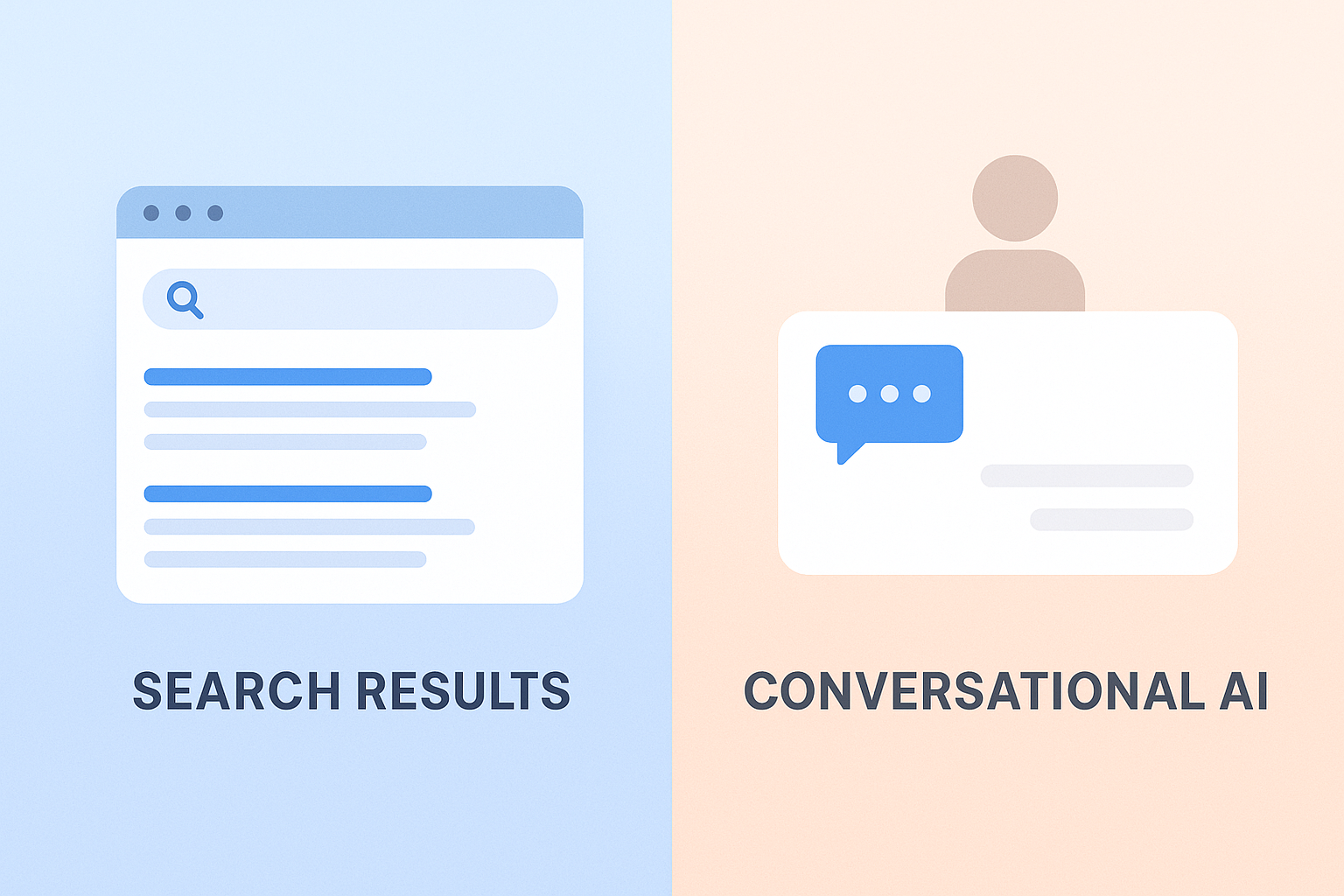
Traditional rankings and AI-generated answers now sit side by side in modern search results.
Signals AI Algorithm Based SEO Weighs That Traditional SEO Often Ignores
- Content freshness relative to how quickly a topic is evolving, not just a fixed publish date.
- Answer extractability — whether a crawler or AI model can pull a clean, direct answer from a passage.
- Semantic completeness — whether every subtopic a searcher expects is actually addressed on the page.
- Cross-channel consistency between what a site says and what third-party sources say about the same entity.
Step-by-Step Guide to Implementing AI Algorithm Based SEO
Getting started with AI algorithm based SEO does not require a data science background. Most platforms automate the technical heavy lifting behind the scenes. In practice, the process follows six clear steps.
- Audit existing content with AI tools. Run your website through an AI-powered audit to identify technical issues, thin content, and missed keyword opportunities across every indexed page on your domain.
- Analyze search intent patterns. Use machine learning based analytics to study what searchers actually want, then group pages by informational, transactional, or navigational intent before rewriting anything.
- Restructure content for algorithmic readability. Rewrite headings, summaries, and answer blocks so search crawlers and AI answer engines can quickly extract clear, direct responses from your pages.
- Automate technical SEO signals. Deploy a platform to handle schema markup (structured data that helps machines read your content, as defined by schema.org), internal linking, and site speed improvements without manually configuring every page.
- Benchmark against real competitors. Compare your content coverage, structure, and depth against pages currently ranking for your target queries so gaps become obvious before you publish.
- Monitor and refine continuously. Review ranking and traffic data on a recurring schedule, letting the AI system adjust recommendations as competitor content and search algorithms change.
Tools focused on AI content writing for SEO can accelerate step three considerably, while dedicated AI analytics for smarter SEO rankings support the ongoing monitoring described in step six. In addition, teams comparing options often start with intelligent SEO tools that boost rankings with AI to shortlist a platform before committing budget.
Choosing the Right AI Algorithm Based SEO Platform
When evaluating a platform, look for tools that combine technical automation with clear, actionable content guidance rather than raw data dumps nobody has time to interpret. According to the National Institute of Standards and Technology, trustworthy AI systems should be transparent about how their recommendations are generated, and that standard applies directly to SEO tools as well.
Platforms like rankauthority.com apply this principle through the 1-Click AI AutoPilot feature, which automates the technical and strategic work behind GEO (generative engine optimization) and AEO (answer engine optimization) for small business owners, digital marketers, entrepreneurs, and agencies managing multiple client sites. A seven-day risk-free trial makes it possible to evaluate real results before committing further budget, which matters far more than a flashy demo.
Key Features to Evaluate Before You Commit
- Content scoring transparency: can you see why a piece scored well or poorly, not just the final number?
- Technical audit depth: does it check crawlability, page speed, schema, and internal linking together?
- GEO and AEO readiness: does the tool prepare content for AI Overviews and chat-based assistants, not just classic search?
- Reporting cadence: does the platform re-check rankings and content freshness automatically, or only on demand?
- Pricing transparency: is there a clear trial period, and does pricing scale sensibly for agencies managing several sites?
For a broader comparison of the category, the complete guide to automated SEO with AI walks through how different automation approaches stack up, while smart SEO solutions for winning AI-powered search rankings covers strategy selection in more depth.
Who Benefits Most From AI Algorithm Based SEO?
AI algorithm based SEO is not limited to enterprise brands with dedicated data teams. In fact, smaller operations frequently see the largest relative gains because automation replaces work they could never staff for in the first place.
- Small business owners: get technical audits and content guidance without hiring a full-time specialist.
- Digital marketers: manage several campaigns at once using predictive scoring instead of manual spreadsheets.
- Agencies: scale client work across many domains without linearly scaling headcount.
- E-commerce teams: optimize thousands of product pages that would be impossible to review by hand one at a time.
- Content publishers: keep evergreen articles current as search intent and competitor content shift over time.
Common Mistakes in AI-Powered SEO Strategies
Even strong automation can go wrong when applied carelessly. One frequent mistake is treating AI recommendations as final decisions instead of a starting point for human review. A model can suggest a change that is statistically common among top pages yet still wrong for your specific audience.
Another common error involves over-optimizing for algorithms while neglecting genuine content quality. In particular, a page can technically satisfy every automated checklist item and still fail to answer a reader’s actual question clearly. Similarly, some teams ignore how their strategy affects how AI can change the way you do SEO across both search engines and conversational AI tools, focusing only on one channel instead of both at once.
A third mistake worth naming: publishing AI-generated content with no fact-checking or brand voice pass. Automation should accelerate research and structure, not replace editorial judgment entirely.
The Future: AI Algorithm Based SEO, GEO, and AEO Working Together
Looking ahead, AI algorithm based SEO will increasingly overlap with generative engine optimization and answer engine optimization rather than existing as a separate discipline. As a result, businesses that build one cohesive strategy across all three will outperform those still optimizing for classic search alone.
Above all, the through-line stays consistent: structure content clearly, answer real questions directly, and let machine learning systems handle the repetitive technical work so humans can focus on strategy and quality control.

Reviewing automated recommendations remains an important step even with AI algorithm based SEO tools in place.
Frequently Asked Questions About AI Algorithm Based SEO
What is AI algorithm based SEO?
AI algorithm based SEO is an approach to search optimization that uses machine learning models to analyze content, predict search intent, and adjust rankings automatically. It replaces static, rule-based tactics with systems that learn from data and continuously improve results.
How does AI algorithm based SEO differ from traditional SEO?
Traditional SEO relies on manual keyword research and fixed best practices, while AI algorithm based SEO uses adaptive models that learn patterns from ranking data. As a result, it can respond to algorithm updates and shifting user behavior much faster than a quarterly manual audit.
How long does it take to see results from AI algorithm based SEO?
Most sites notice measurable movement within 4 to 8 weeks, though competitive niches may take longer. Because AI systems continuously refine recommendations, improvements tend to compound over time rather than appear instantly overnight.
Is AI algorithm based SEO expensive to implement?
Costs vary widely, but automated platforms have made AI algorithm based SEO far more affordable than hiring a large in-house team. Many tools, including rankauthority.com, offer a low-cost entry point with a risk-free trial period.
What tools use AI algorithm based SEO?
Platforms like rankauthority.com apply AI algorithm based SEO through automated technical audits, content scoring, and ranking predictions. Search engines themselves, including Google, also rely on machine learning systems to evaluate content quality at scale.
Can small businesses benefit from AI algorithm based SEO?
Yes, small businesses often benefit the most because automation removes the need for a dedicated SEO specialist. AI algorithm based SEO tools handle technical audits and content recommendations that would otherwise require significant in-house expertise.
What are common mistakes when adopting AI algorithm based SEO?
A common mistake is treating AI recommendations as final answers instead of a starting point for human review. Another is ignoring content quality signals while focusing only on technical automation and checklist compliance.
Does AI algorithm based SEO work for AI search engines like ChatGPT?
Yes, the same principles extend into generative engine optimization and answer engine optimization, since AI chat tools rely on similar language understanding models. Structuring content clearly helps both traditional search engines and conversational AI systems surface it accurately.
What skills do I need to use AI algorithm based SEO tools?
Most modern platforms are built for non-technical users, so deep coding or data science knowledge is not required. A basic understanding of your website and audience is usually enough to interpret and apply the recommendations confidently.
How do search engines use machine learning in their ranking algorithms?
Search engines use machine learning to interpret query intent, evaluate content relevance, and detect low-quality or spammy pages. These models are continuously retrained on new data, which is why rankings can shift even without a publicly announced algorithm update.
What is the difference between GEO, AEO, and AI algorithm based SEO?
AI algorithm based SEO is the broader practice of using machine learning to improve rankings, while GEO and AEO are specialized subsets focused on generative AI answers and direct question responses. In practice, the three overlap heavily and are usually optimized together, not separately.
Can AI algorithm based SEO replace a human content strategist entirely?
No, automation handles repetitive technical and analytical work, but brand voice, editorial judgment, and factual accuracy still require human oversight. The most reliable results come from pairing automated recommendations with a person who reviews them before publishing.
What best practices improve results with AI algorithm based SEO?
Combine automated technical fixes with clear, well-structured content that directly answers user questions. Regularly reviewing AI-generated recommendations against real performance data also helps avoid over-reliance on any single signal or tool.
Conclusion
In summary, AI algorithm based SEO represents a fundamental shift from static checklists toward adaptive, data-driven optimization that keeps working long after the initial audit. Because search engines and AI answer engines both rely on machine learning to evaluate content, businesses that adopt similar AI-driven strategies gain a meaningful and lasting advantage over competitors still working from spreadsheets.
Ultimately, combining automated tools like those available at rankauthority.com with thoughtful human oversight offers the most reliable path forward. As AI-powered search continues to evolve, understanding and applying AI algorithm based SEO will only become more important for long-term visibility, resilience, and growth.

