

GEO technology benefits are reshaping how businesses show up in AI-generated answers, chatbot replies, and next-generation search results. As more people ask questions directly to AI Overviews, voice assistants, and chat-based tools instead of scrolling through blue links, GEO technology benefits any brand that wants to stay visible where searchers actually look. In this guide, you will learn what generative engine optimization technology does, how it compares to traditional SEO, and how to start capturing its advantages today. Last updated: 2026-07-30. By the RankAuthority editorial team — editorial overview and expert guidance.
Quick answer: GEO technology benefits include better visibility inside AI Overviews and chatbot answers, faster content optimization through automation, stronger topical authority, and reduced dependence on manual, time-intensive SEO work.
What Are GEO Technology Benefits?
GEO technology is a set of tools and techniques used to optimize content for generative AI systems rather than only for classic search engines. Specifically, generative engine optimization technology helps a website’s information get pulled into AI-written summaries, chat answers, and voice responses. Consequently, the core GEO technology benefits center on visibility, efficiency, and authority across both traditional and AI-driven search environments.
Unlike older SEO tactics that focus mainly on keyword placement, this newer approach pays close attention to how large language models, explained simply as AI systems trained to understand and generate human-like text, interpret and reuse content. As a result, businesses that adapt early tend to appear more often in AI-generated answers than competitors relying on outdated methods.
How Generative Engine Optimization Technology Works
Generative engine optimization technology works by aligning content structure with the way AI models retrieve and summarize information. For instance, clear definitions, direct answers near the top of a page, and well-organized headings all make it easier for an AI system to extract accurate facts. In addition, structured data, often called schema markup, gives search engines and AI crawlers explicit signals about who wrote the content and what it covers. See our primer on AI content optimization for technical tactics and examples.
Furthermore, automated platforms now handle much of this technical work behind the scenes. Rather than manually rewriting every page, site owners can rely on GEO services explained to continuously adjust formatting, structure, and internal signals as algorithms change. This automation is exactly where the practical GEO technology benefits become most obvious for busy business owners.

GEO technology benefits businesses by connecting content signals across AI-driven search platforms.
Key Advantages of GEO Technology for Modern Businesses
Businesses adopting generative engine optimization technology typically report several consistent advantages. Above all, these gains compound over time as AI search adoption continues to grow.
- Wider AI visibility: Content becomes more likely to appear in AI Overviews, chat answers, and voice search results.
- Time savings: Automation reduces the manual hours typically spent on technical optimization.
- Stronger authority signals: Structured, well-defined content builds topical trust with AI systems and traditional engines alike.
- Lower barrier to entry: Small teams can compete with larger competitors using accessible automated tools.
- Future-proofing: Sites optimized for AI search stay relevant as search behavior continues shifting away from traditional links.
Notably, Gartner has predicted that traditional search engine volume could drop significantly by 2026 as more users turn to AI chatbots and virtual agents for answers. That forecast alone highlights why GEO technology benefits are becoming a priority rather than an optional extra.
GEO Technology Benefits vs Traditional SEO
Traditional search engine optimization still matters, since technical performance, backlinks, and page speed remain foundational. However, GEO technology benefits go further by targeting how AI systems summarize and cite content rather than just how it ranks on a results page.
In contrast to keyword-focused SEO, generative engine optimization technology rewards clear, well-structured explanations that an AI model can lift directly into a conversational answer. Similarly, answer engine optimization, or AEO, focuses on formatting content as direct question-and-answer pairs. Together, these approaches complement rather than replace classic SEO practices.
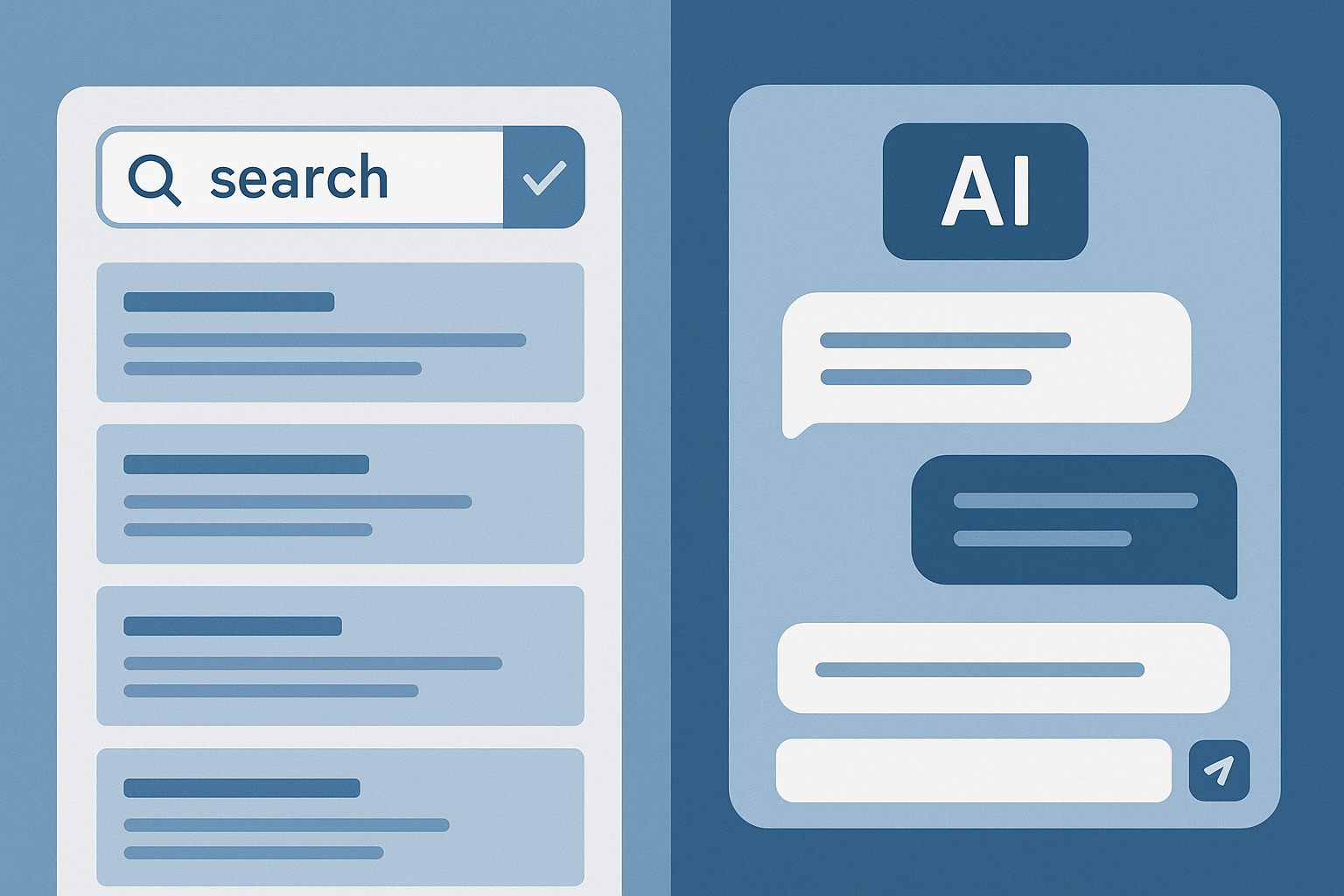
Comparing traditional search ranking with AI-generated answers highlights why optimization strategies must evolve.
Step-by-Step: How to Implement GEO Technology
Getting started does not require a complete website overhaul. Learn how GEO works. Instead, follow these steps to build AI search visibility gradually and consistently.
- Audit your current AI search visibility. Check how your brand appears across AI Overviews, chatbot responses, and voice assistant answers to find gaps.
- Structure content around clear entities and direct answers. Define terms explicitly and answer likely questions within the first few sentences of each page.
- Strengthen topical authority with supporting content. Publish related articles that demonstrate depth of expertise across your subject area.
- Implement schema markup and technical signals. Add FAQ, HowTo, and Organization structured data so AI crawlers can extract accurate facts. See How GEO works for a technical walkthrough and examples.
- Monitor rankings across AI and traditional search engines. Track citation frequency and referral traffic, then refine content based on results.
Who Benefits Most from AEO and GEO Solutions
Almost any business with an online presence can gain from these strategies, though the degree of impact varies. Specifically, service businesses, e-commerce brands, and content publishers tend to see faster results because their pages already answer common customer questions. See our local business visibility guide for practical steps.
For a deeper breakdown by industry, see this guide on which types of businesses can use GEO solutions, as well as this related resource on how different business models benefit from GEO solutions. Agencies managing multiple client sites, in particular, benefit from automated platforms that scale optimization work without adding headcount.
Common Mistakes When Adopting Generative Engine Optimization
Even well-intentioned teams sometimes stumble when adopting new optimization methods. For example, burying a direct answer under several paragraphs of introduction makes it harder for AI systems to extract useful information. Likewise, skipping structured data entirely leaves valuable context signals on the table.
Another frequent misstep involves treating GEO as a one-time project rather than an ongoing process. Because AI models and large language models update frequently, content needs periodic review to stay aligned with how these systems currently interpret information.

Regularly reviewing analytics helps businesses track ongoing GEO technology benefits over time.
Latest Trends Shaping Answer Engine Optimization Technology
AI search continues to evolve quickly, and staying current matters as much as the initial setup. Currently, question answering systems are becoming more conversational, which means content written in a natural, explanatory tone tends to perform better than dense technical jargon.
For a closer look at where the industry is heading, this overview of the latest trends in generative engine optimization covers emerging patterns worth watching. Meanwhile, this complete breakdown of the benefits of using GEO services offers additional context on long-term strategy. Businesses exploring automated options can also review RankAuthority’s platform as one example of a tool built specifically around these shifts.
Frequently Asked Questions About GEO Technology Benefits
What is GEO technology?
GEO technology, short for generative engine optimization technology, is a set of methods and automated tools that help content get cited, summarized, or ranked inside AI-generated answers. It focuses on structuring information so chatbots and AI Overviews can understand and repeat it accurately.
What are the main GEO technology benefits for small businesses?
The main GEO technology benefits for small businesses include stronger visibility in AI answers, less reliance on manual optimization, and a faster path to authority without a large marketing team. Automated platforms make these gains achievable even with limited technical resources.
How does GEO technology differ from traditional SEO?
Traditional SEO targets ranking positions on a search results page, while GEO technology targets inclusion inside AI-generated summaries, chat responses, and voice answers. Both share technical foundations, but GEO places more weight on clear definitions, structured data, and topical depth.
How long does it take to see results from GEO technology?
Most sites notice early signals, such as AI citations or featured snippets, within four to eight weeks of consistent optimization. Full authority gains across multiple AI platforms typically take three to six months.
How much does GEO technology typically cost?
Costs vary widely, from free manual adjustments to monthly automated platforms priced similarly to traditional SEO software. Many providers offer trial periods so businesses can test results before committing.
Why is GEO technology becoming more important now?
GEO technology is becoming more important because a growing share of searches are now answered directly by AI systems instead of traditional link lists. Businesses that ignore this shift risk losing visibility even if their classic search rankings remain strong.
What common mistakes should businesses avoid when adopting GEO technology?
Common mistakes include writing vague introductions, skipping structured data, and ignoring FAQ formatting that AI systems rely on for direct answers. Another frequent error is focusing only on keywords instead of clear, well-defined concepts.
What is the difference between GEO and AEO?
GEO, or generative engine optimization, focuses on visibility inside AI-generated summaries, while AEO, or answer engine optimization, focuses on direct question-and-answer formats used by voice assistants and answer boxes. In practice, most modern strategies blend both approaches together.
Can small businesses benefit from GEO technology, or is it only for enterprises?
Small businesses can benefit significantly from GEO technology, often more than large enterprises, because automated tools remove the need for dedicated technical staff. Accessible platforms now let single-site owners compete for AI visibility once reserved for bigger budgets.
What best practices improve GEO technology performance?
Best practices include defining key terms immediately, answering likely questions within the first few sentences, and adding schema markup for facts and authorship. Consistent publishing of topically related content also strengthens perceived authority.
Does GEO technology replace traditional SEO?
No, GEO technology does not replace traditional SEO; instead, it extends it to cover AI-driven search environments. Sites still need solid technical SEO, quality backlinks, and fast performance to succeed in both systems.
What tools help automate GEO technology benefits?
Automated platforms that combine content structuring, schema generation, and AI visibility tracking help businesses capture GEO technology benefits without manual technical work. These tools continuously adjust content signals as AI search algorithms evolve.
Final Thoughts on GEO Technology Benefits
In summary, GEO technology benefits businesses by improving visibility across AI Overviews, chatbots, and voice search, while also reducing the manual workload traditionally required for search optimization. Therefore, brands that combine solid technical SEO with structured, AI-friendly content are best positioned for the next stage of search. As AI-driven discovery continues to grow, adopting generative engine optimization technology early offers a practical way to stay visible, credible, and competitive. Last updated: 2026-08-14. Author: RankAuthority.

