

A modern SEO analytics platform is the command center behind every serious organic search strategy, pulling rankings, traffic, backlinks, technical health, and — increasingly — AI search citations into one place so teams stop guessing and start making decisions based on evidence. Without one, marketers are flying blind, unable to tell which pages are gaining ground and which are quietly losing visibility. This guide breaks down exactly what an SEO analytics platform does, which features actually move the needle, how pricing typically works, and how to pick the right one for your specific situation — whether you run one site or fifty.
Direct answer: An SEO analytics platform is a software tool that tracks keyword rankings, organic traffic, backlinks, technical site health, and AI search visibility, then presents that data in dashboards so businesses can make faster, better-informed optimization decisions.
What Is an SEO Analytics Platform?
Put simply, an SEO analytics platform is a system that consolidates search performance data from multiple sources into a single dashboard. Instead of manually checking rankings, traffic reports, and backlink lists in separate tools, you get one unified view of the whole picture.
Most platforms track four core areas: search engine rankings, organic traffic trends, backlink profiles, and technical site health. In addition, the strongest modern tools now monitor search engine optimization performance across AI systems like chatbots and AI Overviews, not just classic blue-link results.
For example, a well-built platform might alert you the moment a page drops out of the top 10, or flag a sudden spike in crawl errors before it damages rankings. Because of this real-time visibility, teams can react to problems within days instead of months.
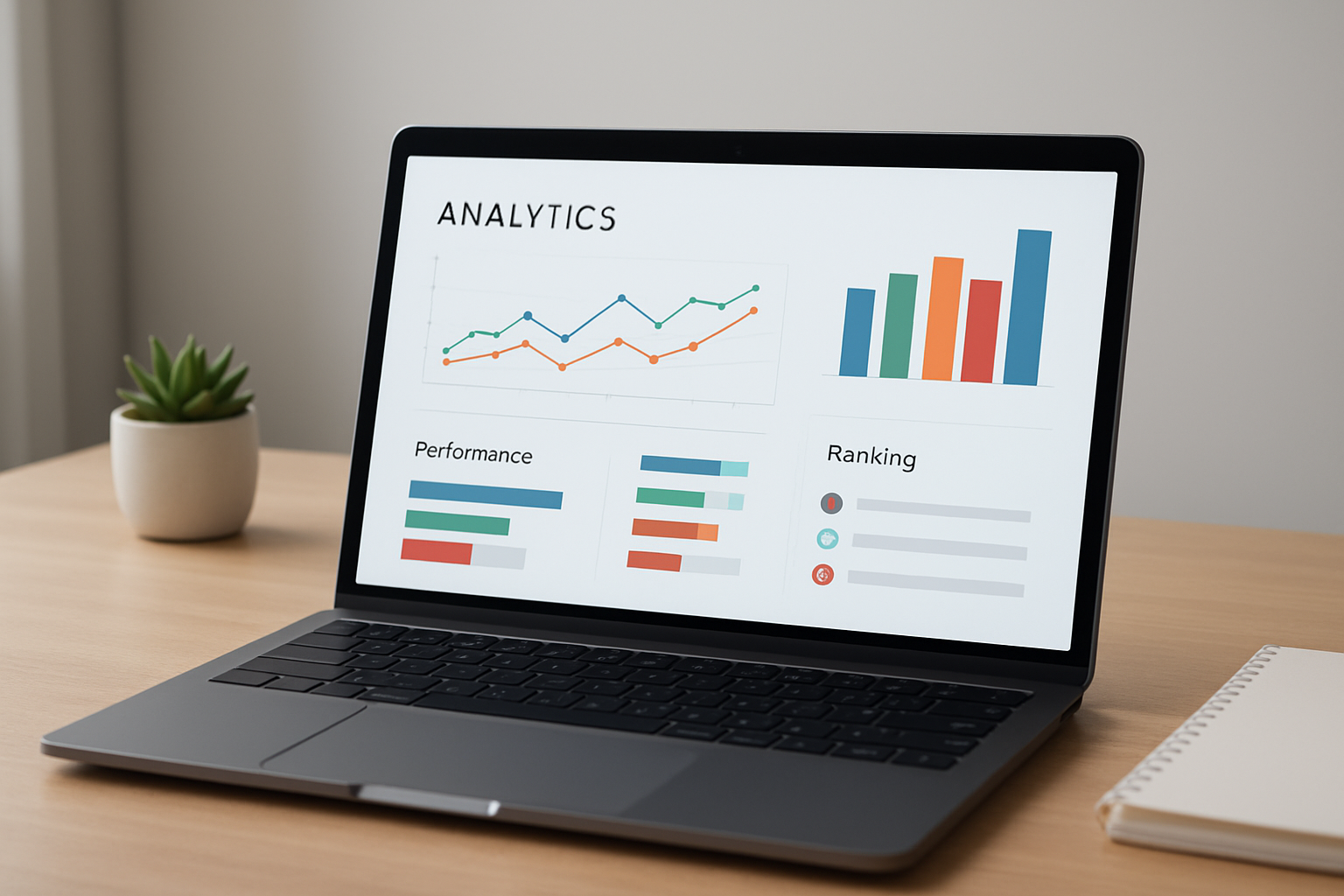
A well-designed SEO analytics platform turns raw ranking and traffic data into clear, actionable dashboards.
How an SEO Analytics Platform Differs From an All-in-One SEO Toolkit
Some vendors market broad “SEO toolkits” bundling keyword research, competitor analysis, site audits, and content tools under one roof. That approach works, but it can bury the specific metrics that matter most — rankings, traffic, and AI citations — under dozens of tangential features few teams ever open. In contrast, a focused SEO analytics platform prioritizes clarity: fewer clicks, faster answers, and dashboards built around decisions rather than raw data exports. Specifically, the goal is to help a marketer answer “is this working?” in seconds, not after twenty minutes of filtering reports.
Why Businesses Need Search Performance Analytics in the AI Era
Search itself has changed dramatically. In particular, AI Overviews, chatbots, and voice assistants now answer questions directly, often without a click to any website. As a result, businesses need search performance analytics that account for this shift, not just classic keyword rankings.
According to Google’s Search Central documentation, search features like AI Overviews continue to expand across query types, which means visibility now depends on being cited by AI systems, not just ranking on page one. Consequently, a platform that only tracks traditional rankings misses a growing share of the picture.
Furthermore, businesses managing content at scale need automated tracking simply to keep up. Manually auditing dozens of pages every week is not realistic for most small teams, which is exactly why automation has become a core feature rather than a luxury add-on. For a deeper look at how automation changes daily workflows, see this guide to automated analytics for SEO.
Core Modules Every SEO Analytics Platform Should Include
Not all SEO reporting tools are built equally. Some focus narrowly on keyword tracking, while others attempt to cover the entire funnel — keyword research, competitor analysis, on-page audits, local SEO, and content recommendations included. Below are the modules that consistently separate strong platforms from weak ones.
| Module | Why It Matters |
|---|---|
| Keyword rank tracking | Shows movement over time so you know what’s working |
| Keyword research & opportunity gaps trending SEO tools | Surfaces search volume, difficulty, and untapped topics competitors rank for |
| Competitor analysis | Benchmarks your visibility against direct competitors, not just your own history |
| AI search visibility | Tracks citations in AI Overviews and chatbot answers |
| Backlink monitoring | Flags lost links and toxic profiles early |
| Technical site audit | Catches crawl errors, slow pages, and indexing issues before they hurt rankings |
| On-page & content optimization | Recommends content improvements based on top-ranking competitor pages |
| Local SEO tracking | Monitors map pack rankings and local citation consistency for brick-and-mortar businesses |
| Automated reporting | Saves hours of manual data compilation weekly |
In addition to these modules, look for a platform that offers plain-language explanations rather than raw data dumps. After all, insights are only useful if your team can actually interpret and act on them quickly. Technical site health, for instance, often includes Core Web Vitals — Google’s page-speed and stability metrics — which the MDN Web Docs on web performance explain in more technical detail if your team wants to go deeper.
SEO Analytics Platform vs. Google Analytics vs. All-in-One Toolkits
A common point of confusion is how a dedicated SEO analytics platform relates to Google Analytics or a broad all-in-one toolkit. Google Analytics focuses on general website traffic and on-site user behavior — page views, session length, conversions. An SEO analytics platform, however, specializes in search-specific data: keyword rankings, backlink profiles, competitor visibility, and now AI citation tracking; see AI SEO platforms for a deeper platform comparison. Most businesses use both together rather than choosing one over the other.
All-in-one toolkits, on the other hand, try to bundle every marketing function — PPC research, social listening, content planning — alongside SEO. That breadth can be useful for large agencies, yet it often comes at the cost of a steeper learning curve and a higher price tag for features many teams never touch. Similarly, businesses that just need clear rank tracking, AI visibility, and automated reporting may find a focused platform delivers faster time-to-value.
How to Choose the Right SEO Analytics Platform
Choosing the right SEO analytics platform starts with knowing your own goals. A solo blogger has very different needs than an agency managing 40 client sites, so the “best” tool genuinely depends on context. For broader platform comparisons, see digital marketing automation.
Consider these three questions before committing: How much technical expertise does your team have? How many sites or domains will you need to track? And how important is AI search visibility compared to traditional rankings for your industry?
For instance, if you manage several client properties, look specifically for multi-site dashboards, as detailed in this complete guide to performance tracking SEO tools. Similarly, if AI search citations matter more to your business, prioritize platforms with dedicated GEO tracking, covered in depth in this AI-driven SEO analytics guide. For a broader look at how data-backed strategy underpins all of this, this piece on data-driven SEO strategies that actually work is worth a read too.
What Does an SEO Analytics Platform Typically Cost?
Pricing varies widely depending on features and site volume. As a general guide, expect the following tiers across the market:
- Free or entry-level tools: Limited keyword tracking and basic reporting, suitable for a single small site.
- Mid-tier plans ($50–$150/month): Full rank tracking, backlink monitoring, and automated reporting for one to a few sites.
- Growth plans ($150–$300/month): Multi-site dashboards, deeper competitor analysis, and AI search visibility tracking.
- Enterprise/agency plans ($300+/month): Unlimited or high-volume site tracking, white-label reporting, and dedicated support.
Above all, match the tier to your actual site count and reporting needs rather than paying for enterprise features you will never use.
Step-by-Step: Setting Up Your SEO Analytics Platform
Once you’ve selected a tool, setup matters just as much as the platform itself. Below is a straightforward process that applies to most modern tools, whether automated or manual, including common digital marketing automation integrations.
- Audit current search visibility. Review existing rankings, organic traffic, and backlinks across your site to establish a clear performance baseline before making changes.
- Connect your website and data sources. Link Search Console, Google Analytics, and any CMS integrations so data flows into your dashboard automatically without manual uploads.
- Define KPIs and tracking goals. Decide which metrics, such as rankings, traffic, or AI citations, matter most to your specific business objectives this quarter.
- Configure automated reporting. Set up scheduled reports so stakeholders and clients stay informed without requiring manual spreadsheet work every week.
- Monitor AI search and traditional rankings together. Track both result types side by side so you get complete visibility across classic search and AI answer engines.
- Review and adjust monthly. Use monthly check-ins to spot emerging trends, catch ranking drops early, and refine your ongoing content strategy accordingly.
For a deeper walkthrough of each stage, see this resource on how to track SEO performance effectively. It expands on baseline audits and goal-setting in more detail than we can cover here.

Automated reporting removes the manual work traditionally required to track search performance.
AI-Powered SEO Analytics: What’s Changing in 2025
AI-powered SEO analytics has shifted from a nice-to-have into a core requirement. Specifically, businesses now need to know whether their content is being cited inside AI Overviews, chatbot responses, and voice search answers, not just where it ranks on a traditional results page. For practical tactics on how to use those signals, see AI insights for SEO.
Research from industry analysts suggests that AI Overviews now appear on a substantial share of informational search queries, which means a meaningful portion of visibility now happens without a traditional click. Because of this shift, platforms that ignore AI citation tracking risk giving businesses an incomplete performance picture.
This is where automation becomes especially valuable. Rather than manually checking dozens of AI tools for mentions, an automated SEO analytics platform can continuously scan and report on citation activity. Tools like RankAuthority approach this through automated Generative Engine Optimization and Answer Engine Optimization, using its 1-Click AI AutoPilot technology to handle much of the technical legwork automatically, backed by a seven-day trial for businesses wanting to test the approach first. For more on this shift, see this guide to smarter AI analytics for SEO in 2025, or this broader piece on AI-driven SEO analytics for the full 2025 picture.
SEO Analytics Platform Use Cases by Business Type
Not every business needs the same feature set from an SEO analytics platform. In particular, the right configuration depends heavily on business model and team size.
Small Businesses and Solo Marketers
For a single-site business, simplicity matters more than depth. Automated reporting and plain-language dashboards let a non-technical owner understand performance without hiring a specialist. Consequently, small businesses often benefit the most since automation removes the need for in-house SEO expertise entirely.
Agencies and Consultants
Agencies managing multiple client sites need multi-site dashboards, white-label reporting, and bulk rank tracking. Without these, compiling client reports manually every month quickly becomes unsustainable as the client roster grows.
Ecommerce and Enterprise Sites
Larger sites with thousands of product pages need technical audits at scale, crawl budget monitoring, and granular competitor analysis. Above all, enterprise teams should prioritize platforms that integrate cleanly with existing analytics and business intelligence stacks. For a strategy-first perspective on scaling these efforts, this guide on data-driven SEO optimization strategies that work is a useful companion resource.
Common Mistakes to Avoid With SEO Reporting Tools
Even with the right tool in hand, mistakes happen. One common error is checking data too infrequently, which means problems go unnoticed for months. On the other hand, checking obsessively without a clear review cadence wastes time without adding insight.
Another mistake is focusing solely on rankings while ignoring traffic quality and conversion data. Similarly, many teams still overlook AI search visibility entirely, even though it increasingly influences how customers discover brands. For a broader troubleshooting checklist, this piece on how to track SEO performance covers several additional pitfalls worth reviewing.
Quick tip: Set a recurring monthly calendar reminder to review your dashboard. This single habit prevents small ranking drops from turning into major traffic losses.

Modern platforms connect traditional ranking data with AI search visibility signals.
Frequently Asked Questions
What is an SEO analytics platform?
An SEO analytics platform is a software tool that collects and analyzes data about your website’s search performance, including rankings, traffic, backlinks, and technical health. It helps businesses understand what is working and what needs improvement.
How does an SEO analytics platform differ from Google Analytics?
Google Analytics focuses on general website traffic and user behavior, while an SEO analytics platform specializes in search-specific data like keyword rankings and backlinks. Many businesses use both tools together for a complete picture.
How much does an SEO analytics platform typically cost?
Pricing varies widely, from free basic tools to enterprise platforms costing several hundred dollars per month. Most mid-tier platforms range between $50 and $300 monthly depending on features and site volume.
How long does it take to see results from SEO analytics tracking?
You can typically see initial ranking and traffic trends within 4 to 8 weeks of consistent tracking. However, meaningful strategic insights usually emerge after around three months of data collection.
What metrics should an SEO analytics platform track?
A strong platform should track keyword rankings, organic traffic, backlinks, page speed, crawl errors, and increasingly, AI search citations. Together, these metrics paint a full picture of search health.
Can small businesses benefit from an SEO analytics platform?
Yes, small businesses often benefit the most because automated tracking removes the need for in-house expertise. This lets small teams compete with larger, better-resourced competitors.
What’s the difference between SEO analytics and AI search visibility tracking?
Traditional SEO analytics measures rankings in classic search results, while AI search visibility tracking monitors whether your content is cited in AI Overviews and chatbots. Modern platforms combine both for complete coverage.
What common mistakes do businesses make when choosing an SEO analytics platform?
Common mistakes include choosing tools based on price alone, ignoring AI search metrics, and failing to set clear KPIs before onboarding. As a result, teams often collect data without acting on it.
Do I need technical SEO knowledge to use an SEO analytics platform?
Not necessarily. Many modern platforms are designed for non-technical users through guided dashboards and plain-language reporting.
How often should I check my SEO analytics platform data?
Weekly check-ins are sufficient for most businesses, with a deeper monthly review to spot trends. Daily monitoring is generally only necessary during active campaigns or site migrations.
What is Generative Engine Optimization (GEO) and how does it relate to SEO analytics?
Generative Engine Optimization, or GEO, is the practice of optimizing content so it gets cited by AI systems like chatbots and AI Overviews. A modern SEO analytics platform should track GEO performance alongside traditional rankings.
Can an SEO analytics platform help with multiple websites or clients?
Yes, many platforms offer multi-site dashboards specifically built for agencies and consultants managing several properties, which centralizes reporting and saves considerable time.
Does an SEO analytics platform include keyword research and local SEO tracking?
Many comprehensive platforms do, bundling keyword research, difficulty scoring, and local map-pack rank tracking alongside core analytics. However, always confirm local tracking is included before purchasing, since some entry-level plans limit it to national rankings only.
Final Thoughts
In summary, a reliable SEO analytics platform is no longer optional for businesses that depend on organic visibility. From tracking traditional rankings to monitoring AI search citations, these tools give teams the clarity needed to make faster, smarter decisions. Above all, the right platform should match your specific goals, whether that’s managing one site or dozens of client properties.
Ultimately, businesses that combine consistent tracking with automation, such as the tools available at RankAuthority, tend to adapt faster as AI search continues reshaping how people find information online. Choosing the right SEO analytics platform today sets the foundation for sustained visibility tomorrow. Last updated: 2026-08-14. Author: RankAuthority Editorial Team.

