

AI-driven website optimization is the process of using artificial intelligence, machine learning, and automation to improve how a website performs across Google, Bing, and emerging AI-powered search tools like ChatGPT and Google AI Overviews. Unlike traditional search engine optimization, which often depends on manual audits and guesswork, this approach analyzes data and applies changes in real time. As a result, businesses can strengthen their search authority without needing years of technical expertise. Last updated: 2026-07-30. Author: RankAuthority editorial team.
In particular, this shift matters because search behavior itself is changing. Consequently, websites that fail to adapt to AI-powered discovery methods risk losing visibility even if they still rank well in classic Google results.

AI-driven website optimization relies on continuous data analysis to guide ranking decisions and AI content optimization explains these applied techniques in detail.
What Is AI-Driven Website Optimization?
Direct answer: AI-driven website optimization uses machine learning and automated analysis to continuously improve a site’s technical health, content quality, and visibility in both traditional search engines and AI answer engines. It replaces manual, one-time audits with ongoing, data-backed adjustments.
Specifically, the process combines several disciplines under one automated system. It typically includes technical SEO (short for search engine optimization, the practice of improving crawlability and page structure), content analysis, and increasingly, search engine optimization fundamentals adapted for AI systems.
In addition, modern platforms extend beyond classic ranking factors. They also account for how large language models retrieve and summarize information, a discipline often called Generative Engine Optimization, or GEO.
Why AI-Driven Website Optimization Matters Today
Search behavior has shifted dramatically in recent years. For example, a growing share of users now ask questions directly to AI assistants rather than typing keywords into a search bar. Therefore, websites need optimization strategies that satisfy both classic algorithms and conversational AI systems.
According to industry research referenced by Google Search Central, structured, clearly answered content performs better in featured snippets and AI-generated summaries alike. Similarly, sites with strong technical foundations tend to load faster, which the MDN Web Docs on performance note directly affects user retention and search ranking signals.
Above all, businesses that delay adapting risk falling behind competitors who already automate these processes. In contrast, early adopters of AI-driven website optimization often see compounding visibility gains as AI search tools continue expanding their reach.
Core Components of Automated SEO and GEO Optimization
Several building blocks work together inside a well-designed optimization system. Understanding each one helps explain why automation produces more consistent results than manual effort alone. See our AI SEO strategy guide.
- Technical audits: automated crawling identifies broken links, slow pages, and indexing issues.
- Content scoring: AI evaluates readability, relevance, and answer clarity against top-ranking pages.
- Structured data generation: schema markup helps both search engines and AI models understand page context.
- Citation tracking: monitoring how often AI tools reference or quote the site’s content.
For a deeper look at how machine learning influences these components, this guide on machine learning in SEO breaks down the underlying algorithms in more detail.
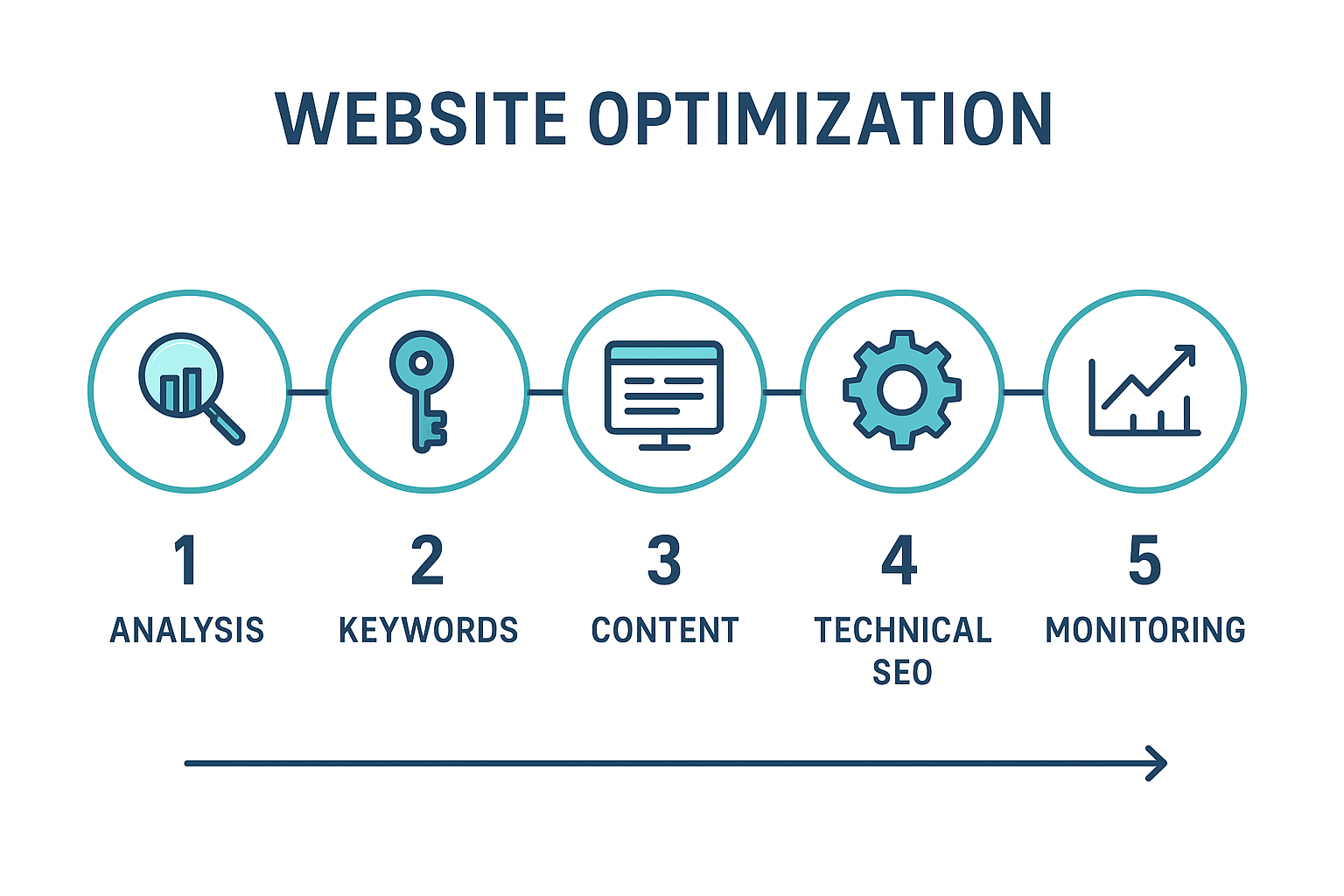
A structured, repeatable workflow is essential to effective AI-driven website optimization. Learn how to improve online rankings using these workflows.
How to Implement an AI-Driven Optimization Strategy
Getting started does not require a large technical team. Instead, following a clear sequence of steps ensures nothing important gets skipped. Learn more in SEO for AI-driven businesses.
- Audit current search visibility. Review existing rankings, traffic sources, and technical issues across both traditional search engines and AI-powered platforms before making any changes.
- Optimize content for semantic intent. Rewrite key pages to directly answer common questions using clear structure, plain definitions, and natural language that AI models can easily interpret.
- Automate technical SEO and structured data. Use automated tools to implement schema markup, fix crawl errors, and improve page speed without manually editing every page one by one. Learn tactics to improve online rankings.
- Monitor AI search citations and rankings. Track how often your content gets referenced by AI answer engines alongside traditional keyword ranking positions using an analytics dashboard.
- Scale optimization across all pages. Apply the patterns that worked to additional pages or client websites, relying on automation to maintain consistency as the site grows.
Tools that streamline this workflow are covered in more depth in this resource on website performance tools that boost rankings fast, as well as this practical walkthrough on how to streamline an SEO strategy using AI.
Common Mistakes in AI-Based Website Optimization
Even with strong automation, certain habits reduce results. For instance, many teams turn on automated tools and then ignore them completely, missing opportunities to fine-tune brand voice or correct rare errors.
Similarly, some businesses focus only on keyword rankings while overlooking AI citation visibility, which is quickly becoming just as important. Therefore, a balanced approach that monitors both traditional and AI-driven signals tends to perform better over time.
Choosing the Right AI Optimization Platform
Not every automation tool offers the same depth. Above all, look for a platform that handles both technical SEO and newer disciplines like Generative Engine Optimization and Answer Engine Optimization together, rather than treating them as separate add-ons.
For example, RankAuthority’s platform offers a 1-Click AI AutoPilot feature designed for small business owners, digital marketers, and agencies managing multiple sites. In addition, its seven-day risk-free trial allows teams to test automated GEO and AEO improvements before committing long term. For a closer comparison of how automated visibility gains work in practice, this explanation of how AI-driven optimization improves online visibility is a useful next read, alongside this guide on how to boost website rankings efficiently with AI.
Meanwhile, if regulatory or safety considerations around AI tools are a concern, the National Institute of Standards and Technology’s AI resources offer helpful, government-backed context on responsible AI use.

Choosing a platform built for AI-driven website optimization saves time compared to piecing together separate tools; explore SEO for AI-driven businesses to see recommended setups.
Frequently Asked Questions About AI-Driven Website Optimization
What is AI-driven website optimization?
AI-driven website optimization is the use of artificial intelligence and automation to analyze, improve, and monitor a website’s performance across search engines. It replaces manual audits with continuous, data-driven adjustments to content, technical structure, and search visibility.
How does AI-driven website optimization differ from traditional SEO, and when to automate your SEO?
Traditional SEO relies heavily on manual keyword research and periodic audits, while AI-driven optimization automates data analysis and applies changes continuously. As a result, it can respond faster to algorithm updates and emerging AI search patterns.
How long does it take to see results from AI-driven website optimization?
Most businesses notice measurable improvements within four to eight weeks, though timelines vary by site size and competition. Consistent monitoring typically produces stronger gains after two to three months.
Is AI-driven website optimization suitable for small businesses?
Yes, small businesses often benefit the most because automation removes the need for a dedicated in-house SEO team. Platforms offering trial periods let owners test results before committing.
What tools are used for AI-driven website optimization?
Common tools include automated technical audit software, AI content analyzers, and structured data generators. Platforms like RankAuthority combine several of these functions into a single automated workflow.
How much does AI-driven website optimization cost?
Pricing varies widely depending on the platform and number of websites managed, ranging from affordable monthly subscriptions to enterprise-level plans. Many providers offer a free or risk-free trial period first.
Can AI-driven website optimization improve rankings in AI search engines like ChatGPT or Google AI Overviews?
Yes, because it specifically addresses Generative Engine Optimization and Answer Engine Optimization factors that influence how AI systems select and cite content. This includes clear answer formatting, structured data, and authoritative sourcing.
What are common mistakes businesses make with AI-driven website optimization?
A frequent mistake is relying solely on automation without reviewing AI-generated changes for accuracy and brand voice. Another is neglecting technical foundations like page speed and mobile usability.
Does AI-driven website optimization replace human content writers?
No, it does not replace human writers but instead supports them by identifying content gaps and optimization opportunities. Human oversight remains important for tone, accuracy, and originality.
How does AI-driven website optimization affect content discoverability?
It improves discoverability by aligning content structure with how both traditional search crawlers and AI language models interpret information. Consequently, pages become easier to index, summarize, and cite.
What is the difference between GEO and AEO in AI-driven website optimization?
Generative Engine Optimization (GEO) focuses on being cited by AI tools like ChatGPT, while Answer Engine Optimization (AEO) focuses on providing direct answers for featured snippets and voice search. Both are core components of a complete AI-driven website optimization strategy.
How do I get started with AI-driven website optimization?
Start by auditing your current search visibility, then choose an automated platform that fits your technical needs and budget. Most reputable providers offer a trial period to test results before full commitment.
Is AI-driven website optimization safe for Google rankings?
Yes, when implemented correctly, it follows the same quality guidelines Google recommends, focusing on genuinely useful content and sound technical structure. Avoiding manipulative automation practices keeps sites compliant.
What metrics should I track for AI-driven website optimization success?
Track organic traffic, keyword rankings, AI citation frequency, and page-level engagement metrics like time on page. Reviewing these monthly helps confirm whether optimization efforts are working.
Final Thoughts on AI-Driven Website Optimization
In summary, AI-driven website optimization combines automation, machine learning, and data analysis to keep websites visible across both traditional search engines and AI-powered platforms. Rather than replacing good judgment, it removes repetitive manual work and lets businesses respond faster to changing search behavior. See what is AI-driven optimization for foundational definitions and examples.
Ultimately, businesses that adopt this approach now, whether through a dedicated platform like RankAuthority or another automated solution, position themselves to stay discoverable as search continues shifting toward AI-driven answers. Above all, consistent monitoring and thoughtful implementation remain the deciding factors between short-term gains and lasting search authority. Add an author byline with credentials and a 'Last updated' date for trust.

