

AI-enhanced SEO strategies are reshaping how businesses compete for visibility as search engines increasingly rely on machine learning to rank and summarize content. In fact, Google has confirmed that AI systems now influence how results are ranked and how AI Overviews are generated, which means ignoring artificial intelligence in your optimization plan is no longer realistic. This article breaks down what AI-enhanced SEO strategies actually involve, why they matter right now, and how to put them to work. Author: RankAuthority editorial team. Last updated: 2026-07-30.
Direct answer: AI-enhanced SEO strategies combine artificial intelligence tools with traditional search optimization techniques to automate research, content creation, and technical fixes. They help websites rank better in both classic search engines and newer AI-driven answer platforms.
What Are AI-Enhanced SEO Strategies?
AI-enhanced SEO strategies is a term for optimization methods that use machine learning models to analyze data, generate content, and adjust websites more efficiently than manual processes alone. Specifically, these strategies rely on algorithms that process ranking signals, user intent, and content gaps far faster than a human team could manage.
As a result, marketers can spend less time on repetitive research and more time on strategy. For example, an AI tool might scan thousands of search results in seconds to identify content patterns that already rank well, then suggest structural improvements automatically.

AI-enhanced SEO strategies rely on data analysis to uncover ranking opportunities faster than manual research.
Why AI-Powered Search Optimization Matters in 2025
Search behavior has changed dramatically. In particular, more users now get answers directly from AI Overviews, chatbots, and voice assistants rather than clicking through ten blue links. Consequently, businesses that only optimize for traditional rankings risk becoming invisible in these newer environments.
According to Wikipedia’s overview of search engine optimization, ranking factors have grown increasingly complex as algorithms incorporate machine learning. Therefore, AI-driven search optimization is not simply a trend; it reflects how search itself now operates.
Moreover, brands that adopt AI-enhanced SEO strategies early often gain a first-mover advantage in AI-generated citations, which can be harder to earn once competitors catch up. You can learn more about how these systems work in this detailed explanation of how AI SEO works.
Core Components of AI-Enhanced SEO Strategies
Effective AI-enhanced SEO strategies typically include several connected components rather than a single tool or tactic. Understanding each piece helps clarify where automation adds the most value.
Automated Content Optimization
AI models can analyze top-ranking pages and suggest headings, word count, and topic coverage that align with search intent. Similarly, they can flag thin or outdated content that needs updating before it loses rankings, a practice central to intelligent search optimization.
Technical SEO Automation
Technical SEO refers to backend factors like site speed, mobile usability, and structured data. AI tools can now scan entire websites and automatically fix common technical issues, which previously required a developer’s manual attention. For deeper technical automation approaches, see our guide on intelligent search optimization.
AI Search and Answer Engine Visibility
Because AI Overviews and chatbots pull content differently than traditional crawlers, strategies must also account for Generative Engine Optimization (GEO) and Answer Engine Optimization (AEO). For further reading, this complete 2025 guide to artificial intelligence SEO breaks down both concepts in depth.
How to Build AI-Enhanced SEO Strategies Step by Step
Building an effective approach does not require starting from scratch. Instead, follow a structured process that layers automation onto proven SEO fundamentals.
- Audit current SEO performance. Review existing rankings, indexed pages, and technical health using analytics tools before introducing any AI-enhanced SEO strategies to establish a reliable baseline.
- Select an AI SEO platform. Choose an automated SEO optimization platform that fits your workflow, whether you manage one website or oversee several client properties simultaneously.
- Automate keyword and content research. Let AI tools identify relevant keywords, content gaps, and competitor opportunities so your team can focus on strategic decisions instead of manual research.
- Optimize for AI search and answer engines. Structure content with clear definitions, direct answers, and FAQ sections so AI Overviews and chatbots can accurately cite your pages in generated responses.
- Monitor and refine automatically. Track ranking changes, click-through rates, and AI citation visibility continuously, allowing automated systems to adjust strategies as search algorithms evolve over time.
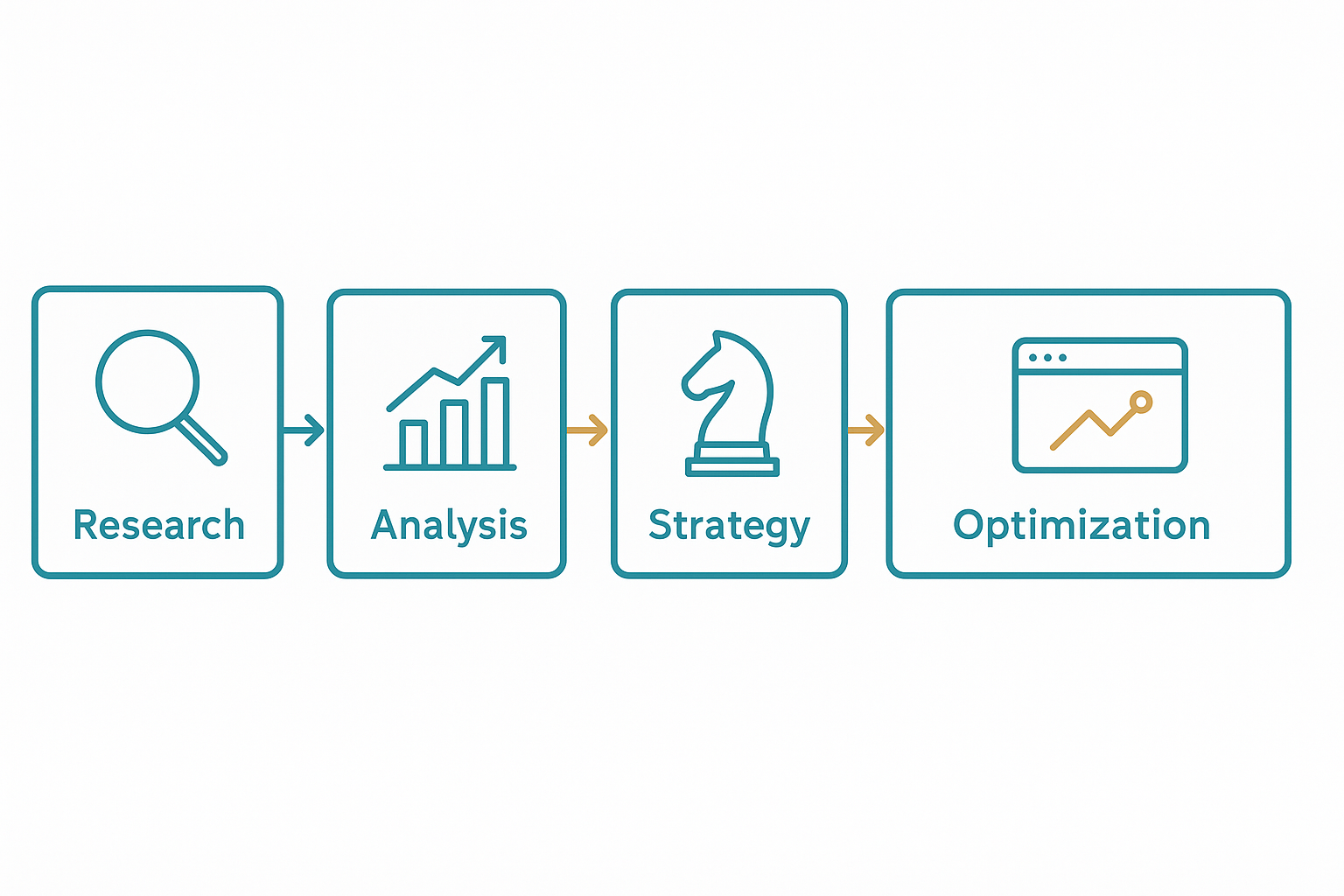
A structured workflow helps teams apply automated SEO optimization consistently across every project; consider using competitive SEO tools to operationalize that workflow.
AI-Driven Search Optimization Tools Worth Knowing
Several categories of tools now support AI-driven search optimization. Content generators help draft articles quickly, while technical crawlers identify site errors automatically. In addition, all-in-one platforms combine both functions into a single dashboard. Learn more about AI SEO platforms that centralize these features.
For instance, tools like Google’s own Search Central documentation outline the technical standards AI-driven tools must still respect. Meanwhile, resources such as MDN’s HTML documentation remain useful references for the structured markup that supports AI readability.
Additionally, this complete guide to AI-powered SEO reviews specific tool categories in more detail for readers who want a deeper comparison.
Common Mistakes to Avoid With AI-Powered SEO Techniques
Even strong AI-powered SEO techniques can backfire when applied carelessly. One frequent mistake is publishing unedited AI content without verifying facts or adding original insight, which can hurt credibility. Another common error involves ignoring technical basics like page speed while focusing entirely on content volume.
Furthermore, some teams treat automation as a replacement for strategy rather than a tool that supports it. As a result, content can become repetitive or lose the brand voice that builds trust with readers over time.
Choosing an Automated SEO Optimization Platform
Selecting the right platform is often the deciding factor between strategies that scale and strategies that stall. Above all, look for a solution that automates both technical fixes and content optimization without requiring deep SEO expertise to operate.
RankAuthority, for example, offers a 1-Click AI AutoPilot feature designed for small business owners, digital marketers, entrepreneurs, and agencies managing multiple client sites. Because it automates the technical and strategic work behind GEO and AEO, users can strengthen search authority without a steep learning curve. A seven-day trial period allows teams to test results before committing further.
To explore how this type of automation works in practice, visit RankAuthority or review this guide to smarter, AI-powered SEO for additional context.

Automated dashboards make it easier to track the impact of AI-enhanced SEO strategies over time.
Frequently Asked Questions
What are AI-enhanced SEO strategies?
AI-enhanced SEO strategies are search optimization methods that use artificial intelligence to research keywords, generate content, and adjust technical elements automatically. They combine traditional SEO principles with machine learning to work faster and more accurately than manual methods alone.
How do AI-enhanced SEO strategies differ from traditional SEO?
Traditional SEO relies on manual keyword research, content audits, and link building performed by a human team. AI-enhanced approaches automate much of that work, analyze larger data sets, and adapt strategies in near real time.
Why are AI-enhanced SEO strategies important in 2025?
Search engines and AI answer tools now use machine learning to rank and summarize content, so strategies that ignore AI signals often lose visibility. Businesses that adopt AI-enhanced SEO strategies stay competitive as search behavior shifts toward AI Overviews and chat-based answers.
How much do AI-enhanced SEO strategies typically cost?
Costs vary widely, from free AI writing tools to enterprise platforms charging several hundred dollars per month. Many automated platforms, including RankAuthority, offer a risk-free trial period so businesses can test results before committing to a paid plan.
How long does it take to see results from AI SEO techniques?
Most businesses notice measurable improvements in crawlability and content quality within two to four weeks. However, meaningful ranking gains and traffic increases usually take three to six months, similar to traditional SEO timelines.
Can AI-enhanced SEO strategies replace human content writers?
AI tools can draft, optimize, and structure content quickly, but human review still matters for accuracy, brand voice, and trustworthiness. The most effective approach pairs AI-enhanced SEO strategies with editorial oversight rather than full automation.
What is the difference between GEO and AEO in AI SEO?
Generative Engine Optimization (GEO) focuses on getting content cited inside AI-generated answers like AI Overviews. Answer Engine Optimization (AEO) focuses on structuring content so voice assistants and chatbots can extract direct answers.
What common mistakes should businesses avoid with AI-powered SEO techniques?
A frequent mistake is publishing unedited AI content without fact-checking or adding original insight. Another common error is ignoring technical SEO basics, such as site speed and structured data, while focusing only on content volume.
Do AI-enhanced SEO strategies work for local businesses?
Yes, local businesses can use AI tools to optimize Google Business Profiles, generate location-specific content, and monitor local search visibility. Automation makes it easier for small teams to compete against larger local competitors.
What tools are commonly used for AI-driven search optimization?
Common tools include AI content generators, automated technical audit platforms, and all-in-one solutions like RankAuthority’s 1-Click AI AutoPilot. These tools handle keyword research, content creation, and ongoing optimization from a single dashboard.
Are AI-enhanced SEO strategies safe for Google rankings?
AI-enhanced SEO strategies are safe when the output prioritizes helpfulness, accuracy, and originality, consistent with Google’s guidance on AI-generated content. Strategies become risky only when they focus on volume over quality or manipulate rankings deceptively.
How do I start implementing AI-enhanced SEO strategies for my website?
Start by auditing your current content and technical performance, then choose an AI SEO platform that matches your team size and goals. From there, automate repetitive tasks like keyword tracking and content optimization while keeping strategic decisions under human review.
Final Thoughts
In summary, AI-enhanced SEO strategies now play a central role in how businesses earn visibility across both traditional search results and AI-generated answers. Rather than replacing SEO fundamentals, these strategies build on them by automating research, content creation, and technical maintenance at a scale manual teams cannot match. By RankAuthority Editorial Team. Last updated: 2026-08-14.
Ultimately, the businesses that succeed will be those that pair smart automation with human judgment. Whether you manage a single site or a full portfolio of client properties, exploring a platform like RankAuthority can help you apply AI-enhanced SEO strategies confidently, starting with tools like the 1-Click AI AutoPilot explainer as a practical next step.

