

How to scale SEO for agencies with automation has become a central question for growing marketing agencies, especially as client rosters expand faster than internal teams can manage manual optimization work. Agencies that once handled five client sites now juggle fifty, and every audit, content update, and schema fix eats into billable hours. Therefore, automation has shifted from a nice-to-have into a survival strategy. This article breaks down the exact systems agencies use to scale SEO, Generative Engine Optimization (GEO), and Answer Engine Optimization (AEO) without hiring an army of specialists.
Direct answer: Agencies scale SEO with automation by using one platform to handle repetitive audits, technical fixes, content creation, internal linking, and reporting across every client site simultaneously. This cuts manual hours dramatically while keeping output consistent, so teams can take on more clients without adding headcount.
What Is SEO Automation for Agencies?
SEO automation for agencies is the use of software platforms to perform repetitive optimization tasks—site audits, schema markup, content publishing, and internal linking—across multiple client websites at once. Rather than a specialist manually reviewing each site, the platform applies approved fixes, tracks rankings, and generates AEO- and GEO-ready content on its own. As a result, agency teams spend less time on repetitive technical work and more time on strategy and client communication.
Schema markup, for instance, is structured code added to a webpage that helps search engines and AI systems understand what the content means. Generating and deploying it manually across dozens of client sites is slow; automation applies it consistently in minutes. Similarly, topical authority refers to how thoroughly a site covers a subject area—something internal linking automation can reinforce without a strategist mapping every link by hand.
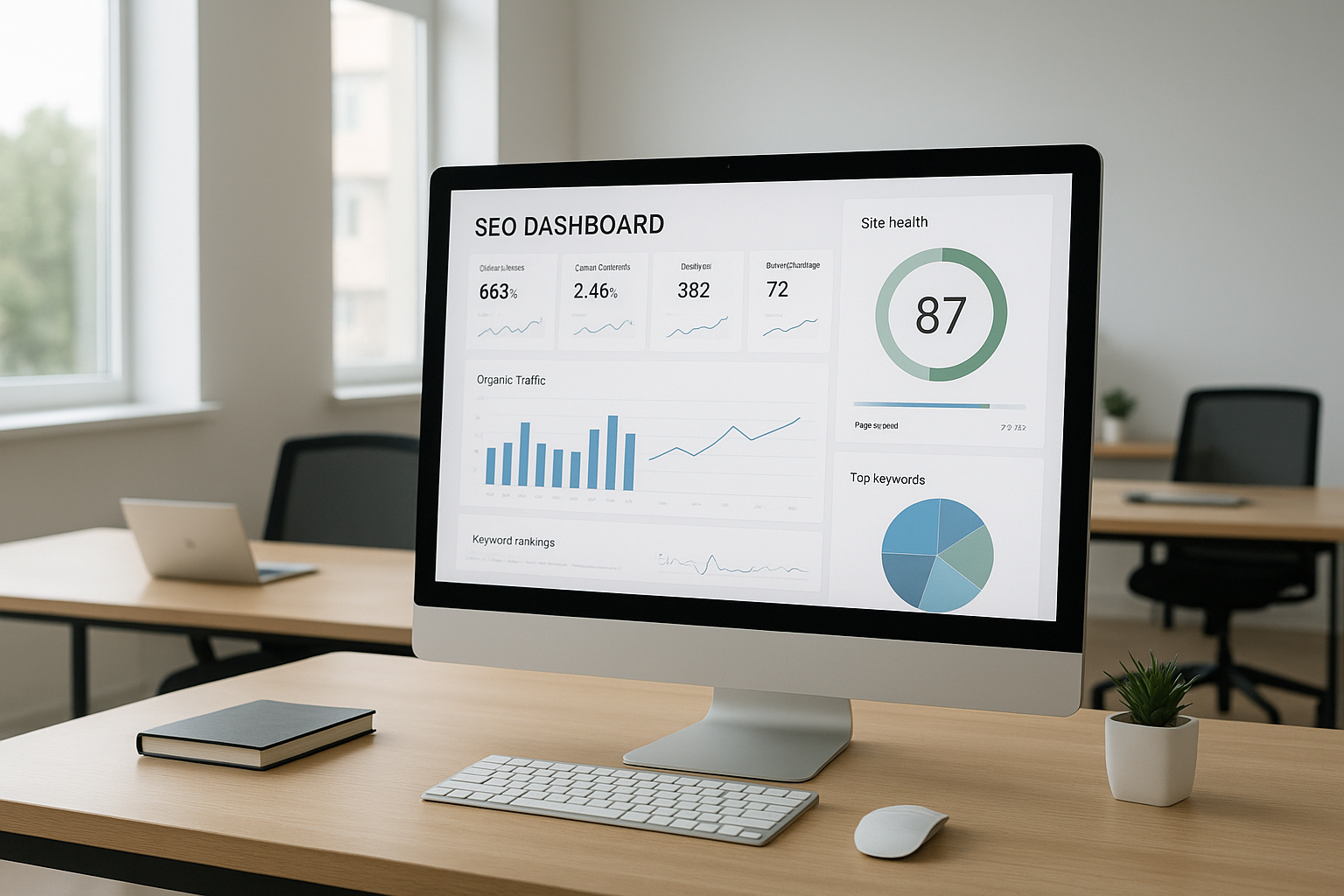
A unified dashboard is often the first step agencies take when learning how to scale SEO for agencies with automation.
Why Agencies Need to Scale SEO Operations Now
Search behavior is changing quickly. In addition to traditional organic results, AI-generated answers now sit above many search results pages, and Google has publicly stated that its AI Overviews feature reaches well over a billion monthly users, according to search industry reporting on evolving SEO practices. Consequently, agencies can no longer optimize for rankings alone; they must also optimize for citation inside AI-generated answers.
For a deeper look at how growing teams restructure their workflows, see this guide on SEO solutions for growing agencies that scale fast. Above all, the agencies winning new business today are the ones that can demonstrate measurable visibility gains across both environments, not just one.
How to Scale SEO for Agencies with Automation
Specifically, scaling SEO with automation follows a repeatable five-step process. Below is the short version; detailed steps follow immediately after.
- Audit every client site automatically
- Automate technical and on-page fixes
- Build GEO and AEO ready content at scale
- Automate internal linking and topical authority
- Monitor AI visibility and report results
Step 1: Audit Every Client Site Automatically
First, run automated technical and on-page audits across every client domain simultaneously. This surfaces indexing errors, broken links, missing schema, and content gaps without a team member opening each site individually. A tool like a free AI Visibility Checker can establish a baseline RA (Rank Authority) Score for each client before work begins.
Step 2: Automate Technical and On-Page Fixes
Next, use a platform that applies approved technical and on-page fixes automatically—meta tags, header structure, and page speed adjustments—rather than routing each fix to a developer. Rank Authority’s 1-Click AI AutoPilot, for example, streamlines this exact process across many sites at once. For a comparison of tools built for this purpose, see this overview of SEO software for agencies to scale client rankings fast.
Step 3: Build GEO and AEO Ready Content at Scale
Then, generate structured, answer-first content designed for both AI citation and featured snippets. An AI Blog Builder can draft this content quickly, but a human reviewer should still check facts and tone before publishing. This is where GEO and AEO diverge from classic SEO: content must directly answer a question in the first few sentences to be eligible for AI citation.
Step 4: Automate Internal Linking and Topical Authority
Furthermore, deploy topical siloing and internal linking automation so new and existing pages connect logically. Tools such as RankLink build this structure without a strategist manually mapping every link. Learn more in this breakdown of SEO automation tools for marketing agencies.
Step 5: Monitor AI Visibility and Report Results
Finally, track rankings, indexing status, and AI citation activity across every client site from a single dashboard. Note that a platform can submit pages for indexing, but Google alone determines whether and when a page is actually indexed. Automated reporting then turns this data into client-ready summaries instead of hours of manual spreadsheet work.
Individual results vary. Reviews reflect individual user experiences and are not guaranteed results for all users.
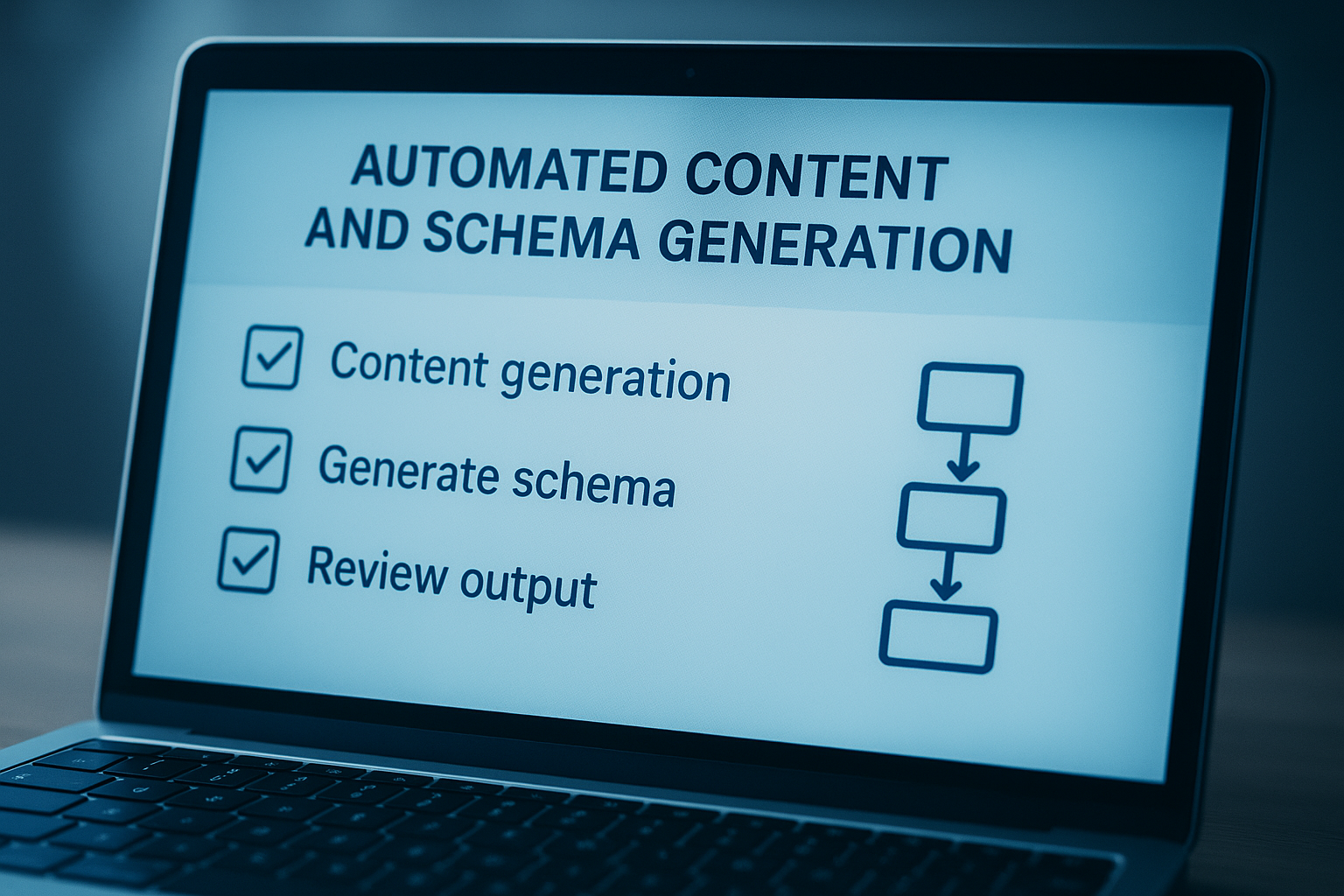
Automating repetitive technical steps frees agency teams to focus on strategy rather than manual fixes.
Choosing the Right Platform for Scaling Agency SEO
When comparing platforms, agencies should look for coverage across traditional SEO, GEO, and AEO in one dashboard rather than three disconnected tools. In particular, check whether the platform supports CMS integrations such as WordPress, Shopify, or Webflow, since manual deployment across different systems slows everything down. According to Google’s own SEO guidance, structured, well-organized sites remain easier for search systems to crawl and understand, which is exactly what automated schema deployment, defined by Schema.org, aims to support at scale.
For agencies managing many client accounts, this detailed comparison of SEO automation for agencies to scale client rankings fast is a useful next read. Similarly, agencies exploring AI-specific tooling may benefit from this guide on AI-powered SEO for agencies to scale client results fast.
Common Mistakes When Automating SEO at Scale
Even with the right tools, mistakes happen. Agencies sometimes automate content without a clear strategy, publishing generic pages that rank poorly. Others skip manual quality checks entirely, assuming automation needs zero oversight—a risky assumption, since brand voice and factual accuracy still require human review.
In contrast, agencies that pair automation with light human oversight tend to see steadier, more consistent gains. Likewise, ignoring AI visibility tracking in favor of only watching traditional rankings leaves agencies blind to a growing share of search traffic. As a result, monitoring both environments together is no longer optional for agencies serious about long-term client retention.

Human oversight paired with automation helps agencies avoid common scaling mistakes.
Frequently Asked Questions
What does it mean to scale SEO for agencies with automation?
Learning how to scale SEO for agencies with automation means using software to handle repetitive optimization tasks—audits, schema markup, content, and reporting—across many client sites at once instead of doing each task manually. This lets a small team manage far more client accounts without sacrificing quality.
How is SEO automation different from traditional manual SEO?
Traditional SEO requires a specialist to manually audit, fix, and monitor each site one at a time. Automation platforms apply approved fixes, generate schema, and track rankings across dozens of sites simultaneously, reducing hands-on hours significantly.
Why should agencies automate GEO and AEO alongside traditional SEO?
AI answer engines and traditional search now influence buying decisions side by side. Automating GEO and AEO ensures client content is structured for AI citation and featured answers, not just classic blue-link rankings.
How much time can agencies save by automating SEO workflows?
Agencies commonly report reclaiming hours per client each week by automating audits, internal linking, and content publishing. Individual results vary based on site size and existing technical debt.
What does automated SEO cost compared to hiring in-house staff?
An automation platform typically costs a fraction of a full-time SEO hire while covering audits, schema, content, and monitoring for many sites. Most platforms, including Rank Authority, offer tiered plans so agencies can scale cost with client volume.
How long does it take to see results from automated SEO campaigns?
Technical fixes and schema deployment can show measurable improvements within weeks, while content and authority-building typically take two to four months. Individual results vary and depend on competition and starting site health.
Can automation fully replace an agency’s SEO strategists?
No. Automation handles repetitive technical and content work, but strategists still set priorities, interpret data, and manage client relationships. Automation amplifies a strategist’s output rather than replacing their judgment.
What common mistakes should agencies avoid when automating SEO?
Common mistakes include automating without a content strategy, skipping manual quality checks, and ignoring AI visibility alongside traditional rankings. Agencies that skip strategic oversight risk generic, low-performing output.
How does schema markup automation help agency clients?
Schema markup is structured code that helps search engines and AI systems understand page content. Automating its generation and deployment across client sites improves eligibility for rich results and AI answer citations without manual coding.
What is the difference between GEO and AEO?
Generative Engine Optimization (GEO) focuses on getting content cited by AI tools like chatbots and AI Overviews, while Answer Engine Optimization (AEO) structures content to win featured snippets and direct-answer boxes. Both work alongside traditional SEO.
How do agencies track AI visibility for client websites?
Agencies use AI visibility monitoring tools that track whether and how often client content is cited across major AI answer platforms. This data helps prioritize which pages need GEO improvements most.
What should agencies look for when choosing an SEO automation platform?
Look for platforms covering technical SEO, schema, GEO, AEO, and multi-site reporting in one dashboard, plus CMS integrations and a trial period. This avoids stitching together multiple disconnected tools and conflicting data.
Final Thoughts on Scaling Agency SEO
Ultimately, learning how to scale SEO for agencies with automation comes down to combining the right technology with consistent human oversight. Agencies that automate audits, technical fixes, content, internal linking, and reporting free their teams to focus on strategy and client relationships instead of repetitive manual work. Platforms such as Rank Authority bring traditional SEO, GEO, and AEO together in one dashboard, backed by a seven-day trial for agencies that want to test the workflow before committing. As AI-powered search continues reshaping how clients get discovered, agencies that automate early will be best positioned to defend and grow their visibility across both traditional and AI-driven search results.

