

How to enhance digital marketing with AI-driven insights is now one of the most urgent questions facing business owners as AI Overviews, chatbots, and generative search tools reshape how people find information online. Traditional keyword-stuffed pages no longer guarantee visibility when answer engines decide what gets surfaced first. This guide walks through what AI-driven insights actually are, why they matter, and the concrete steps you can take to put them to work, whether you manage one website or dozens of client properties.
Direct Answer
To enhance digital marketing with AI-driven insights, audit your site for technical and content gaps, automate schema and on-page fixes, structure content for AI answer engines, and continuously monitor visibility across both traditional search and AI platforms like chatbots and generative answer tools.
What Is AI-Driven Digital Marketing?
AI-driven digital marketing is the use of machine learning and automated analysis to guide decisions about content, targeting, and technical optimization. Instead of manually reviewing spreadsheets, marketers rely on algorithms that process large volumes of data and surface patterns a person might miss.
For example, an AI system can scan thousands of competitor pages in minutes to identify keyword gaps, something that would otherwise take a human analyst days. As a result, teams spend less time on repetitive research and more time acting on findings.
According to industry research summarized by HubSpot, a majority of marketers using AI tools report improved campaign performance and faster content production. However, outcomes vary depending on how consistently the tools are applied, so individual results vary.

Reviewing AI-driven insights helps marketers spot opportunities faster than manual analysis alone.
How to Enhance Digital Marketing with AI-Driven Insights
Enhancing digital marketing with AI-driven insights starts with treating data as a continuous feedback loop rather than a one-time report. Specifically, that means pairing automated audits with regular content updates and ongoing visibility tracking.
In practice, this looks like running a site diagnostic, fixing technical errors automatically, then feeding the resulting data back into your content calendar. Platforms built around this workflow, such as Rank Authority, combine these steps into a single dashboard so small teams can act on insights without hiring specialized staff.
Furthermore, consistency matters more than any single tactic. Businesses that review performance data monthly tend to adapt faster to algorithm shifts than those that optimize once and move on.
Why AI Marketing Insights Are Reshaping Strategy
AI marketing insights are reshaping strategy because they shift decision-making from assumption to evidence. In particular, the rise of AI answer engines means visibility now depends on being cited, not just ranked.
Similarly, Generative Engine Optimization (GEO)—the practice of structuring content so AI tools like chatbots are more likely to cite it as a source—has become as important as traditional keyword targeting. Meanwhile, Answer Engine Optimization (AEO), which structures content for direct answers in featured snippets and voice search, adds another layer businesses cannot ignore.
As a result, brands that combine traditional SEO automation with GEO and AEO tend to maintain visibility across more discovery channels than those focused on search engines alone. You can review a broader breakdown of this shift in the complete guide to automated digital marketing insights.
Step-by-Step: Implementing AI-Driven Marketing Insights
Implementing AI-driven insights does not require a complete strategy overhaul. Instead, follow a structured sequence to build momentum without overwhelming your team.
- Audit your current digital presence to identify technical issues, missing schema markup, slow page speed, and content gaps.
- Automate technical and schema fixes using tools designed to deploy structured data without manual coding.
- Restructure key pages so direct answers appear near the top, making them easier for AI answer engines to extract and cite.
- Monitor AI visibility and competitor gaps by tracking citations across AI platforms alongside traditional rankings.
- Refine your strategy monthly based on performance data and expanded topical coverage.
Notably, each step builds on the last. Skipping the audit phase, for instance, often leads to wasted effort fixing problems that were never the real bottleneck.
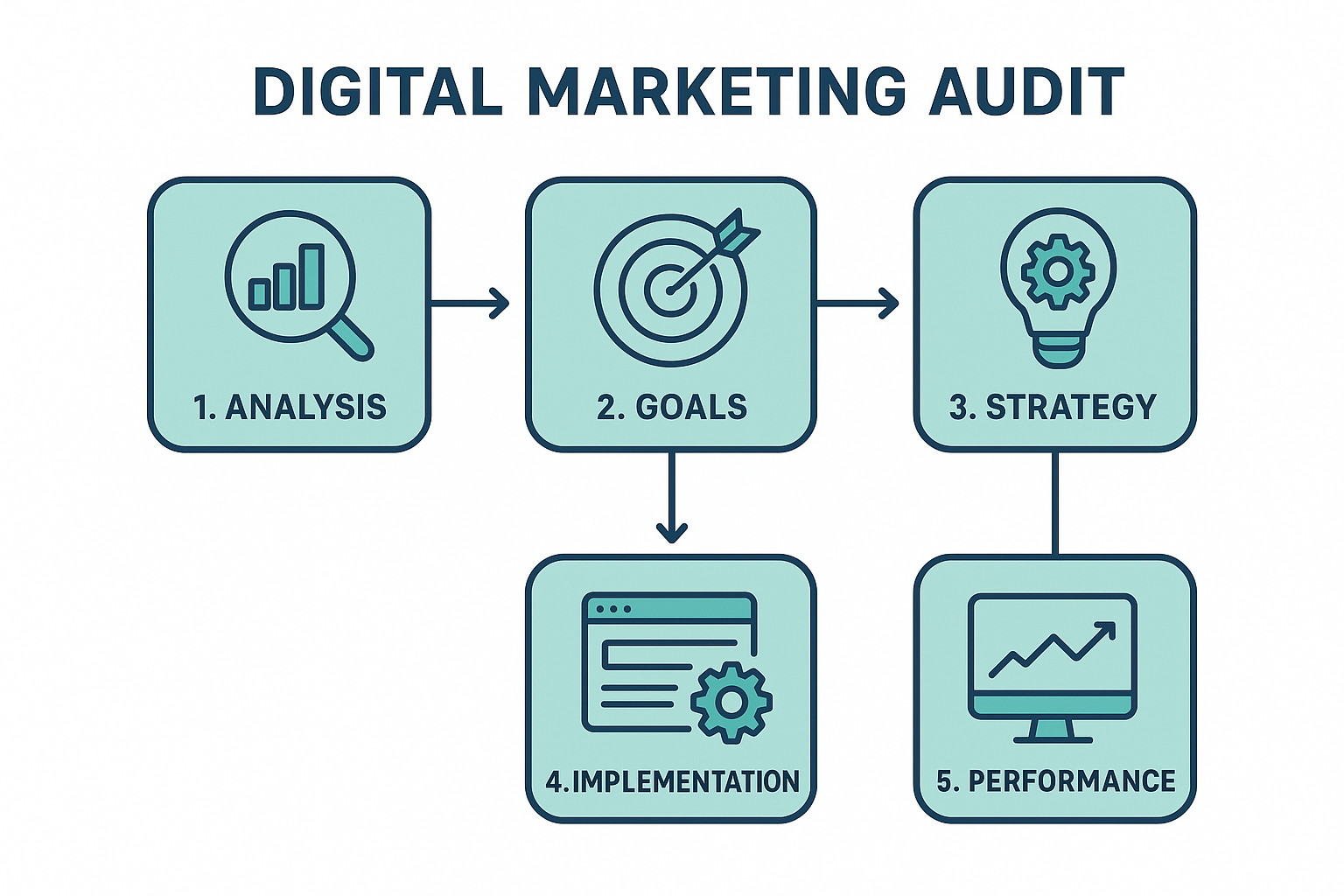
A structured, repeatable process makes it easier to enhance digital marketing with AI-driven insights over time.
Strengthening Visibility with GEO and AEO
Generative Engine Optimization and Answer Engine Optimization both aim to increase the chances that AI systems cite your content directly. Consequently, pages written for these purposes tend to be shorter, more focused, and heavier on structured data such as FAQ and HowTo schema.
For example, a page answering “how to enhance digital marketing with AI-driven insights” in the first sentence, followed by a concise direct-answer block, is far more likely to be pulled into an AI-generated summary than a page that buries the answer in paragraph six.
Tools that automate this structuring, including schema generation and content formatting, remove much of the guesswork. You can explore practical examples in this guide on AI solutions for digital marketing that drive results.
Choosing the Right AI Marketing Insights Platform
Selecting a platform depends on how much manual work you want to automate versus manage yourself. At minimum, look for tools that combine site auditing, schema generation, content creation, and visibility tracking in one place.
For instance, a platform like Rank Authority offers 1-Click AI AutoPilot for automated technical fixes, RankFast for competitor page analysis and rebuilds, and RankLink for internal linking automation—covering several workflows that would otherwise require separate tools or specialists.
Additionally, free diagnostic tools such as an AI Visibility Checker or Site Audit Checker let you evaluate your current standing before committing to a paid plan. Many providers, including Rank Authority, also offer a risk-free trial period for testing the full feature set.
Common Mistakes to Avoid with AI-Driven Insights
One common mistake is publishing AI-generated content without reviewing it for accuracy. Even strong AI writing tools can produce errors, so a brief human review step protects credibility.
Another frequent error is ignoring schema markup entirely. Without structured data, search engines and AI answer engines have a harder time understanding what a page is actually about, which limits citation potential.
Finally, many businesses treat AI optimization as a one-time project. In contrast, algorithms and AI models update frequently, so ongoing monitoring, discussed further in this guide to smarter campaigns, is what sustains visibility long term.
Measuring the Impact of AI-Enhanced Campaigns
Measuring impact requires tracking more than click-through rates. Specifically, businesses should monitor AI citation frequency, organic ranking movement, page speed, and content gap closure over time.
A 2024 industry analysis referenced by W3C standards documentation notes that structured data adoption correlates with improved machine readability of web content, which supports easier indexing and citation. Rank Authority can submit optimized pages for indexing, though Google alone determines whether and when a page is ultimately indexed.
Individual results vary, and reviews reflect individual user experiences rather than guaranteed outcomes for every business. Even so, consistent measurement remains the clearest way to know whether your strategy is working. For additional benchmarks, see this breakdown of AI content marketing insights.
Getting Started Without Overwhelming Your Team
Getting started does not mean adopting every tool at once. Instead, begin with a single workflow, such as automated schema deployment, before layering in content generation and competitor analysis.
Small business owners, marketers, and agencies managing multiple sites often find it easier to start with a free diagnostic scan, then expand into automated fixes once gaps are identified. You can learn more about matching tools to your goals in this overview of how AI tools can enhance your marketing strategy.
Ultimately, the goal is sustainable progress rather than a single dramatic overhaul. Teams that build AI insights into their regular workflow tend to see steadier, more durable visibility gains.

Collaborative review sessions help teams translate AI-driven insights into action.
Frequently Asked Questions
What is AI-driven digital marketing?
AI-driven digital marketing is the use of machine learning and automation to analyze customer data, predict behavior, and optimize campaigns in real time. It replaces manual guesswork with pattern recognition drawn from large datasets.
How to enhance digital marketing with AI-driven insights?
You can enhance digital marketing with AI-driven insights by auditing your current data, automating technical SEO fixes, structuring content for AI answer engines, and monitoring visibility across search and AI platforms. Starting with one workflow, such as schema automation, makes adoption manageable.
How much does AI marketing software typically cost?
Pricing varies widely, from free diagnostic tools to monthly subscriptions ranging from under $50 to several hundred dollars depending on features. Many platforms, including Rank Authority, offer a free trial period before committing to a paid plan.
How long does it take to see results from AI marketing insights?
Technical fixes like schema deployment can show measurable changes within a few weeks, while content and authority gains typically take two to four months. Individual results vary based on site history, competition, and implementation consistency.
What is the difference between AEO and SEO?
SEO focuses on ranking in traditional search results, while Answer Engine Optimization (AEO) structures content so AI assistants and voice search can extract direct answers. Both rely on technical accuracy, but AEO emphasizes concise, well-structured answers.
What is Generative Engine Optimization (GEO)?
Generative Engine Optimization (GEO) structures website content so AI tools like chatbots and generative search engines are more likely to cite it as a source. It often involves creating focused, fact-dense pages that answer specific questions clearly.
Can small businesses use AI-driven marketing insights?
Yes, small businesses are often well positioned to benefit because automated platforms remove the need for a dedicated in-house SEO or data team. Combining audits, content generation, and monitoring in one dashboard reduces cost and workload.
What are common mistakes when adopting AI marketing tools?
Common mistakes include publishing AI-generated content without fact-checking, ignoring schema requirements, and treating AI insights as a one-time fix rather than an ongoing process. Skipping competitor and keyword gap analysis is another frequent oversight.
How does AI improve content marketing?
AI improves content marketing by identifying topic gaps, analyzing competitor pages, and generating structured drafts optimized for readers and algorithms. It also supports consistent publishing schedules, which helps build long-term topical authority.
Is AI-driven marketing better than traditional marketing methods?
AI-driven marketing is not a replacement for strategy but a force multiplier that speeds up analysis and execution. Businesses that combine human judgment with AI-generated insights tend to outperform those relying on either approach alone.
What data do AI marketing platforms typically analyze?
AI marketing platforms commonly analyze site speed, backlink profiles, keyword gaps, schema completeness, and competitor content structure. Some platforms also track citations across AI answer engines to measure visibility beyond traditional search.
How do I track AI visibility across different platforms?
AI visibility tracking tools monitor whether your brand or content is being cited by chatbots and generative search engines, similar to how rank trackers monitor traditional positions. Dashboards that consolidate this data make gaps easier to spot quickly.
What skills are needed to use AI marketing tools effectively?
Basic familiarity with your website’s content management system and an understanding of your target audience are usually sufficient to start. Automated platforms are designed to handle technical complexity, reducing the need for deep SEO expertise.
How often should I update my AI marketing strategy?
Reviewing performance data monthly and conducting a full strategy review quarterly keeps your approach aligned with algorithm changes. AI answer engines and search algorithms evolve frequently, so continuous monitoring beats a set-and-forget approach.
Conclusion
In summary, learning how to enhance digital marketing with AI-driven insights comes down to consistent, structured action: audit your site, automate technical fixes, write for direct answers, and monitor visibility across both traditional and AI-powered search. Businesses that treat this as an ongoing cycle rather than a one-time project tend to maintain stronger discoverability as search continues to evolve.
Whether you manage a single website or oversee several client properties, tools that consolidate GEO, AEO, and SEO automation, such as those available at Rank Authority, can meaningfully reduce the expertise and time required to stay visible. As always, individual results vary, so pair any platform with regular review of your own performance data.

