

How to improve search engine visibility using AI starts with understanding that search itself has changed. Today’s searchers get answers from Google AI Overviews, ChatGPT, and Perplexity, not just a scrollable list of blue links. As a result, businesses now need strategies built for both traditional search engines and AI answer engines to stay visible. This guide walks through the specific technical and content actions that strengthen presence across both environments, and how automation tools like Rank Authority make the process faster and more consistent.
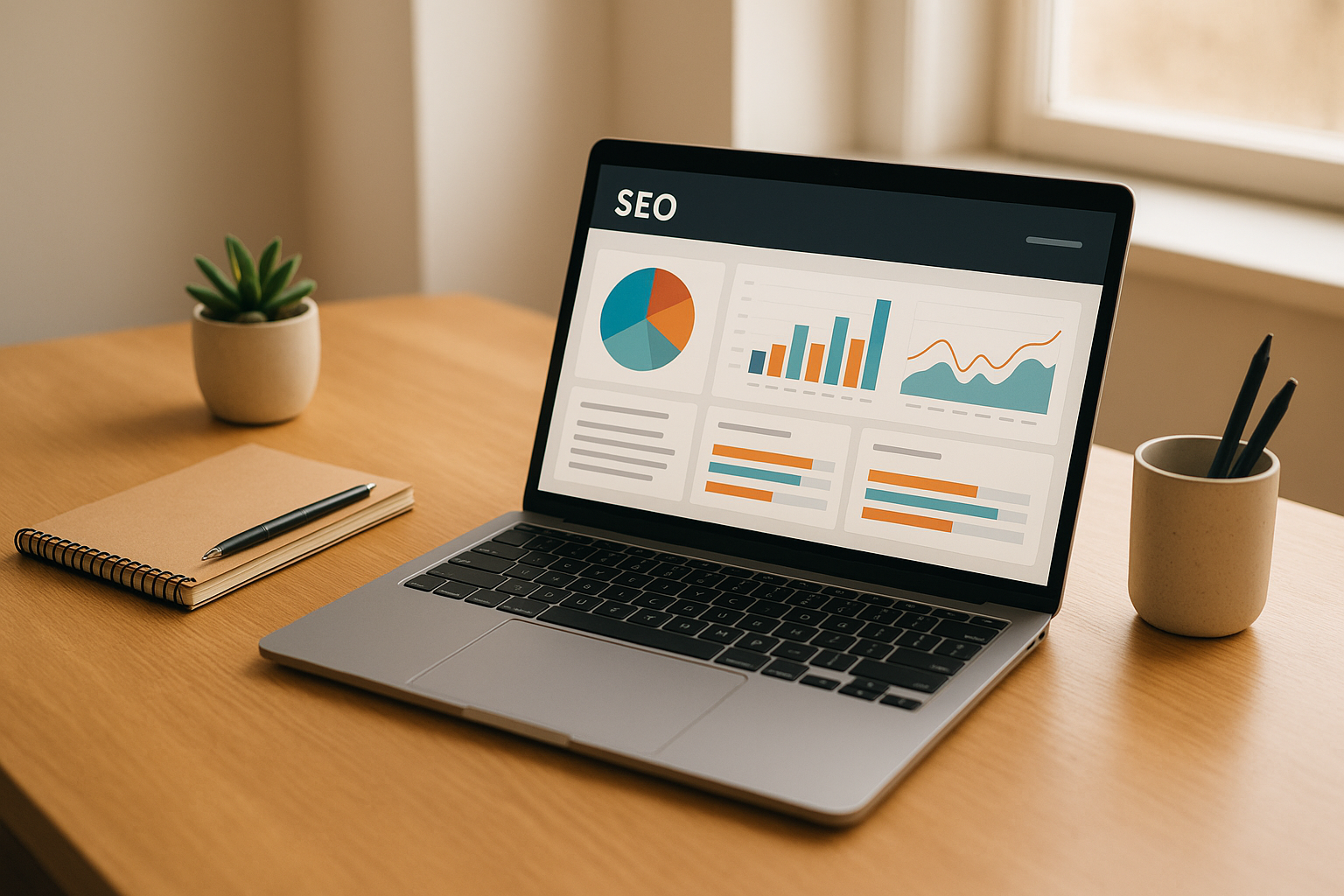
A visibility dashboard reflects how AI automation can track search performance in real time.
What Is Search Engine Visibility and How Does AI Improve It?
Search engine visibility is how easily potential customers find a website across search engines and AI answer platforms. How to improve search engine visibility using AI is, in short, the process of using automated tools to fix technical SEO issues, structure content for AI citation, and monitor rankings continuously and at scale. In practice, this means combining traditional SEO automation with Generative Engine Optimization (GEO) — formatting content so AI systems can cite it directly — and Answer Engine Optimization (AEO), which structures answers for featured snippets and AI-generated responses.
Notably, industry research from SparkToro has shown that a majority of search queries now end without an additional click, largely because AI-generated answers satisfy the query directly on the results page. Therefore, simply ranking in a traditional sense is no longer enough. In addition, a business’s content must be structured well enough that an AI system chooses to cite it by name, since that citation often replaces the click a website would have otherwise received.
How to Improve Search Engine Visibility Using AI: A Step-by-Step Process
Improving visibility is not a single action; rather, it is a sequence of coordinated steps. For example, technical fixes mean little without content structured for AI citation, and content means little without the schema markup that helps AI systems understand it. The following process outlines how automation tools, including Rank Authority’s AI-powered online visibility tools, typically approach this work.
- Run a full AI visibility and site audit to identify technical gaps, missing schema, and content weaknesses, producing a baseline score such as a Rank Authority Score (RA Score).
- Deploy automated schema markup so answer engines and traditional search engines alike can parse structured data without manual coding.
- Build GEO-ready artifact pages designed specifically for citation by AI systems such as ChatGPT, Perplexity, and Google AI Overviews.
- Format existing content for AEO with direct answers, FAQ sections, and scannable structure to improve eligibility for featured snippets.
- Automate internal linking and topical siloing, similar to Rank Authority’s RankLink feature, so authority flows to the most important pages.
- Monitor AI citation tracking and competitor visibility continuously, adjusting the strategy as search behavior and algorithms shift.
AI answer engines pull content from multiple sources, making structured citation signals essential.
Boosting AI Visibility Across Answer Engines
AI visibility refers specifically to how often and how accurately a brand appears within AI-generated answers, rather than just within a ranked list of links. Consequently, businesses need to think beyond keywords and consider how an AI model would summarize their expertise. According to Google’s own developer documentation, structured data increases a page’s eligibility for enhanced search features, which also applies to how AI systems interpret page content (see Google Search Central).
In particular, Rank Authority’s GEO and AEO tools generate artifact-style pages and structured answers designed for this exact purpose. For instance, a service page rewritten with clear definitions, data points, and direct answers is far more likely to be cited by an AI answer engine than a page written only for keyword ranking. Resources like Rank Authority’s guide on search visibility AI tools go into further detail on this shift.
Automating Technical SEO and Schema for AI-Driven Search
Technical SEO still forms the foundation of visibility, even in an AI-driven search environment. However, manually auditing site speed, broken links, and schema markup across dozens of pages is time-consuming. This is where 1-Click AI AutoPilot technology becomes useful: it scans a site, flags technical and content gaps, and streamlines approved fixes without requiring an in-house SEO team.
Similarly, automated indexing submission can speed up how quickly search engines discover new or updated pages. It is worth clarifying, though, that Rank Authority can submit pages for indexing, but Google alone determines whether and when a page is actually indexed. For businesses managing multiple client sites, this kind of automation, paired with CMS integrations for WordPress, Shopify, Wix, and similar platforms, reduces the workload considerably. Readers can also review the broader toolset on digital optimization tools for AI-powered search.
Avoiding Common Mistakes When Optimizing for AI Search Visibility
Above all, the most common mistake is treating AI search optimization as identical to traditional SEO. In contrast, AI systems reward clarity, direct answers, and well-structured data over keyword density alone. Other frequent errors include skipping schema markup entirely, publishing long unstructured paragraphs with no FAQ formatting, and failing to track how an AI platform cites or paraphrases a brand’s content.
Furthermore, many businesses neglect internal linking and topical organization, which weakens the authority signals that both Google and AI crawlers rely on. As explained on the Wikipedia overview of search engine optimization, relevance and site structure remain foundational, even as the tools used to achieve them evolve. Individual results vary, and no automation tool can guarantee specific rankings or indexing outcomes.
Automated schema markup helps both search engines and AI systems interpret page content accurately.
Choosing the Right Platform Features
When evaluating any AI SEO platform, it helps to compare features against actual business needs rather than marketing claims. Specifically, look for site auditing, schema automation, GEO and AEO content tools, internal linking automation, and ongoing visibility monitoring in one place. Rank Authority’s breakdown of which features to prioritize in an SEO platform offers a useful checklist for this comparison, as does the structured data standard published by Schema.org, the shared vocabulary most search and AI systems rely on.
Meanwhile, agencies managing multiple client sites should prioritize platforms with bulk auditing and reporting, since manually repeating these steps for each property is impractical. For a deeper look at traffic-focused strategy, Rank Authority’s guide on AI tools for traffic growth expands on pairing visibility gains with conversion-focused content.
Frequently Asked Questions About How to Improve Search Engine Visibility Using AI
What does it mean to improve search engine visibility using AI?
How to improve search engine visibility using AI refers to using automated tools and algorithms to fix technical SEO issues, structure content for AI citation, and monitor rankings across both traditional search engines and AI answer platforms. It combines traditional SEO automation with GEO and AEO strategies.
How is Generative Engine Optimization (GEO) different from traditional SEO?
GEO focuses on formatting content so AI systems like ChatGPT and Perplexity can cite it directly in generated answers, while traditional SEO focuses on ranking in standard search result links. Both share a foundation in content quality and site authority.
What is Answer Engine Optimization (AEO)?
AEO is the practice of structuring content with direct answers, FAQ formatting, and schema markup so it can be surfaced in featured snippets and AI-generated answer boxes. It prioritizes clarity and structure over keyword volume alone.
How long does it take to see AI visibility improvements?
Most businesses begin seeing measurable AI visibility and indexing activity within four to eight weeks of implementing schema, GEO, and AEO changes, though timelines vary by site size and competition. Individual results vary.
Can small businesses improve search visibility without hiring an SEO expert?
Yes, automated platforms like Rank Authority’s 1-Click AI AutoPilot handle technical fixes, schema generation, and content structuring without requiring in-house expertise. This removes much of the learning curve typically associated with manual SEO work.
What is schema markup and why does AI search need it?
Schema markup is structured code that helps search engines and AI systems understand the content and context of a page. Without it, AI answer engines have a harder time accurately citing or summarizing a website’s information.
How much does AI-powered SEO automation typically cost?
Pricing for AI SEO automation platforms varies widely, from free diagnostic tools to monthly subscriptions for full-service platforms. Rank Authority offers a 7-day free trial so businesses can evaluate the platform before committing to a paid plan.
What are the most common mistakes businesses make with AI search optimization?
Common mistakes include ignoring schema markup, writing content without a clear direct-answer structure, and failing to monitor how AI platforms cite or misrepresent their brand. Skipping internal linking and topical organization also weakens results.
Does using AI tools guarantee higher rankings?
No automation tool can guarantee specific rankings or indexing outcomes, since search engines and AI platforms control their own algorithms. Rank Authority can submit pages for indexing, but Google alone determines whether and when a page is indexed.
How does AI citation tracking work?
AI citation tracking monitors whether and how often a brand’s content is referenced or quoted across AI answer platforms such as ChatGPT, Perplexity, and Google AI Overviews. This gives businesses visibility into their AI presence beyond standard search rankings.
What is the difference between AI Overviews and traditional search results?
AI Overviews generate a synthesized answer directly on the search results page, often pulling from multiple sources, while traditional results display a ranked list of links. Both require different optimization approaches to earn visibility.
How does Rank Authority’s 1-Click AI AutoPilot work?
1-Click AI AutoPilot scans a website for technical and content gaps, then streamlines approved fixes such as schema deployment and on-page corrections without requiring manual coding. It is designed to reduce the time and expertise typically needed for SEO maintenance.
Should businesses still use traditional SEO when optimizing for AI search?
Yes, traditional SEO remains foundational because AI answer engines often pull from well-ranked, authoritative sources. Combining traditional SEO automation with GEO and AEO produces the strongest overall visibility.
Final Thoughts
In summary, how to improve search engine visibility using AI comes down to combining automated technical fixes, schema markup, and content built for both traditional ranking and AI citation. Because the search landscape now includes AI Overviews, ChatGPT, and Perplexity alongside classic results pages, businesses that optimize for only one environment risk losing visibility in the other. Therefore, pairing GEO and AEO strategies with consistent monitoring gives a clearer, more complete picture of where a brand stands. Tools such as Rank Authority’s 1-Click AI AutoPilot, RankFast, and RankLink, available with a 7-day free trial at rankauthority.com, are designed to make this ongoing work manageable for small businesses, marketers, and agencies alike. Individual results vary, and reviews reflect individual user experiences rather than guaranteed outcomes for every site.

