
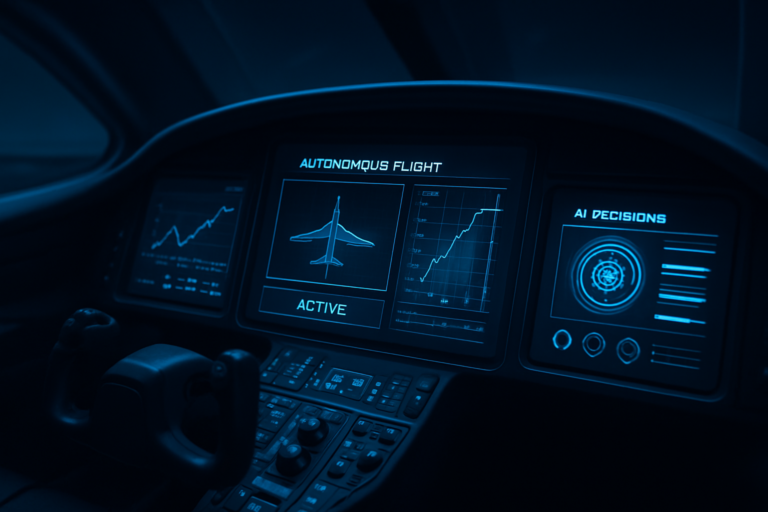
AI AutoPilot technology is a class of intelligent software that monitors data inputs, makes real-time decisions, and executes actions autonomously — all without requiring constant human intervention. As businesses and industries increasingly seek efficiency, this technology has moved from science fiction into everyday infrastructure, reshaping how systems operate across aviation, marketing, manufacturing, and beyond.
Understanding how it works, where it applies, and what risks it carries is essential for anyone looking to adopt or evaluate autonomous AI systems today. Therefore, this guide breaks down everything you need to know in clear, practical terms.
What Is AI AutoPilot Technology?
AI AutoPilot technology is a system that combines machine learning, sensor data, and decision logic to manage complex, continuous tasks with minimal human input. Unlike traditional automation, which follows rigid pre-programmed rules, an AI autopilot adapts its behavior as conditions change.
At its core, the system perceives its environment, reasons about the best course of action, and then executes that action — often in milliseconds. For example, an autopilot system in a commercial aircraft continuously reads altitude, speed, wind, and heading data, then adjusts control surfaces to maintain the desired flight path.
In digital contexts, the same principle applies. A marketing autopilot might monitor ad performance metrics and automatically reallocate budget toward higher-performing campaigns. In both cases, the defining characteristic is self-directed action guided by learned or programmed intelligence.
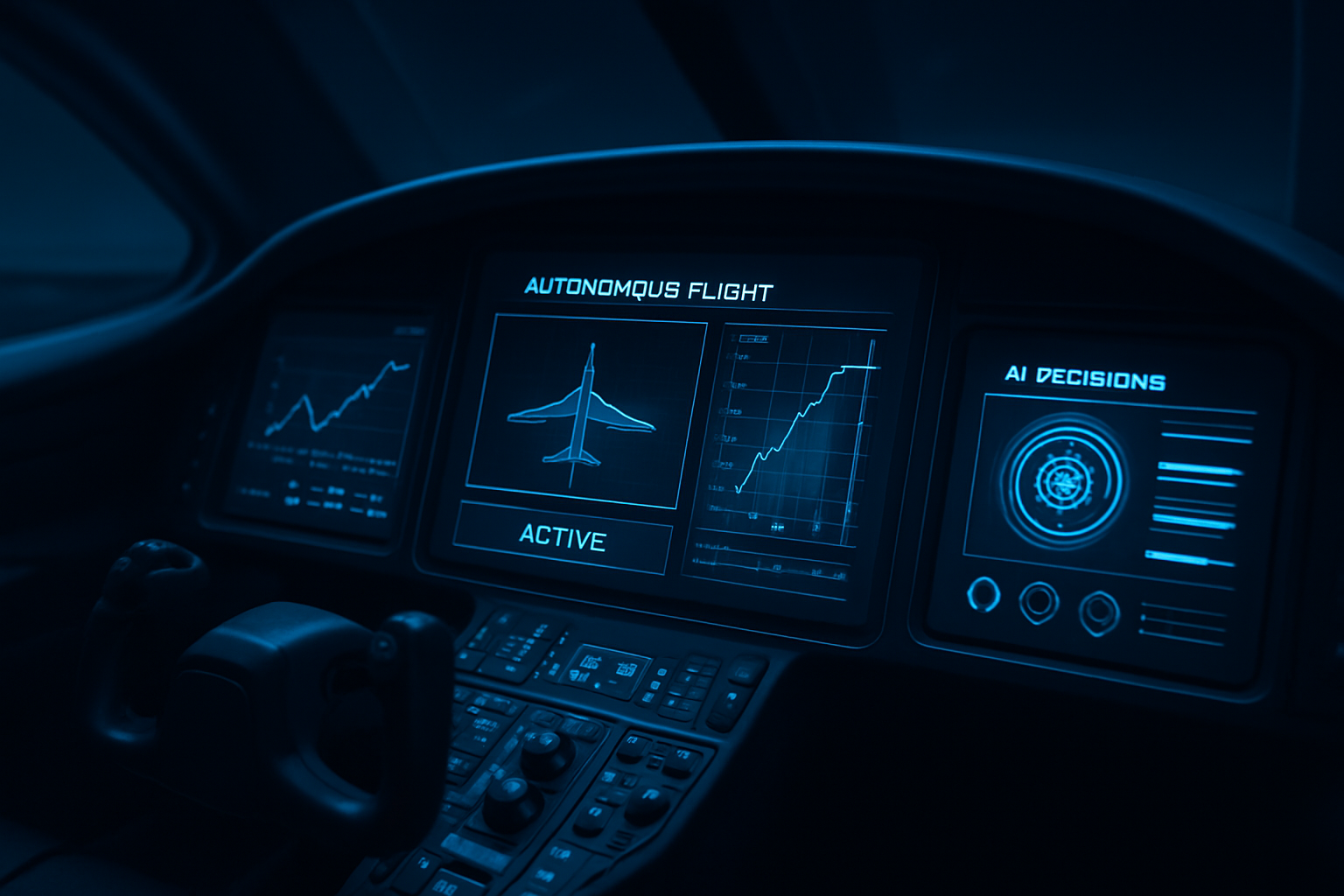
AI AutoPilot technology processes thousands of data points per second to maintain autonomous control in complex environments.
The Core Technologies Behind Autonomous AI Systems
Several foundational technologies work together to make AI autopilot systems function reliably. First, machine learning enables the system to recognize patterns in historical data and make predictions. Additionally, reinforcement learning allows the system to improve through repeated trial and error, rewarding correct decisions and penalizing mistakes.
Computer vision gives autopilot systems the ability to interpret visual information from cameras and sensors. Meanwhile, natural language processing (NLP) allows systems that interact with humans — such as customer service bots — to understand and respond to text or speech naturally.
Finally, real-time data pipelines connect these components, ensuring the system always acts on the most current information available. Without fast, reliable data streams, even the most sophisticated AI model would make outdated decisions.
How Reinforcement Learning Improves Autopilot Decisions
Reinforcement learning is particularly powerful in autopilot contexts because it does not require labeled training data. Instead, the system explores possible actions, observes outcomes, and gradually learns which strategies produce the best results. As a result, autopilot systems trained with reinforcement learning often outperform those built on static rule sets, especially in dynamic environments.
Where AI Autopilot Is Applied Today
The reach of AI autopilot systems has expanded dramatically over the past decade. Below are the most prominent domains where this technology is actively deployed.
Key Application Areas
- Aviation: Commercial autopilots manage flight paths, altitude, and speed during cruise phases.
- Autonomous vehicles: Self-driving systems use sensor fusion and AI to navigate roads without human input.
- Digital marketing: Autopilot platforms optimize ad bids, email sequences, and content scheduling automatically.
- Manufacturing: Robotic arms and assembly systems use AI autopilot to adjust production in real time.
- Financial trading: Algorithmic trading systems execute thousands of trades per second based on market signals.
Each of these sectors shares a common need: the ability to process more data faster than any human team can manage. Therefore, AI autopilot fills a critical operational gap, not by replacing human judgment entirely, but by handling the volume and speed that humans cannot match.
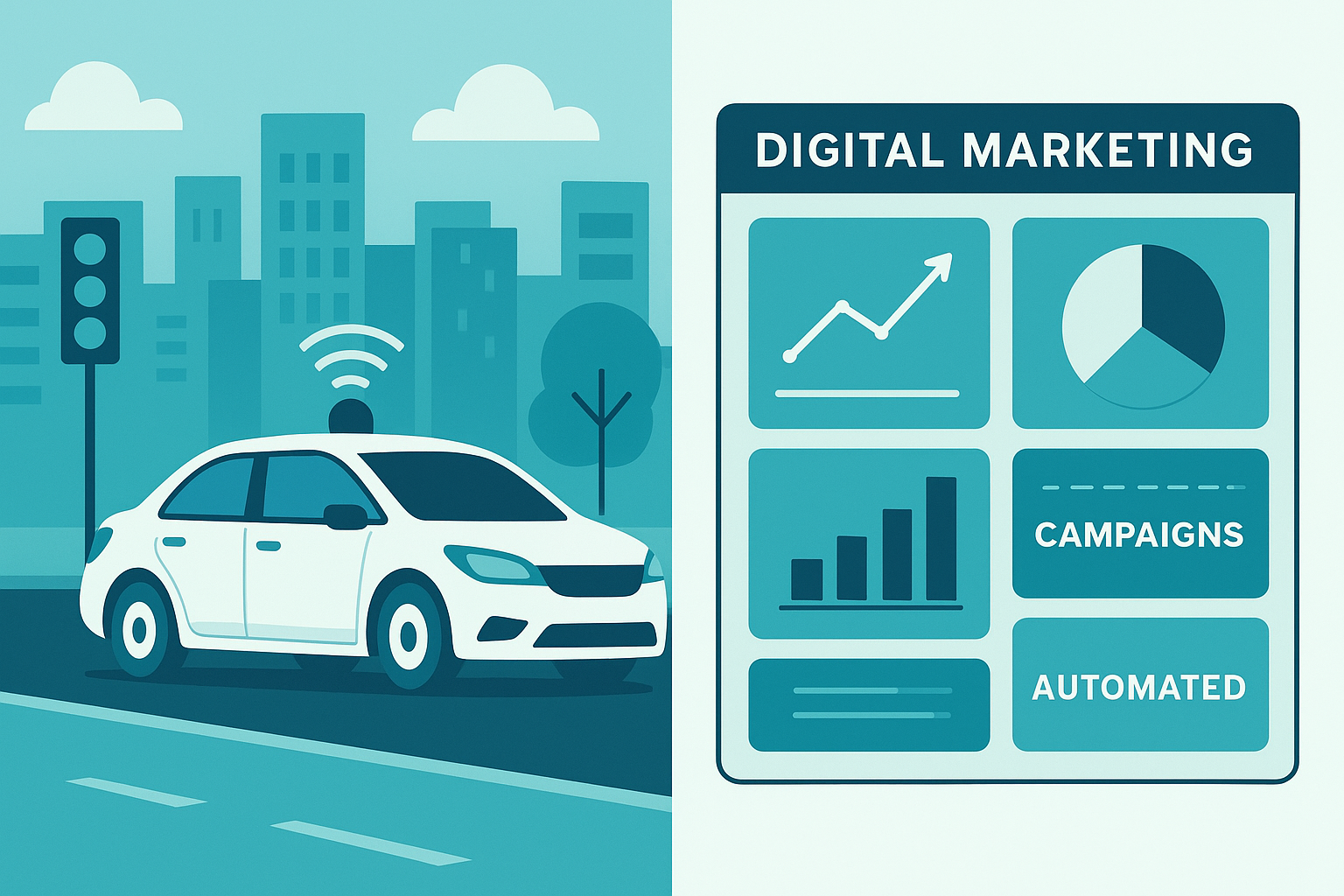
From self-driving cars to automated ad campaigns, AI autopilot systems are reshaping how industries operate at scale.
Benefits That Drive Adoption
Organizations adopt AI autopilot systems primarily because they deliver measurable operational advantages. First and most obviously, they reduce the burden on human operators by handling repetitive, high-volume tasks automatically. This frees teams to focus on strategy, creativity, and exception handling.
Additionally, autopilot systems operate continuously without fatigue. A human analyst cannot monitor ad performance around the clock, but an AI autopilot can — and will act on changes within seconds. In practice, this speed advantage often translates directly into cost savings and performance improvements.
Furthermore, AI autopilot systems produce consistent outputs. Human decision-making is subject to mood, distraction, and cognitive bias. In contrast, a well-trained autopilot applies the same logic every time, reducing variance and making outcomes more predictable.
Scalability as a Strategic Advantage
One of the most compelling benefits is scalability. A human team managing ten ad campaigns cannot simply manage a thousand campaigns with the same effort. However, an AI autopilot system scales effortlessly, applying the same optimization logic across as many instances as needed. Resources like Rank Authority illustrate how autopilot-style AI tools are increasingly used in SEO and content marketing to manage large-scale optimization tasks that would otherwise require entire teams.
Risks and Limitations to Understand
Despite its advantages, AI autopilot technology carries meaningful risks that every adopter must understand. The most significant is data bias. If the training data reflects historical inequalities or errors, the autopilot will perpetuate those flaws at scale. As a result, biased autopilot systems can cause harm far more efficiently than biased humans.
Transparency is another concern. Many advanced AI models function as black boxes, making decisions that are difficult to explain or audit. In regulated industries — such as finance, healthcare, or aviation — this opacity can create legal and compliance challenges.
Finally, over-reliance on autopilot systems can erode human expertise. Pilots who rarely manually fly aircraft may lose proficiency over time. Similarly, marketers who delegate all decisions to AI tools may lose the intuition needed to course-correct when systems fail. Therefore, maintaining human oversight and skill development alongside autopilot deployment is critical.

Maintaining human oversight remains essential even as AI autopilot systems grow more capable and autonomous.
How to Deploy an AI Autopilot System Effectively
Successful deployment requires a structured approach. Rushing into full autonomy without proper preparation is one of the most common and costly mistakes teams make. The following steps provide a reliable framework.
- Define the scope clearly. Identify exactly which tasks the autopilot will manage and which will remain under human control. Ambiguity leads to gaps and conflicts.
- Gather and clean training data. The quality of your autopilot’s decisions depends entirely on the quality of the data it learns from. Therefore, invest time in data preparation before training begins.
- Run supervised pilot tests. Deploy the system in a controlled environment with human monitoring. This phase surfaces edge cases and failure modes before they affect production.
- Establish performance benchmarks. Define measurable success criteria so you can objectively evaluate whether the autopilot is performing as intended.
- Build in fallback protocols. Every autopilot system should have a defined response when confidence in a decision drops below an acceptable threshold — either defaulting to a safe state or escalating to a human.
- Monitor and retrain continuously. Environments change over time, and a model trained on last year’s data may perform poorly today. Schedule regular retraining cycles to keep the system current. Tools highlighted at Rank Authority demonstrate how continuous monitoring is increasingly built into modern AI autopilot platforms.
The Future Direction of Autonomous AI
The trajectory of AI autopilot technology points toward greater autonomy, broader application, and tighter integration with human workflows. Emerging developments in natural language processing are enabling autopilot systems to understand and respond to conversational instructions, making them far more accessible to non-technical users.
Additionally, multi-modal AI systems that combine vision, language, and sensor data are blurring the line between specialized autopilots and general-purpose AI agents. In practice, this means future autopilot systems will be capable of handling tasks that currently require multiple separate tools working in sequence.
However, regulatory frameworks are still catching up. Governments and industry bodies are actively developing standards for AI transparency, accountability, and safety — particularly in high-stakes domains like aviation and healthcare. As a result, organizations deploying autopilot systems today should build compliance readiness into their architecture from the start.
In Summary: Why AI AutoPilot Technology Matters Now
AI AutoPilot technology represents one of the most transformative shifts in how work gets done across every major industry. By combining machine learning, real-time data, and autonomous decision logic, these systems deliver speed, consistency, and scale that human teams simply cannot match alone. Nevertheless, the most effective deployments treat AI autopilot as a collaborator rather than a replacement — keeping humans informed, in control of exceptions, and continuously improving the systems they oversee.
Whether you are evaluating autopilot tools for a marketing team or designing autonomous systems for industrial use, the principles remain the same: start with clean data, test thoroughly, monitor continuously, and never remove the human override.
Frequently Asked Questions
What is AI AutoPilot technology?
AI AutoPilot technology is intelligent software that monitors inputs, makes decisions, and executes actions autonomously without constant human intervention. It combines machine learning, sensor data, and decision logic to manage complex tasks in real time.
How does it differ from traditional automation?
Traditional automation follows fixed, pre-programmed rules and cannot adapt when conditions change. AI autopilot learns from new data and adjusts dynamically, making it far more resilient in unpredictable environments.
Which industries use it most widely?
Aviation, autonomous vehicles, digital marketing, manufacturing, and financial trading are among the leading industries. Each benefits from the system’s ability to process large data volumes and act faster than human operators.
Is it safe to use without human oversight?
Most implementations are designed for supervised autonomy, meaning a human can intervene at any time. Full autonomy is reserved for well-tested, low-risk environments where failure consequences are minimal.
What technologies power these systems?
AI AutoPilot systems typically rely on machine learning, reinforcement learning, natural language processing, computer vision, and real-time sensor integration. These components work together to perceive the environment, reason about it, and take action.
How long does implementation typically take?
Timelines vary widely. A basic marketing autopilot can be deployed in days, while an autonomous vehicle or industrial control system may require months or years of development and testing.
What are the biggest risks?
Key risks include data bias leading to poor decisions, lack of transparency in how decisions are made, and over-reliance that reduces human skill. Cybersecurity vulnerabilities can also allow bad actors to manipulate autopilot behavior.
Can small businesses benefit from AI autopilot tools?
Yes. Small businesses can use autopilot tools for email marketing, social media scheduling, customer support chatbots, and ad bidding. These tools reduce manual workload and allow small teams to operate at a larger scale.
What is the difference between AI autopilot and AI agents?
AI AutoPilot systems typically manage a defined, continuous process such as flying a plane or running ad campaigns. AI agents are more flexible goal-driven systems that plan and execute multi-step tasks across different tools and environments.
How does reinforcement learning contribute?
Reinforcement learning allows an AI AutoPilot system to improve through trial and error by receiving rewards for correct actions and penalties for mistakes. Over time, this process produces highly optimized decision-making policies.
What common mistakes should teams avoid during deployment?
Common mistakes include deploying without sufficient training data, skipping human-in-the-loop testing phases, and failing to monitor performance after launch. Teams should also avoid treating autopilot systems as permanent set-and-forget solutions.
How does an AI autopilot handle unexpected situations?
Well-designed systems include fallback protocols that trigger when confidence in a decision drops below a threshold. In those cases, the system either defaults to a safe state or escalates control to a human operator.

