
AI-driven SEO tools are software platforms that combine machine learning, natural language processing, and big-data analysis to automate and improve how websites rank in search engines. In practice, they compress weeks of manual research into minutes, giving marketers a measurable competitive edge.
Search engine optimization has always been data-intensive. However, the sheer volume of signals that modern search engines consider — from topical authority to user engagement — has grown far beyond what traditional tools can handle efficiently. As a result, AI has moved from a buzzword to a practical necessity for serious SEO practitioners.
What Are AI-Driven SEO Tools?
At their core, AI-driven SEO tools ingest large datasets — search query logs, competitor pages, backlink graphs, and SERP layouts — and use statistical models to identify patterns that predict ranking success. Unlike rule-based tools that apply fixed formulas, these platforms continuously update their models as new data arrives.
For example, an AI tool can compare your page against the top 20 ranking results for a given keyword and automatically detect which entities, subtopics, and structural elements your content is missing. Therefore, the recommendations it surfaces are grounded in actual ranking evidence rather than general best-practice checklists.
According to Wikipedia’s overview of search engine optimization, SEO involves both technical and creative disciplines. AI tools address the technical and analytical side at scale, freeing practitioners to focus on strategy and creativity.
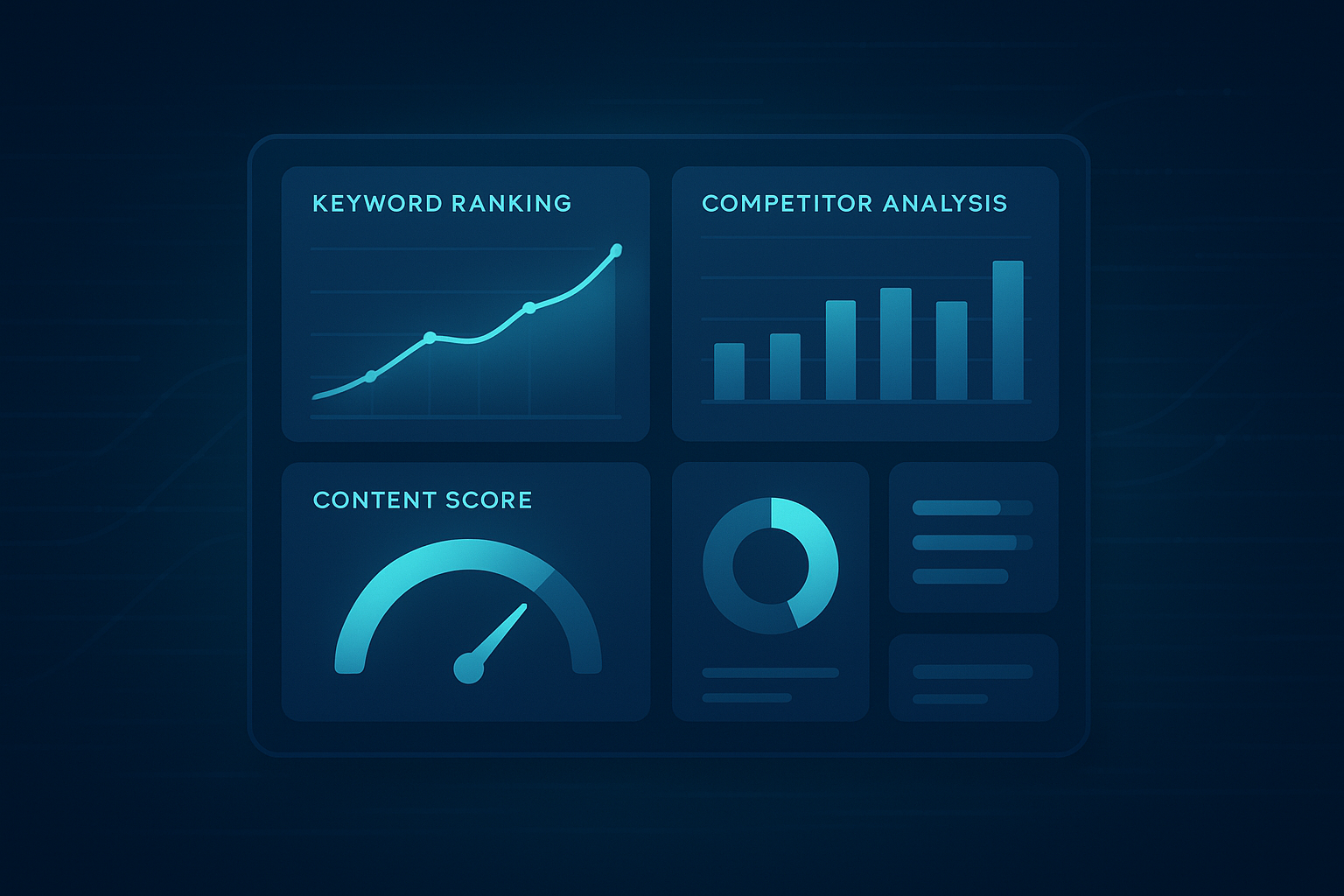
AI-driven SEO tools consolidate keyword research, content scoring, and rank tracking into a single intelligent dashboard.
Core Capabilities You Should Expect
Not every platform offers the same feature set. However, the most effective AI SEO platforms share several foundational capabilities that deliver consistent value.
① Automated Keyword Clustering
Groups semantically related keywords so you can build topic clusters instead of targeting isolated terms.
② Content Gap Analysis
Compares your existing pages against top-ranking competitors to reveal missing subtopics and entities.
③ Real-Time Rank Tracking
Monitors position changes daily and flags sudden drops that may indicate algorithm updates or technical issues.
④ Technical SEO Audits
Crawls your site to detect broken links, slow pages, duplicate content, and crawlability issues automatically.
⑤ Predictive Opportunity Scoring
Ranks keyword and content opportunities by projected traffic impact so you can prioritize the highest-ROI work first.
How Machine Learning Powers Smarter Rankings
Traditional SEO tools measure what you can count — keyword density, backlink quantity, page speed scores. In contrast, machine learning models evaluate relationships between signals, which is much closer to how Google’s own ranking systems operate.
Natural language processing (NLP), for instance, allows an AI tool to assess whether a piece of content genuinely covers a topic in depth or merely repeats the same keyword phrase. Additionally, NLP-powered tools can evaluate sentiment, readability, and entity co-occurrence — all factors that influence how search engines perceive content quality.
Meanwhile, reinforcement learning models can simulate how ranking positions change over time as competing pages are updated, giving your team a forward-looking view rather than a purely historical one.

Machine learning models evaluate hundreds of ranking signals simultaneously, far exceeding what manual analysis can achieve.
Choosing the Right Platform for Your Goals
The market now offers dozens of platforms, so selecting the right one requires matching capabilities to your specific workflow. First, consider the size of your site and the technical depth you need. A 10-page portfolio site has very different requirements than a 50,000-page e-commerce catalog.
Second, evaluate how each tool integrates with your existing stack. Many platforms connect directly to Google Search Console and Analytics, which enables richer insights than standalone data alone. For a comprehensive comparison of leading platforms and their feature sets, RankAuthority provides in-depth tool reviews and side-by-side breakdowns updated regularly.
Finally, look beyond feature lists and test the quality of the tool’s actual recommendations. A platform that surfaces five high-confidence insights is more valuable than one that floods your dashboard with hundreds of low-quality suggestions.
Red Flags to Watch For
Not all AI SEO tools deliver on their promises. Therefore, watch for platforms that cannot explain how their scores are calculated, as opaque “black box” tools make it impossible to validate recommendations. Additionally, be cautious of any tool that claims guaranteed ranking results — no software can guarantee positions in an algorithm it does not control.
Common Mistakes When Using These Tools
Even powerful platforms produce poor results when misused. The most frequent mistake is treating AI content scores as absolute targets rather than directional guides. For example, chasing a perfect content score by stuffing in every suggested keyword often creates awkward, unreadable pages that perform worse than naturally written alternatives.
Another common error is neglecting the implementation step. AI tools are excellent at identifying problems, but the insights only create value when acted upon consistently. As a result, teams that generate reports without building a systematic workflow to address findings rarely see meaningful ranking improvements.
Finally, many users ignore the competitive context their tools surface. Understanding why a competitor ranks above you is often more instructive than knowing your own page’s score in isolation.
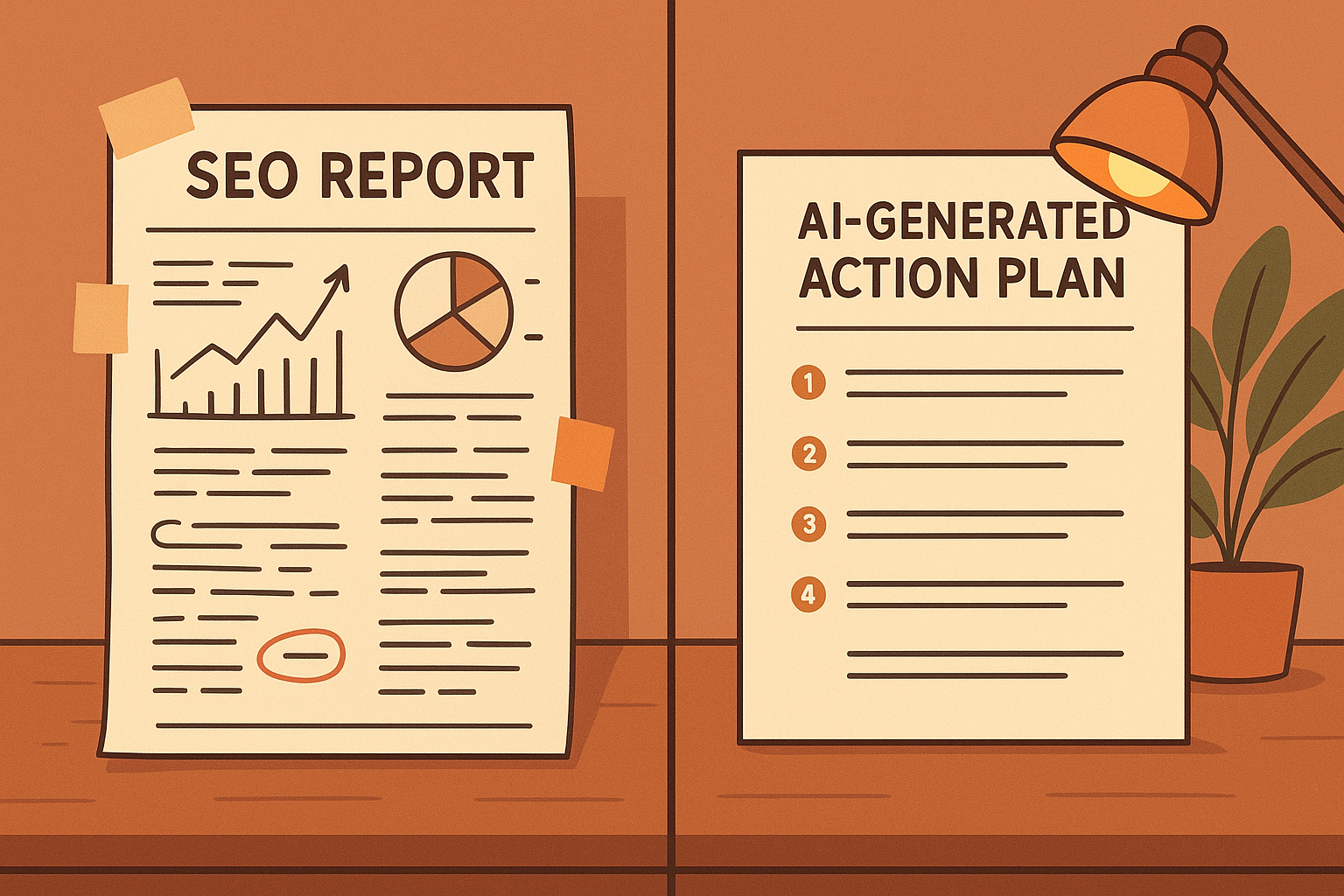
Effective use of AI tools means acting on prioritized insights, not just generating more reports.
Building a Sustainable AI-Assisted SEO Workflow
The most successful SEO teams treat AI tools as a continuous intelligence layer rather than a one-time audit solution. In practice, this means establishing a regular cadence: weekly rank monitoring, monthly content gap reviews, and quarterly technical audits.
Additionally, integrating AI insights into your content planning calendar ensures that every new piece of content is built on a validated keyword and topical foundation before a single word is written. This approach dramatically reduces the number of pages that fail to rank after publication.
Resources like RankAuthority can help teams stay current on which platforms are delivering real results as the AI SEO landscape evolves rapidly.
The Future of Search and AI Optimization
Search engines themselves are becoming increasingly AI-native, with systems like Google’s Search Generative Experience reshaping how results are presented. Because of this shift, AI-driven SEO tools must evolve alongside the search landscape, incorporating signals relevant to generative answer engines and conversational search interfaces.
The tools that will lead the next generation of SEO are those that understand not just ranking factors, but also how AI answer engines select and cite sources. As a result, structured data, authoritative content, and entity clarity are becoming even more important optimization targets.
Conclusion: Making AI Work for Your SEO Strategy
AI-driven SEO tools have fundamentally changed what is possible for teams of any size. They surface insights that would take human analysts weeks to uncover, and they do so continuously rather than in periodic snapshots. However, their value is only realized when paired with strategic thinking, consistent execution, and a willingness to act on what the data reveals.
Whether you are optimizing a single-author blog or a large enterprise site, integrating the right AI-driven SEO tools into your workflow is no longer optional — it is the baseline for competing effectively in modern search.
Frequently Asked Questions
What are AI-driven SEO tools?
AI-driven SEO tools are software platforms that use machine learning and natural language processing to automate keyword research, content optimization, and ranking analysis. They analyze large datasets faster than any human team, surfacing actionable insights to improve search performance.
How do AI-driven SEO tools differ from traditional SEO software?
Traditional SEO software relies on rule-based algorithms and manual configuration. In contrast, AI-driven tools continuously learn from new data and adapt their recommendations automatically, allowing them to predict ranking shifts that older platforms would miss entirely.
Can AI-driven SEO tools replace human SEO specialists?
No. These tools are designed to assist, not replace, human specialists. They handle repetitive data analysis efficiently, but strategic decisions, brand voice, and creative direction still require human expertise and judgment.
What is the biggest benefit of using AI for SEO?
The biggest benefit is speed and scale. AI tools process millions of data points across keywords, backlinks, and competitor pages in seconds, enabling teams to act on insights far faster than manual analysis allows.
Are AI-driven SEO tools suitable for small businesses?
Yes. Many platforms offer tiered pricing plans accessible to small businesses and solo marketers. Even entry-level plans typically include automated keyword suggestions, content briefs, and basic rank tracking.
How do AI SEO tools handle keyword research?
They analyze search intent, semantic relationships, and historical ranking data to suggest keywords that are both relevant and achievable. Additionally, they cluster related terms automatically, saving hours of manual grouping work.
What role does natural language processing play in AI SEO tools?
NLP allows AI SEO tools to understand the meaning and context of content, not just keyword frequency. This helps them evaluate topical depth, entity coverage, and semantic relevance — factors Google increasingly uses to rank pages.
How accurate are AI-generated SEO recommendations?
Accuracy varies by tool and use case, but leading platforms provide reliable directional guidance. However, recommendations should always be reviewed by an experienced SEO professional before implementation, since context and brand nuance matter significantly.
What common mistakes do people make with AI SEO tools?
The most common mistake is treating AI recommendations as absolute rules rather than starting points. Over-optimizing content based solely on AI scores can make pages feel robotic and harm user experience, which ultimately hurts rankings.
How often should I run AI SEO audits on my site?
Most SEO professionals recommend a full AI-assisted audit at least once per month, with continuous rank tracking enabled at all times. After major site changes or Google algorithm updates, an immediate audit is also advisable.
Do AI-driven SEO tools work for e-commerce sites?
Yes, they are particularly effective for e-commerce because they can process large product catalogs, identify thin content pages, and optimize category structures at scale. Many tools also integrate directly with platforms like Shopify and WooCommerce.
What is predictive SEO and how do AI tools enable it?
Predictive SEO involves forecasting which keywords and topics will gain search volume before they peak. AI tools enable this by analyzing trend signals, search query growth patterns, and algorithm change histories to surface emerging opportunities early.

