

AI optimization tools are software platforms that use artificial intelligence to analyze, automate, and improve search engine optimization strategies — and in 2025, they have become essential for any team serious about organic growth. Whether you manage a single blog or a large enterprise site, understanding how these tools work can mean the difference between ranking on page one and being invisible online.
Traditional SEO relied heavily on manual audits, spreadsheet-based keyword research, and guesswork. However, the rise of AI-driven platforms has fundamentally changed that workflow. Today, these tools surface insights in minutes that would previously take days to uncover.
Why Search Teams Are Adopting AI-Powered SEO in 2025
Search engines have grown dramatically more sophisticated over the past three years. Google’s algorithm now evaluates topical authority, semantic relevance, and user experience signals simultaneously. As a result, keeping up manually is no longer practical for most teams.
AI optimization tools solve this problem by continuously processing large volumes of search data and translating it into prioritized, actionable recommendations. They identify content gaps, flag technical issues, and even predict how a page is likely to rank before it goes live.
Additionally, the emergence of AI answer engines — including Google’s AI Overviews, Perplexity, and ChatGPT — has created an entirely new optimization discipline. Teams that use AI tools to structure content for both traditional search and generative engines are gaining a measurable competitive edge.
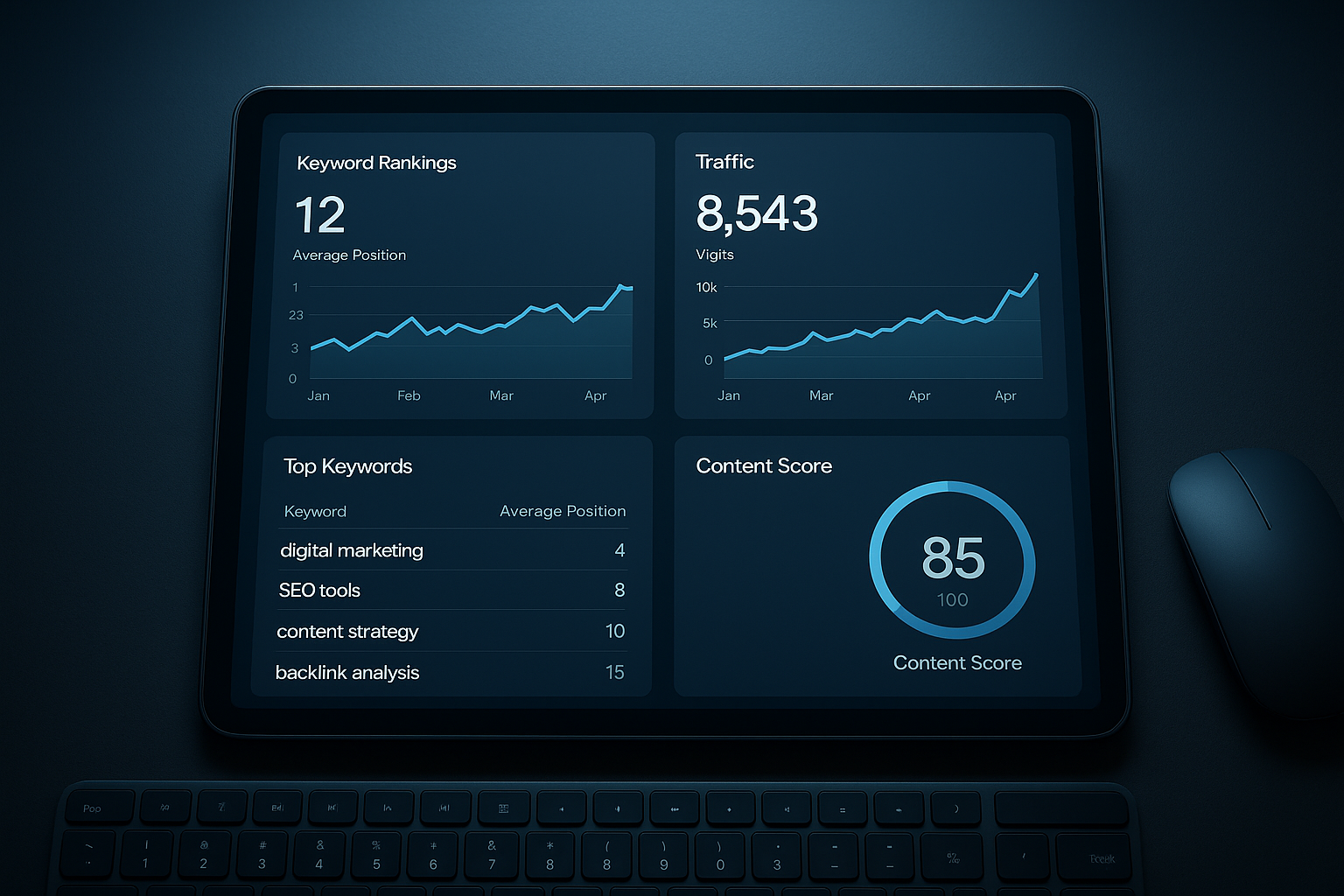
A modern AI optimization tools dashboard gives SEO teams real-time visibility into rankings, content scores, and technical health.
Core Features to Evaluate Before Choosing a Platform
Not every platform delivers the same value. Therefore, before committing to a subscription, it is worth understanding which feature categories matter most for your specific goals.
Keyword Research and Intent Clustering
The best platforms use natural language processing to group related keywords by search intent rather than simply listing volume data. This allows content teams to build topically complete pages that satisfy multiple related queries at once. According to Wikipedia’s overview of SEO, topical depth is increasingly central to how search algorithms evaluate authority.
Content Scoring and On-Page Recommendations
AI content scoring compares your draft against top-ranking competitors and identifies missing semantic terms, structural weaknesses, and readability issues. In practice, pages that consistently score in the top tier of these tools tend to outperform those that do not by a significant margin.
Technical SEO Auditing
Automated technical audits flag crawl errors, broken links, page speed problems, and missing structured data. Because these issues directly affect how search engines index your content, resolving them quickly is one of the highest-return activities in SEO. AI tools make this process continuous rather than periodic.
How to Use AI Optimization Tools Step by Step
Getting the most from these platforms requires a structured approach. The following five-step process works for teams of any size.
Step 1 — Audit your current SEO baseline. First, run a full site audit to identify technical errors, content gaps, and keyword opportunities. This gives you a clear picture of where you stand before making any changes.
Step 2 — Research and cluster target keywords. Next, use the keyword research module to identify high-value terms grouped by intent. Prioritize clusters where you already have some authority, because building on existing topical relevance accelerates results.
Step 3 — Optimize existing content with AI scoring. Run your top-performing pages through the content scorer and apply the recommended improvements. Often, refreshing existing content produces faster ranking gains than publishing entirely new pages.
Step 4 — Implement schema markup and structured data. Use the tool’s schema generator to add FAQ, HowTo, and Article markup to key pages. This step is particularly important for visibility in AI answer engines and featured snippets.
>Step 5 — Monitor rankings and iterate. Finally, track weekly ranking changes and refine your strategy based on what the AI identifies as winning patterns. Consistent iteration compounds over time.

Applying AI-driven content scores during the writing process helps marketers align each page with current search intent before publishing.
GEO and AEO: The New Frontier for AI-Driven Optimization
Beyond traditional search, two emerging disciplines are reshaping how content teams think about visibility. Generative Engine Optimization (GEO) focuses on making content discoverable by AI systems like Google’s AI Overviews and ChatGPT. Answer Engine Optimization (AEO) focuses on earning placement in featured snippets and direct answer boxes.
AI optimization tools support both disciplines by helping teams structure content with clear definitions, direct answers, and proper schema markup. Platforms like Rank Authority are specifically designed to address GEO and AEO alongside traditional SEO, making them particularly valuable for teams that want to future-proof their content strategy. For a deeper walkthrough, see our AI Scorecard: The Complete Guide to Smarter SEO.
In practice, GEO-optimized content tends to include concise definitional paragraphs, question-based headings, and structured FAQ sections — all elements that AI answer engines parse efficiently. Therefore, the same practices that improve AI search visibility also tend to improve traditional search rankings.
Common Mistakes That Undermine Results
Even powerful tools produce poor outcomes when used incorrectly. The most common mistake is publishing AI-generated recommendations verbatim without human editorial review. Search engines increasingly reward genuine expertise and original perspective, so treating AI output as a starting point rather than a final draft is critical.
Another frequent error is optimizing for keywords without considering search intent. For example, a page targeting a commercial keyword but written as an informational article will struggle to rank, regardless of how well it scores technically. AI tools can identify intent mismatches, but only if you review their recommendations carefully.
Finally, many teams neglect the monitoring phase entirely. Because search algorithms update continuously, a strategy that works today may need adjustment in 90 days. AI optimization tools shine brightest when used as an ongoing monitoring system rather than a one-time fix. Resources like Rank Authority provide continuous tracking features that make this kind of ongoing oversight practical even for small teams.

AI optimization tools map complex relationships between keywords, content, and rankings that would be impossible to track manually at scale.
Choosing the Right Tool for Your Team’s Goals
With dozens of platforms available, selection can feel overwhelming. However, a few guiding questions simplify the decision significantly. First, consider your primary use case: are you focused on content creation, technical auditing, rank tracking, or all three? Some tools excel in one area but are weak in others.
Second, evaluate integration compatibility. A tool that connects directly to your CMS, Google Search Console, and analytics platform will deliver far more value than one that operates in isolation. Additionally, consider the quality of the tool’s support and documentation, especially if your team is newer to AI-assisted workflows.
Finally, prioritize platforms that cover both traditional SEO and the newer GEO and AEO disciplines. Because search behavior is shifting rapidly toward AI-mediated answers, tools built for that future will compound in value more quickly than those anchored entirely in legacy keyword-rank metrics.
In conclusion, AI optimization tools represent the most significant productivity shift in SEO since the introduction of keyword research software. Teams that adopt them strategically — combining AI-generated insights with human editorial judgment — are consistently outperforming those that rely on manual workflows alone. Start with a solid audit, build a keyword strategy around intent, and iterate continuously to stay ahead of algorithm changes.
Frequently Asked Questions About AI Optimization Tools
What are AI optimization tools?
AI optimization tools are software platforms that use artificial intelligence and machine learning to analyze, improve, and automate SEO and content strategies. They help identify keyword opportunities, optimize on-page elements, and predict ranking outcomes faster than manual methods. Because they process large data sets continuously, they surface insights that manual analysis would likely miss.
How do AI optimization tools differ from traditional SEO tools?
Traditional SEO tools provide data reports that require human interpretation, while AI optimization tools actively analyze patterns, generate recommendations, and automate repetitive tasks. As a result, AI tools significantly reduce time-to-insight and surface opportunities that manual analysis might miss.
Can AI optimization tools help with Google rankings?
Yes, AI optimization tools can directly support Google rankings by identifying content gaps, improving topical authority, and ensuring on-page factors align with current algorithm signals. However, they work best when combined with high-quality, original content and a solid link-building strategy.
Are AI optimization tools suitable for beginners?
Most modern AI optimization tools are designed with intuitive interfaces that make them accessible to beginners. Many platforms offer guided workflows, automated audits, and plain-language recommendations so users without deep SEO knowledge can still act on insights effectively.
How much do AI optimization tools typically cost?
Pricing varies widely, ranging from free tiers with limited features to enterprise plans costing several hundred dollars per month. Most mid-range tools suitable for small to medium businesses fall between $50 and $200 per month.
What is GEO and how do AI tools support it?
GEO stands for Generative Engine Optimization, which focuses on making content discoverable by AI-powered answer engines like ChatGPT, Perplexity, and Google’s AI Overviews. AI optimization tools support GEO by structuring content with clear definitions, direct answers, and schema markup that large language models can easily parse.
What is the biggest mistake people make with AI optimization tools?
The most common mistake is treating AI tool output as final, publishable content without human review. AI recommendations should be treated as a starting point, because search engines increasingly reward authentic expertise and original perspectives that purely automated content often lacks.
How long does it take to see results from AI optimization tools?
Most users begin to see measurable ranking improvements within 4 to 12 weeks of consistently applying AI tool recommendations. Technical fixes like site speed and schema often show faster results, while content authority improvements typically take longer to build.
Do AI optimization tools work for local SEO?
Yes, many AI optimization tools include local SEO features such as Google Business Profile analysis, local keyword tracking, and citation auditing. These features help businesses improve visibility in location-based searches and map pack results.
Which features matter most for content marketers?
Content marketers should prioritize tools with content scoring, semantic keyword suggestions, competitor gap analysis, and readability analysis. Additionally, tools that integrate with CMS platforms like WordPress streamline the workflow from research to publication.
Can AI optimization tools handle technical SEO audits?
Yes, many AI optimization tools include automated technical SEO auditing that checks for broken links, crawl errors, page speed issues, missing meta tags, and structured data problems. These audits surface actionable fixes far faster than manual site reviews.
How do AI tools help with keyword research?
AI optimization tools use natural language processing and search data to cluster related keywords, identify search intent, and predict keyword difficulty. This allows marketers to build topically comprehensive content strategies rather than targeting isolated keywords in isolation.

