

AI-powered search optimization is quickly becoming the deciding factor in whether a business gets found online or fades into the background. As tools like ChatGPT, Google AI Overviews, and Perplexity increasingly answer questions directly, brands can no longer rely on traditional rankings alone. In this guide, you will learn what AI-powered search optimization actually means, how it works alongside generative engine optimization and answer engine optimization, and the practical steps needed to strengthen visibility across both classic and AI-driven search environments.
Quick Answer
AI-powered search optimization combines traditional SEO with generative engine optimization (GEO) and answer engine optimization (AEO) so content can be ranked, summarized, and cited by AI search tools. It prioritizes structured, factual, citation-ready content that AI systems can easily extract and quote.

AI-powered search optimization connects structured content to the AI systems that now generate search answers.
What Is AI-Powered Search Optimization?
AI-powered search optimization is the process of structuring, writing, and technically formatting content so it performs well in both traditional search engines and AI-generated answer systems. Unlike older SEO, which focused almost entirely on keyword rankings, this approach also accounts for how large language models read, summarize, and cite information.
In practice, this means paying close attention to entity clarity, factual accuracy, and structured data such as schema markup. For example, a well-optimized page might include a direct answer near the top, followed by supporting detail, so an AI tool can pull an accurate quote without misrepresenting the source. Because AI search results often skip the traditional click entirely, visibility now depends on being the source that gets cited, not just the link that gets clicked.
According to Google’s own documentation on AI features in Search, structured, well-organized content remains a foundational signal even as generative summaries become more common. This confirms that AI-powered search optimization is an extension of solid content practices, not a replacement for them.
How Generative Engine Optimization Shapes AI Search Results
Generative engine optimization, often shortened to GEO, focuses specifically on how generative AI systems interpret and reuse content. These systems, built on models similar to those described on Wikipedia’s generative AI overview, work by predicting the most relevant and coherent response based on patterns in training data and retrieved content.
As a result, GEO emphasizes a few specific practices. First, it prioritizes clear entity definitions, meaning terms are explained plainly the first time they appear. Second, it favors content that is easy to extract, such as short paragraphs and labeled sections. Furthermore, GEO rewards sites that demonstrate consistent topical depth rather than a single thin article, since AI models weigh overall authority when selecting sources to cite.
You can explore this in more depth through this breakdown of AI search engine optimization strategies and ROI data, which walks through how GEO tactics translate into measurable visibility gains.
Why Answer Engine Optimization Matters for Visibility
Answer engine optimization, or AEO, is closely related but distinct from GEO. While GEO focuses on how AI systems process content broadly, AEO specifically targets the direct question-and-answer format that voice assistants and AI chat tools rely on. In particular, AEO content is built around concise, standalone answers that make sense even when pulled out of context.
A 2024 Pew Research Center survey found that a growing share of U.S. adults have encountered AI-generated summaries directly within search results, underscoring how quickly answer-first formats are becoming the norm. Therefore, brands that fail to adapt their content structure risk losing visibility even when their underlying information is accurate and valuable.
For a deeper look at where this trend is heading, see this analysis on why AEO is shaping the future of AI search, which outlines how answer-first content is reshaping visibility strategy.

Tracking AI citation performance is now as important as tracking traditional keyword rankings.
Step-by-Step Process to Optimize for AI Search
Implementing AI-powered search optimization does not require starting from scratch. Instead, it builds on existing SEO foundations with a few targeted additions. Below is a practical sequence to follow.
- Audit current visibility. Check how your site appears in both traditional results and AI tools like ChatGPT or Google AI Overviews to establish a baseline.
- Strengthen structured data. Add schema markup so AI systems can accurately parse entities, authorship, and page context.
- Write direct answer blocks. Place short, clear answers near the top of key sections so AI tools can extract them confidently.
- Build topical authority. Publish interlinked content covering related subtopics, since AI models favor sources with demonstrated depth.
- Add credible citations. Reference government sites, research bodies, or recognized industry sources to reinforce trust signals.
- Automate ongoing monitoring. Track AI citation performance over time and adjust content based on what is actually surfaced in results.
Understanding how advanced algorithm optimization impacts search rankings can help clarify why these steps matter more now than in previous years, as ranking systems increasingly blend traditional signals with AI evaluation layers.
Choosing the Right AI Search Optimization Platform
Manually implementing every element of AI-powered search optimization can be time-consuming, particularly for small teams managing multiple sites. This is where automated platforms come in. For example, rankauthority.com’s 1-Click AI AutoPilot technology automates much of the technical and strategic work involved, including structured data implementation and ongoing AI visibility monitoring, without requiring deep technical expertise.
This kind of automation is especially useful for small business owners, digital marketers, entrepreneurs, and agencies overseeing several client properties at once. In addition, a seven-day risk-free trial makes it possible to evaluate results before committing to a long-term plan. You can review a broader set of options through these digital optimization tools built for AI-powered search success.
Common Mistakes to Avoid
Even with the right tools, some mistakes persist. Skipping schema markup, writing vague introductions instead of direct answers, and neglecting FAQ sections all reduce the odds of being cited by AI tools. Similarly, ignoring internal linking structure makes it harder for both crawlers and AI systems to understand how your content connects across a site.
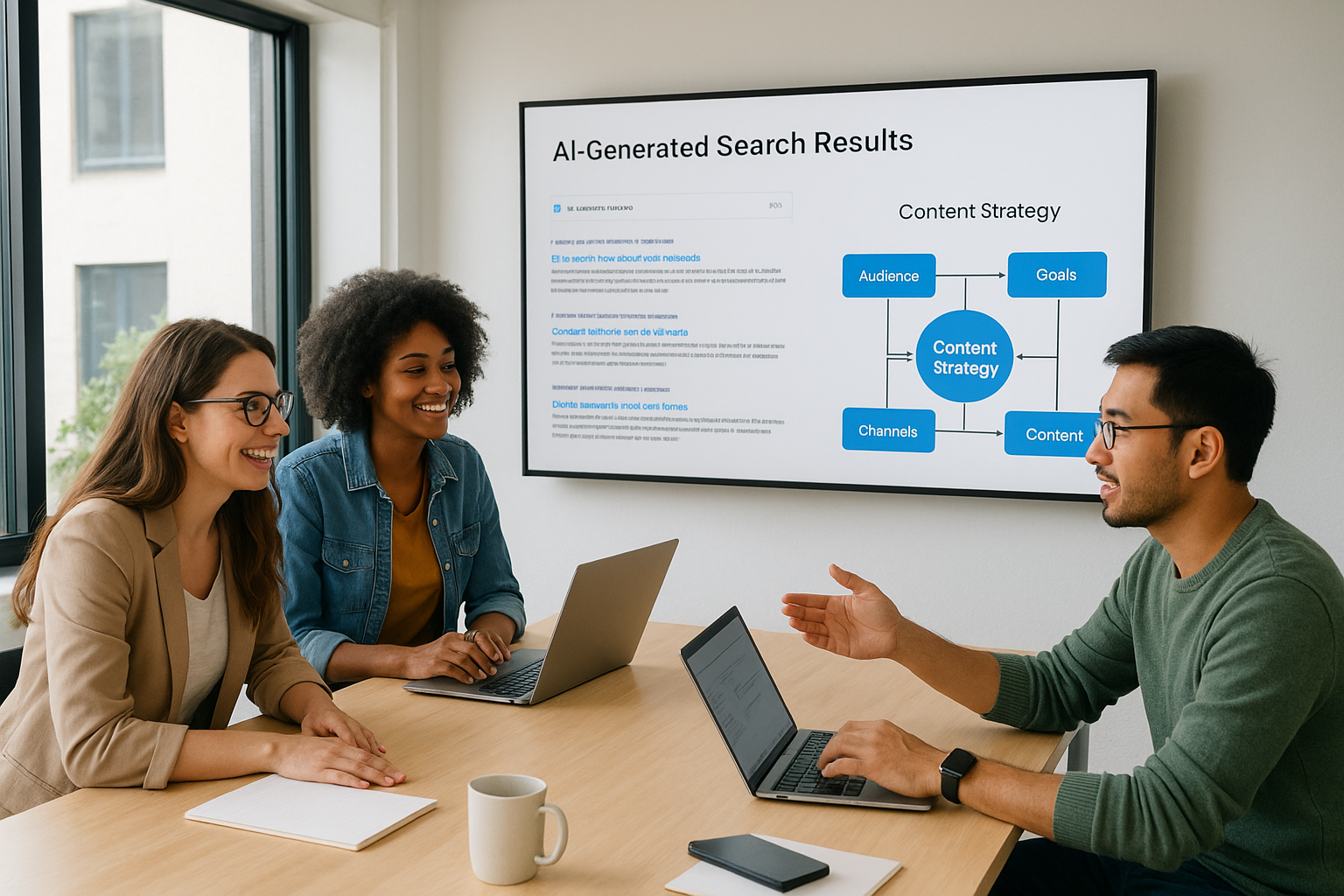
Teams that plan AI search optimization collaboratively tend to catch structural gaps earlier.
Practical Next Steps to Improve Search Performance
Above all, consistency matters more than perfection. Small, steady improvements to structure, clarity, and sourcing tend to outperform occasional large overhauls. For a more detailed walkthrough, this guide on practical ways to improve search performance using AI offers additional tactics you can apply immediately.
You can also refer to the FTC’s guidance on using artificial intelligence in business when evaluating AI tools, since transparency and accuracy remain important regardless of which optimization platform you choose.
Frequently Asked Questions About AI-Powered Search Optimization
What is AI-powered search optimization?
AI-powered search optimization is the practice of structuring and strengthening content so it ranks in both traditional search engines and AI-driven tools like ChatGPT, Gemini, and Google AI Overviews. It combines classic SEO with GEO and AEO techniques.
How does AI-powered search optimization differ from traditional SEO?
Traditional SEO focuses mainly on ranking in a list of links, while AI-powered search optimization also targets AI-generated summaries. As a result, it emphasizes structure, factual accuracy, and citation-ready formatting.
What is Generative Engine Optimization (GEO)?
Generative Engine Optimization is the practice of optimizing content so generative AI tools can understand, summarize, and cite it accurately. It focuses on entity clarity, structured data, and authoritative sourcing.
What is Answer Engine Optimization (AEO)?
Answer Engine Optimization is the practice of formatting content to directly answer specific questions asked through voice assistants and AI chat tools. It typically involves concise answer blocks and FAQ sections.
How long does it take to see results from AI search optimization?
Most sites see measurable movement within four to eight weeks, though full authority gains can take three to six months depending on competition and consistency.
How much does AI-powered search optimization cost?
Costs vary widely, from free manual tactics to automated platforms priced from roughly $30 to several hundred dollars monthly. Many providers offer a trial period to test results first.
Can small businesses benefit from AI search optimization?
Yes, small businesses often benefit significantly because AI search tools frequently surface niche, specific answers rather than only large brand websites.
What tools help automate AI-powered search optimization?
Automated platforms like rankauthority.com’s 1-Click AI AutoPilot handle technical structuring, content signals, and monitoring without manual work. Other tools focus narrowly on schema or tracking.
What are common mistakes in AI search optimization?
Common mistakes include skipping structured data, writing vague answers instead of direct ones, and neglecting FAQ sections, which makes content harder for AI systems to cite.
Does AI-powered search optimization replace traditional SEO?
No, it builds on traditional SEO rather than replacing it. Technical SEO and page experience still matter alongside GEO and AEO techniques.
How do AI search engines choose which sources to cite?
AI search engines typically favor sources with clear structure, factual accuracy, credible citations, and strong topical authority near the top of the page.
What metrics measure success in AI search optimization?
Useful metrics include AI citation frequency, referral traffic from AI tools, featured snippet appearances, and traditional keyword rankings tracked together.
Is a free trial available for AI search optimization platforms?
Many platforms, including rankauthority.com, offer a seven-day risk-free trial so users can evaluate automated results before committing to a plan.
How often should AI search optimization strategies be updated?
Strategies should be reviewed at least quarterly since AI algorithms change frequently, though monitoring citation performance monthly helps catch shifts sooner.
Final Thoughts
AI-powered search optimization is no longer optional for brands that want to stay visible as search behavior shifts toward AI-generated answers. In particular, combining structured data, clear answer blocks, and consistent topical authority gives content the best chance of being cited across both traditional and AI-driven environments.
Whether you choose to implement these steps manually or rely on automated tools like rankauthority.com’s platform, the core principle remains the same: content built for clarity and trust performs well regardless of which system is reading it.

